

Understand your Gendaito Japanese sword's worth. This guide explains how smith reputation, blade condition, koshirae, and certification (NBTHK, NTHK) determine its value, guiding your investment decisions.
1. Understanding Gendaito Japanese Swords
Embarking on the journey to understand the worth of a Japanese sword begins with a clear grasp of its identity. Among the various eras of Japanese sword production, the Gendaito stands as a unique and often highly valued category. This section will define what constitutes a Gendaito, explore its historical backdrop, and distinguish it from other significant periods of Japanese sword making, laying the groundwork for assessing its potential value.
1.1 What Defines a Gendaito
The term "Gendaito" (現代刀), literally translating to "modern sword," refers to Japanese swords traditionally forged by hand between the Meiji Restoration (specifically, after the Haitorei Edict of 1876 or the end of the Edo period in 1868) and the end of World War II in 1945. These are true nihonto (日本刀 - Japanese swords) made using traditional methods, including the folding of high-carbon steel (tamahagane) and differential hardening to create the distinctive hamon (temper line).
Unlike the mass-produced, non-traditionally made Showato (昭和刀) of the same period, Gendaito were crafted by swordsmiths dedicated to preserving and continuing the ancient art. This distinction is paramount when evaluating worth, as only traditionally made swords are considered true nihonto by collectors and experts. Gendaito smiths, though operating in a modernizing Japan, adhered to centuries-old techniques, often under challenging circumstances, to produce blades of exceptional quality and artistic merit.
1.2 Historical Context and Significance
The Gendaito era emerged from a period of profound change in Japan. The Meiji Restoration in 1868 brought an end to the samurai class and, crucially, the Haitorei Edict of 1876 banned the public wearing of swords. This edict plunged the swordsmithing profession into crisis, as demand for their primary product plummeted. Many master smiths were forced to abandon their craft or turn to making agricultural tools and kitchen knives.
However, the traditional art of sword making did not die. A small number of dedicated individuals and organizations worked to preserve the techniques. This preservation effort gained momentum in the early 20th century, particularly with the rise of Japanese nationalism and military expansion. As Japan prepared for and engaged in World War II, there was a renewed demand for high-quality swords for military officers. This demand, coupled with the desire to revive traditional craftsmanship, led to the flourishing of Gendaito production.
Key institutions and initiatives played a vital role:
- The Imperial Household Ministry (Kunzan-kai): This organization, established in the late 19th century, supported traditional arts, including swordsmithing, providing a lifeline for many masters.
- Yasukuni Shrine Swordsmiths (Yasukuni Tosho): Beginning in 1933, the Yasukuni Shrine in Tokyo established a forge to produce high-quality, traditionally made swords for military officers. Swords from these smiths are among the most highly regarded Gendaito.
- Rikugun Jumei Tosho (RJTs - Army Approved Swordsmiths): During WWII, the Japanese Army officially sanctioned certain smiths to produce traditionally made blades for officers. These swords, while sometimes varying in quality, represent a significant portion of Gendaito production.
1.3 Gendaito Versus Other Sword Eras
To fully appreciate the Gendaito, it's essential to understand how it fits into the broader timeline of Japanese sword production. The value and characteristics of a Japanese sword are heavily dependent on its era of manufacture and the methods employed. The table below outlines the primary sword eras and highlights key differences, particularly distinguishing Gendaito from the often-confused Showato.
| Sword Era | Period | Production Method | Key Characteristics & Context | General Value & Collectibility (Relative) |
|---|---|---|---|---|
| Koto (古刀) | Pre-1596 (Ancient Swords) | Traditional hand-forging (tamahagane) | Original "classic" Japanese swords. Wide variety of styles, often showing strong regional characteristics. Highly revered for historical significance and craftsmanship. | Generally the highest value, especially for famous smiths and well-preserved examples. |
| Shinto/Shinshinto (新刀/新々刀) | 1596-1876 (New Swords) | Traditional hand-forging (tamahagane) | Reflects changes in warfare and taste. Often more uniform in shape. Includes Shinshinto (1781-1876) which saw a revival of Koto styles. | High value, particularly for master smiths and well-preserved examples. |
| Gendaito (現代刀) | 1876-1945 (Modern Swords) | Traditional hand-forging (tamahagane) | Produced during a period of transition and military demand. Represents the continuation of traditional techniques despite the decline of the samurai class. Often high quality, especially from renowned smiths like those from Yasukuni Shrine. | Significant and growing value, especially for traditionally made blades by known smiths. |
| Showato (昭和刀) | 1926-1945 (Showa Era Swords) | Non-traditional, often machine-assisted, mass-produced (e.g., oil-quenched, non-folded steel) | Produced rapidly to equip the large military during WWII. Lacks the artistic and metallurgical qualities of traditional nihonto. Often signed by smiths, but the methods are not traditional. | Significantly lower value; generally not considered true nihonto by serious collectors. Primarily historical artifacts of the war. |
| Shin-Gendaito (新現代刀) | Post-1953 (New Modern Swords) | Traditional hand-forging (tamahagane) | Swords made after the lifting of the sword-making ban by the Allied Occupation. Represents the modern continuation of traditional sword making. Often of very high quality. | Value varies widely based on smith's reputation; can be quite high for top modern smiths. |
It is crucial to understand that while Gendaito and Showato were produced concurrently during WWII, their methods and resulting quality are fundamentally different. The traditional craftsmanship of a Gendaito is what elevates it to the status of a collectible nihonto, distinguishing it sharply from the utilitarian, mass-produced Showato. This distinction is the bedrock upon which the worth of a Gendaito is assessed.
2. Key Factors Determining Gendaito Worth
The value of a Gendaito Japanese sword is not static; it is a complex interplay of several critical factors. Understanding these elements is essential for both collectors and those seeking to appraise their swords accurately. From the esteemed hand of its creator to its historical journey and current state, each detail contributes significantly to its market worth.
2.1 The Swordsmith and His Reputation
The individual who forged the Gendaito blade is arguably the single most influential factor in determining its value. The reputation, skill, and historical significance of the swordsmith directly correlate with the demand and price their works command in the market.
2.1.1 Renowned Gendaito Smiths
During the Gendaito period (roughly 1876-1945, encompassing the Meiji, Taisho, and early Showa eras), a resurgence of traditional sword-making techniques saw the rise of exceptionally talented smiths. Blades crafted by these masters are highly sought after due to their superior craftsmanship, adherence to classical methods, and often, their limited production numbers. Swords from smiths recognized for their mastery of traditional techniques and artistic expression typically fetch the highest prices.
| Renowned Gendaito Smith | Active Period / Key Style | Contribution to Value |
|---|---|---|
| Kurihara Hikosaburo (栗原彦三郎) | Late Meiji - Early Showa (c. 1900-1940s) | Pioneered the revival of traditional forging, established the Nihonto Tanren Denshujo. His personal works are highly prized. |
| Gassan Sadakatsu (月山貞勝) | Late Meiji - Early Showa (c. 1900-1943) | Head of the Osaka Gassan school, renowned for his exquisite Ayasugi-hada (wavy wood grain pattern) and overall high quality. |
| Takahashi Yoshimune (高橋義宗) | Early Showa (c. 1930s-1940s) | Considered one of the finest smiths of his era, known for beautiful hamon and jihada, often working for the Imperial Household. |
| Kasama Shigetsugu (笠間繁継) | Early Showa (c. 1930s-1940s) | A student of Kurihara Hikosaburo, known for his robust and artistically powerful blades, particularly in Bizen tradition. |
| Horii Taneaki (堀井胤明) | Late Meiji - Early Showa (c. 1900-1940s) | Based in Muroran, Hokkaido, known for his precise and elegant work, often following the Soshu tradition. |
2.1.2 Signatures and Authentication
A swordsmith's signature, or mei (銘), inscribed on the tang (nakago) of the blade, is a crucial identifier. A genuine and clearly legible signature from a renowned smith significantly enhances a Gendaito's value. However, the presence of a signature alone is not sufficient; its authenticity must be verified. False signatures (gimei) are common and can severely devalue a sword, as they misrepresent its true origin. Conversely, an unsigned (mumei) blade can still be highly valuable if it is attributed to a master smith by reputable experts based on its style, forging characteristics, and quality. Professional authentication by leading organizations is paramount in confirming the validity of a signature or making an accurate attribution for an unsigned blade.
2.2 Blade Condition and Craftsmanship
Beyond the smith, the intrinsic quality and preservation of the blade itself are paramount. The artistry of its forging and its current state of preservation directly impact its aesthetic appeal, historical integrity, and, consequently, its market worth.
2.2.1 Flaws and Imperfections
The presence of flaws can dramatically reduce a Gendaito's value, even if made by a renowned smith. Some imperfections are inherent to the forging process, while others result from damage or improper care. Serious structural flaws are particularly detrimental. Common flaws include:
- Hagire (刃切れ): A crack in the cutting edge (hamon). This is considered a fatal flaw and severely diminishes value.
- Fukure (膨れ): Small air bubbles or pockets of un-forged steel visible on the surface, indicating imperfect forging.
- Shinae (撓え): Stress cracks or folds, often from bending, especially near the spine.
- Ware (割れ): Openings or cracks in the surface of the blade's steel (jihada).
- Rust (錆): Active or deeply pitted rust can permanently damage the surface and integrity of the steel.
- Nicks and Chips (刃こぼれ): Damage to the cutting edge, often from impact.
- Bends (曲がり): Any curvature or warp not intended by the smith.
The severity and location of these flaws determine their impact on value. While minor, stable imperfections might be tolerated in older blades, a Gendaito in near-flawless condition commands a significant premium.
2.2.2 Quality of Polish and Forging
The quality of the blade's polish (togaki) is crucial because it reveals the underlying craftsmanship. A professional polish by a skilled togishi (polisher) brings out the intricate details of the blade's construction, such as the grain pattern (jihada), the temper line (hamon), and the various activities (hataraki) within the hamon. A high-quality polish enhances the blade's aesthetic appeal and allows for proper appreciation and authentication of the smith's work. Conversely, a poor or amateur polish can obscure details, thin the blade, or even damage its features, reducing its value.
The inherent quality of the forging itself is also paramount. This includes:
- Tamahagane (玉鋼): The traditional, high-carbon steel used for Japanese swords. Its quality directly impacts the blade's durability and aesthetic.
- Jihada (地肌): The grain pattern visible on the surface of the blade, resulting from the folding and forging process. A well-executed and aesthetically pleasing jihada (e.g., Itame, Masame, Mokume) is highly valued.
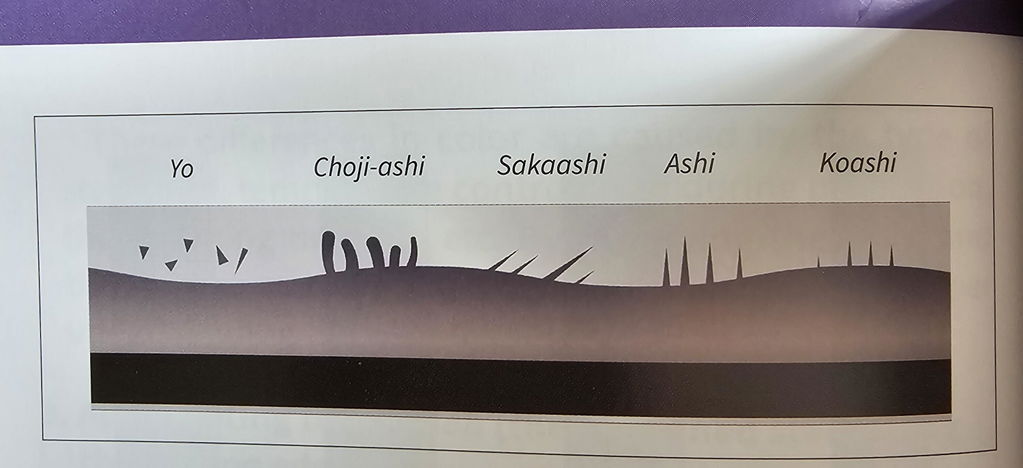
- Hamon (刃文): The temper line, formed by differential hardening. Its shape (e.g., Suguha, Notare, Gunome, Choji) and the intricate patterns within it (hataraki like Nie, Nioi, Kinsuji, Inazuma) are key indicators of the smith's skill and artistic vision.
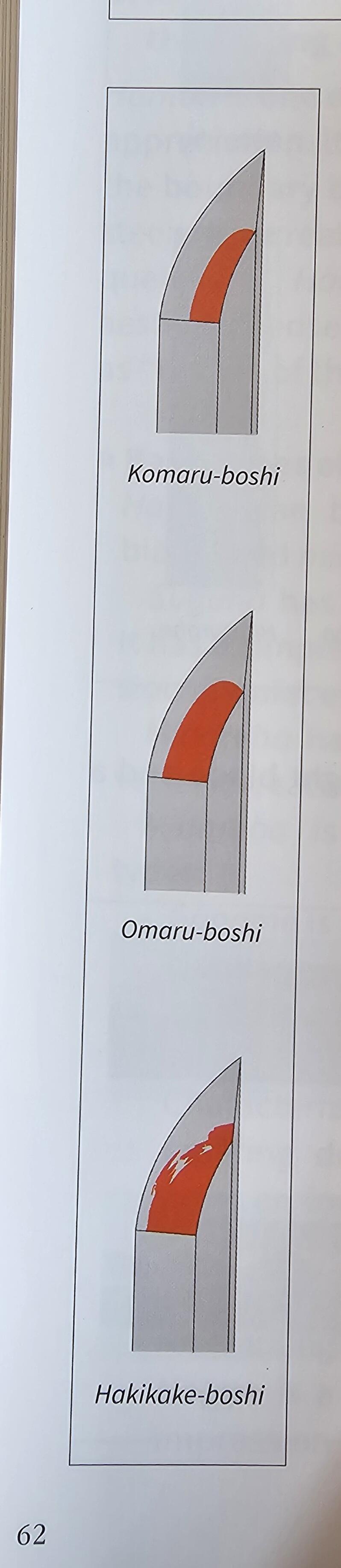
- Boshi (帽子): The temper line in the kissaki (tip). Its form and return (kaeri) are important stylistic elements.
A Gendaito demonstrating exceptional forging quality, with vibrant hamon, clear jihada, and well-defined activities, will be significantly more valuable.
2.3 Koshirae and Fittings
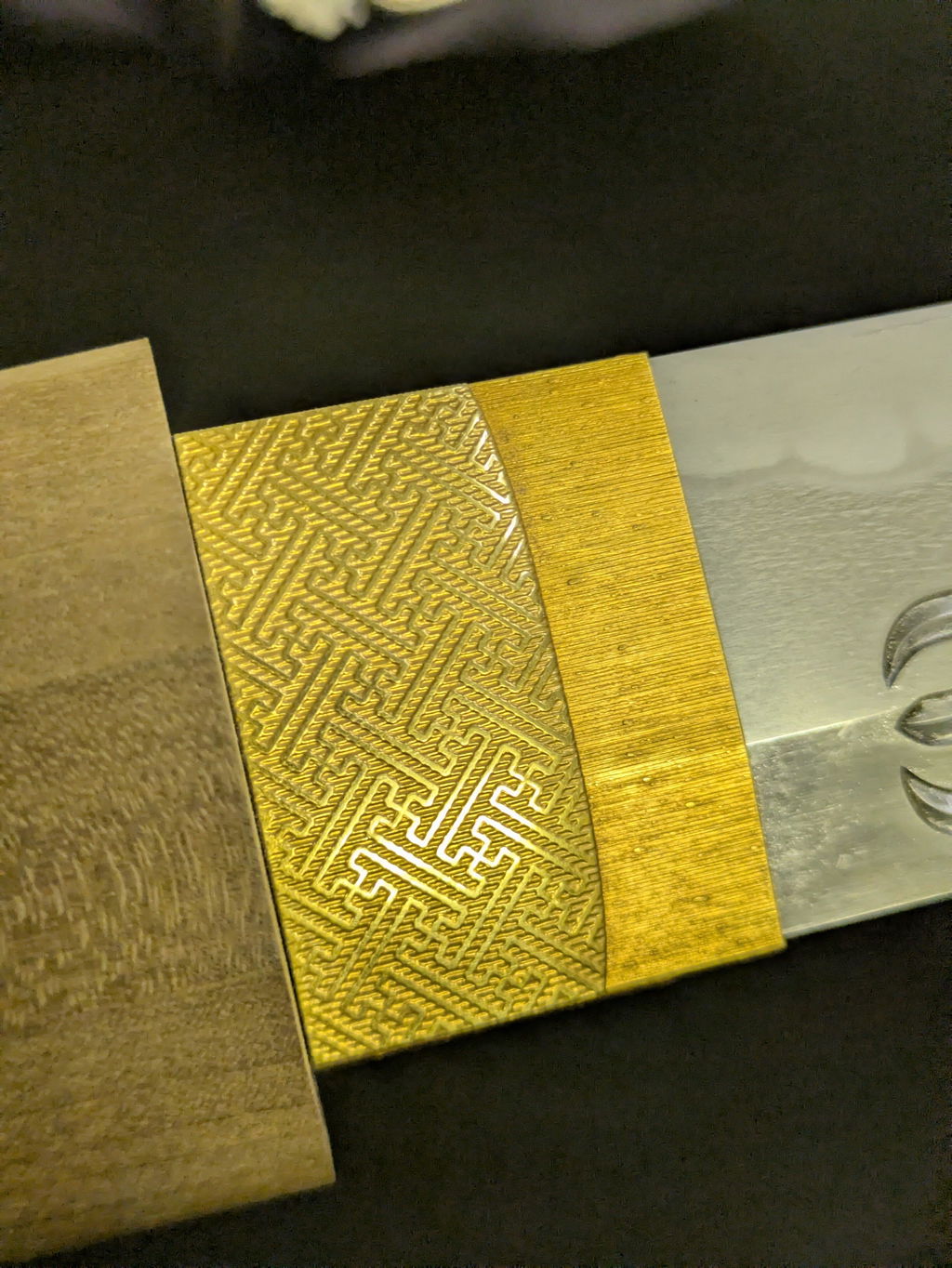
While the blade is the soul of the sword, the koshirae (外装), or mountings, play a significant role in its overall presentation and value. Koshirae typically includes the tsuba (handguard), fuchi (collar) and kashira (pommel), menuki (ornaments under the handle wrap), saya (scabbard), and tsuka (handle). Original, high-quality, and aesthetically matching koshirae can substantially increase a Gendaito's worth.
- Originality: Koshirae that was made specifically for the blade, ideally by a skilled craftsman of the same period or school, adds historical integrity and value.
- Quality of Craftsmanship: Fittings made by renowned artists or schools (e.g., Goto, Yokoya) are highly collectible in their own right and elevate the sword's value.
- Condition: Well-preserved koshirae, free from significant damage, wear, or missing parts, is preferred.
- Aesthetic Cohesion: Koshirae that harmonizes artistically with the blade's style and period demonstrates thoughtful assembly and enhances overall appeal.
While a sword's value is primarily in the blade, a complete and well-preserved set of koshirae that complements the blade's quality makes for a more desirable and valuable piece. Even if not original to the blade, exceptionally fine separate fittings can add value, though a complete, original ensemble is always preferred.
2.4 Provenance and Historical Significance
The history of ownership and any notable historical associations (provenance) can significantly enhance a Gendaito's value, transforming it from merely an object of art into a historical artifact. Documented provenance adds a layer of verifiable history that is highly sought after by collectors.
- Distinguished Ownership: A sword known to have belonged to a famous historical figure, a prominent samurai, a military leader, or even a well-known collector, can command a premium.
- Historical Events: Swords associated with specific historical events, such as being presented for a significant achievement or having a verifiable role in a notable conflict (though less common for Gendaito than older swords), can be more valuable.
- Documentation: Strong provenance is supported by verifiable documentation, such as old photographs, family records, purchase receipts, letters, or published references.
Without solid documentation, claims of provenance are difficult to verify and generally do not impact value. However, a well-documented and historically significant Gendaito can achieve prices far exceeding those of similar blades without such a history.
2.5 Certification and Paperwork
Official certification from reputable Japanese sword appraisal organizations is perhaps the most crucial factor for establishing and realizing a Gendaito's true market worth. These papers provide independent, expert authentication and evaluation, instilling confidence in buyers and facilitating transactions.
2.5.1 NBTHK and NTHK Papers
The two most respected organizations for Japanese sword appraisal are the Nihon Bijutsu Token Hozon Kyokai (NBTHK - Society for the Preservation of the Japanese Art Sword) and the Nihon Token Hozon Kai (NTHK - Japanese Sword Preservation Society). Both organizations employ highly experienced experts who examine swords for authenticity, quality, and attribution. Their papers act as a universally recognized standard of appraisal.
The NBTHK, for example, issues different levels of papers, each signifying a higher degree of quality and historical importance:
- Hozon (保存 - "Preservation"): Confirms the blade is genuine and worthy of preservation. This is the entry-level paper for collectible swords.
- Tokubetsu Hozon (特別保存 - "Especially Preservation"): Indicates a blade of higher quality, considered particularly well-made and important.
- Juyo Token (重要刀剣 - "Important Sword"): Designates a sword of significant artistic merit and historical importance, often by a master smith.
- Tokubetsu Juyo Token (特別重要刀剣 - "Especially Important Sword"): The highest level, reserved for exceptional blades of the finest quality and historical significance, often considered national treasures.
A Gendaito with higher-level NBTHK or NTHK papers will invariably be more valuable and easier to sell than an unpapered blade, even if the latter is of similar quality.
2.5.2 Importance of Documentation
Beyond official appraisal papers, other forms of documentation contribute to a sword's value. These can include old appraisal certificates from previous owners, records of purchase, export permits, or any written material that verifies the sword's history, ownership, or attributes. Comprehensive and verifiable documentation provides transparency and builds trust, which are essential in the high-value Japanese sword market. It helps to confirm the sword's identity, provenance, and any unique characteristics, thereby solidifying its perceived and actual worth.
3. The Gendaito Market and Investment Potential
3.1 Current Market Trends
The market for Gendaito Japanese swords has experienced a fascinating evolution, reflecting a growing appreciation for their unique blend of traditional craftsmanship and historical significance. Unlike antique swords (Koto, Shinto, Shinshinto) which have long been established in the collector's sphere, Gendaito, produced from roughly 1876 to 1945, are increasingly recognized for their artistic merit and investment potential. Current trends indicate a stable and, for high-quality examples, appreciating market, driven by a global community of collectors, martial artists, and art enthusiasts.
Factors influencing demand include a heightened interest in Japanese culture, the finite supply of well-preserved examples, and the increasing recognition of master Gendaito smiths. Online platforms and international auction houses have also played a crucial role in expanding market access, connecting sellers with a broader base of potential buyers worldwide. While the market is not as volatile as some mainstream investments, it is influenced by economic conditions and the availability of exceptional pieces. Swords by highly regarded smiths, those with documented provenance, or those in pristine condition consistently command premium prices.
3.2 Gendaito as an Investment
Investing in Gendaito Japanese swords can be a rewarding endeavor, offering both aesthetic pleasure and potential financial returns. However, it is a niche market that requires significant knowledge and patience. Gendaito are considered tangible assets, much like fine art or rare antiques, and their value is often less susceptible to the rapid fluctuations seen in financial markets.
Here’s a breakdown of Gendaito as an investment:
- Prospective Appreciation: High-quality Gendaito, especially those by renowned smiths like Gassan Sadakatsu, Kurihara Akihide, or Tsukamoto Okimasa, have shown consistent appreciation over time. Their value is underpinned by their artistic quality, historical context, and the finite number of existing pieces.
- Tangible Asset: Unlike stocks or bonds, a Gendaito is a physical object that can be admired and held, offering a unique form of ownership.
- Diversification: For investors looking to diversify their portfolio beyond traditional assets, Gendaito can offer an alternative investment class.
- Cultural and Historical Value: Beyond monetary value, owning a Gendaito connects one to a rich tradition of Japanese craftsmanship and history, which adds intrinsic value for many collectors.
However, potential investors must also be aware of the challenges:
- Liquidity: The Gendaito market is not as liquid as mainstream financial markets. Selling a sword, especially a high-value one, can take time.
- Expertise Required: Accurately assessing a Gendaito's worth and authenticity requires specialized knowledge. Without it, there is a significant risk of overpaying or acquiring a misrepresented piece.
- Maintenance Costs: Proper care and storage are essential to preserve value, which may incur costs for professional polishing, shirasaya (storage scabbard), or climate control.
- Storage and Security: High-value swords require secure storage to prevent theft or damage.
For a Gendaito to be a strong investment, it must possess key attributes: exceptional craftsmanship, excellent condition, a reputable smith, proper authentication (e.g., NBTHK or NTHK papers), and ideally, documented provenance. Investing in lower-quality or unauthenticated pieces carries higher risk and is unlikely to yield significant returns.
3.3 Where to Buy and Sell Gendaito
Navigating the Gendaito market requires careful consideration of where to buy and sell. The choice of venue significantly impacts the authenticity, pricing, and overall experience.
3.3.1 Reputable Dealers and Auction Houses
For both buying and selling, reputable dealers and established auction houses are often the safest and most reliable options. They provide a layer of expertise, authentication, and often offer guarantees of authenticity.
Benefits:
- Authentication: Dealers and auction houses typically employ experts who can verify the authenticity of a sword, including the smith's signature and the blade's period. Many pieces sold through these channels will already have NBTHK or NTHK certification.
- Condition Reports: They provide detailed condition reports, highlighting any flaws or restoration work.
- Provenance: They often have records of a sword's ownership history, which adds to its value and credibility.
- Market Knowledge: They possess in-depth knowledge of current market values, helping to ensure fair pricing.
- Secure Transactions: They offer secure payment and shipping processes.
Examples:
Major international auction houses like Christie's and Sotheby's occasionally feature high-value Japanese swords. However, specialized dealers and auctioneers focusing exclusively on Japanese swords are more common and often more knowledgeable. Examples include:
| Type of Venue | Description | Key Advantages |
|---|---|---|
| Specialized Japanese Sword Dealers | Businesses dedicated solely to buying and selling Japanese swords, often with decades of experience. | Deep expertise, personalized service, access to private collections, often offer post-purchase support. |
| Specialized Auction Houses | Auctioneers focusing on Asian art, militaria, or specifically Japanese swords. | Competitive bidding, wider reach for sellers, professional cataloging and photography. |
3.3.2 Online Marketplaces and Forums
The internet has opened new avenues for buying and selling Gendaito, offering broader access and potentially more competitive pricing. However, these platforms also come with increased risks.
Benefits:
- Wider Selection: Access to swords from sellers globally, potentially offering a wider variety of pieces.
- Competitive Pricing: Direct sales can sometimes bypass dealer markups, leading to lower prices for buyers or higher returns for sellers.
Risks:
- Authentication Challenges: It can be difficult to verify authenticity without physical inspection or reliable third-party authentication. The risk of encountering fakes or misidentified swords is higher.
- Misrepresentation: Photos may not accurately represent condition, and descriptions might be incomplete or misleading.
- Transaction Security: Higher risk of scams or payment disputes if not using a reputable platform with buyer/seller protection.
Recommendations:
- Specialized Forums and Communities: Many online forums dedicated to Japanese swords have classified sections where collectors buy and sell. While these offer a direct connection, transactions often rely on trust within the community.
- Reputable Online Stores: Some established brick-and-mortar dealers also operate secure online stores.
- Due Diligence: Always request high-resolution photos, detailed descriptions, and proof of authentication (NBTHK/NTHK papers) before considering a purchase. If possible, arrange for a professional appraisal or inspection.
3.3.3 Private Sales and Collector Networks
For seasoned collectors, private sales within established networks can be a common way to acquire or divest of Gendaito. These transactions often occur through word-of-mouth, at sword shows, or through direct connections established over years.
Benefits:
- Direct Negotiation: Allows for direct negotiation of terms and price.
- Access to Rare Pieces: Some of the most desirable swords rarely enter the public market and are traded privately.
Risks:
- Limited Exposure: For sellers, this method offers less market exposure than public sales.
- Reliance on Trust: Transactions heavily rely on the reputation and trust between parties.
- Expertise Required: Both buyer and seller must have a strong understanding of the sword's value and authenticity, as there's no third-party intermediary.
Regardless of the chosen venue, the cardinal rule for both buying and selling Gendaito is to prioritize authentication and thorough due diligence. Consulting with reputable experts and obtaining official certification papers are paramount to protecting your investment and ensuring a satisfactory transaction.
4. Professional Appraisal and Authentication
For any serious collector or investor, a professional appraisal is an indispensable step in accurately determining the worth and authenticity of a Gendaito Japanese sword. It provides an expert, unbiased assessment that protects both buyers and sellers from misrepresentation and ensures fair market value.
4.1 Finding Reputable Appraisers
Identifying a qualified appraiser is paramount. Unlike general antiques, Japanese swords require highly specialized knowledge encompassing metallurgy, art history, traditional craftsmanship, and an understanding of specific schools and smiths. General antique dealers or auction houses without dedicated Japanese sword specialists are often insufficient.
The most reputable appraisers are typically those with deep ties to, or recognition from, major Japanese sword preservation societies. In the English-speaking world, look for experts who:
- Possess extensive, verifiable experience specifically with Japanese swords, including the Gendaito period.
- Are recognized by or have worked with institutions like the NBTHK (Nihon Bijutsu Token Hozon Kyokai - Society for the Preservation of the Japanese Art Sword) or the NTHK (Nihon Token Hozon Kai - Japanese Sword Preservation Society). While these organizations primarily issue official papers, their top-tier members and affiliates are the gold standard for private appraisals.
- Have a strong reputation within the international Japanese sword community, evidenced by peer recognition, publications, or contributions to the field.
- Operate with transparency regarding their appraisal methodology, fees, and ethical standards.
Avoid individuals who claim expertise without demonstrable credentials or a clear track record in authenticating and valuing high-quality Japanese swords. An unqualified assessment can lead to significant financial loss or the acquisition of a misrepresented item.
4.2 The Appraisal Process
A professional appraisal involves a meticulous examination of the sword, often requiring disassembly of the fittings (koshirae) to fully inspect the bare blade (nakago and sugata). The appraiser assesses numerous characteristics to determine the sword's authenticity, quality, artistic merit, and ultimately, its market value. The process typically involves:
| Aspect Examined | Key Details Assessed | Impact on Value |
|---|---|---|
| Blade Condition (Sugata) | Overall shape, balance, straightness, presence of chips, bends, rust, or deep scratches. Quality of polish. | Excellent condition and proper polish significantly enhance value. Damage or poor polish detracts. |
| Forging Quality (Jihada) | Grain pattern (e.g., Masame, Itame, Mokume), consistency, activity (e.g., Chikei, Nie), and overall beauty of the steel surface. | Clear, well-formed, and aesthetically pleasing jihada indicates high craftsmanship and adds value. |
| Temper Line (Hamon) | Pattern (e.g., Suguha, Gunome, Choji), clarity, presence of internal activities (e.g., Nie, Nioi, Utsuri), and how well it follows the blade's contour. | A vibrant, well-executed hamon with rich activity is a hallmark of a master smith and is crucial for high valuation. |
| Tang (Nakago) | Shape, file marks (yasurime), signature (mei), hole (mekugi-ana), and condition of the rust (patina). The mei is compared against known examples of the smith's work. | Authentic, well-preserved mei is vital for attribution. Original, unaltered nakago adds significant value. |
| Fittings (Koshirae) | Quality, artistry, and condition of the tsuba, fuchi/kashira, menuki, and saya. Whether they are original to the blade or period-appropriate. | High-quality, matching koshirae by renowned artists can add considerable value, especially if original to the blade. |
| Provenance & Documentation | Any historical records of ownership, previous appraisals, or existing authentication papers (e.g., NBTHK, NTHK). | Clear, verifiable provenance and official papers dramatically increase confidence and value. |
Following this detailed examination, the appraiser will provide a valuation, often accompanied by a written report detailing their findings and the estimated market value. For official authentication, the sword may then be submitted to a major society like NBTHK or NTHK for their formal papering process.
4.3 Avoiding Counterfeits and Misrepresentations
The market for Japanese swords, including Gendaito, is not immune to counterfeits and misrepresentations. Professional appraisal and authentication are your primary defenses against these risks, protecting your investment and ensuring you acquire a genuine piece of art.
4.3.1 Common Forms of Misrepresentation:
- Gimei (False Signatures): This is the most prevalent issue. A sword by a lesser-known smith is signed with the name of a famous, highly sought-after smith to inflate its value. While the blade itself might be genuine, the signature is not, severely impacting its true worth. A skilled appraiser can often detect gimei by comparing the signature's style, stroke order, and placement against verified examples, as well as by assessing the blade's intrinsic quality, which may not match the purported smith's caliber.
- Complete Fakes: These are modern reproductions designed to deceive. They often lack the traditional forging methods, quality of steel, and artistic refinement found in genuine Gendaito. These can be difficult for an untrained eye to distinguish, but an expert will identify inconsistencies in the hamon, jihada, nakago, and overall sugata.
- Misattribution: A genuine sword may be incorrectly attributed to a different, often more valuable, smith or school, either intentionally or due to a lack of knowledge. An appraisal clarifies the correct attribution based on the sword's characteristics.
4.3.2 The Role of Authentication Papers:
Official authentication papers from organizations like the NBTHK (Hozon, Tokubetsu Hozon, Juyo Token, Tokubetsu Juyo Token) and NTHK (Kanteisho) are the gold standard for verifying a Japanese sword's authenticity and quality. These papers are issued after a panel of experts meticulously examines the sword. They provide a consensus opinion on the smith, period, and quality, significantly mitigating the risk of acquiring a counterfeit or misrepresented item. Swords with such papers command higher prices and instill greater buyer confidence.
When considering a purchase, especially from private sellers or less established dealers, always prioritize swords that come with reputable authentication papers. If papers are absent, factor in the cost and time of obtaining them, and be prepared for the possibility that the sword may not authenticate as expected. Investing in a pre-purchase appraisal is always advisable for high-value Gendaito without existing papers.
5. Preserving Your Gendaito Value
Maintaining your Gendaito in pristine condition is paramount to preserving its value. Regular and correct care prevents damage that could necessitate costly professional restoration or, worse, permanently diminish its historical and monetary worth.
5.1 Proper Care and Maintenance
5.1.1 Handling Your Gendaito
Always handle your Japanese sword with the utmost care. Never touch the bare blade with your fingers, as skin oils can cause rust. When handling, hold the sword by the saya (scabbard) or the tsuka (handle).
5.1.2 Cleaning and Oiling
Routine cleaning and oiling are essential to protect the blade from oxidation and environmental degradation. This should be done after every handling session, or at least every few months if the sword is stored away.
| Step | Description | Materials Needed | Key Considerations |
|---|---|---|---|
| 1. Preparation | Ensure you are in a clean, stable environment. Lay down a soft cloth or mat. | Clean, lint-free cloths (nuguigami or similar) | Work on a stable surface to prevent accidental drops or damage. |
| 2. Disassembly (Optional for full cleaning) | Carefully remove the mekugi (bamboo peg) to detach the tsuka (handle) and habaki (blade collar). | Mekugi-nuki (brass hammer/punch) | Exercise extreme caution. If unsure, consult an expert or stick to blade-only cleaning. Do not force components. |
| 3. Remove Old Oil | Gently wipe off any old oil from the blade using fresh nuguigami. Start from the habaki end and wipe towards the tip. | Fresh nuguigami (soft rice paper or lint-free cloth) | Use a clean section of cloth for each pass. Never reuse oily cloths. |
| 4. Apply Uchiko Powder | Lightly tap the uchiko (rice powder ball) onto the blade, creating a fine, even layer of powder. | Uchiko (rice powder ball) | Use sparingly. Too much powder can scratch the polish. Avoid applying to the nakago (tang). |
| 5. Wipe Off Uchiko | Using a fresh piece of nuguigami, gently wipe off the uchiko powder, again wiping from the habaki end towards the tip. This cleans the blade surface. | Fresh nuguigami | Ensure all powder is removed. Inspect the blade for any remaining residue or smudges. |
| 6. Apply Choji Oil | Apply a few drops of choji oil (clove oil) onto a clean piece of nuguigami and spread a thin, even coat over the entire blade surface. | Choji oil, fresh nuguigami | A very thin layer is sufficient. Excess oil can attract dust and become gummy. |
| 7. Reassembly (If disassembled) | Carefully reattach the habaki, tsuka, and reinsert the mekugi. Ensure everything fits snugly without force. | None | Double-check that the mekugi is fully inserted and secure. |
5.1.3 Critical Don'ts in Gendaito Care
- Never touch the nakago (tang): The patina on the tang is vital for authentication and establishing age. Cleaning or polishing it will drastically reduce the sword's value.
- Avoid harsh chemicals or abrasives: These can permanently damage the delicate polish and steel.
- Do not attempt DIY repairs or polishing: Blade repair or re-polishing should only be done by a certified Japanese sword polisher (Togishi).
- Protect from impact: Even a minor bump can cause a chip or scratch, which is expensive to repair.
5.2 Storage Recommendations
Proper storage is as crucial as regular cleaning for long-term preservation and value retention. The environment in which your Gendaito resides significantly impacts its condition.
5.2.1 Ideal Environmental Conditions
- Humidity Control: Maintain a stable humidity level, ideally between 40-60% Relative Humidity (RH). High humidity promotes rust, while excessively low humidity can cause wooden fittings (saya, tsuka) to shrink or crack. Consider using a hygrometer to monitor conditions and a dehumidifier or humidifier as needed.
- Temperature Stability: Store your sword in a location with stable room temperature, avoiding extreme heat or cold fluctuations.
- Light Exposure: Keep the sword away from direct sunlight or strong artificial light. UV rays can damage organic materials like silk wraps (ito) on the tsuka, lacquered saya, and even cause the wood to warp or crack over time.
- Air Circulation: Ensure adequate air circulation to prevent stagnant moisture buildup, but avoid drafty areas.
5.2.2 Recommended Storage Solutions
The choice of storage solution plays a vital role in protecting your Gendaito from environmental hazards and physical damage.
| Storage Solution | Description | Benefits for Gendaito | Considerations |
|---|---|---|---|
| Shirasaya (Plain Wooden Mounts) | An unlacquered, plain wooden scabbard and handle, typically made of magnolia wood (ho-no-ki). Designed purely for blade storage. | Allows the blade to "breathe", preventing moisture buildup. Protects the blade from dust and minor impacts. Ideal for long-term preservation. | Does not offer the aesthetic appeal of full koshirae. Requires the blade to be removed from its display mounts. |
| Naga-bukuro (Sword Bag) | A soft, breathable cloth bag (often silk or cotton) used to encase the shirasaya or full koshirae. | Provides an additional layer of protection against dust, minor scratches, and environmental fluctuations. Adds a touch of traditional elegance. | Should be made of natural, breathable fibers. Does not protect against significant impact or moisture. |
| Sword Tansu (Storage Cabinet) | Traditional Japanese wooden chests specifically designed for storing swords, often featuring multiple drawers. | Offers excellent protection from dust, light, and provides a relatively stable micro-environment. Secure and aesthetically pleasing. | Can be a significant investment. Ensure it's made from appropriate wood and is well-sealed. |
| Display Stands (Katana Kake) | Wooden or lacquered stands used for displaying swords. | Allows for appreciation of the sword's beauty. | Not for long-term storage of the bare blade. If displaying the sword in its full koshirae, ensure the display area has controlled humidity, temperature, and no direct light. |
5.2.3 Regular Inspection and Professional Consultation
Even with meticulous care and ideal storage, it's crucial to periodically inspect your Gendaito (e.g., every 3-6 months) for any signs of rust, oil degradation, or environmental issues. If you notice any problems or are unsure about proper care, always consult a reputable Japanese sword expert or conservator. Early intervention can prevent minor issues from becoming major, value-diminishing problems.
6. Summary
Understanding the true worth of a Gendaito Japanese sword requires a nuanced appreciation of its unique place in history and a careful evaluation of several critical factors. These swords, forged during the Showa era (1926-1989) by traditional methods, bridge the gap between antique blades and modern craftsmanship, offering both historical significance and artistic merit.
The value of a Gendaito is not solely determined by its age but by a confluence of attributes that speak to its quality, authenticity, and historical journey. Here’s a concise overview of the key determinants:
| Factor | Impact on Worth | Key Considerations for Value |
|---|---|---|
| Swordsmith Reputation | Significantly increases value for blades by renowned Gendaito smiths (e.g., Kurihara Hikosaburo, Gassan Sadakatsu, Yasukuni Shrine smiths). | Presence of a clear, authentic signature (Mei). Proven lineage and established skill. |
| Blade Condition & Craftsmanship | Pristine condition, absence of major flaws (e.g., deep rust, chips, bends), and exceptional forging quality enhance value. | Quality of the Hamon (temper line), Hada (grain pattern), and overall polish. Integrity of the Kissaki (tip). |
| Koshirae (Fittings) | Original, high-quality, and well-preserved Koshirae (Tsuka, Tsuba, Saya, etc.) can add substantial value. | Matching aesthetics, craftsmanship of individual components, and historical significance of the fittings. |
| Provenance & Historical Significance | Documented history of ownership or association with notable events/individuals can dramatically increase worth. | Verifiable records, historical context, and compelling stories attached to the sword. |
| Certification & Paperwork | Essential for confirming authenticity and quality, providing expert validation. | Official papers from reputable organizations like the NBTHK (Nihon Bijutsu Token Hozon Kyokai) or NTHK (Nihon Token Hozon Kai). |
The Gendaito market is dynamic, influenced by collector demand, historical interest, and the increasing recognition of these swords as legitimate art forms and historical artifacts. While not all Gendaito are high-value investments, those exhibiting superior craftsmanship, excellent condition, and strong provenance can appreciate over time.
For any serious collector or prospective buyer, professional appraisal and authentication by a reputable expert is paramount. This process not only verifies the sword's authenticity and identifies the smith but also provides an accurate market valuation, safeguarding against counterfeits and misrepresentations.
Finally, maintaining the value of your Gendaito involves diligent proper care and maintenance, including regular oiling, appropriate storage, and handling with respect. These practices prevent deterioration and preserve the sword's integrity and aesthetic appeal for future generations.
In conclusion, a Gendaito Japanese sword is more than just a blade; it is a piece of art, history, and a potential investment. Its true worth is unlocked through careful evaluation of its unique characteristics, backed by expert authentication, and preserved through dedicated care.

Want to buy authentic Samurai swords directly from Japan? Then TOZANDO is your best partner!
Related Articles
- Modern Japanese Swords: Value, Difference, and Types Explained
- Mumei(Unsigned) Japanese Sword: Understanding its Potential Value
- Understanding Imitation Japanese Swords: A Look at Overseas Manufacturing
Investment reading: Understand how Japanese sword value is determined and the true worth of unsigned mumei blades. Explore investment-grade pieces in our antique Japanese swords collection.

Leave a comment: