

Unlock the hidden significance of the habaki on a Japanese sword. This article will reveal how this vital component is crucial for securing the blade within its saya, preventing wear, and ensuring stability, proving its importance extends far beyond aesthetics to the sword's integrity and function.
1. Understanding the Habaki on a Japanese Sword
1.1 What is a Habaki
The habaki is a crucial, collar-like metal fitting found at the base of the blade (nagasa) of a Japanese sword, such as a katana, wakizashi, or tanto. It sits just above the guard (tsuba) when the sword is assembled, and its primary purpose is to ensure a secure and precise fit of the blade within its scabbard (saya).
Often overlooked by the casual observer, who might mistake it for a mere decorative element, the habaki is a testament to the functional artistry inherent in traditional Japanese sword design. Typically crafted from soft metals like copper, sometimes plated with gold, silver, or other alloys, it is meticulously shaped to match the unique profile of each individual blade.
| Characteristic | Description |
|---|---|
| Location | Fitted directly onto the tang (nakago) section of the blade, resting against the blade's shoulder (machi). |
| Appearance | A wedge-shaped, collar-like component that transitions the blade's profile to fit the saya. |
| Primary Material | Most commonly copper, often gilded or silver-plated for aesthetic appeal and corrosion resistance. |
| Key Role | Secures the blade within the saya and prevents wear on the blade's edge. |
1.2 More Than Just Decoration on a Japanese Sword
While a beautifully crafted habaki can certainly add to the overall aesthetic appeal of a Japanese sword, its role extends far beyond mere ornamentation. In fact, to consider it solely decorative would be to misunderstand its profound functional importance. The habaki is an integral component of the sword's structural integrity and safety mechanism.
It acts as the critical interface between the highly polished blade and the wooden saya. Without a properly fitted habaki, the sword would either rattle loosely within its scabbard, risking damage to the blade and the saya, or it would be too tight, making drawing and sheathing difficult and potentially unsafe. Therefore, understanding the habaki means recognizing its essential contribution to the sword's practical use and preservation, rather than just its visual charm.
2. The Core Functions of the Habaki
2.1 Securing the Blade within the Saya
Perhaps the most critical role of the habaki is to **securely hold the sword blade within its saya** (scabbard). It functions as a collar, meticulously fitted around the *nakago* (tang) portion of the blade where it transitions into the main body. When the blade is sheathed, the habaki creates a precise **friction fit with the koiguchi** (the mouth of the *saya*). This snug contact is paramount, as it **prevents the sword from accidentally falling out** of the scabbard during carrying or movement. A properly fitted habaki ensures that the valuable and potentially dangerous blade remains safely in place until intentionally drawn by the practitioner.
2.2 Preventing Blade Wear and Damage
Beyond its primary securing role, the habaki serves as a vital **protective buffer for the Japanese sword blade**. While the *saya* itself offers external protection, it is typically crafted from wood (such as magnolia), and direct, repeated contact can lead to wear on the blade's highly polished surfaces over time. The habaki is designed to **absorb the primary contact and friction** with the *saya*'s interior walls during the act of sheathing and drawing. This prevents direct abrasion on the blade's *ha* (cutting edge), *mune* (spine), and polished flats, preserving its aesthetic and structural integrity. Furthermore, it helps to **seal the koiguchi**, reducing the ingress of moisture, dust, and debris that could otherwise cause rust or corrosion on the exposed steel.
2.3 Shock Absorption and Stability for the Japanese Sword
The habaki also contributes significantly to the **overall stability and shock absorption** of the Japanese sword assembly. The precise, tight fit of the habaki within the *saya* ensures that the blade does not rattle or shift unnecessarily when sheathed. This inherent stability is crucial for **maintaining the sword's balance and preventing internal damage** to both the *saya* and the blade itself, particularly the delicate *kissaki* (tip), from constant, uncontrolled movement. In the event of minor impacts or jolts, the habaki can **dissipate some of the kinetic energy**, acting as a protective cushion and reducing direct stress on the blade. This multifaceted function contributes to the longevity and preservation of the entire Japanese sword.
The table below summarizes these core functions:
| Function | Mechanism | Key Benefit |
|---|---|---|
| Securing the Blade | Creates a precise friction fit with the *saya*'s *koiguchi*. | Prevents accidental unsheathing, ensuring safety and readiness. |
| Preventing Wear & Damage | Acts as a protective buffer between the blade and *saya*. | Shields the blade's polished surface from friction, abrasion, moisture, and debris. |
| Shock Absorption & Stability | Ensures a snug, rattle-free fit within the *saya*. | Maintains blade balance, protects the *saya* interior, and dissipates minor impact forces. |
3. Habaki Design and Craftsmanship
3.1 Materials and Construction
The construction of a habaki is a testament to the meticulous craftsmanship inherent in Japanese sword making. While its function is paramount, its material and finish often reflect the sword's overall quality and the owner's status. Traditionally, habaki are forged from soft metals that can absorb impact and be precisely shaped without damaging the hardened steel of the blade.
| Material | Characteristics & Common Use |
|---|---|
| Copper (Dō) | The most common and traditional material. Valued for its malleability, corrosion resistance, and ability to be highly polished. Often left plain, or adorned with simple file marks (yasurime) or decorative patterns. |
| Brass (Shinchū) | An alloy of copper and zinc, offering a slightly harder alternative to pure copper. It provides a distinctive golden luster and is also highly workable for intricate designs. |
| Silver (Gin) | Used for more luxurious or ceremonial swords. Silver habaki often feature intricate carvings, inlay work, or a mirror-like polish, signifying prestige and aesthetic value. |
| Gold (Kin) | The most opulent choice, typically found on swords of the highest rank or those belonging to daimyo and shoguns. Gold habaki are rare and signify immense wealth and importance, often over a copper or silver base. |
| Gold Foil (Kinkise) | A common method to achieve the appearance of gold without the full cost. Thin sheets of gold are carefully wrapped and burnished onto a copper or silver habaki core, creating a stunning finish. |
The process involves careful shaping to match the unique profile of each individual blade (nagasa), from the spine (mune) to the edge (ha). Artisans employ techniques like filing, hammering, and polishing to achieve a flawless finish and an exact fit. Some habaki feature decorative patterns such as rain streaks (ameagari), cat scratches (nekogaki), or even family crests (mon), adding an artistic dimension to this functional component.
3.2 The Importance of a Perfect Fit
While the choice of material and decorative elements contribute to its beauty, the functional integrity of a habaki hinges entirely on its precise fit. A habaki must be custom-made for each Japanese sword, ensuring a snug, friction-fit connection to the blade's tang (nakago) and the base of the blade.
- Blade Security: A perfectly fitted habaki ensures that the blade remains firmly seated within the scabbard (saya) or a storage scabbard (shirasaya). When the sword is drawn, the habaki creates a gentle resistance, allowing for a smooth yet secure release.
- Protection Against Movement: Any looseness or rattling (known as gata-tsuki) can lead to accelerated wear on the blade's surfaces and the inside of the saya. A tight fit prevents the blade from shifting and rubbing against the wood, preserving both components.
- Structural Integrity: In a mounted sword (koshirae), the habaki also helps to transmit the force of the retaining peg (mekugi) through the various fittings, contributing to the overall stability of the sword's assembly.
The artisan's skill is paramount in achieving this precise fit. Too tight, and it risks damaging the blade or being impossible to seat; too loose, and it compromises all its protective and securing functions. This bespoke craftsmanship ensures that the habaki acts as a seamless extension of the blade, safeguarding its longevity and enhancing its handling.
4. Maintaining Your Habaki
Proper care of the habaki is crucial for the longevity and functionality of your Japanese sword. As a vital component that protects the blade and ensures a secure fit within the saya, its maintenance should not be overlooked. Regular inspection and appropriate care will preserve its integrity and, by extension, the sword's overall condition and value as a collector's item.
4.1 Regular Cleaning and Inspection
Routine examination of your Japanese sword should always include a thorough check of the habaki. This involves:
- Visual Inspection: Look for any signs of wear, damage, or corrosion. Pay close attention to the machi-okuri (the part of the habaki that sits against the blade's tang) and the inner surface that contacts the blade. Discoloration, pitting, or unexpected gaps are red flags.
- Fit Check: Gently insert the blade into the saya. The habaki should provide a snug, secure fit without excessive play or undue force required for insertion/removal. A loose habaki can lead to blade rattling, potential damage to the blade's edge or surface, and an unstable carry.
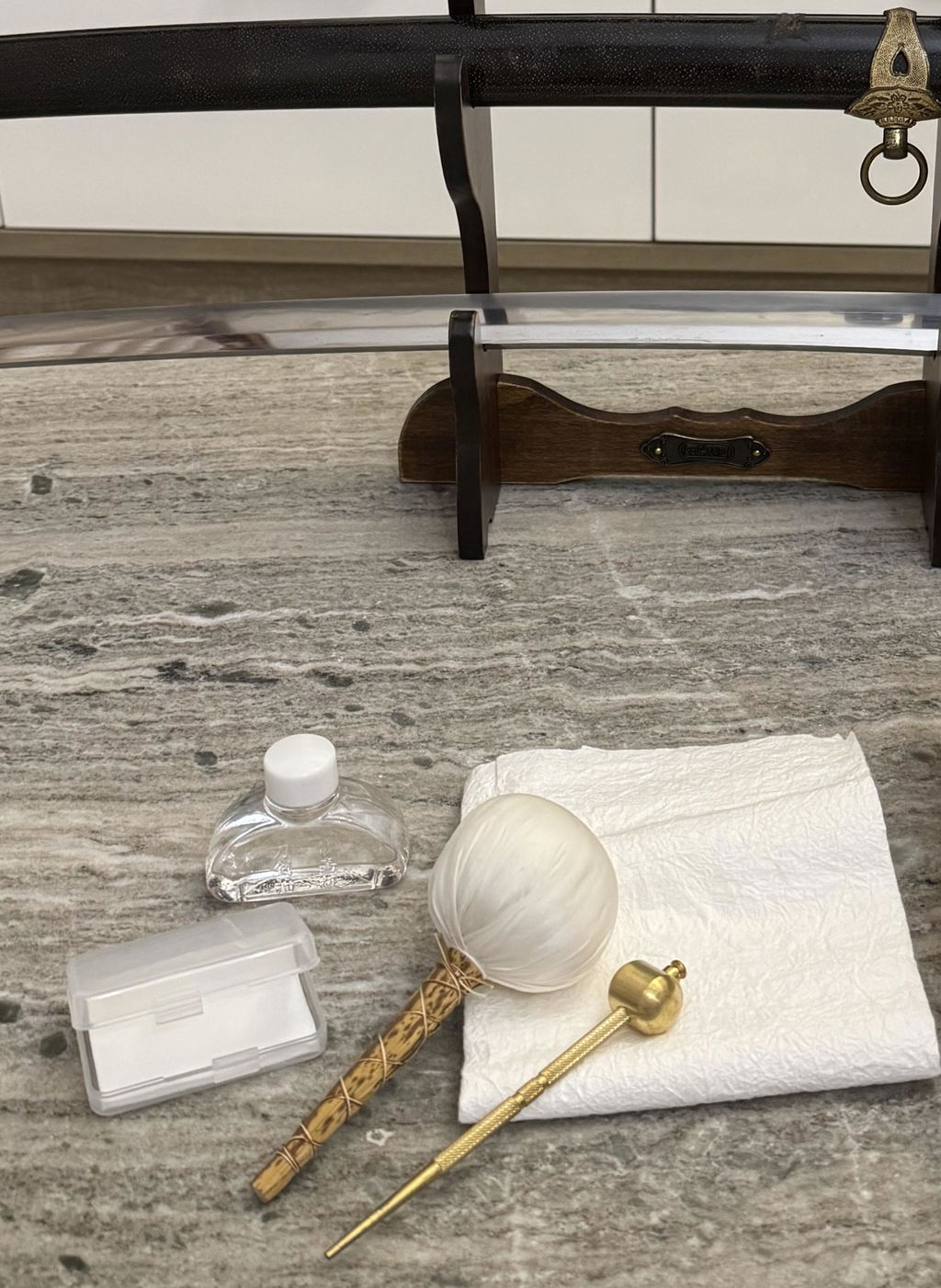
- Gentle Cleaning: If dust or debris accumulates, use a soft, dry cloth to wipe the habaki. For more stubborn grime, a very lightly oiled cloth (using traditional sword oil like choji oil) can be used, followed by a dry cloth to remove any excess. Avoid abrasive materials or harsh chemicals that could damage the metal, its delicate patina, or etchings.
4.2 Addressing Common Habaki Issues
Over time, certain issues may arise with a habaki, especially with frequent use, improper handling, or unsuitable storage conditions. Addressing these promptly is key to preventing further damage to the sword and maintaining its proper function.
| Common Issue | Description | Solution/Action |
|---|---|---|
| Loose Fit in Saya | The habaki no longer holds the blade securely within the saya, allowing it to rattle or fall out easily. This can be due to wear on the saya's koiguchi (mouth) or the habaki itself. | A professional swordsmith or experienced polisher can assess and often rectify this. Solutions might include shimming the habaki, adjusting the saya's koiguchi, or, in rare cases, replacing the habaki. Do not attempt DIY adjustments without expert knowledge, as this can damage the blade, saya, or the habaki itself. |
| Corrosion or Rust | Discoloration, pitting, or rust spots appearing on the habaki's surface, particularly common on copper habaki if exposed to moisture or acidic environments. | For minor surface corrosion, gentle cleaning with a very fine abrasive (like a specialized metal polish for copper, if applicable) might be possible, but care must be taken to preserve any existing patina. For significant rust, consult a professional conservator or polisher. Prevention is paramount: keep the sword in a stable, low-humidity environment and ensure the habaki is clean and lightly oiled. |
| Dents or Deformations | Physical damage to the habaki's shape, which can impair its fit or function. This often occurs from impact or mishandling. | This almost always requires the attention of a skilled swordsmith or craftsman. Attempting to reshape it without proper tools and expertise can worsen the damage or irrevocably affect the blade's fit within both the habaki and the saya. |
| Scratches on Blade | Fine scratches appearing on the blade where the habaki meets the steel, often due to grit trapped between the habaki and the blade, or a poorly fitted habaki. | Ensure the area where the habaki meets the blade is always meticulously clean before assembly or sheathing. If the habaki is loose, address the fit issue as described above. Regular cleaning and ensuring a proper fit prevent abrasive particles from causing irreversible damage to the blade's finish. |
4.3 Proper Storage Considerations
The environment in which a Japanese sword is stored significantly impacts the habaki and the overall sword preservation. Store swords in a climate-controlled environment with stable temperature and humidity to prevent corrosion and wood expansion/contraction that can affect saya fit. Extreme fluctuations can lead to the saya shrinking or swelling, altering the habaki's snugness. When storing long-term, ensure the habaki is clean, free of moisture, and lightly protected with a thin film of choji oil. Some collectors prefer to store the sword slightly unsheathed to allow for air circulation, though this should be done with caution to prevent accidental damage or exposure to contaminants.
5. Conclusion
In the intricate world of the Japanese sword, where every component holds significance, the habaki stands as a testament to functional design and masterful craftsmanship. Far from being a mere aesthetic flourish, this small yet crucial collar performs a multitude of vital roles that directly impact the sword's integrity, safety, and longevity.
We've explored how the habaki securely seats the blade (nagako) within its scabbard (saya), preventing accidental dislodgement and ensuring a snug fit. It acts as a critical buffer, protecting the blade's delicate cutting edge (ha) from wear and abrasion against the wooden saya, a common issue in frequently drawn swords. Furthermore, its precise fit provides essential shock absorption and stability, contributing to the overall balance and handling of the nihonto, whether it's a katana, wakizashi, or tanto.
The meticulous selection of materials, typically copper or its alloys, and the bespoke fitting process underscore the habaki's indispensable nature. A poorly fitted habaki can compromise the entire sword, leading to damage, instability, or even danger. Therefore, understanding and appreciating the habaki is to grasp a fundamental aspect of Japanese sword design and preservation. It is a humble yet profoundly important component that bridges the gap between the blade and its mountings (koshirae), ensuring the bushi's weapon remains a reliable and revered object for generations.

Leave a comment: