

The Japanese sword is a weapon known as the soul of the samurai. Yet, many people, both in Japan and abroad, are fascinated by its beauty, making it different from other antiques. In particular, if you are a fan of Japanese history, a fan of historical dramas, or someone who has become interested in Japanese swords through anime, you have probably at least once wanted to own a real Japanese sword.
On the other hand, the reality of how to acquire and own a Japanese sword is not well known even here in Japan. For example, we are often asked questions such as, "To obtain a Japanese sword, do you need a license?" or "You have to take a test, right?" Of course, neither a license nor an examination is required to purchase a Japanese sword. Under Japanese law, anyone can own a Japanese sword by simply changing the owner's name once it is purchased.

In this article, we would like to explore the question of how to purchase a Japanese sword for those who are interested. Please read to the end of this article so you will have all the information you need to know in order to purchase a Japanese sword.
Three points to decide on before purchasing a Japanese sword
First, there are three things you need to decide before purchasing a Japanese sword. By making these decisions, you will be able to purchase the Japanese sword of your choice without much confusion.
1. What is your budget?

The price of Japanese swords varies widely depending on the period, type, and rank of the swordsmith. Some inexpensive swords start at around 200,000 yen for the full-length katana while others range in price starting from 5 million yen. It is first important to determine how much money you wish to spend on a Japanese sword. If you are importing a Japanese sword directly from Japan, you will be obligated to pay import taxes in addition to the price of the sword and shipping costs. The higher the purchase price, the higher the amount of taxes will be levied, so it is important to research import tax rates when budgeting.
2. What purpose will you use the sword for?
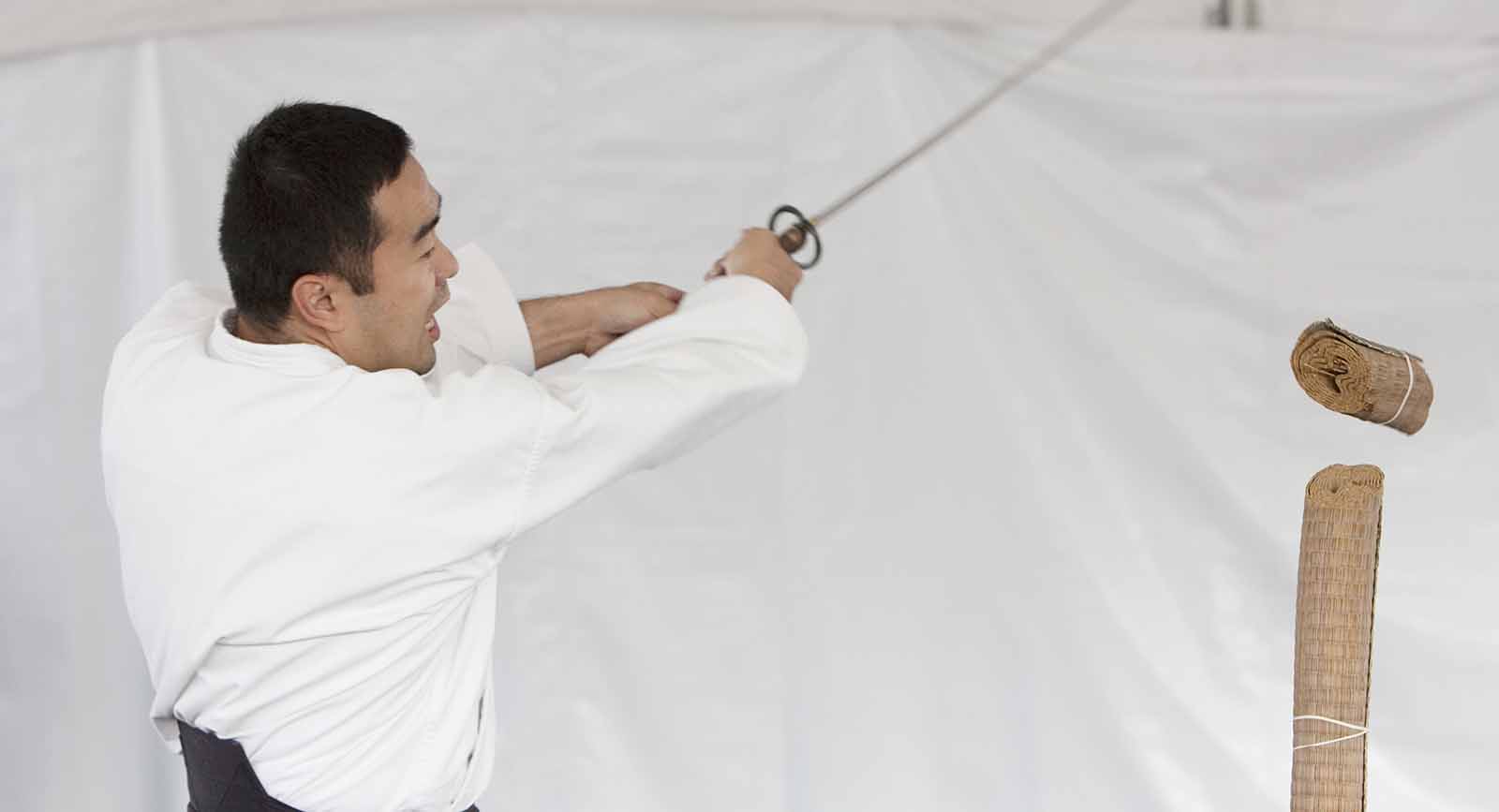
Next, you must be clear about what you want to do with the sword you have purchased. For example, do you want to display the sword in your room and appreciate it, or do you want to use it as a practice tool, or do you want to give it as a gift to a friend who likes swords? In addition, you need to consider whether you will have enough space to display the sword in your room, whether you should buy a showcase for safety reasons, and how you will control the humidity. Even if you are buying a sword for practice, the type of sword you should buy will differ between iai for demonstration purposes and batto for actual cutting. You must make a clear decision on how you will use the sword.
3. The era in which it was produced, the swordsmith, and other aspects of the sword's appearance

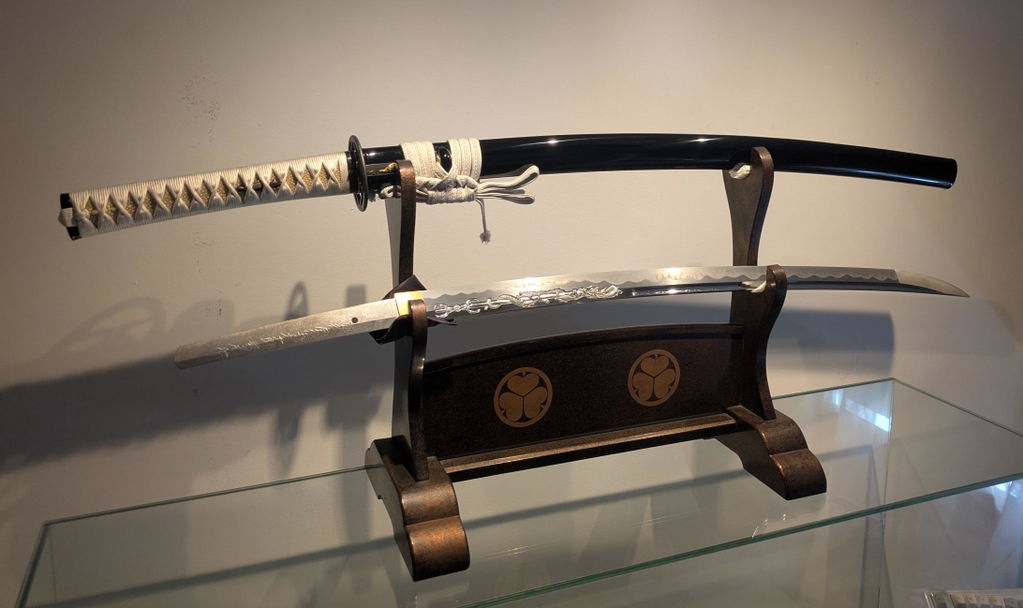
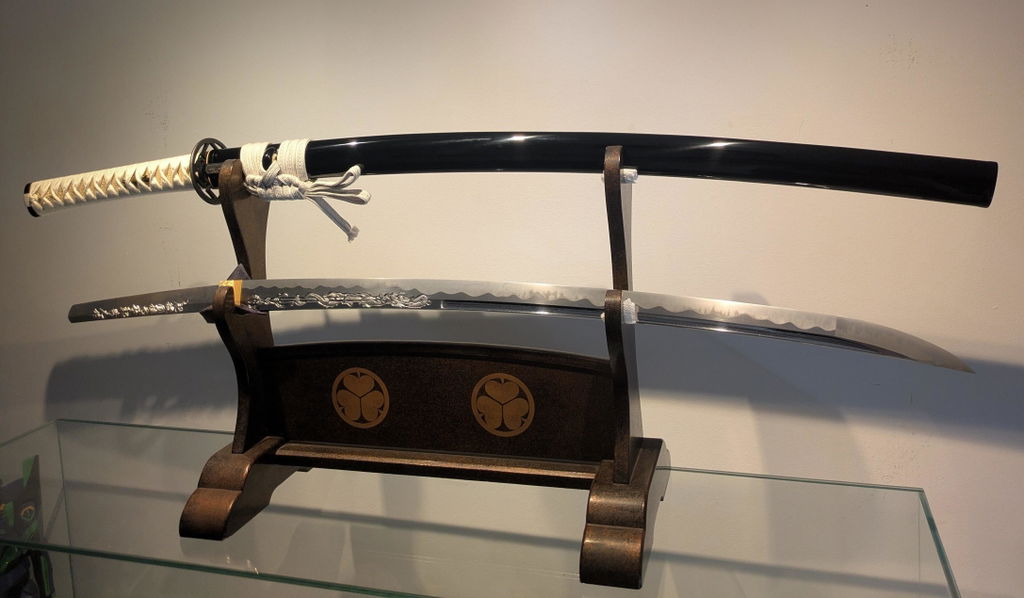
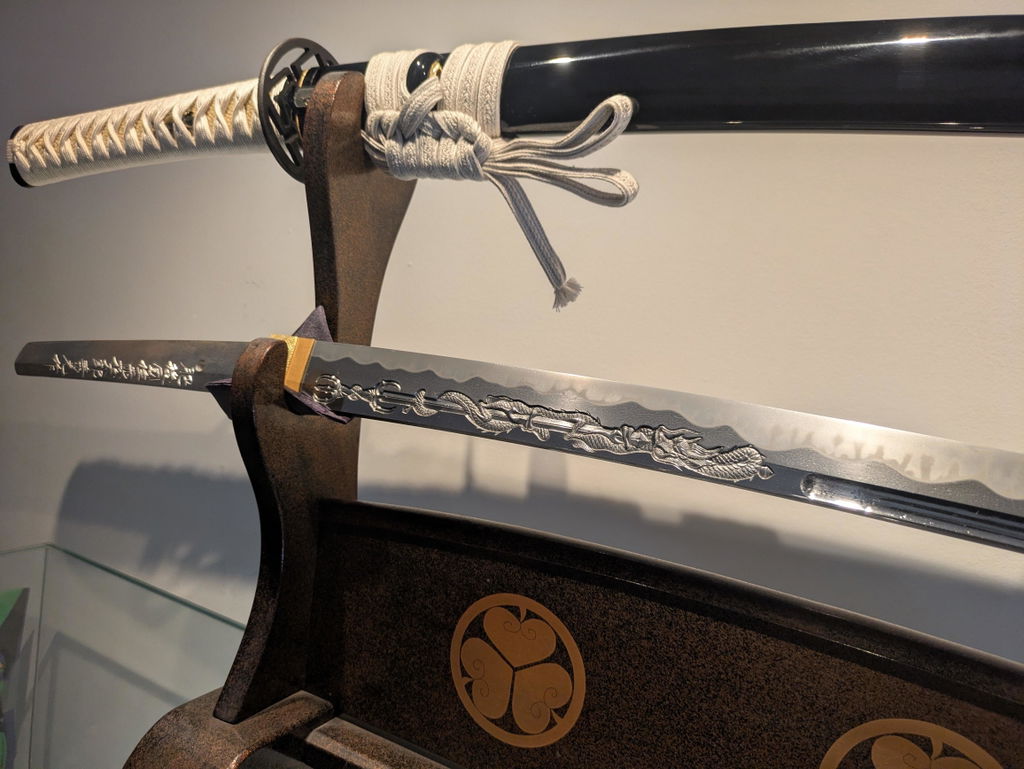
Once you have decided on the purpose for which you will use the sword, the next step is to decide what kind of sword you want in order to achieve that purpose. There are many types of Japanese swords, and there are many factors that determine the price, such as the period in which the sword was made, the swordsmith, the state of preservation, and whether or not the sword has a certificate of authenticity. Therefore, it is best to make a list of the condition of the sword, whether it is unsigned or in shirasaya fitting, to minimize hesitation when it comes time to purchase.
About the Price of Japanese Swords
The price of a Japanese sword is determined by a variety of factors.
- The rank of the swordsmith
- Condition
- Blade length
- Whether the sword has a certificate of authenticity
1. Famous swordsmiths are expensive

Naturally, swords made by famous swordsmiths are more popular and more expensive. This is true not only for antique swords but also for modern swordsmiths. This rank is known as "iretsu(rank row)" and is a rating order in which swordsmiths are ranked according to the superiority of their skills. In the case of antique swords, workmanship, and cutting ability are the subject of evaluation. There are several books that rate swords and the swordsmiths selected differ according to the period in which the book was published.
2. The better the state of preservation, the higher the price

As with other antiques, Japanese swords in good condition are more expensive. Those that are not in good condition are less expensive. While those that are not in good condition are less expensive. In addition, swords are also ranked according to their condition in the appraisal report which are items introduced later in this article. However, there are also some flaws such as arrow and kirikomi flaws, which are still considered to be flaws but are still appreciated.
3. The longer the blade length, the higher the price

The price of a Japanese sword also depends on the blade length. The longer the blade length, the higher the price will be. Generally, swords with a blade length of 60 cm or longer are classified as katana or tachi while those with a blade length of 30-60 cm as wakizashi, and those with a blade length of 30 cm or shorter as tanto.
Although the value is not determined by the blade length alone, the prices of tachi and uchigatana tend to be higher and the prices of wakizashi are about 30% of those of tachi and uchigatana. The prices of tanto are about half of that of katana. Of course, wakizashi and tanto with shorter blade lengths are often less expensive.
First-time buyers or those who do not have a very large budget for a Japanese sword may consider buying wakizashi or tanto.
4. The more authenticate, the higher the price
Like other works of art, many Japanese swords have been evaluated by the Japan Government as "National Treasures," "Important Cultural Properties," or "Important Art Objects," but these are generally not available for purchase. In addition to these, swords are appraised by The Society for Preservation of Japanese Art Swords, a public interest incorporated foundation, and classified into four ranks: "Tokubetsu Juyo Token (Special Important Swords)," "Juyo Token (Important Swords)," "Tokubetsu Hozon Token (Special Preserved Swords)," and "Hozon Token (Preserved Swords), " for which an official certificate of authenticity is issued. Prices and quotations vary depending on these appraisals.
Hozon Token (Preserved Swords)

A "preserved sword" is a sword that was made before the Edo period and is still in good condition, even if it has some scratches or repairs or, unsigned but with the date of production, country, and lineage legible. Swords made after the Meiji and Taisho eras are considered to be preserved swords if they are well-made and of excellent workmanship. However, works by living artists are not considered for this category. The price of a preserved sword is usually in the range of 100,000 to 1,000,000 yen.
Tokubetsu Hozon Token (Specially Preserved Swords)

“Special Preservation Swords" are swords that are of excellent workmanship and are in a good state of preservation. Even swords made in the Meiji and Taisho periods may be selected for special preservation if they are masterpieces. However, even if the workmanship is excellent, swords that are aesthetically unappealing, such as those with scratches, repairs, or noticeable rust, are not eligible for this category. The price of a specially preserved sword is said to range from 300,000 yen to 3,000,000 yen.
Juyo Token(Important Swords)
“Important Swords" are swords from the Heian period to the Edo period that are in particularly good condition. In principle, swords from the Muromachi and Edo periods must be unmarked and undamaged, but swords from the Nanbokucho period (1392-1568) and earlier are selected as Important Swords because of their historical significance, even if unmarked. The market price of a sword is about 1 million yen to 5 million yen.

Tokubetsu Juyo Token (Special Important Swords)
“Special Swords of Importance" are swords that are considered masterpieces and in excellent condition. It is considered to be of equal value to the top level of swords designated as Important Art Objects by the Japanese government. Furthermore, swords that have extremely high material value and are considered equivalent to the higher level of nationally recognized Important Art Objects, or swords that are considered equivalent in value to nationally designated Important Cultural Properties, are considered to be highly valuable and thus quite expensive. The market price of a Special Important Sword is estimated to be 5 to 10 million yen or more.
Tokubetsu Kicho Token (Specially Precious Swords) and Kicho Token (Precious Swords)

The Society for Preservation of Japanese Art Swords began its certification system in 1948. In the beginning, excellent swords were designated as " Precious Swords" and even higher quality examples as "Specially Precious Swords." In May 1982, these standards were abolished, and the current system was adopted in July of the same year. Swords accompanied by a certificate of authenticity as a "Specially Precious Sword" or "Precious Sword" are subject to a different standard of authenticity than the current system of recognition.
Mumei (Unsigned) and Mukantei (Not Appraised) Swords

A sword without a certificate of authenticity is not worthless. Also, the fact that it is unsigned, or that it is unknown who made it, does not mean that its value itself is diminished. Each sword has survived through a long period of time and history, and fortunately, still exist today. Each and every one of these swords has survived to the present day while being passed on to various people. That alone makes them a witness to history. It is very important that you value your swords without worrying only about their financial value. However, if you really want to know the value of a sword, why not apply for an appraisal by the Society for Preservation of Japanese Art Swords? This may prove that the unmarked sword was in fact made by a very famous smith.
Cautions for Purchasing Japanese Swords
In Japan
To own a Japanese sword in Japan, you are required by law to carry a "Firearms and Swords Registration Card" with the sword. The certificate is issued by the board of education of each prefecture, which is also required to register the owner's name. Therefore, if you purchase a Japanese sword, the first thing you must do is change the owner's name within 20 days of purchase or inheritance. Notification forms for changing the owner of the registration certificate can be obtained from the store where you purchased the sword or from the website of the Board of Education in each prefecture.
If you are in possession of a sword without the registration card, you are in violation of the "Firearms and Swords Control Law" and will likely be subject to legal punishment. If you purchase a sword that does not have a Firearms and Swords Registration Certificate on an auction site, you will not only be subject to punishment but your sword will also be confiscated.
Overseas
In order to export a Japanese sword out of Japan, it is necessary to have the Agency for Cultural Affairs certify that the sword in question is not a National Treasure or Important Cultural Property. It takes between two weeks and two months to obtain this certification (Export Certificate of Japanese Antiques). Therefore, even if you purchase a Japanese sword, you cannot immediately take it out of Japan. If you come to Japan as a tourist and decide to buy a Japanese sword to take home with you, please understand that you will not be able to bring it back with you because you do not have an Export Certificate of Japanese Antiques. When you export or check your Japanese sword with an airline, it must be accompanied by an Export Certificate of Inspection for Antiques. Also, the Firearms and Swords Registration Certificate, which is required in Japan, must be returned to the Board of Education before the sword can be taken out of Japan.
General
When purchasing a Japanese sword, whom you purchase it from is a very important factor. It may be possible to obtain a sword at a lower price on an auction site than at a sword store, but you may want to make sure that the seller is truly knowledgeable about Japanese swords. There are many vendors on the market who sell swords mass-produced outside of Japan as Japanese swords. When purchasing Japanese swords from a sword store, make sure that the store is trustworthy. You may want to determine this based on payment methods, location, operating company, and reviews.

Want to buy authentic Samurai swords directly from Japan? Then TOZANDO is your best partner!
Learn more: how to tell if a Japanese sword is real, how to avoid dishonest dealers, and expert tips for buying safely. Browse our authenticated antique Japanese swords.
Buying safely: reputable dealers, auctions, and avoiding scams
Knowing what to buy is only half the task; knowing where and from whom is just as important. Most costly mistakes come not from the blade itself but from the transaction around it.
Where to buy: established dealers vs. open marketplaces
A reputable, established dealer who provides clear provenance, authentication papers, and a sensible return policy is almost always the safer route than an anonymous listing on a general auction site or online marketplace. Open auctions can hold genuine bargains, but they also concentrate the risk — misdescribed condition, hidden flaws, and outright forgeries are far more common where there is no accountable seller behind the item.
Do your due diligence
Before committing, research the seller (history, reviews, and reputation in the collecting community) and ask for detailed photographs of the parts that matter most — the tang (nakago) and its signature (mei), the temper line (hamon), and the overall condition. Ask directly about papers: a certificate from a recognised body such as the NBTHK adds real assurance, as we explain in our guide to whether a sword without a certificate is worthless.
Red flags: the tactics of dishonest sellers
A handful of warning signs recur again and again. Be wary of a price that seems too good to be true, of vague or missing provenance, of a forged or added signature (gimei), of a seller reluctant to show clear photos of the bare tang, and of pressure to decide quickly. “Restored” or heavily polished blades can also hide serious fatal flaws. When a sword is presented as the work of a famous smith, treat the claim with extra caution and insist on evidence.
For the details of telling a genuine blade from a forgery, see our guides to gansaku, the fake Japanese sword, and to identifying an authentic samurai sword from a clever forgery.

2 comments
Mar 04, 2025 • Posted by Tozando Katana Shop
Thanks for the comment. You are best suited to purchase a katana for your batto.
Mar 10, 2023 • Posted by Ervin Velez
I will be using the sword for Tatami cutting
Leave a comment: