

A Japanese sword is the most meaningful gift most people will ever give or receive. It is not a gesture — it is a statement. It says: I know what you value, I have taken the time to understand it, and I have found something worthy of that understanding. But buying a Japanese sword for someone else is also more complex than most gifts — it involves legal considerations, personal taste, collection context, and a quality standard that is easy to get wrong without guidance. This guide covers everything you need to know before you surprise someone with a blade from Japan.
Before Anything Else — What Makes This Gift Different
Most gifts can be chosen with confidence based on general knowledge of someone's tastes. A Japanese sword is different in ways that matter practically:
It is a cultural artifact, not a product. An authentic nihonto is the product of a specific legal and cultural framework — made in Japan, by a licensed smith, from traditional materials, certified by the NBTHK. This definition has practical implications for the gift-giver: the "Japanese sword" your recipient wants is not the same category of object as the "Japanese sword" that appears in most online searches, which returns predominantly mass-produced replicas.
It may be their most valuable possession. A genuine authenticated sword is likely to be the single most valuable object your recipient owns, outside of property or vehicles. This means it comes with responsibilities — storage, care, insurance — that they should be prepared for rather than surprised by.
It has legal dimensions that vary by country. Sword ownership and import laws vary significantly between countries. Before purchasing, confirm that the sword can be legally imported into the recipient's country and that your recipient is aware of any local storage or transport requirements. Our full country-by-country legal guide is available on the blog.
It takes 4–6 weeks to arrive. Unlike most gifts, a sword shipped from Japan requires an Agency for Cultural Affairs export permit that takes approximately two weeks to process. Plan well ahead of any specific occasion — ideally six to eight weeks before the date you want it delivered.
The Occasions — When a Japanese Sword Is the Right Gift
There are specific moments in life when a Japanese sword is not merely an appropriate gift but the most fitting one possible. These are the occasions where the scale of the gesture matches the scale of what is being marked:
A Japanese sword given to mark a significant achievement carries the weight of the occasion perfectly. The Bushido values embedded in the tradition — discipline, perseverance, excellence pursued over years — mirror exactly what a major achievement represents. This is the gift that says "I recognise what this cost you."
Recommended: A modern shinsakutō by a licensed smith — complete provenance from the forging date, in perfect condition, symbolically representing a new beginning.
A milestone birthday is the most common occasion for a Japanese sword gift — particularly for someone who has spent years with a passion for Japan, martial arts, or sword collecting without yet making the purchase themselves. The gift says: the time for this is now, and I am making it possible.
Recommended: Match budget to significance. A 50th or 60th birthday warrants a Tokubetsu Hozon-certified piece; a 40th may suit a well-documented entry-level purchase.
In Japanese culture, swords have historically been exchanged between families as gifts of the highest significance — objects that embody commitment, honour, and the permanence of a bond. A sword given between partners carries exactly this weight. For a significant anniversary — 10th, 20th, 25th, 30th — it is among the most fitting gifts imaginable.
Recommended: An antique with historical depth — a blade that has its own story, given to add to someone else's.
Retirement is the moment that most directly echoes the samurai tradition of the sword as a mark of honour earned through decades of commitment. A Japanese sword given at retirement — particularly to someone in the military, law enforcement, medical profession, or any field defined by dedication and service — is a gift that will be treasured for the rest of their life.
Recommended: A piece with Tokubetsu Hozon or higher certification — something that represents the highest quality their interests merit.
For someone who has reached a significant rank in kendo, iaido, iaijutsu, or another Japanese sword art — particularly a high dan grade or a teaching qualification — a sword is the natural expression of that achievement. Many serious practitioners spend years working toward the level where owning a genuine nihonto feels appropriate. A gift that arrives at exactly that moment is unforgettable.
Recommended: A modern shinsakutō suited to practice as well as display — or, for very advanced practitioners, an antique that connects them to the historical tradition they study.
Perhaps the most meaningful gift of all: the first authentic nihonto for someone who has spent years fascinated by Japanese sword culture, read everything, studied deeply, and never quite made the purchase. You know who this person is. The gift removes the hesitation and gives them the beginning of something they have long wanted.
Recommended: Consult with our specialists — this requires more contextual knowledge about the recipient than any other gift type.
What to Find Out Before You Buy — The Four Questions
Buying a sword for someone who knows about nihonto is more demanding than buying for someone who does not. An informed recipient will notice immediately whether what they have received reflects genuine understanding of their interests — or a well-intentioned but undifferentiated purchase. These four questions guide you toward the former.
-
Do they already collect? If so, what do they own?
This is the most important question. Someone who already owns two Edo-period antiques with Hozon certification will have very specific ideas about what would complement their collection — a Kamakura piece would be extraordinary; a second Edo piece less so. Someone who has never owned a nihonto has complete freedom of first impression. Understanding where your recipient is in their collecting journey shapes every subsequent decision.
Ask indirectly: "Have you ever thought about which period interests you most?" "If you could own any kind of nihonto, what would it be?"
-
Antique or modern — which speaks to them more?
Some people are drawn to the historical depth of antiques — the idea of owning a blade that was forged seven centuries ago. Others are more moved by the idea of a blade forged by a living master, with complete provenance from the day of creation. This is a matter of personal philosophy, not knowledge level — and it is worth finding out before purchasing.
Listen for: Do they talk about historical smiths and periods? Or about contemporary masters and living craft? The answer is usually already in how they speak about swords.
-
What is their living situation — do they have a space for it?
A Japanese sword requires appropriate storage, ideally a dedicated display space, and climate awareness. An apartment-dweller with no display space and no humidity management will not be well-served by a surprise acquisition that they have nowhere to properly keep. This does not mean the gift is wrong — but it may mean that a conversation about display before the sword arrives makes the gift more complete.
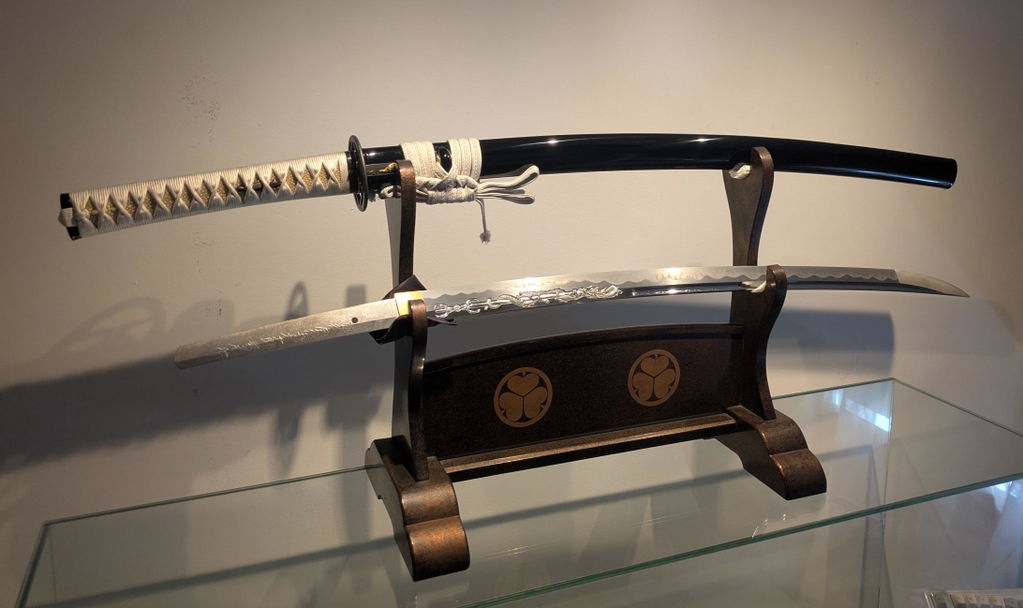
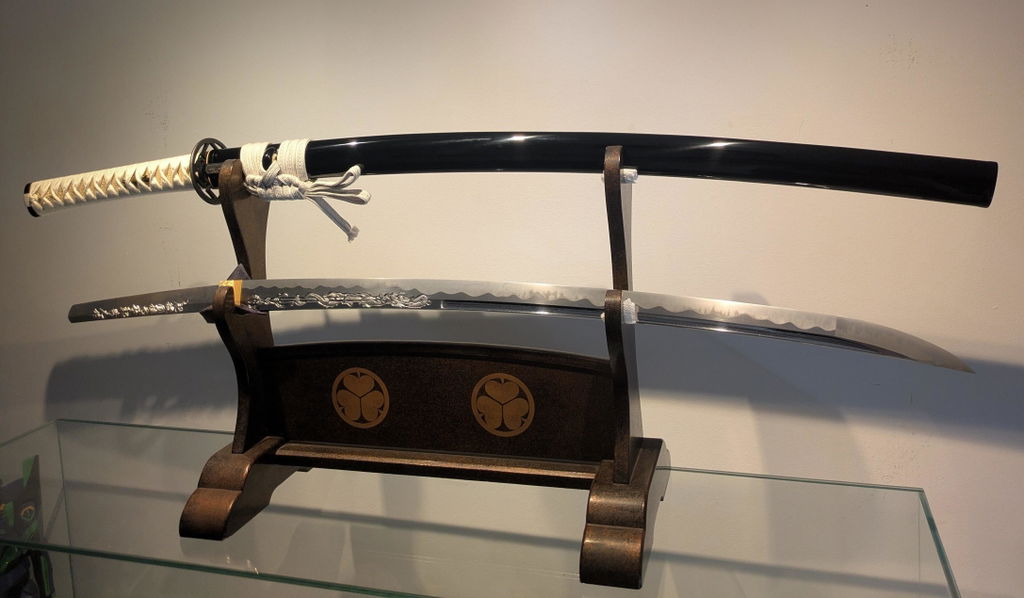
Consider including: A quality katana-kake display stand with the purchase — it signals that you have thought about the whole picture, not just the blade.
-
Do you know their country's import requirements?
Legal requirements for sword ownership and import vary significantly by country. The US and Canada are permissive; the UK requires the sword to qualify under the traditional manufacture exemption (which all genuine nihonto do); Australia's requirements vary by state; Germany and France have specific but manageable requirements. Confirm the situation for your recipient's location before purchasing — and if in any doubt, contact us for country-specific guidance.
Note for Australia: Victorian residents may require a specific permit. Contact us before purchasing for a recipient in Victoria.
It is the one that shows you understood what they actually wanted."
Gift Tiers — What Each Budget Delivers
The ideal gift for a first-time recipient — whether they are entirely new to nihonto or have been fascinated for years but never taken the step. A modern shinsakutō by a licensed Japanese smith gives them a genuine, NBTHK-certified, traditionally forged blade with complete and irrefutable provenance. No attribution uncertainty, perfect condition, and the knowledge that the blade was made by a living craftsperson in the same tradition that produced the greatest swords in history.
This tier is also the most appropriate for recipients in countries with more stringent import requirements — the complete modern provenance documentation makes customs clearance as straightforward as possible.
The range where a gift becomes genuinely significant — where the recipient will understand immediately that serious thought, knowledge, and investment went into the choice. Both antique pieces with solid NBTHK certification and premium modern shinsakutō by recognised smiths are available at this level. An Edo-period wakizashi with Tokubetsu Hozon papers at this budget is among the most thoughtful and historically resonant sword gifts available at any price.
For a recipient who has expressed specific interest in antiques, this tier opens the door to pieces with genuine historical depth and specific school attribution. For those who prefer modern work, a smith with a strong competition record at this level produces blades that will be cherished for generations.
At this level, you are giving someone a piece that will likely be the most significant object they own — a blade with specific named smith attribution, exceptional documentation, and the kind of artistic and historical quality that collectors spend years working toward. A retirement gift at this level, a milestone birthday for a serious collector, or a gift between long-term partners who share a deep passion for Japanese culture — these are the occasions where this investment is not excessive but exactly right.
For gift purchases above $15,000, we strongly recommend a consultation with our specialists before selecting — the specific choice matters greatly at this level, and our team can help identify a piece whose character fits your recipient's specific tastes and collection context.
To Surprise or Not to Surprise — An Honest Assessment
or is involvement a better gift?
For most gifts, surprise is part of the pleasure. For a Japanese sword, the calculus is more complex — and honesty serves everyone better here.
A knowledgeable recipient who already collects will almost certainly have strong preferences about period, school, certification level, and sword type that are impossible to reliably infer from outside. Surprising them with a blade that is adjacent to but not quite what they would have chosen themselves is a common outcome of well-intentioned gift purchases in this category. The gift is appreciated — but not as fully as it could be.
The most meaningful gift for a serious collector is often involvement in the selection. Consider this alternative: present the gift as a dedicated budget and the promise of working together with Tozando's specialists to choose exactly the right piece. A beautiful letter or card explaining what you are offering, with the Tozando contact details and a stated budget, can be more moving than the sword itself — because it says "I want you to have exactly what you want, and I am going to make that possible."
For a recipient who is new to nihonto and has no existing preferences, a surprise works perfectly — and our specialists can help you choose something that covers all the right bases without requiring inside knowledge.
The Gift Purchase Checklist
- Plan 6–8 weeks ahead of any specific date. The export permit process takes approximately 2 weeks; allow additional buffer for shipping and any customs processing.
- Confirm the recipient's country has no unusual sword import restrictions. Contact us if in any doubt — we will confirm for your specific destination.
- Do not purchase below $2,500. Any "authentic Japanese sword" below this price is not what it claims. There are no exceptions.
- Insist on original NBTHK papers accompanying the physical sword. Photocopies are not acceptable.
- Tell us it is a gift when ordering. We can include a handwritten gift note and ensure presentation is appropriate for the occasion.
- Consider a display stand as part of the gift. A quality katana-kake shows you have thought about the whole experience, not just the acquisition.
- For serious collectors — consider involving them in the selection rather than surprising them with a specific blade.
- Register the sword for insurance immediately upon delivery. A blade at this value should be listed as a specified high-value item on their contents policy.
we will find the right blade
Tozando's English-language specialists have helped collectors across 30+ countries choose meaningful gifts for the people they care about. Tell us the occasion, your budget, and what you know about your recipient's interests — we will do the rest. Every piece ships from Kyoto with complete NBTHK certification and full export documentation.
In Closing — The Gift That Lasts a Thousand Years
A Japanese sword, properly chosen and properly given, is not a gift that will be forgotten or replaced. It will be displayed, maintained, and passed on. It will be the object that the recipient remembers receiving for the rest of their life — and that their children may one day hold and wonder about.
That is what makes getting it right so important — and what makes the effort of finding out enough to choose correctly so worthwhile. The sword is the statement. But the thought behind it is the gift.
Whatever the occasion — tell us about it. We will help you find something worthy of it.
Note: Delivery timelines of 4–6 weeks reflect standard Tozando international shipping procedure including Agency for Cultural Affairs export permit processing. For time-sensitive occasions, contact us as early as possible. Legal requirements for sword import vary by country and jurisdiction; always confirm requirements for your recipient's specific location before purchasing. Price ranges are approximate and reflect general market conditions as of 2026.

Leave a comment: