

The most important decision you will make when buying a Japanese sword is not which sword to buy. It is who to buy it from. The sword is only as trustworthy as the dealer behind it. Choose the wrong dealer, and the finest NBTHK papers, the most convincing photographs, and the most compelling attribution mean nothing — because all of it can be fabricated. Choose the right dealer, and every question you have will be answered honestly, every document will be original, and every sword will be exactly what it is claimed to be.
This guide gives you a precise, actionable framework for evaluating any Japanese sword dealer — whether based in Japan or abroad — before you commit a single dollar. It is drawn from the hard-won experience of collectors who have seen both sides: the dealers who protected their investment, and the dealers who destroyed it.
Why the Dealer Is More Important Than the Sword
In most collecting fields, the object speaks for itself. With Japanese swords, the dealer speaks first — because the object cannot be adequately evaluated without genuine expertise, and because the documentation that establishes authenticity can be fabricated by anyone with a scanner and a printer.
A trustworthy dealer is not merely a seller. They are an authenticator, an educator, a legal intermediary (handling export and import documentation), and a guarantor. An experienced dealer not only sources authentic swords, but carefully curates pieces based on condition, quality, and value — something that can never be guaranteed through private sales or online marketplaces. When you combine NBTHK certification with a trusted dealer, the risk of making a costly mistake becomes significantly lower.
The inverse is equally true. A dealer who lacks expertise, transparency, or integrity can cause financial harm that no authentication paper will undo. Your choice of dealer is arguably the most critical decision in the entire purchase process.
8 Signs of a Trustworthy Dealer
-
1A verified physical presence — not just a website
Legitimate dealers have a real, verifiable address — ideally a physical shop or office that can be confirmed. Use Google Maps Street View to check that the address corresponds to an actual commercial premises. A dealer whose only presence is a website and a contact form is a significant risk, regardless of how professional the site appears.
In Japan, legitimate dealers are registered with local commerce bureaus and are publicly verifiable. Ask for a business registration number. Any dealer who refuses to provide a physical address and verifiable business credentials should be disqualified immediately — this single check eliminates 90% of fraudulent operators.
-
2Active NBTHK affiliation or membership
The NBTHK (Nihon Bijutsu Token Hozon Kyokai — Society for the Preservation of Japanese Art Swords) is the internationally recognised gold standard for Japanese sword authentication and preservation. A dealer with active NBTHK affiliation operates within a framework of accountability, has access to direct appraisal services, and is known — by name — within the tightly networked Japanese sword community.
Membership can be verified directly with the NBTHK. Dealers who cite NBTHK affiliation should be able to demonstrate it specifically — not merely reference the organisation's existence. Similarly, membership in the NTHK (Nihon Token Hozon Kai) or accreditation by other recognised nihonto bodies is a positive indicator. Affiliation means accountability.
-
3A long and consistent track record
Prioritise dealers who have been in business for many years and have a consistent, positive track record. Search for online reviews, testimonials, and discussions in collector forums — particularly the Nihonto Message Board and Japanese Sword Index forums. Search for the dealer's name combined with terms like "review," "scam," or "experience" in both English and Japanese.
Look for mentions in collector reference books and check whether the dealer's name appears in association with auction houses such as Christie's or Bonhams — established auction houses work with established dealers. Longevity in the nihonto market is not accidental. It reflects a consistent standard of quality and integrity that repeat customers — and the collector community — have validated over time.
-
4Complete, unedited photography of every piece
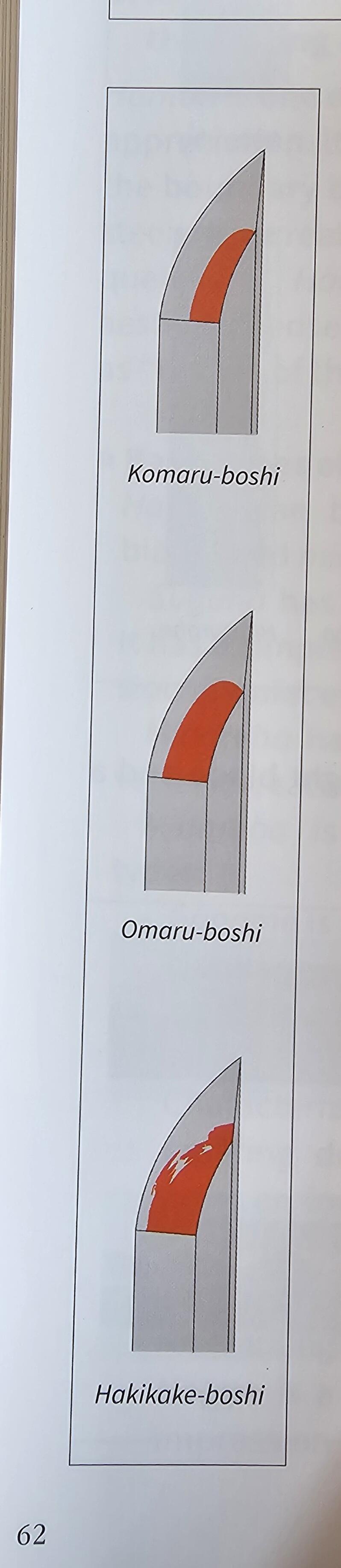
A trustworthy dealer provides comprehensive, high-resolution photography of every sword they offer: full blade from both sides, close-ups of the hamon under raking light, the kissaki (tip), the boshi, the full nakago (tang) including any signature, the habaki, and all fittings. Reputable dealers routinely provide 30 or more detailed images on request — not because they are asked, but because transparency is their standard practice.
Blurry images, stock photography, images that avoid the tang, or any reluctance to provide additional photographs upon request are disqualifying. The tang is the primary authentication site for any nihonto. A dealer who will not photograph the tang has something to hide.
-
5Original documentation — always
Every authentic sale should include: original NBTHK or NTHK certification papers (never photocopies); a written condition report with precise measurements; and for pieces exported from Japan, the original Agency for Cultural Affairs export permit. Each certificate must contain crucial details about the blade including its measurements, the swordsmith where signed, and a quality assessment — with photographs that match the actual sword. Certificate numbers must be verifiable.
Fake NBTHK certification exists. Verify the quality of the certificate — paper weight, presence of official stamps, printing quality — and confirm that all details match the physical blade exactly. Any dealer who offers photocopies as a substitute for originals, or who claims originals are "unavailable," should be disqualified without exception.
-
6Genuine expertise — and willingness to share it
A trustworthy dealer does not merely sell swords — they educate the buyer. They can explain the period, school, and stylistic characteristics of each piece in their inventory. They welcome technical questions about hamon classification, steel grain characteristics, and attribution methodology. They can discuss the specific appraisers who certified a blade and the basis for that certification.
Crucially, a knowledgeable Japanese dealer will not sell a misattributed piece, because their reputation in the tightly networked Japanese sword community depends on accuracy. Their credibility is their most valuable business asset. A dealer who deflects technical questions, uses vague language about attribution, or seems unfamiliar with the specific pieces they are selling is either a generalist or a fraudster — neither is acceptable.
-
7An unconditional authenticity guarantee — in writing
A trustworthy dealer stands behind every sword they sell with a clear, written authenticity guarantee. This guarantee should state explicitly that if the sword is found by independent appraisal to be other than described — in terms of attribution, period, or condition — the dealer will make it right. Get this commitment in writing before any payment is made.
Note that customer-initiated returns or cancellations are not standard practice among specialist Japanese sword dealers, given the nature of the goods and the export processes involved. What matters is the authenticity guarantee: any dealer unwilling to provide a written authenticity guarantee is signalling that they are not confident in what they are selling — and that is disqualifying.
-
8Verified references from international buyers
For purchases over $5,000 from any dealer you have not worked with before, ask for references — contact information for previous international buyers who can speak to their experience. Legitimate dealers happily provide references. A dealer who hesitates, deflects, or declines is either lacking a reference base or unwilling to be held accountable to one.
In addition to direct references, check collector forums in the target language: experienced collectors are generous with both warnings and recommendations. A dealer mentioned positively across multiple independent forums over several years is a dealer you can trust.
The sword is only as trustworthy as the person selling it."
Before You Buy — The Dealer Verification Checklist
Apply this checklist to any dealer before committing to a purchase. Every item should produce a satisfactory answer. A single unsatisfactory answer warrants caution; multiple failures warrant disqualification.
- Physical business address confirmed via Google Maps Street View — not merely a postal address or PO box.
- Business registration number provided and verifiable in the relevant jurisdiction.
- NBTHK affiliation, NTHK membership, or other recognised nihonto body accreditation confirmed.
- Minimum 5–10 years of consistent, documented business history in Japanese swords specifically.
- Positive mentions on independent collector forums (Nihonto Message Board, Japanese Sword Index forums) in English and/or Japanese.
- Complete, unedited, high-resolution photography of each piece — including full nakago with signature.
- Original NBTHK or NTHK papers provided — not photocopies or digital scans.
- Written condition report with precise measurements and disclosure of any known flaws or restorations.
- Written unconditional authenticity guarantee — confirming the sword is exactly as described and that the dealer will make it right if independent appraisal proves otherwise.
- For Japan-based dealers: confirmation that export documentation is handled directly at no additional cost.
- Willingness to provide references from previous international buyers for purchases over $5,000.
- Transparent, appraisal-based pricing — not open-ended negotiation or urgency pricing.
Disqualifying Red Flags — Walk Away Immediately
- No verifiable physical address or business registration. Anonymity is the first refuge of fraudsters. Any legitimate dealer is proud to be findable.
- Photocopied or digital NBTHK papers. Original certification only. No exceptions, regardless of the explanation offered.
- Reluctance or refusal to photograph the nakago. The tang is the primary authentication site. Concealing it conceals everything.
- Vague attribution language. "Possibly Masamune school," "attributed to a Bizen smith," "likely Edo period" — these are not attributions. They are the absence of attribution dressed as possibility.
- Prices dramatically below comparable authenticated pieces. A 400-year-old signed blade does not sell for $800. If the price seems impossible, the attribution is impossible.
- Pressure tactics. "Another buyer is interested." "Price increases tomorrow." "Last chance." Legitimate dealers do not create artificial urgency.
- Resistance to questions or requests for additional images. Experts welcome enquiry. Fraudsters avoid it.
- No written authenticity guarantee. A dealer who will not commit in writing to the authenticity of what they sell is a dealer who cannot guarantee it. This is non-negotiable.
- No prior international transaction history or references. First-time international transactions with unknown dealers are high-risk. References protect both parties.
- Business based outside Japan presenting itself as Japanese. Many fraudulent operations use Western addresses to appear legitimate. Verify country of origin carefully.
Dealer Types — A Comparison
| Dealer type | Authenticity assurance | Documentation | Expertise level | Value vs. price |
|---|---|---|---|---|
|
Specialist nihonto dealer in Japan NBTHK-affiliated, 10+ years |
✓ Highest | ✓ Complete originals | ✓ Deep, specialist | ✓ Best — Japan source price |
|
Reputable overseas specialist Known in collector community |
△ Good — depends on sourcing | △ Usually complete | △ Varies — verify credentials | △ 30–50% markup over Japan |
|
General antique dealer Not nihonto-specialised |
△ Variable — limited expertise | △ Often incomplete | ✕ Limited — generalist knowledge | △ Risk of misattribution inflating price |
|
Specialist nihonto auction house Token Kai, major Japanese auctions |
△ Generally reliable | ✓ Usually complete | ✓ High | △ Buyer's premium 15–25% added |
|
General auction platform eBay, Amazon, social media |
✕ 70–90% fakes or misrepresented | ✕ Frequently fabricated | ✕ None — buyer unprotected | ✕ False economy — low price, lower value |
Kyoto's trusted source for international collectors
every piece authenticated, every detail documented
We meet every criterion in this guide — and we welcome you to verify each one before you buy. Based in Kyoto, affiliated with the NBTHK, and exporting to collectors worldwide for over a decade. No replicas. No forged papers. No pressure. Just authentic Japanese swords, honestly sold.
The Bottom Line
A trustworthy dealer is not hard to identify — because trustworthy dealers have nothing to hide and every incentive to be transparent. They show you their address. They show you their credentials. They show you the tang. They give you papers you can hold in your hand. They answer your questions with knowledge rather than evasion. They guarantee what they sell.
Fraudulent dealers share one characteristic: they cannot pass this test. Every red flag in this guide exists because legitimate dealers do not trigger it. The checklist above is not onerous — it takes perhaps an hour to apply thoroughly. For any purchase above a few thousand dollars, that hour is the most valuable due diligence you will ever perform.
The sword you buy should be exactly what it claims to be. The dealer you buy from should be exactly who they claim to be. These two things are inseparable — and together, they are the foundation of everything in this market.
Sources: Tozando Katana Shop — "Don't Get Scammed: A Buyer's Guide to Avoiding Dishonest Japanese Sword Dealers," "Buyer Beware: Japanese Sword Auction Failure Examples"; Tokyo Nihonto — "Is It Safe to Buy Authentic Nihonto Online from Japan?"; Touken Takarado — "A Guide to Collecting Nihonto"; Tokyo Travel Assist — "A Foreigner's Guide to Japanese Swords"; and collector community reference materials including the Nihonto Message Board.
Note: Dealer verification steps in this article reflect best practices in the nihonto collector community. Always conduct independent due diligence appropriate to the value of your intended purchase.

Leave a comment: