

Of all the questions Tozando receives from international collectors and iaido practitioners, one comes up more consistently than almost any other: "What is the difference between an iaito and a shinken?" The question seems straightforward. The answer is not — because the word iaito (居合刀) is used in Japan to describe two completely different categories of object, and the confusion between them is the source of significant misunderstanding, mismatched purchases, and occasionally wasted money. This article explains the distinction clearly, once and for all — so that anyone asking this question will understand exactly what they are looking at, what they are being offered, and which category is right for them.
Why the Confusion Exists — The Terminology Problem
The root of the confusion is that Japanese everyday language uses iaito (居合刀) loosely to refer to any sword used in iaido practice — whether that sword is a genuine steel blade or an alloy replica. In casual conversation, a Japanese iaido practitioner might call both their alloy practice sword and their steel training sword "iaito" without distinction, because in that context the word simply means "the sword I use for iai."
But these two objects are fundamentally different in their legal status, their materials, their construction, and their appropriate use. Conflating them — as many online sources do — creates precisely the kind of misunderstanding that leads a buyer to ask Tozando: "I've seen iaito for $200 and iaito for $3,000 on the same page — what is the difference?"
The answer is that they are not the same category of object. Understanding the three distinct categories that the word "iaito" can describe is the key to answering every question that follows.
The Three Categories — Clearly Defined
Alloy practice sword
- Blade: aluminium-zinc alloy
- No cutting edge — intentionally blunt
- Not a nihonto — not registered
- Legal to manufacture without a smith's license
- Can be exported freely as a non-sword object
- Price range: ¥30,000–¥150,000
- Colloquially called "iaito" in Japan
- The correct technical term is mogitō
Steel sword for iaido practice
- Blade: genuine steel — tamahagane (same as bijutsu-tō)
- Live blade — genuine cutting edge
- Genuine nihonto — government registered
- Made by licensed swordsmith only
- Requires export permit to leave Japan
- Price range: ¥200,000–¥2,000,000+
- Also called "iaito" colloquially
- Legally and materially a shinken
Art sword / collector's shinken
- Blade: tamahagane — traditional steel only
- Live blade — highest polish standard
- Genuine nihonto — government registered
- Made by licensed swordsmith, NBTHK-certifiable
- Requires export permit to leave Japan
- Price range: ¥300,000–¥10,000,000+
- Never called "iaito"
- Optimised for beauty, appreciation, and artistic polish
A mogitō is an alloy sword — its blade made from an aluminium-zinc alloy rather than steel — specifically designed for iaido practice. It is not a Japanese sword under Japanese law. It does not require a government registration certificate because it is not classified as a sword at all — it is a practice implement. It cannot be sharpened to a cutting edge, it does not have a hamon produced by differential hardening, and it has not been made by a licensed swordsmith.
These are not deficiencies — they are design features. The mogitō is specifically designed to be safe for practice, affordable, legal to own in many countries where a shinken would require special licensing, and readily available without the export documentation requirements of a genuine nihonto. For beginners in iaido and for practitioners in countries with strict sword laws, the mogitō is entirely appropriate and the correct choice.
The best Japanese-made mogitō are well-crafted objects: their weight and balance are engineered to approximate a genuine shinken, their koshirae is made with proper materials, and their fit and finish reflect serious attention to the practitioner's needs. What they are not is a Japanese sword — and buying one in the belief that it is a shinken is the misunderstanding this article exists to prevent.
An iaido shinken is a genuine Japanese sword — made from steel by a licensed swordsmith, with a government registration certificate — that has been made or selected specifically for iaido and tameshigiri practice rather than for appreciation or collection. It is legally and materially a shinken: a live blade, with a genuine cutting edge, capable of cutting.
The key differences from a bijutsu-tō (art sword) lie in the design priorities. An iaido shinken is optimised for balance, durability, and practical performance in the draw-cut-sheathe sequences of iaido kata. The polish may be simpler than a collector's piece — a working polish rather than a museum-quality finish — and the fittings are typically durable rather than elaborately decorated. Both iaido shinken and bijutsu-tō use tamahagane — the same traditional steel smelted from iron sand in a tatara furnace. The material is not the differentiator.
The real distinction between an iaido shinken and a bijutsu-tō lies in the polish and the design priority. An iaido shinken receives a practical working polish — one that maintains the blade's performance for drawing, cutting, and sheathing, and that can withstand the minor wear of regular practice without the heartbreak of damaging an expensive museum-quality finish. A bijutsu-tō receives the full artistic polish — ten or more progressively finer stones, applied over weeks by a certified tōgishi, to bring out the maximum visual expression of the jihada and hamon. This finish is extraordinary to look at and deeply meaningful to appreciate — but it is not designed for the repeated contact of iaido practice. The polish is the most significant practical difference: functional for use in the case of an iaido shinken, maximised for visual beauty in the case of a bijutsu-tō.
In iaido practice, the move from mogitō to shinken is a recognised milestone — one that typically accompanies advancing dan rank and developing technical maturity. Many dojos encourage students to continue with a mogitō through the early dan grades, making the transition to shinken when their sensei judges the time appropriate. The iaido shinken is a real sword, requiring the same documentation, registration, and export process as any other nihonto. It is not a practice prop — it is a live blade that requires the same respect, maintenance, and legal compliance as any other Japanese sword. Practitioners who choose to use a shinken for iaido rather than a mogitō do so because of the physical and psychological difference of working with a live blade, and because certain aspects of iaido practice — including tameshigiri (test cutting) — require a genuine steel blade.
One is an alloy practice implement with no registration.
The other is a live blade, a registered nihonto, and a completely different purchase."
The Five Differences That Matter Most
1. The steel — and its polish. The most fundamental difference between mogitō and shinken is the blade material: alloy versus steel. But between an iaido shinken and a bijutsu-tō, the steel is the same — both use tamahagane. The difference here is the polish. An iaido shinken receives a practical working polish suited to repeated drawing and cutting; a bijutsu-tō receives a full artistic polish that maximises the visual expression of the jihada and hamon over weeks of a certified tōgishi's work. Both are magnificent — but they serve different purposes. Damaging a bijutsu-tō's museum-quality polish through practice use would be a significant loss; an iaido shinken's practical polish is designed to be maintained through use.
2. The registration. A shinken — including an iaido shinken — must be registered with Japan's prefectural Board of Education under the Firearms and Swords Control Law. This registration is what gives the blade its legal identity in Japan. A mogitō has no registration because it is not legally a sword. When a seller offers you an "iaito" without a registration certificate, they are selling you a mogitō — not a shinken.
3. The export process. A mogitō can be exported without a government export permit — it is not a nihonto, so the cultural property protection law does not apply to it. A shinken — including an iaido shinken — requires the full export permit process: Agency for Cultural Affairs application, registration surrender, and the associated timeline. If a seller offers same-week shipping of an "iaito" internationally without mentioning any permit process, they are shipping a mogitō.
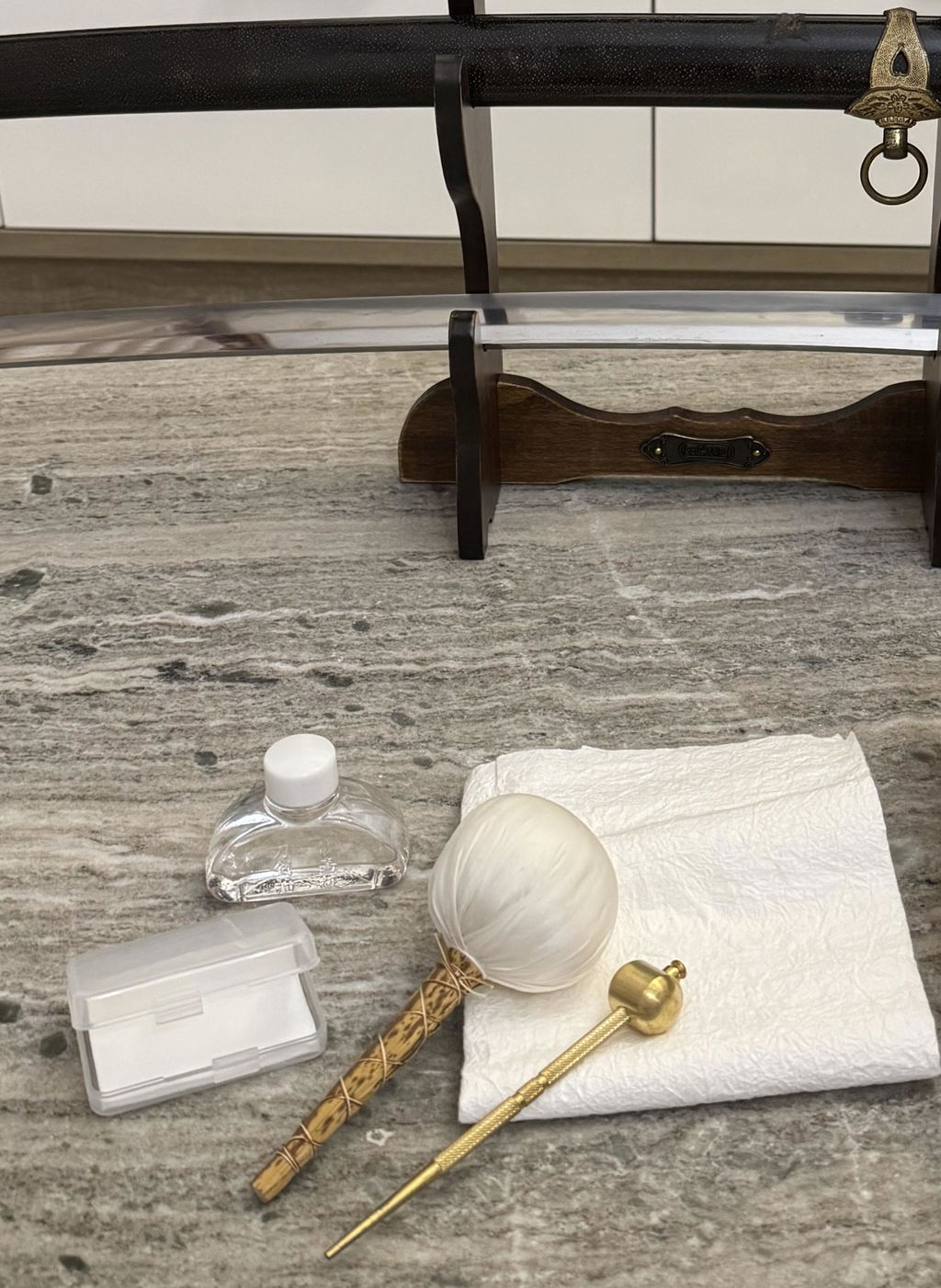
4. The maintenance. A mogitō with an alloy blade does not require uchiko, chōji oil, or the standard nihonto maintenance routine. Its maintenance is simpler — wipe down the blade with a clean cloth, check the koshirae for wear. An iaido shinken requires exactly the same care as any nihonto: regular oiling, uchiko cleaning, and appropriate storage. The maintenance requirement is one of the most practical ongoing differences between owning a mogitō and a shinken.
5. The price signal. Genuine iaido shinken made by licensed swordsmiths start at approximately ¥200,000 — and more typically ¥300,000–¥500,000 for a properly made piece. A well-made Japanese mogitō is ¥30,000–¥150,000. If you are being offered an "iaito" at a mogitō price with claims that it is a shinken, you are either being misled or the seller is confused about what they are selling.
Which Is Right for You — A Decision Guide
Tozando has you covered
Looking for an alloy practice sword to begin your iaido journey? Visit our sister site Tozando Online Shopping. Ready to step up to a genuine shinken for practice or tameshigiri? Browse our newly forged collection here. Building a collection of antique or modern fine art swords? Our specialist team is ready to help — wherever you are on the path.
In Closing — One Word, Three Different Things
The Japanese language's flexible use of iaito as a blanket term for any sword used in iai practice is entirely understandable within its original context — where a practitioner and their sensei both know exactly what category of object is being discussed, and the distinction between mogitō and shinken is a practical daily reality rather than a terminological puzzle.
In the international market, where buyers encounter the word without that context, the same flexibility creates genuine confusion. A buyer who searches for "iaito" online will find mogitō starting at $200 and shinken at $3,000 on the same results page, described with the same word, with no clear indication of what the difference is or why it matters.
Now you know what the difference is. A mogitō is an alloy practice implement — safe, affordable, legal in most jurisdictions, and appropriate for the majority of iaido practitioners. An iaido shinken is a genuine Japanese sword — steel, registered, live-bladed, and a completely different category of object with its own documentation, maintenance requirements, and legal implications. The word "iaito" can refer to either. The purchase cannot refer to both. Know which one you are looking at before you decide.
Sources: Tozando Katana Shop — "The Difference Between Bijutsu Swords and Iaido Swords" (2023, citing All Japan Swordsmiths' Association definition); Tozando Katana Shop — "Japanese Iaito Buying Guide" (2022); Wikipedia — "Iaitō" (accessed 2026). The distinction between mogitō and iaido shinken, and the legal definitions under Japan's Firearms and Swords Control Law, reflect Tozando's direct operational knowledge of both categories. Price ranges are approximate and reflect Japanese market conditions as of 2026.

Leave a comment: