

Explore Tanaka Shinbei, the Bakumatsu's infamous hitokiri, and his legendary sword. Understand his brutal role in Japan's turbulent history, the characteristics of his blade, and the profound legacy they left behind.
1. Who Was Tanaka Shinbei
In the tumultuous final years of Japan's feudal era, a period known as the Bakumatsu, figures of immense influence and deadly skill emerged. Among them was Tanaka Shinbei, a name synonymous with ruthless efficiency and unwavering loyalty to the Imperial cause. He was not merely a warrior but a pivotal, often terrifying, instrument in the political upheaval that ultimately led to the Meiji Restoration.
1.1 The Bakumatsu Era and Tanaka Shinbei's Early Life
The Bakumatsu era (1853-1868) was a time of profound crisis and radical change in Japan. After centuries of self-imposed isolation under the Tokugawa Shogunate, the arrival of Western powers forced Japan to confront its technological inferiority and internal divisions. This period saw the rise of the sonnō jōi movement, advocating "Revere the Emperor, Expel the Barbarians," a philosophy that fueled a fierce desire to restore imperial rule and resist foreign influence. It was in this volatile environment that Tanaka Shinbei rose to prominence.
Tanaka Shinbei hailed from the Satsuma Domain, one of the most powerful and influential domains that would play a crucial role in overthrowing the Shogunate. Born in 1838, his early life is not extensively documented, but it is understood that he was a samurai deeply committed to the sonnō jōi ideology. He was drawn into the political ferment of Kyoto, the Imperial capital, which became a hotbed of intrigue, clashes between pro-Shogunate and anti-Shogunate factions, and a stage for the deadly work of assassins.
His dedication to the Imperial cause led him to join the ranks of the shishi (men of high purpose), a group of politically active samurai who believed in direct action to achieve their goals. These men were often ronin (masterless samurai) or low-ranking samurai who felt the Shogunate was weak and corrupt, unable to protect Japan from foreign encroachment. Tanaka Shinbei quickly distinguished himself not just as a loyalist, but as a formidable and unyielding force.
1.2 Tanaka Shinbei: A Hitokiri of Satsuma
Tanaka Shinbei earned the chilling epithet of Hitokiri, literally "manslayer" or "assassin," a title reserved for the most feared and effective swordsmen of the Bakumatsu period. These individuals were the sharp edge of the anti-Shogunate movement, tasked with eliminating key figures who supported the Tokugawa regime or advocated for opening Japan to foreign influence. Their actions were brutal but, in the eyes of their compatriots, necessary to achieve the ultimate goal of imperial restoration.
His reputation was built on his skill with the sword and his unwavering resolve in carrying out political assassinations. Unlike conventional warfare, the work of a Hitokiri required stealth, precision, and a complete lack of hesitation. Tanaka Shinbei embodied these qualities, becoming one of the most notorious and effective assassins of his time. He was particularly active in Kyoto, where many of the political assassinations took place, targeting both Shogunate officials and influential individuals deemed obstacles to the Imperial cause.
Tanaka Shinbei is often counted among the Four Great Hitokiri of the Bakumatsu, a quartet of exceptionally skilled and feared assassins whose names struck terror into the hearts of their enemies. While the exact composition can sometimes vary, these individuals were legendary for their contributions to the sonnō jōi movement through their deadly deeds.
| Notable Bakumatsu Hitokiri | Domain/Affiliation | Key Characteristics |
|---|---|---|
| Tanaka Shinbei | Satsuma Domain | Known for his ruthless efficiency and unwavering dedication to the Imperial cause. |
| Kawakami Gensai | Kumamoto Domain | Famed for his swift, unpredictable sword style and quiet demeanor. |
| Okada Izō | Tosa Domain | A brutal and effective killer, often acting on orders from Takechi Hanpeita. |
| Nakamura Hanjirō (later Kirino Toshiaki) | Satsuma Domain | Another prominent Satsuma swordsman, known for his ferocity and later a general in the Satsuma Rebellion. |
As a Hitokiri of Satsuma, Tanaka Shinbei was a direct reflection of his domain's aggressive stance against the Shogunate. His actions were not random acts of violence but calculated strikes aimed at destabilizing the existing power structure and paving the way for a new Japan under imperial rule. His name alone became a symbol of the dangerous and desperate political climate of the Bakumatsu, a period where the sword often decided the fate of the nation.
2. Tanaka Shinbei's Legendary Sword
2.1 Identifying Tanaka Shinbei's Weapon
While many famous samurai are associated with specific, named blades that have become legends in their own right, the exact identity of Tanaka Shinbei's personal sword remains a subject of historical speculation rather than definitive record. Unlike a celebrated daimyo's ceremonial katana or a family heirloom passed down through generations, Tanaka Shinbei's weapon was primarily a tool for his grim profession as a hitokiri, or "manslayer." Therefore, its renown stems less from a specific name and more from its effectiveness in the hands of a fearsome assassin during the tumultuous Bakumatsu period.
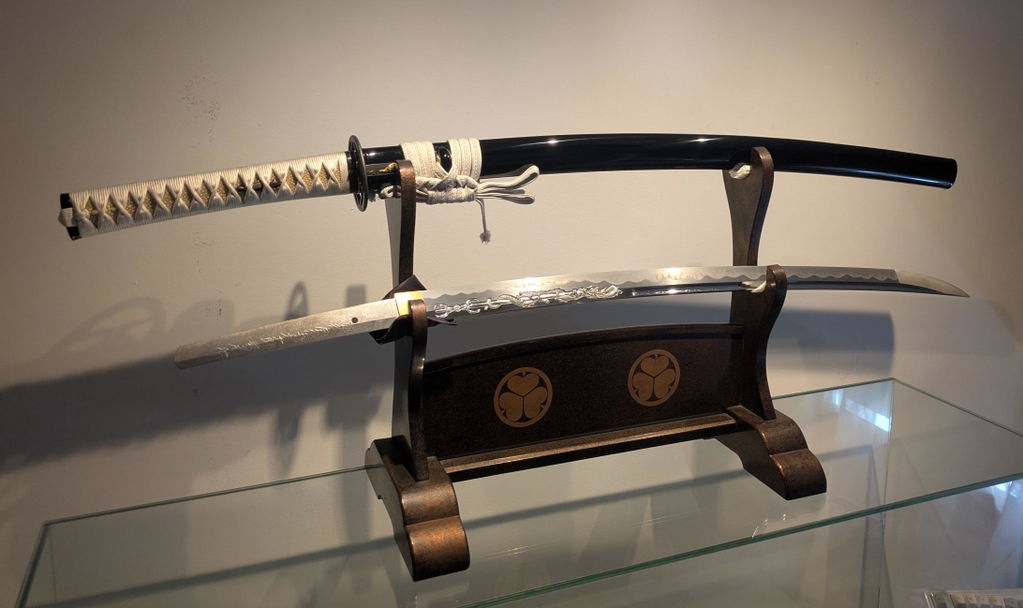
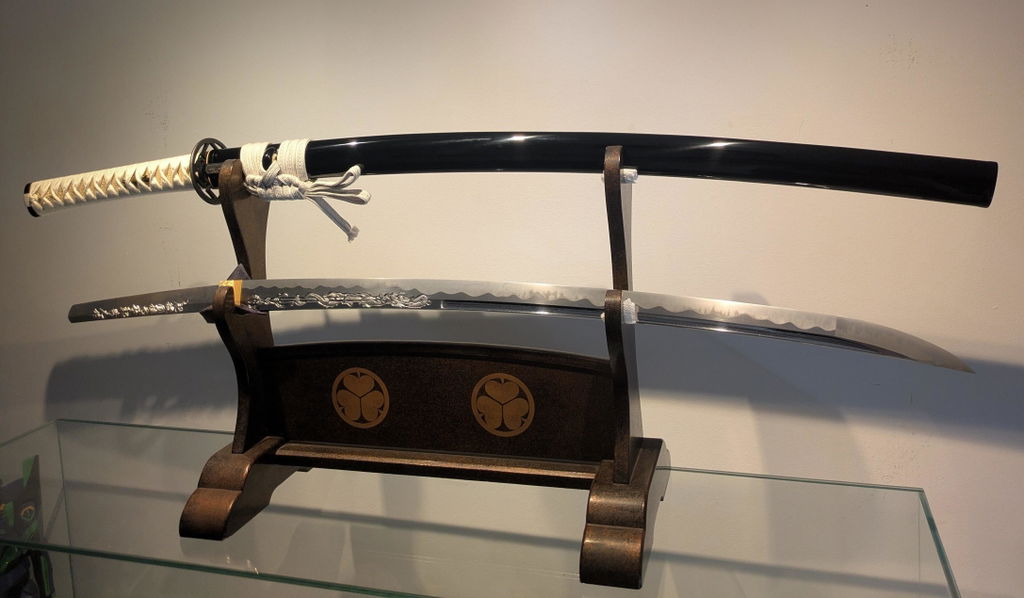
It is widely understood that Tanaka Shinbei would have wielded a katana, the archetypal Japanese long sword, which was the standard weapon for samurai of his era. Given his role and the high stakes involved in his clandestine operations, it can be inferred that his sword was a reliable and exceptionally sharp instrument, crucial for the swift and decisive actions for which he became infamous. The lack of a specific named sword in widely circulated historical accounts emphasizes that the legend was built around the wielder and his deadly skill, rather than the unique identity of the blade itself.
2.2 The Characteristics of His Sword
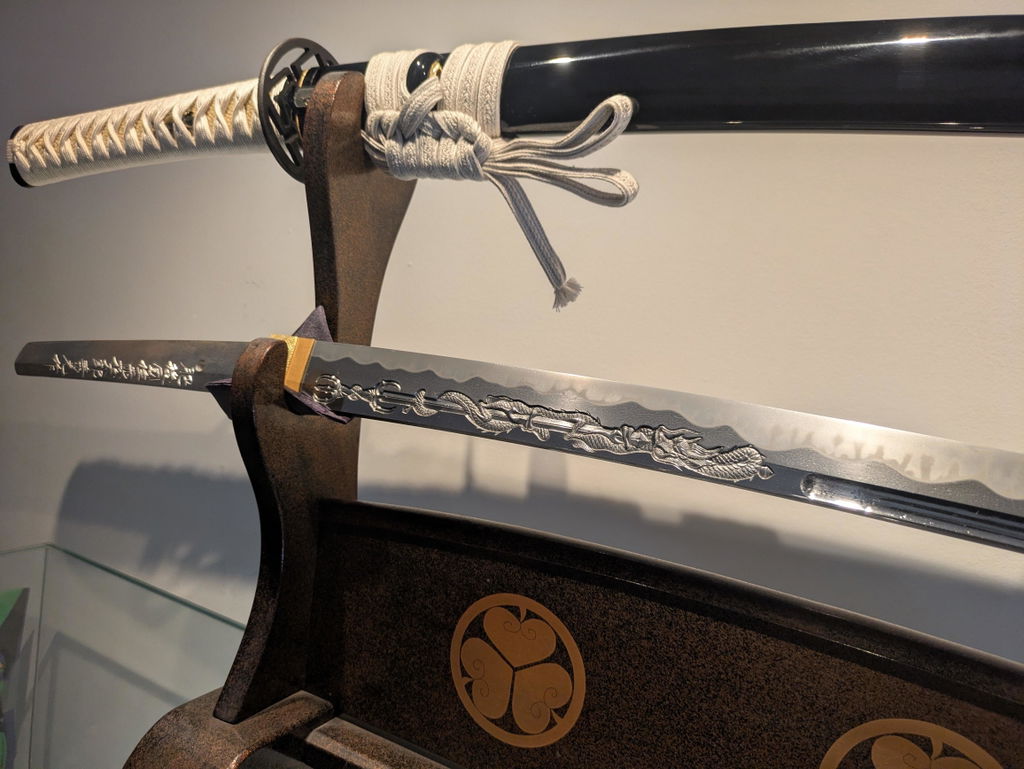
Though not individually named, the sword wielded by Tanaka Shinbei would have possessed characteristics vital for a Bakumatsu-era assassin. It was, without doubt, a nihonto (Japanese sword) of superior quality, likely forged by a skilled swordsmith. The demands of his profession required a blade that was not only incredibly sharp but also robust and well-balanced, capable of enduring the rigors of combat and delivering lethal blows with precision.
Here are the probable characteristics of Tanaka Shinbei's sword:
| Characteristic | Description |
|---|---|
| Type of Sword | A katana, the primary single-edged, curved sword used by samurai. Its design was optimized for cutting and slashing, making it highly effective in close-quarters combat. |
| Craftsmanship | Likely a high-quality, expertly forged blade. Swords from Satsuma Province, Tanaka Shinbei's home domain, were known for their practical strength and sharpness, often reflecting the aggressive Jigen-ryu style of swordsmanship. |
| Sharpness | Exceptional sharpness was paramount. A hitokiri relied on the ability to deliver clean, decisive cuts to dispatch targets quickly and efficiently, often in surprise attacks. |
| Balance and Weight | A well-balanced sword would have allowed for rapid maneuverability and powerful strikes. Its weight would be sufficient to generate momentum for cuts, yet light enough for swift recovery and changes in direction. |
| Durability | While precision was key, the blade also needed to be durable enough to withstand repeated use without breaking or dulling excessively, a testament to its forging and heat treatment. |
| Appearance | Functionality likely superseded ornate decoration. The sword's fittings (koshirae) would have been practical, perhaps understated, reflecting its purpose as a deadly weapon rather than a status symbol. |
In essence, Tanaka Shinbei's sword was a masterpiece of Japanese swordcraft tailored for its deadly purpose, an extension of his will and skill as a formidable assassin.
2.3 Stories and Legends of Tanaka Shinbei's Blade
The legend of Tanaka Shinbei's sword is inextricably linked to his own fearsome reputation. While specific tales focusing on the sword itself (e.g., a unique name or a mystical property) are not widely documented, the blade became a potent symbol through its actions. It was the instrument that executed the will of the sonnō jōi (Revere the Emperor, Expel the Barbarians) movement, striking down those perceived as obstacles to imperial restoration.
The stories surrounding Tanaka Shinbei often emphasize the speed and ruthlessness of his attacks, and his sword was the silent, deadly partner in these deeds. It was rumored to be so sharp that targets were often unaware they had been cut until it was too late. This perception, whether entirely factual or exaggerated through fear and oral tradition, contributed significantly to the mystique of both the assassin and his weapon.
His sword, therefore, became more than just a piece of steel; it was the embodiment of his swift and decisive strikes, a silent witness to the political assassinations that destabilized the Tokugawa Shogunate. It represented the brutal efficiency required by the imperial loyalists to achieve their goals. The legend of Tanaka Shinbei's blade is thus a testament to its effectiveness in his hands, solidifying his place as one of the most feared hitokiri of the Bakumatsu era and making his sword a symbol of the era's violent political upheaval.
3. Key Incidents Involving Tanaka Shinbei
The Bakumatsu period was a crucible of political intrigue, violence, and revolutionary fervor. Within this tumultuous era, figures like Tanaka Shinbei emerged as agents of radical change, their actions often dictated by the fervent ideology of Sonno Joi – "Revere the Emperor, Expel the Barbarians". Tanaka Shinbei's notoriety stems directly from his involvement in a series of high-profile assassinations, which were not random acts of violence but calculated strikes aimed at destabilizing the Tokugawa Shogunate and advancing the imperial cause.
3.1 The Assassinations and Political Climate
As a leading member of the hitokiri (manslayers) from Satsuma Domain, Tanaka Shinbei became a symbol of the extremist wing of the imperial loyalist movement. His targets were typically perceived enemies of the emperor, pro-Shogunate officials, or those advocating for foreign relations that were seen as detrimental to Japan's sovereignty. These acts of terror were designed to sow fear, disrupt governance, and galvanize support for the anti-Shogunate faction.
Among the most significant incidents attributed to or strongly associated with Tanaka Shinbei are:
- The Assassination of Shimada Sakon: One of the most famous and impactful assassinations. Shimada Sakon was a high-ranking official within the Shogunate's government, serving as a Machi-bugyo (City Magistrate) of Kyoto. He was known for his firm stance against the imperial loyalists and his efforts to suppress the Sonno Joi movement. On January 15, 1862 (Bunkyu 1, 12th month, 16th day), Shimada Sakon was brutally attacked and killed by Tanaka Shinbei and his associates near the Teradaya Inn in Fushimi. This act sent shockwaves through the Shogunate and Kyoto, demonstrating the ruthlessness and determination of the imperial loyalists.
- The Assassination of Honda Kakunoshin: Honda Kakunoshin was another prominent figure, a retainer of the Hikone Domain, which was a staunch supporter of the Tokugawa Shogunate. He was known for his conservative views and opposition to the imperial loyalists. His assassination, also in 1862, further fueled the climate of fear and political instability in Kyoto, reinforcing the image of Tanaka Shinbei as a relentless executor of the Sonno Joi agenda.
These assassinations were not isolated incidents but part of a broader campaign of political violence that characterized the Bakumatsu era. The targets were carefully chosen to maximize political impact, sending clear messages to both the Shogunate and the general populace about the power and resolve of the imperial loyalist movement. The political climate was one of extreme tension, with clandestine meetings, betrayals, and sudden, violent deaths becoming commonplace in Kyoto, the heart of the imperial court.
| Incident | Date (Gregorian) | Victim | Victim's Affiliation/Role | Significance |
|---|---|---|---|---|
| Assassination of Shimada Sakon | January 15, 1862 | Shimada Sakon | Kyoto City Magistrate (Shogunate Official) | High-profile strike against a key Shogunate figure, intensifying anti-Shogunate sentiment. |
| Assassination of Honda Kakunoshin | 1862 | Honda Kakunoshin | Retainer of Hikone Domain (Shogunate Supporter) | Further demonstrated the ruthlessness of the hitokiri, contributing to political terror. |
3.2 The Sword's Role in His Actions
For Tanaka Shinbei, as for any hitokiri, his sword was more than just a weapon; it was an extension of his will and the instrument through which the radical ideology of Sonno Joi was enforced. In the close-quarters, often sudden nature of political assassinations, the effectiveness of the blade was paramount. Tanaka Shinbei's legendary sword was the primary tool for his swift and decisive actions, embodying the brutality and efficiency required for his missions.
- Instrument of Execution: The sword was the literal means by which Tanaka Shinbei carried out his political executions. Its sharp edge and the skill with which it was wielded ensured that his attacks were often fatal and swift, leaving little chance for resistance or escape for his unsuspecting targets.
- Symbol of Resolve: Beyond its practical function, the sword served as a potent symbol. For the imperial loyalists, it represented their unwavering commitment to their cause, even if it meant shedding blood. For the Shogunate and its supporters, it was a terrifying emblem of the revolutionary forces at play.
- Psychological Warfare: The very presence of a hitokiri like Tanaka Shinbei, known for his deadly blade, created an atmosphere of dread. The fear that such a warrior could strike anywhere, at any time, with his formidable sword, was a powerful psychological weapon against the Shogunate's authority.
While specific details about the exact techniques Tanaka Shinbei employed with his sword in each incident are scarce, it is understood that the fighting style of a hitokiri prioritized speed, surprise, and lethal efficiency. These were not duels of honor but targeted killings, often involving ambushes or attacks on unarmed or unprepared individuals. The sword, therefore, was used to deliver swift, decisive blows aimed at incapacitating or killing the target instantly, reflecting the cold, calculated nature of these political assassinations.
4. The Demise of Tanaka Shinbei
The turbulent political landscape of the Bakumatsu era, characterized by escalating tensions between the pro-imperial sonnō jōi faction and the Tokugawa Shogunate, ultimately led to the tragic end of many fervent activists, including Tanaka Shinbei. As a notorious hitokiri, his actions drew the ire and relentless pursuit of the Shogunate's forces, making his demise an inevitable consequence of his radical commitment.
4.1 The Shogunate's Intensified Crackdown
By 1863, Kyoto had become a hotbed of political intrigue and violence. The Shogunate, through its appointed Kyoto Shugoshoku (Kyoto Protectorate), under the leadership of Matsudaira Katamori of the Aizu Domain, began to intensify its efforts to suppress the anti-Shogunate elements. This period saw a systematic crackdown on the sonnō jōi activists who were openly challenging the Tokugawa rule. Tanaka Shinbei, having been involved in several high-profile assassinations, including that of Shimada Sakon (a senior retainer of the Kujo family) and Honma Seiichirō, found himself increasingly targeted.
The assassination of Honma Seiichirō, a prominent pro-Shogunate official, in July 1863, was a particularly significant event that directly precipitated Tanaka Shinbei's downfall. The authorities were determined to apprehend those responsible, and evidence quickly pointed towards Shinbei and his associates. The pressure on the Satsuma Domain, which had been a significant base for sonnō jōi activities, also mounted, forcing many of its radicals to either flee or face direct confrontation.
4.2 The Final Confrontation and Act of Seppuku
The net tightened around Tanaka Shinbei in the summer of 1863. On August 13, 1863 (Bunkyū 3, 6th month, 29th day), forces of the Kyoto Shugoshoku, specifically Aizu troops, converged on his residence in Kyoto. Faced with imminent capture and interrogation, which would undoubtedly lead to the exposure of his comrades and the wider sonnō jōi network, Tanaka Shinbei made a decisive and final choice.
Rather than surrender or allow himself to be taken alive, Tanaka Shinbei committed seppuku, the ritual suicide of a samurai. This act was not merely an escape from punishment but a profound statement of defiance and adherence to the samurai code, preserving his honor and protecting his allies. Accounts suggest he used his wakizashi (short sword), a customary blade for such a solemn act, to disembowel himself. His death prevented the Shogunate from extracting crucial information about the imperial loyalists and their plans.
4.3 Immediate Aftermath and Legacy of His Demise
Tanaka Shinbei's death sent shockwaves through both the loyalist and Shogunate factions. For the imperial loyalists, it was a loss of a formidable warrior, yet his sacrifice was seen as a heroic act that upheld the ideals of sonnō jōi. For the Shogunate, while his death eliminated a dangerous assassin, it also highlighted the extreme dedication of their adversaries.
His demise marked a period of intensified crackdown on radical elements in Kyoto, paving the way for further clashes such as the Shishi's attempt to seize the Imperial Palace later that year (the Kinmon Incident of 1864). Tanaka Shinbei's legend, already formidable due to his exploits with his sword, was cemented by his defiant end. His death underscored the brutal realities of the Bakumatsu period, where political conviction often demanded the ultimate sacrifice.
| Event | Date (Gregorian) | Significance |
|---|---|---|
| Assassination of Honma Seiichirō | July 1863 | Key incident directly implicating Tanaka Shinbei and leading to his pursuit. |
| Shogunate Forces Converge | August 13, 1863 | Aizu troops surround Tanaka Shinbei's residence in Kyoto. |
| Tanaka Shinbei's Seppuku | August 13, 1863 | His ritual suicide to avoid capture and protect fellow loyalists. |
| Intensified Crackdown | Post-August 1863 | Shogunate's efforts against sonnō jōi activists escalate in Kyoto. |
5. The Legacy of Tanaka Shinbei and His Sword
The life and death of Tanaka Shinbei, along with the elusive identity of his formidable sword, left an indelible mark on the tumultuous Bakumatsu period and continue to fascinate historians and enthusiasts of Japanese history. His legacy is not merely that of a skilled assassin but a complex figure whose actions profoundly influenced the course of Japan's transition into the Meiji era.
5.1 Historical Significance and Perception
Tanaka Shinbei stands as a prime example of the zealous loyalists who championed the Sonno Joi (Revere the Emperor, Expel the Barbarians) philosophy. As one of the "Four Hitokiri of Bakumatsu," his name became synonymous with the brutal political violence that characterized the era. His assassinations, often targeting figures perceived as pro-Shogunate or foreign sympathizers, were not random acts but calculated strikes intended to destabilize the Tokugawa shogunate and accelerate the return of imperial rule.
- Catalyst for Change: Shinbei's actions, alongside those of other radical shishi, created an atmosphere of fear and uncertainty, forcing political leaders to take sides and ultimately contributing to the collapse of the shogunate.
- Symbol of Extremism: He embodies the darker, more violent side of the loyalist movement, demonstrating the lengths to which some were willing to go for their ideals.
- Enduring Debate: Historians continue to debate the morality and effectiveness of the Hitokiri's methods. While their actions were undeniably violent, they are often viewed as instrumental in paving the way for the Meiji Restoration, a period of rapid modernization and national strength.
5.2 The Enduring Mystery of His Blade
Even without a definitively identified blade, Tanaka Shinbei's sword holds a powerful symbolic weight. It represents the instrument of revolutionary change, a tool of justice (from the loyalist perspective) and terror (from the shogunate's). The lack of a specific name or detailed description only adds to its mystique, allowing it to exist more as a legend than a mere weapon.
- A Symbol of the Era: His sword, regardless of its specific make, symbolizes the omnipresent threat of violence and the readiness of the shishi to use deadly force to achieve their political goals.
- Inspiration for Storytelling: The idea of his unknown, yet deadly, blade has fueled countless stories and artistic interpretations, making it a powerful element in the narrative of the Bakumatsu period.
- The Warrior's Extension: For Shinbei, as for any samurai, his sword was an extension of his will and skill. Its legendary status is intertwined with his own formidable reputation as a swordsman.
5.3 Tanaka Shinbei in Popular Culture
Tanaka Shinbei's dramatic life and role as a Bakumatsu Hitokiri have ensured his enduring presence in Japanese popular culture. He frequently appears in historical fiction, manga, anime, and video games, often depicted as a skilled, ruthless, and enigmatic figure.
| Medium | Representation | Impact |
|---|---|---|
| Historical Novels | Portrayed as a key figure in the loyalist movement, often with internal conflicts or unwavering conviction. | Shapes public perception and understanding of his historical role. |
| Manga & Anime | Often featured as a formidable warrior, sometimes romanticized or given fictionalized backstories. | Introduces his story to new generations, contributing to the mystique of the "Hitokiri." |
| Video Games | Appears as a boss character or historical NPC, showcasing his combat prowess. | Allows interactive engagement with his historical persona. |
| Film & Television | Depicted in historical dramas, emphasizing his role in key assassinations and the political climate. | Visually brings his legend to life, often highlighting his intensity. |
These cultural representations, while often taking artistic liberties, serve to keep his story alive, ensuring that the legend of Tanaka Shinbei and his deadly sword continues to resonate with audiences both in Japan and internationally.
5.4 Conclusion of the Article: A Lasting Impression
Tanaka Shinbei remains a compelling figure in Japanese history, a testament to the turbulent Bakumatsu era and the profound changes it wrought. His unwavering commitment to the Sonno Joi cause, his reputation as a fearsome Hitokiri of Satsuma, and the mystique surrounding his legendary sword all contribute to a legacy that transcends simple historical fact. He represents the fierce loyalism and the extreme measures taken during a period of intense political upheaval, a figure whose actions, though violent, undeniably contributed to the eventual establishment of modern Japan. The story of Tanaka Shinbei and his sword is a powerful reminder of the human cost and the complex motivations behind one of Japan's most pivotal historical transformations.
6. Conclusion
Tanaka Shinbei, often remembered as one of the infamous Four Hitokiri of the Bakumatsu era, remains a compelling figure in Japanese history. His life, inextricably linked with the tumultuous period leading to the Meiji Restoration, epitomizes the extreme dedication and brutal effectiveness of the shishi (men of high purpose) who sought to reshape Japan. As a loyalist from the powerful Satsuma Domain, Shinbei's actions were driven by the fervent sonnō jōi ideology, aiming to restore imperial power and expel foreign influence.
The legend of Tanaka Shinbei and his sword is more than just a tale of a skilled assassin; it is a reflection of an entire era. While the precise identity of his blade might be a subject of historical debate, the sword itself stands as a potent symbol. It represents the instrument of swift, decisive, and often ruthless political change during a time when traditional samurai values clashed with modernizing forces. His weapon was not merely a tool but an extension of his unwavering commitment to the imperial cause, responsible for silencing voices that stood against the burgeoning revolutionary tide.
Shinbei's ultimate demise, shrouded in the circumstances of suspected betrayal or a desperate act to protect his comrades, cemented his place in the annals of Bakumatsu lore. Yet, his legacy extends beyond his violent end. He embodies the complex moral landscape of the period, where acts of assassination were perceived by some as necessary evils for a greater national good. The stories of his blade continue to fascinate, underscoring the profound impact that individual warriors and their weapons had on the course of Japanese history.
In summary, Tanaka Shinbei and his legendary sword serve as a powerful reminder of the human cost and fierce determination that characterized Japan's transition from feudalism to a modern state.
6.1 Key Aspects of Tanaka Shinbei's Historical Significance
| Aspect | Description |
|---|---|
| Role in Bakumatsu | A prominent Hitokiri (manslayer), instrumental in the political assassinations that fueled the sonnō jōi movement. |
| Domain Affiliation | Loyalist from the Satsuma Domain, a key player in the overthrow of the Tokugawa Shogunate. |
| Ideological Drive | Committed to the sonnō jōi (Revere the Emperor, Expel the Barbarians) philosophy, advocating for imperial restoration. |
| Sword's Symbolism | His katana became a symbol of the era's brutal political violence and the decisive actions taken by imperial loyalists. |
| Legacy | An enduring figure whose story highlights the radical dedication of the shishi who paved the way for the Meiji Restoration. |

Want to buy authentic Samurai swords directly from Japan? Then TOZANDO is your best partner!
Related Articles


1 comment
May 27, 2026 • Posted by Domingo
Excelente artículo. Muchas gracias por ilustrar un período tan efervescente y trascendental en la historia del Japón a través de sus personajes.
Atentamente,
Domingo Mederos
Leave a comment: