

It is the question every serious first-time buyer asks — and the question that experienced collectors almost always answer the same way, having learned the hard way themselves. Should your first Japanese sword be an antique with centuries of history, or a modern blade forged by a living licensed smith? The honest answer is: it depends entirely on who you are, what draws you to the tradition, and what you want ownership to feel like. This guide gives you the framework to answer that question for yourself — clearly, completely, and without a sales agenda.
First — What Do "Antique" and "Modern" Actually Mean?
In the Japanese sword world, these terms have specific meanings that differ from everyday usage:
Swords forged before 1953. Four main eras:
- Kotō (古刀) — Old swords, pre-1596. Kamakura through Muromachi.
- Shintō (新刀) — New swords, 1596–1780. Edo period.
- Shinshintō (新々刀) — New-new swords, 1781–1876.
- Gendaitō (現代刀) — Modern swords, 1877–1953. Pre-NBTHK system.
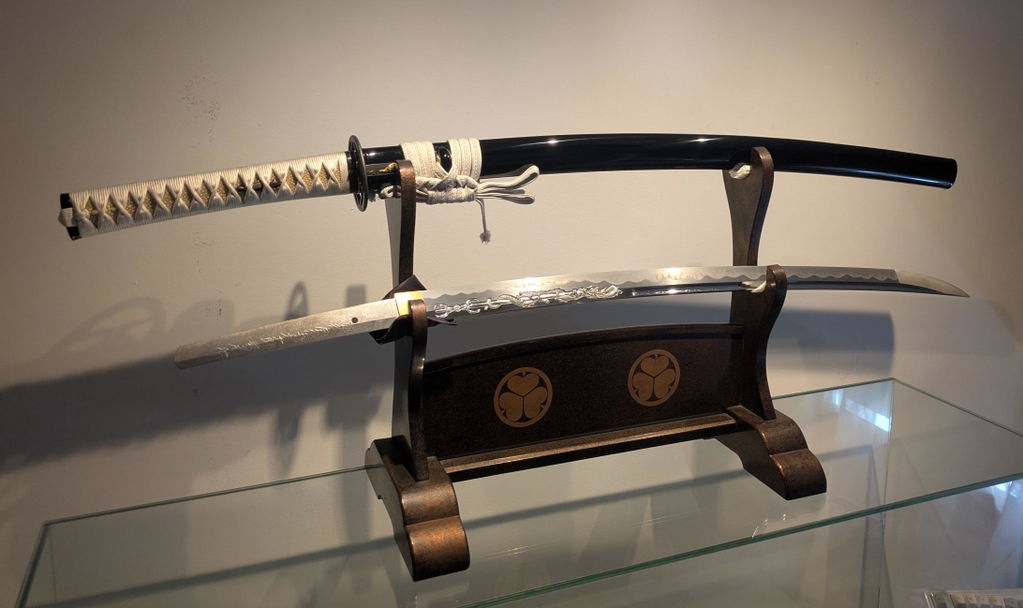
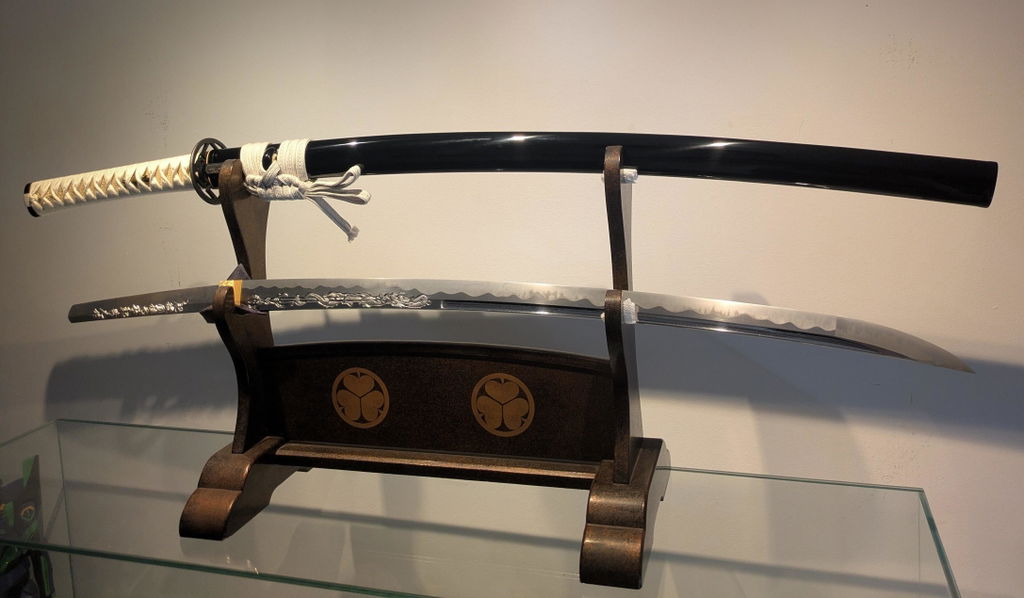
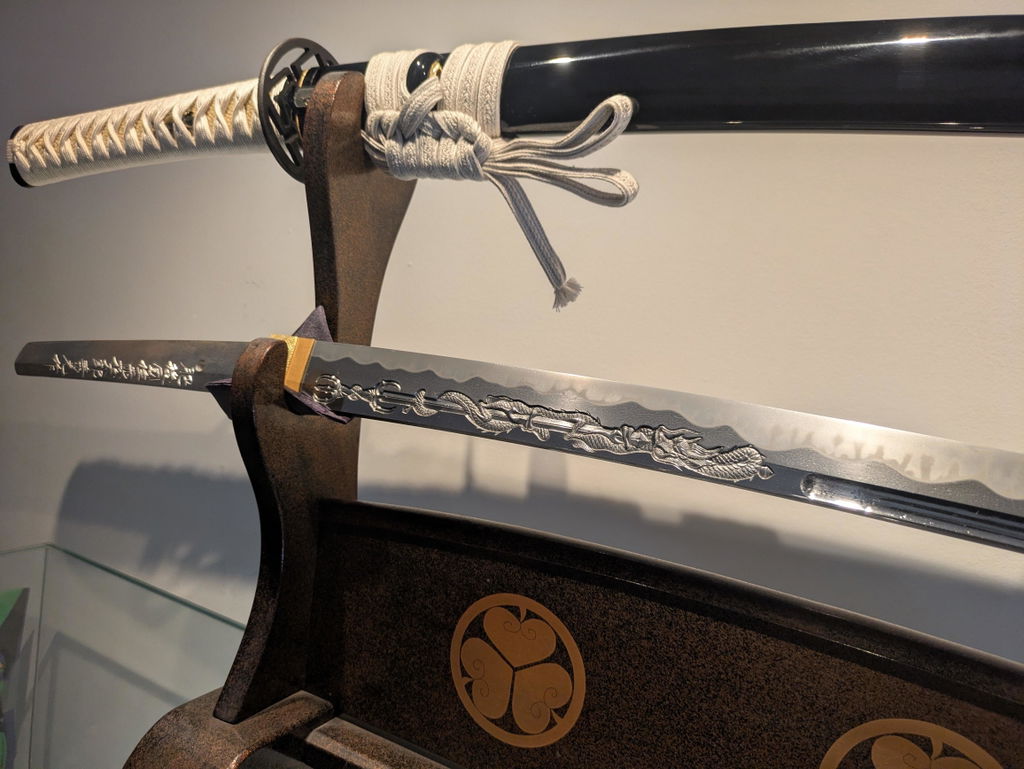
Swords forged from 1953 onward by licensed Japanese smiths:
- Licensed — The smith has completed a traditional apprenticeship and passed certification exams administered by the Agency for Cultural Affairs.
- Traditional methods — Tamahagane steel, clay differential hardening, water quenching. The same techniques as the classical period.
- Approximately 300 licensed smiths are active in Japan today, producing 300–400 swords annually in total.
The Case for Modern — Why Many Experts Recommend Starting Here
Many dealers with decades of experience recommend that first-time collectors begin with a modern sword by a licensed Japanese smith, rather than an antique. The reasoning is practical, not philosophical — and it is worth taking seriously.
- Perfect, irrefutable provenance — You know exactly who made the blade, when, where, with what materials, and in which tradition. No attribution uncertainty.
- Perfect condition — No restoration needed, no hidden flaws from centuries of use, no questions about previous ownership or storage conditions.
- Lower entry price at any quality tier — A legitimate piece from a skilled licensed smith is available from $2,500–$4,000. Equivalent antique quality costs significantly more.
- Complete NBTHK certification trail — From the day of forging, the documentation chain is clear and continuous.
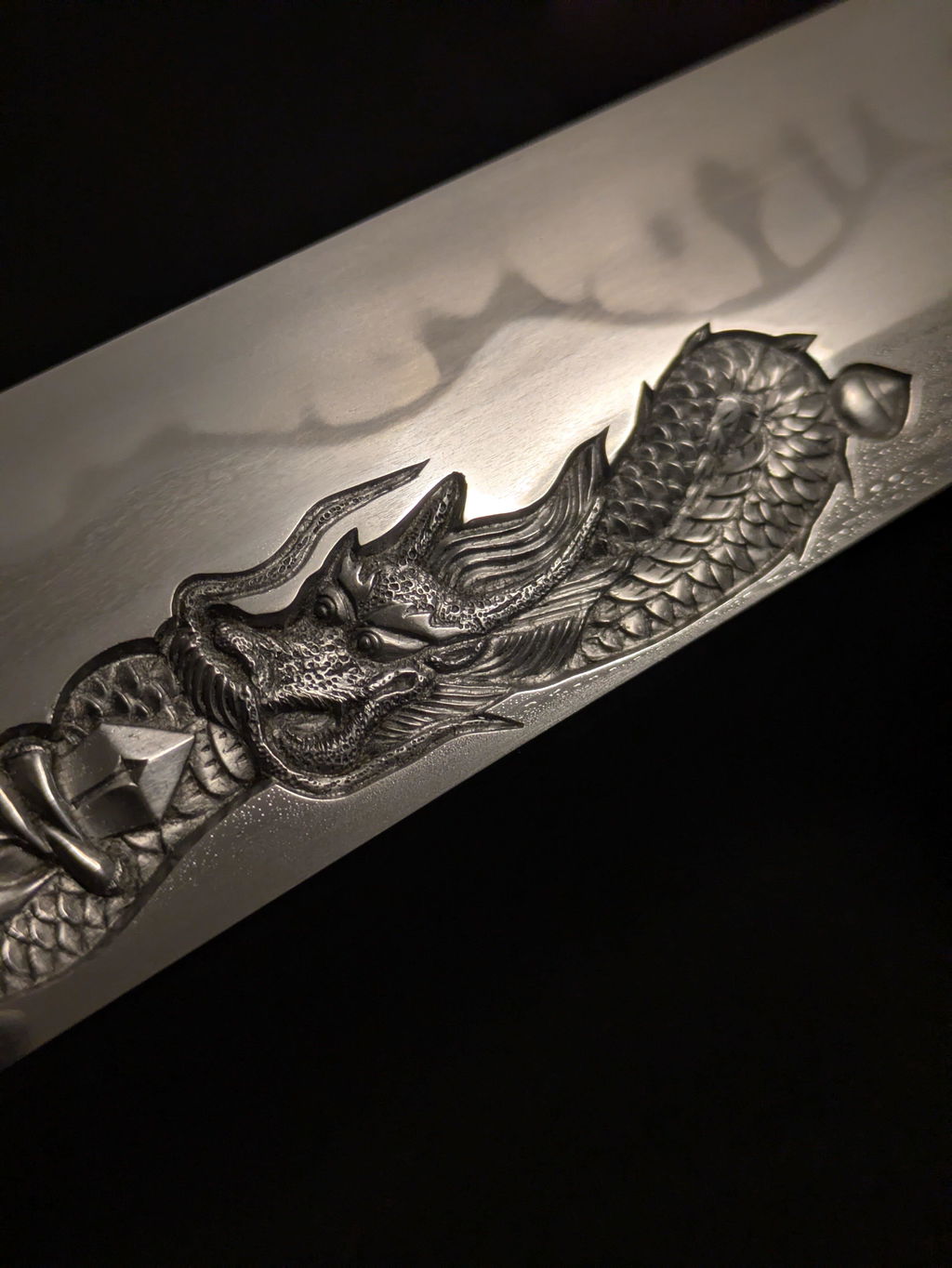
- Supporting a living tradition — Your purchase sustains a licensed smith who has spent over a decade mastering a thousand-year craft.
- Commission options — Some smiths accept commissions, allowing a degree of specification in length, style, and fittings not possible with antiques.
- No historical depth — the blade has no story beyond its forging date.
- High-end pieces by mukansa smiths can be more expensive than comparable antiques.
- Commission waiting times can reach 1–2 years for top-tier smiths.
- May feel less "connected" to Japanese history for collectors primarily drawn by historical interest.
- Attribution complexity — Even NBTHK-certified antiques may carry general school attributions ("Bizen tradition") rather than named smith attributions. The difference matters for value.
- Condition assessment requires expertise — Flaws, restoration history, and polish condition are consequential for price and require knowledge to evaluate correctly.
- Higher entry price for reliable quality — Antique pieces with solid NBTHK certification and good condition reliably start above $5,000.
- Attribution fraud risk — Fake signatures (gimei) and misattributed pieces are the most common fraud type in the antique market. Requires expertise to detect.
- Deeper knowledge needed — To make a genuinely informed antique purchase, you need to understand periods, schools, and condition factors that take time to learn.
The Case for Antique — What Only History Can Provide
The expert consensus toward modern swords as a starting point is practically sound — but it is not universal, and it does not capture everything that draws people to Japanese swords in the first place. For some collectors, the historical connection is the entire point — and no modern blade, however perfectly forged, can provide it.
What antique swords offer that modern swords cannot:
An antique nihonto is a primary historical document. A Kamakura-period blade was forged 700 years ago, during the same era that produced the great warriors whose stories define Japanese history. A Muromachi sword was carried — possibly in battle — before Shakespeare wrote his first play. An Edo-period wakizashi may have accompanied a samurai through the entire arc of that extraordinary civilisation. This temporal depth is not an aesthetic quality — it is a factual one, and it is irreplaceable.
The steel character of antique nihonto is also different from modern work in ways that experienced collectors find compelling. The tamahagane of historical periods was produced from iron sands whose specific mineral composition varied by region and century. The accumulated knowledge embedded in historical blades — visible in their grain, their hamon activity, their geometry — reflects technical traditions that no modern smith has fully recovered. A Kamakura-period blade is not merely old; it is the product of a specific metallurgical knowledge that existed in that time and place and nowhere else.
It is which category answers the question that drew you to Japanese swords in the first place."
What Things Actually Cost — A Reality Check
Antique vs. Modern — The Direct Comparison
| Factor | Antique nihonto | Modern shinsakutō |
|---|---|---|
| Provenance | Historical — attribution by NBTHK appraisal; may be general (school) or specific (named smith) | Complete — smith, date, materials, training all documented from day of forging |
| Condition | Variable — centuries of use, storage, and potential restoration; condition assessment requires expertise | Perfect — no wear, no restoration, no hidden history; exactly as it left the forge |
| Entry price | Reliable quality from $5,000+ with NBTHK papers | From $2,500–$4,000 for licensed smith with certification |
| Historical connection | Direct — the blade existed in historical Japan; may have been carried in the period it represents | Indirect — the tradition is historical, but the blade itself is new |
| Steel character | Unique to period and school — specific mineral compositions of historical tamahagane that cannot be fully replicated | High quality traditional tamahagane — closest available equivalent to historical steel |
| Authentication risk | Higher — gimei (false signatures), misattribution, and condition issues require expertise to detect | Negligible — smith's identity is irrefutable; no attribution to verify |
| Investment potential | Strong for well-documented, clearly attributed pieces; values have appreciated consistently over decades | Growing — mukansa smiths' work appreciating; market expanding internationally |
| Knowledge required | Significant — periods, schools, condition factors, certification levels all matter for evaluation | Moderate — smith reputation, competition record, certification level are the primary factors |
| Best for | History-driven collectors; those with existing nihonto knowledge; advanced collectors expanding a collection | First-time buyers; those prioritising clarity of provenance; collectors supporting the living tradition |
Which Type of Collector Are You?
You find the idea of a modern sword intellectually interesting but ultimately unsatisfying. What you want is a blade that existed in the Japan of the samurai — something with verifiable historical weight. The attribution, the period, the school matter deeply to you.
Start with: Antique — but begin with Tokubetsu Hozon Edo-period wakizashi. Solid documentation, accessible condition, lower price than equivalent katana.
Attribution uncertainty makes you uncomfortable. You want to know exactly what you own, who made it, and be certain of its authenticity without expert second-guessing. The idea of a question mark in your collection is not something you want to carry.
Start with: Modern — a licensed smith with a strong competition record. The documentation is as complete as it gets in the sword world.
The idea of a living smith spending ten years mastering a thousand-year tradition and then forging a blade specifically for your collection resonates deeply. You see ownership as participation in a living culture, not acquisition of a historical artifact.
Start with: Modern — and consider a commission if your timeline allows. Gallery Tozando features works by mukansa-level masters.
You are drawn to the historical depth of antiques and the clarity of modern provenance. Budget and collecting goals will determine the right sequence — but many serious collectors eventually build collections that include both.
Start with: Modern first — learn the tradition through a piece you fully understand, then approach antiques with the knowledge that first purchase gives you.
A Simple Decision Guide — Five Questions
-
1
What is your budget? Under $4,000: modern is your only realistic option for a genuine piece. $5,000–$10,000: both are viable. Above $15,000: both categories offer excellent options at different points in the quality spectrum.
-
2
How comfortable are you with uncertainty? If the idea of a general school attribution ("Bizen tradition, Edo period") feels satisfying, antiques are accessible. If you want certainty of specific authorship, modern is the clearer path.
-
3
How much do you already know? A first antique purchase made without the knowledge to evaluate condition and certification level is a significant risk. If you are new to the field, a modern sword lets you build knowledge through a piece you fully understand, before approaching the additional complexity of antique evaluation.
-
4
Is this a one-time purchase or the start of a collection? If you plan to own one sword: choose whichever category speaks to you more deeply. If you plan to collect: most experienced collectors recommend starting modern, developing knowledge, and adding antiques from an informed position.
-
5
What draws you to Japanese swords in the first place? If the answer is "the history and the warriors" — antiques speak more directly to that. If the answer is "the craft and the beauty" — modern work is equally compelling and more accessible. If the answer is "both" — you are not alone, and both categories will eventually find their place in your collection.
authenticated, documented, from Kyoto
Tozando offers both antique nihonto with full NBTHK certification and modern shinsakutō by licensed Japanese smiths through Gallery Tozando. Not sure which is right for you? Our English-language specialists are here to help you think it through — with no pressure, just knowledge.
In Closing — Both Answers Are Right
The antique and the modern are not competing answers. They are different expressions of the same tradition — one looking backward through centuries of history, one looking forward into a craft that still lives and breathes in workshops across Japan today. Both are authentic. Both are meaningful. Both can be the starting point of a collecting life that deepens and enriches with every piece added.
The most important thing — more important than which category you start with — is that your first purchase is genuine, properly documented, and acquired from a dealer who stands behind what they sell. A genuine modern sword is a better first purchase than a dubious antique. A genuine antique is a better first purchase than a sophisticated replica. In either case, authenticity is the foundation everything else is built on.
Start with what speaks to you. Verify everything. Trust the documentation. And remember that the most experienced collectors in the world have almost all said the same thing: the best first sword is the one that teaches you what to look for in the second.
Sources: Tokyo Nihonto — "Beginner's Guide to Buying Your First Authentic Katana," "How Do I Choose My First Authentic Japanese Katana?"; Touken Takarado — "A Guide to Collecting Nihonto"; Tokyo Travel Assist — "A Foreigner's Guide to Japanese Swords"; Tozando Katana Shop — "Your First Blade: 7 Points Every Beginner Should Know"; Supein Nihonto — "Differences Between Nihonto and Modern Japanese Swords."
Note: Price ranges are approximate and reflect general market conditions as of 2026. Individual pieces vary significantly. Always verify NBTHK certification and conduct appropriate due diligence for any significant purchase.

Leave a comment: