

Is Muramasa Truly a Cursed Blade?
The Truth Behind the Tokugawa Legend
For five centuries, the name Muramasa has meant one thing: a sword that brings ruin to the Tokugawa. But how much of the legend is history — and how much is myth?
A sword so sharp it could cut flowing water. A blade that, once drawn, demands blood before it can be sheathed — even the blood of its own owner. A weapon so feared by the most powerful shogun in Japanese history that its mere possession could mean death. The legend of Muramasa is one of the most compelling in the entire world of edged weapons. But strip away the kabuki drama and the folklore, and what remains? The answer is more fascinating — and more complicated — than the myth itself.
Muramasa (村正) is not simply a cursed sword. It is a lineage of swordsmiths, a masterpiece of metallurgy, a political symbol, and a mirror held up to five centuries of Japanese history. To understand Muramasa is to understand how legends are born, how they serve power, and how they outlive the facts that created them.
The Man Behind the Myth
Before there was a curse, there was a craftsman. Sengo Muramasa (千子村正) was a swordsmith active in the town of Kuwana, in Ise Province (present-day Mie Prefecture), during the late Muromachi period — roughly 1500 to 1530. He was almost certainly not a single individual but a school spanning two, possibly three generations of smiths, with the name Muramasa appearing on blade tangs from around 1500 through to the 1660s.
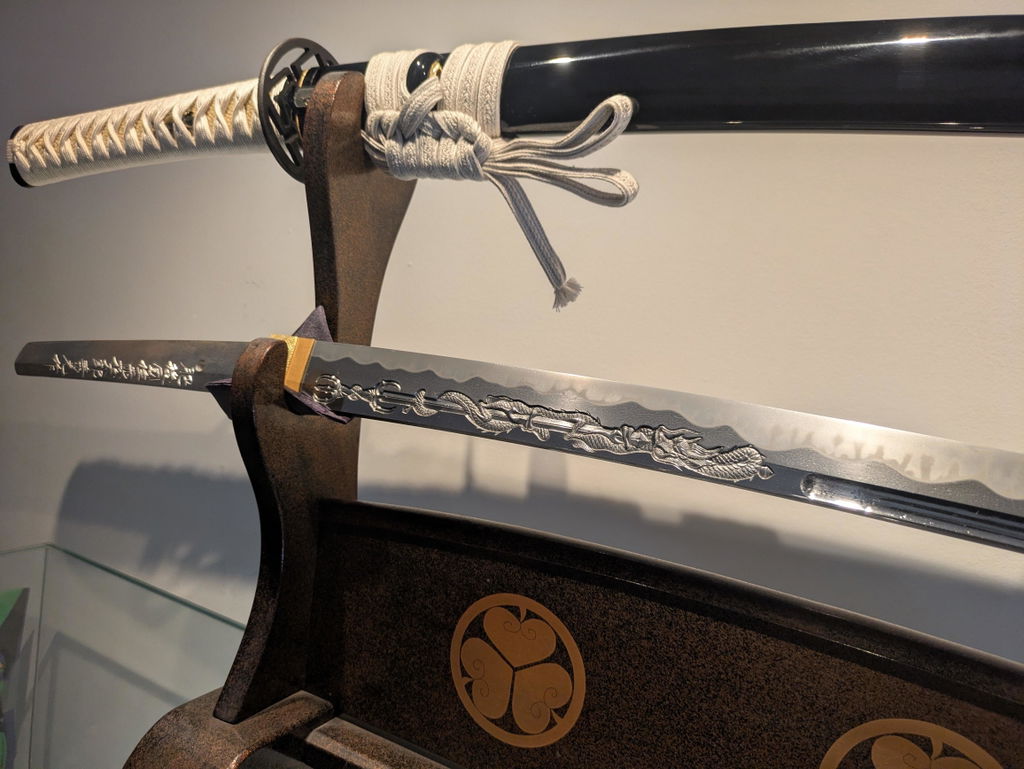
What is beyond dispute is the quality of his work. The blades produced in Kuwana during the first decades of the 16th century were renowned for their exceptional sharpness and aggressive beauty. Muramasa swords are celebrated for their distinctive gunome-midare (irregular wavy) hamon — a turbulent, energetic temper line unlike the more serene patterns favored by rival schools. The Muramasa-ba, as this hamon style became known, was visually dramatic and technically demanding to produce.
Kuwana's geographic location mattered too. The town sits close to Mikawa Province — present-day Aichi Prefecture — which was the home of the Matsudaira clan, the family that would produce Tokugawa Ieyasu. Muramasa blades were thus the local sword of choice for the Mikawa samurai — the very warriors who would go on to found Japan's most powerful shogunate.
The Tokugawa Tragedies — What Actually Happened
The legend of the cursed Muramasa did not arise from nowhere. It was seeded by a series of genuine tragedies — real deaths, real wounds, and real grief — that all, by remarkable coincidence or simple statistical probability, involved Muramasa blades. Because Muramasa swords were so widespread among the Mikawa samurai, any misfortune befalling those around Tokugawa Ieyasu could be connected to one.
The incidents that built the legend unfolded across several decades:
-
15351535 — AssassinationMatsudaira Kiyoyasu — Ieyasu's grandfather
Matsudaira Kiyoyasu, the seventh head of the Matsudaira clan, was assassinated by his own retainer Abe Masatoyo — reportedly on a fatal misunderstanding — using a sword forged by Muramasa. This was the first incident linking the blade to misfortune within the family.
-
15491549 — MurderMatsudaira Hirotada — Ieyasu's father
Ieyasu's father, Matsudaira Hirotada, was stabbed by Iwamatsu Hachiya, who was under the influence of alcohol at the time, using a Muramasa blade — reinforcing the belief in the curse within the clan.
-
c.1560c.1560 — AccidentTokugawa Ieyasu himself — childhood wound
As a child in Suruga, Ieyasu accidentally injured his finger with a Muramasa sword. A minor incident in itself, but one that took on weight in retrospect, once the pattern of family misfortune had been established.
-
15791579 — SeppukuMatsudaira Nobuyasu — Ieyasu's firstborn son
Ieyasu's first-born son, Matsudaira Nobuyasu, was ordered to commit seppuku. The coup de grace was delivered by Amagata Michitsuna — using a Muramasa blade. For Ieyasu, this was perhaps the most devastating blow: the sword of his own lineage turned against his heir.
-
16001600 — Battle woundBattle of Sekigahara
During the Battle of Sekigahara — the decisive engagement that established Ieyasu's supremacy — he sustained a wound from a spear bearing a Muramasa engraving. Even at the moment of his greatest triumph, the Muramasa blade left its mark.
For Ieyasu, this could not be coincidence. It had to be a curse."
The Ban — What Really Happened
The most enduring element of the Muramasa legend is the claim that Tokugawa Ieyasu banned the swords entirely. The reality is considerably more nuanced — and more revealing about how the legend served political purposes.
The official history of the shogunate, Tokugawa Jikki (1849), cites a legend from a 1787 text claiming that Ieyasu regarded Muramasa as cursed and banned them from his family — but this is clearly a fabricated story, given that the Owari-Tokugawa family still holds one of Ieyasu's own Muramasa swords as an heirloom.
What the historical record does suggest is a partial, informal suppression rather than a formal ban. Ieyasu is known to have stopped accepting gifts bearing the Muramasa signature, and those close to him were not permitted to use such blades — though soldiers and common people in his territory were allowed to possess them with little inspection.
The consequences of being caught with a Muramasa could nonetheless be severe. In 1632, Nagasaki magistrate Takenaka Unemenosho Shigeyoshi and his son were arrested on suspicion of crimes. When their properties were seized, 24 Muramasa blades were discovered — upon which both were sentenced to commit seppuku. The legal charge was separate from the swords, but the discovery of 24 Muramasa blades clearly did not help their case. Afraid to face a similar fate, many Muramasa owners began to carve away or alter the signatures on their blades — an act called kaisan (改鏨). Many Muramasa blades in existence today carry such altered signatures.
The Anti-Tokugawa Symbol — When the Curse Became a Weapon
In a remarkable historical reversal, the very fear that the Tokugawa clan projected onto Muramasa swords transformed them into something far more dangerous than a superstition: a political weapon.
During the Bakumatsu period (1853–1868), opponents of the Tokugawa shogunate — the shishi, or anti-Tokugawa activists — sought out Muramasa blades, considering them symbolic curses against the ruling family. Sanada Yukimura, during the Siege of Osaka, carried a Muramasa tantō openly defying the Tokugawa clan. Centuries later, the legend had not faded — it had been weaponized.
A Muramasa was even wielded by Prince Arisugawa Taruhito, the commander-in-chief of the Imperial Army against the Tokugawa shogunate during the Boshin War (1868–1869). The sword that was meant to be suppressed had become the banner of the opposition. The Tokugawa's fear of the Muramasa had, over two and a half centuries, transformed a swordsmith's blade into a symbol of political resistance.
The Legend vs. The Historical Record
What separates the Muramasa myth from the historical reality? The following comparison distills what scholars know from documented evidence versus what popular tradition has embellished.
Why Were Muramasa Blades So Deadly?
Setting aside the supernatural, there is a practical explanation for why Muramasa swords appeared so frequently in violent incidents — one that reflects the craft's extraordinary quality rather than any curse.
Another theory posits that the association with misfortune arose simply because Muramasa swords were exceptionally sharp and durable. These qualities made them popular among warriors, increasing the likelihood of them being used in fatal incidents. A blade favored by every samurai in the region will, by sheer probability, be present at more accidents, more battles, and more tragedies than a blade used by only a few.
Nearly everyone, especially high-ranking officials and daimyō of the shogunate, wanted a Muramasa for its exquisite sharpness and unquestionable reliability on the battlefield. The curse of Muramasa may have been, at its root, simply the curse of being the best sword available — used by everyone, present at everything.
Muramasa in Popular Culture — The Legend Lives On
The 18th century saw the Muramasa legend crystallize into something approaching its modern form. Writers of fiction began drawing inspiration from the curse: from 1781 onwards, various kabuki dramas were written featuring evil Muramasa swords — plays such as Katakiuchi Tenga Jaya Mura (1781) and Kago-tsurube Sato-no-Eizame (1888). On stage, the Muramasa name became shorthand for a weapon wielded by madmen and villains, further cementing its supernatural reputation.
The image was reinforced by scholars: Oscar Ratti and Adele Westbrook wrote that Muramasa swords were "popularly believed to hunger for blood and to impel their warrior to commit murder or suicide." These images, born from theatrical invention, entered the historical record as though they were established fact.
Today, the legend of the "cursed Muramasa" thrives in modern popular culture — appearing in anime, games, and novels as a powerful yet foreboding weapon. The character Senju Muramasa appears in Touken Ranbu, and cursed sword imagery inspired by Muramasa can be found in Demon Slayer and numerous other works. The legend has, if anything, grown stronger with each generation of storytellers who pick it up.
The Collector's Perspective — What a Muramasa Means Today
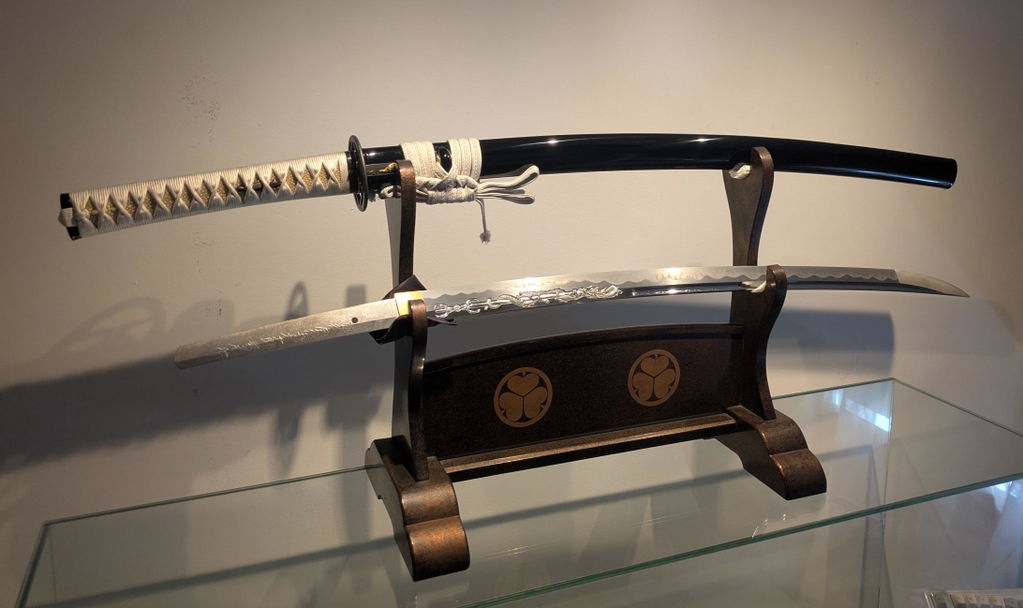
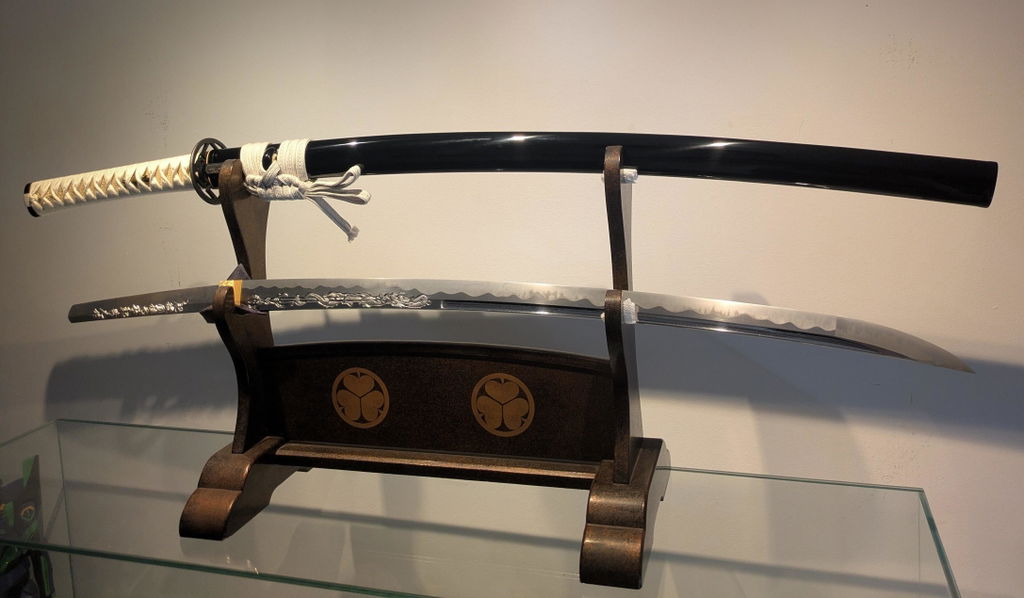
For the modern collector, a genuine Muramasa blade represents one of the most sought-after and complex acquisitions in the world of nihonto. Muramasa swords, due to their historical significance, legendary status, and relative scarcity, are highly prized. Their value is influenced by factors such as the blade's condition, provenance, and historical importance.
Authentication is particularly challenging. Because many owners altered or removed signatures during the period of informal suppression — the act called kaisan — a significant proportion of Muramasa blades in existence today carry modified tangs. Additionally, to satisfy growing demand during the Bakumatsu period, forgeries of Muramasa blades were frequently made. Any purchase requires rigorous NBTHK appraisal and specialist expertise.
What a genuine Muramasa offers, beyond its monetary value, is something rarer: a tangible connection to one of the most extraordinary stories in the history of Japanese culture. A blade that survived suppression, inspired political resistance, defined an era of kabuki theatre, and continues to captivate imaginations five hundred years after it was forged. Cursed or not, that is a remarkable legacy for any work of craft.
Explore our collection
Own a piece of
living Japanese history
Our antique and modern collections are individually sourced, fully authenticated, and documented with NBTHK certification. Every blade tells a story — our specialists are here to help you find yours.
Conclusion — Cursed, or Simply Extraordinary?
The honest answer to the question "Is Muramasa a cursed blade?" is: almost certainly not — and the truth is far more interesting than the myth.
Muramasa swords were the finest blades of their time, used by the most powerful warriors in Japan. Their prevalence in the orbit of the Tokugawa family was a natural consequence of their quality and geography. The tragedies that struck Ieyasu's lineage were real, and the accumulation of grief around the Muramasa name was genuine. But the leap from coincidence to curse was made not by history — it was made by human nature: by the storytelling impulse that finds pattern in pain, and by political operators who found it useful that the people feared a blade.
The real story of Muramasa is this: a craftsman of extraordinary skill produced blades of exceptional quality in a time of war, and those blades were everywhere — in victories, in accidents, in executions, and in grief. Five centuries of literature, theatre, and popular culture did the rest.
That a sword so thoroughly embedded in history, politics, and human imagination can still be held in the hand today — felt, studied, owned — may be the most remarkable fact of all.

Leave a comment: