

Two names stand above all others in the mythology of the Japanese sword. One is spoken with reverence — the master whose blades embody spiritual perfection, whose greatest work has been lost to history for eighty years and may never be found. The other is spoken with awe, and sometimes fear — the smith whose blades cut everything they touch, whose name became synonymous with bloodlust, and whose swords were wielded by the enemies of Japan's most powerful dynasty. Masamune and Muramasa. The saint and the demon. The most famous rivalry in the history of the Japanese sword — and one of the strangest, because it may never have been a rivalry at all.
The Truth That Surprises Everyone
Before anything else, there is a fact about this rivalry that most people — including many collectors — do not know: Masamune and Muramasa almost certainly never met.
Masamune — full name Gorō Nyūdō Masamune — worked during the late Kamakura period, approximately 1288 to 1328. Muramasa — Sengō Muramasa — was active during the late Muromachi period, roughly 1500 to 1530. That is a gap of approximately 150 to 200 years. They were not contemporaries. They could not have competed. They could not have been rivals in any personal sense. The greatest rivalry in Japanese sword history is, at its biographical foundation, entirely fictional.
And yet the rivalry is real — because it exists not between the men but between the blades, and between the philosophies those blades came to represent. The contest between Masamune and Muramasa is not about who was the better swordsmith. It is about what a sword should be: what values it should embody, what relationship it should have with violence, and what it means to make something beautiful that is also made to kill. That is a rivalry that transcends time — and it is why these two names have been inseparable for five centuries.
Two Smiths — Two Worlds
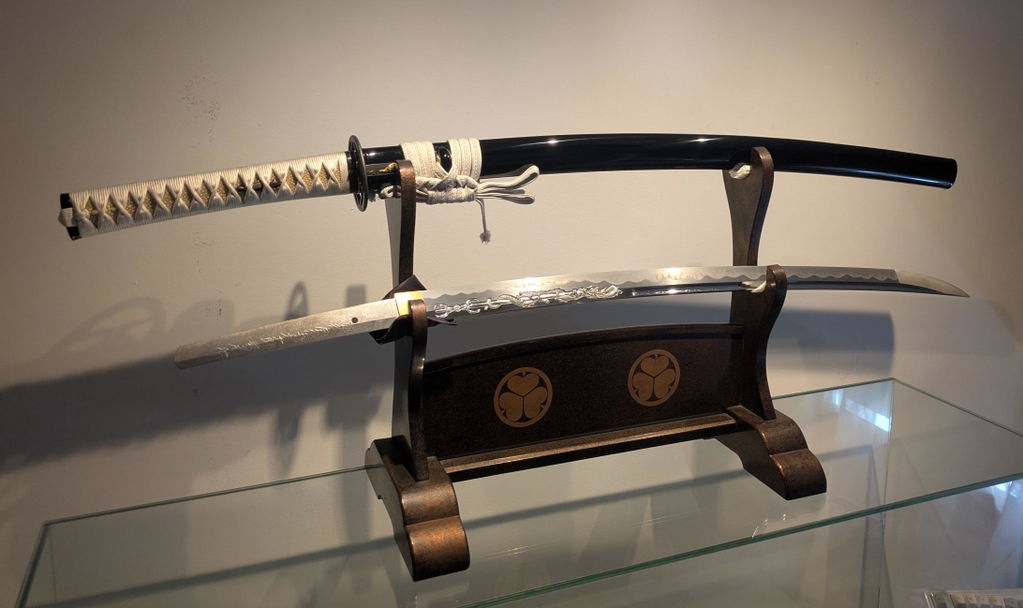
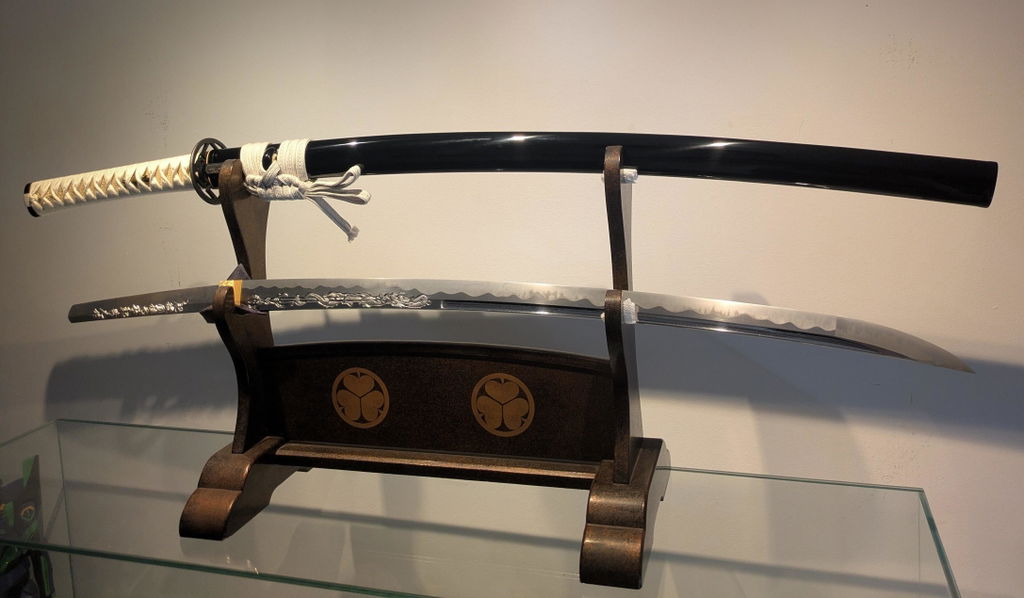
The most celebrated swordsmith in Japanese history. A Buddhist monk-swordsmith working at the seat of the military government, Masamune is credited with creating the Sōshū tradition — the most technically advanced and visually dramatic of the five great schools. His blades are characterised by abundant nie, wild kinsuji and sunagashi, and a physical perfection that no subsequent smith has been unanimously agreed to have surpassed. His greatest work, the Honjo Masamune, disappeared in December 1945 and has not been seen since.
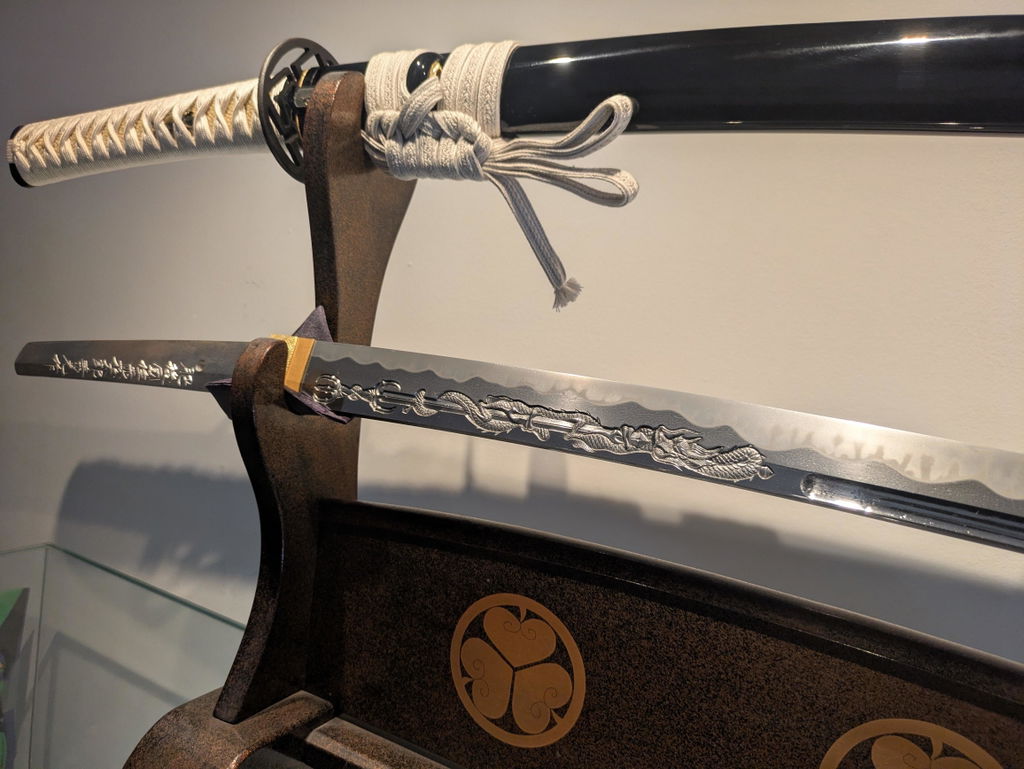
The most feared name in Japanese swordsmithing — and possibly the most misunderstood. Muramasa was not a single smith but a school spanning two or three generations. The blades produced at Kuwana were renowned for their exceptional sharpness and aggressive beauty, with a distinctive turbulent gunome-midare hamon unlike any other school. They were the preferred weapons of the Mikawa samurai — the very warriors who would produce Tokugawa Ieyasu — and their connection to the Tokugawa family's tragedies gave rise to one of the most enduring legends in Japanese cultural history.
The Legend of the Stream — Japan's Most Famous Sword Story
No account of Masamune and Muramasa can omit the legend that crystallised their opposition into a single, unforgettable image. It is a story that was recorded and popularised by Zen scholar Daisetz T. Suzuki in his celebrated work Zen and Japanese Culture, and it has been retold so many times that it has achieved the status of cultural mythology.
Two blades are placed in a flowing stream to test their sharpness. Muramasa's sword cuts everything that touches it — leaves, fish, debris — indiscriminately and without hesitation. Nothing that comes near it survives. Muramasa begins to boast that his blade is clearly the superior weapon.
Then Masamune's sword is placed in the same stream. The leaves that float toward it part around it and flow on untouched. The fish swim past it unharmed. Nothing is cut that did not need to be cut.
A passing monk who has watched both tests delivers the verdict: "The Muramasa is a fine sword, but it is a bloodthirsty and merciless weapon. The Masamune is a superior sword. It does not discriminate between what should and should not be cut. It is a sword without malice — and therefore, a sword of greater wisdom."
The leaves avoid the Masamune. The Masamune was not bent on killing — it was more than a cutting machine. But the Muramasa could not go beyond that quality. There was nothing divinely inspiring in it.
The story is almost certainly not historically accurate. It was composed long after both smiths were dead — part of the mythologising process by which Japanese culture transformed two craftsmen into symbols. But its power is undeniable, because it captures something true about how these blades were experienced and understood: one as an instrument of spiritual perfection, the other as an instrument of terrible, indiscriminate destruction.
In the imagery of the stream, every value that Japanese culture has placed on the sword — restraint, precision, spiritual discipline, the warrior's responsibility not to kill unnecessarily — is embodied in the Masamune. And every fear about the sword — bloodlust, compulsion, the violence that cannot be controlled — is embodied in the Muramasa. The two blades became the poles of an entire moral universe.
It cuts only what needs to be cut — and that is why it is the greater blade."
The Technical Reality — What the Blades Actually Are
Behind the mythology lie two genuine and remarkable bodies of craft work. What does the historical and technical record actually say about these blades?
| Feature | Masamune 正宗 | Muramasa 村正 |
|---|---|---|
| Period | Late Kamakura (c.1288–1328) | Late Muromachi (c.1500–1530) |
| Location | Kamakura, Sagami Province (Kanagawa) | Kuwana, Ise Province (Mie) |
| School tradition | Founder of Sōshū-den — one of the five great traditions | Independent — Mino-influenced, distinct Ise style |
| Hamon character | Wild, turbulent notare / midareba — abundant sparkling nie | Aggressive gunome-midare — turbulent, active, sharply pointed |
| Defining markers | Kinsuji and sunagashi — bright linear effects unique to Sōshū work | Gunome-ba — irregular pointed formations, distinct from all other schools |
| Technical reputation | Pinnacle of Japanese swordsmithing — universally recognised as supreme | Exceptional sharpness and durability — ō-wazamono (great cutting blade) tier |
| Training lineage | Studied under Shintōgo Kunimitsu; taught the "Ten Great Students" including Sadamune and Go Yoshihiro | Origins disputed; later sometimes described as a student of Masamune — almost certainly legendary |
| Surviving works | Extremely rare — fewer than 40 authenticated blades survive. Honjo Masamune missing since 1945 | More numerous — but many signatures altered (kaisan) during Tokugawa suppression |
| Wazamono ranking | Beyond classification — considered the apex | Yoki wazamono (fourth tier) in Kaihō Kenjaku — though this may reflect political bias |
The Famous Blades — Swords That Changed History
Both smiths produced blades that left indelible marks on Japanese history. These are the pieces that collectors know by name — swords whose stories are inseparable from the legend of their makers.
Masamune's great works
- The Honjo Masamune — Designated a National Treasure in 1939 and the hereditary treasure of the Tokugawa shōgunate for over 250 years. Surrendered to Allied forces at Mejiro police station in December 1945 by the last Tokugawa head, Iemasa. Its current whereabouts are unknown — the most searched-for missing cultural artifact in Japan.
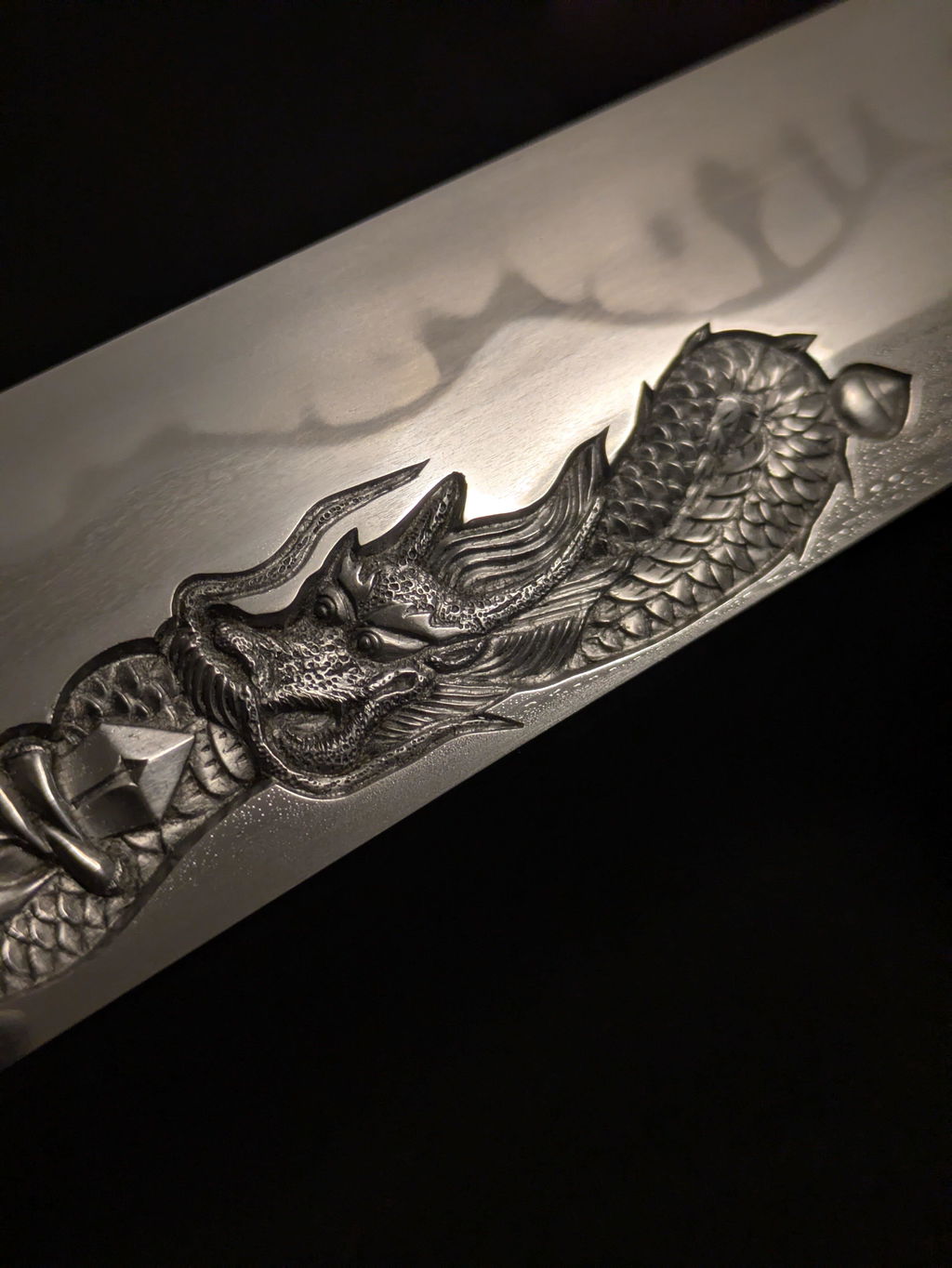
- The Fudō Masamune — A tantō held in the Tokyo National Museum as a National Treasure. Named after the Buddhist deity Fudō Myōō whose image is engraved on the blade, it represents the spiritual dimension of Masamune's work most clearly.
- The Daikoku Masamune — Another tantō held in the Tokugawa Art Museum, Nagoya. Its engraved image of Daikoku, the god of fortune, reflects the intimate relationship between the sword and Japanese religious practice during the Kamakura era.
- The Kyōgoku Masamune — A tachi held in the Tokyo National Museum, also a National Treasure. Among the most visually dramatic surviving Masamune works — the wild hamon fully in evidence.
Muramasa's famous blades
- The Tokugawa tragedies collection — No single "Muramasa blade" is as famous as the pattern: the sword that killed Ieyasu's grandfather Kiyoyasu (1535), the blade that killed his father Hirotada (1549), the sword used in the seppuku of his first-born son Nobuyasu (1579), and the spear bearing a Muramasa inscription that wounded Ieyasu at Sekigahara (1600). No other smith's work is so intertwined with a single family's grief.
- The Owari-Tokugawa Muramasa — Among the supreme ironies of the Muramasa legend, one of Ieyasu's own swords — a Muramasa — was preserved by the Owari branch of the Tokugawa family and remains a family heirloom. The man who feared the blade owned one.
- Prince Arisugawa's Muramasa — The blade wielded by Prince Arisugawa Taruhito, commander of the Imperial Army, during the Boshin War (1868–69) against the Tokugawa shogunate. The "cursed" blade had become the banner of the revolution.
Two Philosophies — What the Rivalry Really Means
Strip away the legend, the fabricated student–teacher relationship, and the politically motivated curse narrative, and what remains is a genuine philosophical opposition — one that cuts to the heart of what the Japanese sword tradition has always been about.
Masamune represents the sword as spiritual discipline. His blades emerge from the Sōshū tradition that developed at Kamakura — the seat of Zen Buddhist military culture — at a moment when the relationship between the warrior class and Buddhist practice was at its most intimate. The great blades of Masamune are simultaneously weapons and objects of spiritual significance: technically supreme, visually extraordinary, and imbued with a quality that transcends their function. The story of the stream — the sword that does not cut what should not be cut — expresses this perfectly. The ideal sword is not the sharpest blade; it is the blade wielded by the wisest hand.
Muramasa represents the sword as pure instrument. The Kuwana blades were forged for the Mikawa samurai — hard, practical men in a violent period who needed weapons that would perform, not inspire. The gunome-midare hamon of a Muramasa blade looks like what it is: aggressive, turbulent, functional. There is beauty in it, but it is not a serene or contemplative beauty. It is the beauty of something perfectly optimised for its purpose — and that purpose is to cut. The Tokugawa suppression, and the subsequent use of Muramasa swords as anti-Tokugawa symbols during the Bakumatsu, completed this narrative: a blade that the most powerful dynasty in Japanese history feared became the weapon of those who sought to end that dynasty.
Masamune and Muramasa are not really about two swordsmiths. They are about two answers to the question that the sword always asks: what is this weapon for? Is it an instrument of spiritual cultivation, or a tool of destruction? The Japanese sword tradition has always held that these are not opposites — that the finest warrior is the one who can hold both truths simultaneously. And perhaps that is why the two names remain inseparable.
The Legacy — Masamune and Muramasa in Modern Culture
The reach of these two names into modern popular culture is extraordinary — and growing. From Japanese literature to global video games, the Masamune–Muramasa opposition has become one of the most recognisable motifs in world entertainment:
Both "Masamune" and "Muramasa" appear as named weapons across multiple Final Fantasy titles. Sephiroth's impossibly long sword in FF VII is called Masamune. The Muramasa is typically a powerful dark or cursed weapon. These appearances have introduced both names to hundreds of millions of players worldwide.
The browser game and anime Touken Ranbu anthropomorphises famous swords as characters — including multiple Masamune works and the Muramasa. The franchise has been a major driver of interest in nihonto among younger Japanese and international audiences.
Vanillaware's acclaimed action game centres entirely on the Muramasa legend, presenting the cursed blades as living objects of dark power in feudal Japan. Its visual style drew directly from ukiyo-e woodblock print tradition and introduced the Muramasa legend to a new generation of Western players.
Both series draw heavily on nihonto mythology. Rurouni Kenshin's sakabatō (reverse-blade sword) directly inverts the Muramasa concept — a sword that cannot kill by design. Demon Slayer's iconic blade colours and spiritual resonance echo Masamune's association between steel and soul.
The persistence of Masamune and Muramasa in popular culture reflects something deeper than brand recognition. These two names touch something universal: the opposition between creation and destruction, between discipline and chaos, between the human capacity for beauty and the human capacity for violence. That is a story that never becomes dated — and it is why, six or seven centuries after these blades were forged, the names of the men who made them are still being spoken.
to the living smiths of today
The traditions that Masamune established continue in the hands of licensed Japanese smiths today. Our collection spans antique swords from the great classical schools — including Sōshū-den works — and modern shinsakutō by contemporary masters. Every piece is authenticated, documented, and shipped directly from Japan.
In Closing — A Rivalry Beyond Time
The historical truth is that Masamune and Muramasa never competed, never met, and probably never heard of each other. The legendary truth is that their blades have been in contest for five centuries — and the contest shows no sign of ending.
What makes this rivalry endure is not the swords themselves, extraordinary as they are. It is what the swords represent: the two faces of a tradition that has always understood that beauty and violence are not opposites, that the greatest craft can produce the most terrible instrument, and that the discipline required to make such a thing perfectly is the same discipline required to wield it wisely.
Masamune showed that a sword could be more than a cutting machine. Muramasa showed that there was nothing shameful in being the best cutting machine ever made. Between those two poles — spiritual aspiration and brutal excellence — lies the full range of everything the Japanese sword tradition has ever achieved.
Both are right. Both are necessary. And perhaps that is the deepest truth the rivalry contains.
Sources: TV Tropes — "Muramasa and Masamune"; Musashi Swords — "Masamune and Muramasa: The Rivalry of Japan's Two Most Legendary Smiths"; OrientalSouls — "Masamune and Muramasa: The Mysteries of Japan's Two Greatest Katana Swordmakers" (Parts 1 & 2); Timeblade Guild — "Muramasa vs. Masamune: A Swordsmith Rivalry"; Connolly Cove — "Muramasa Katana: Legendary Cursed Sword of Japan"; Daisetz T. Suzuki, Zen and Japanese Culture (1959); Markus Sesko, Swordsmiths of Japan (2015); Tokyo Nihonto.
Note: Historical dates for both smiths are approximate and disputed by scholars. The student–teacher relationship between Muramasa and Masamune is considered legendary rather than historical. Many accounts of both smiths blend documented history with cultural mythology accumulated over centuries.

Leave a comment: