

In the world of Japanese swordsmithing, there is a title that stands above all awards, all prizes, and all competitive rankings. It is not given for a single exceptional piece, or for winning a particular competition. It is given for a sustained career of excellence so consistent and so profound that the competition's judges have determined there is no longer anything to judge. Mukansa (無鑑査) — literally "without examination" — is the highest designation a living Japanese swordsmith can receive. This is the story of what it means, how it is earned, and the masters who hold it.
What Is Mukansa — Beyond Competition
The Mukansa title originates in the Japanese art world: mukansa originally meant that a work is allowed to be exhibited without examination by the exhibition organiser, taking into consideration its past achievements. In the sword world, the NBTHK (Nihon Bijutsu Token Hozon Kyokai) applied this concept to swordsmiths through the annual Shinsakuto (New Sword) Exhibition.
The formal criteria for Mukansa designation are exacting:
- The swordsmith must have won at least 15 prizes at the Modern Sword Art Exhibition
- Of those 15, at least 8 must be special awards (the highest tier of competitive prizes)
- The smith must have won the Prince Takamatsu Memorial Prize (高松宮記念賞) — the highest individual award — at least twice
- The application is reviewed by the NBTHK board and must receive formal approval
- Once designated, the title is not permanent: a smith who ceases exhibiting, or whose skills are judged to have declined significantly, may have the designation withdrawn
This last point is critical: Mukansa is not a lifetime achievement award. It is an active status that requires continued excellence. A Mukansa smith is expected to be a role model for swordsmiths, to continue exhibiting, and to mentor the next generation. It is simultaneously the highest honour the Japanese sword world can confer — and an ongoing obligation.
What Mukansa Means for the Collector
For international collectors, the Mukansa designation provides one of the clearest quality signals available in the modern sword market. A sword by a Mukansa smith carries the following implicit assurances:
The smith has been evaluated, repeatedly and rigorously, by Japan's most qualified panel of sword experts. Their work has been judged — under blind evaluation conditions — to meet the highest standards of traditional Japanese swordsmithing on multiple occasions. The attribution is irrefutable: unlike antique swords where attribution is a matter of scholarly judgment, a Mukansa smith's work comes with complete provenance from the moment of forging. And the cultural standing is formally recognised: Mukansa status is acknowledged by the Japanese government's Agency for Cultural Affairs as a mark of distinguished achievement in an Important Intangible Cultural Asset.
A sword by a Mukansa smith is, in the most literal sense, a work by a master — verified as such by the most rigorous evaluation system in the world of traditional craft.
It is a recognition that every work this smith produces is exceptional."
The Masters — Profiles of Notable Mukansa Swordsmiths
吉原 義人
Tokyo Important
Cultural Property
Yoshihara Yoshindo is, by almost universal consensus among Western collectors and scholars, the most internationally recognised living Japanese swordsmith. His family has made swords for ten generations, and he himself learned the art from his grandfather Yoshihara Kuniie, who began making swords in 1933 in Tokyo and was ranked among the top swordsmiths in Japan during his career. Yoshindo received his licence as a smith in 1965 and won his first competition award in 1972.
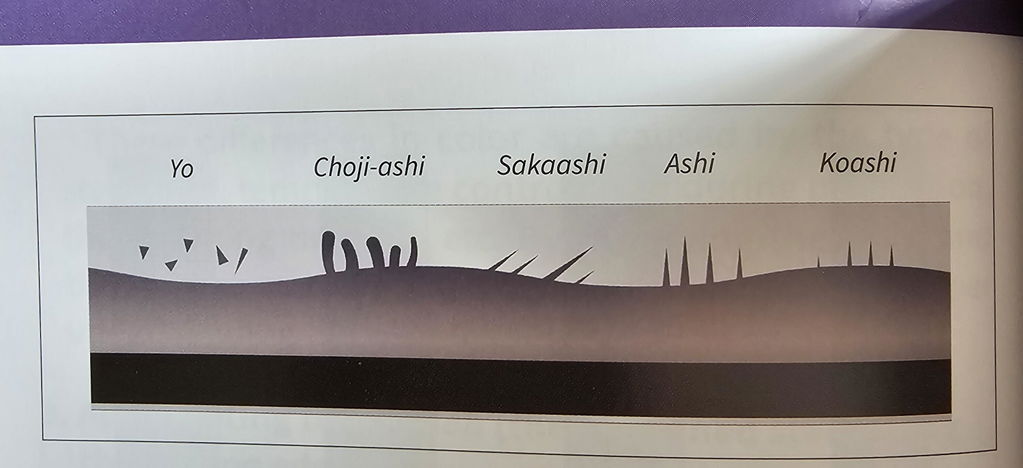
Through experimentation and persistence, Yoshindo has not only "rediscovered" many lost secrets of the Kamakura period of sword making but has contributed his own improvements. His blades have a unique spirit to them that is immediately recognizable. His swords often feature a chōji-midare (clove patterned) hamon — one of the most technically demanding hamon patterns in the entire tradition.
Yoshihara is recognised as an Important Cultural Property by the Tokyo Metropolitan Government. His work is held in the collections of the Metropolitan Museum of Art in New York and the Museum of Fine Arts in Boston — making him one of the very few living swordsmiths whose work has entered major Western museum collections. He is also the co-author of The Craft of the Japanese Sword (with Leon Kapp), the most widely read English-language introduction to swordsmithing in existence.
Yoshihara Yoshindo's international reputation makes his work among the most sought-after by Western collectors. A Yoshihara sword comes with the deepest possible authentication pedigree — Mukansa status, museum-collection recognition, and complete provenance from an active Tokyo workshop that has been producing documented masterworks for over sixty years.
月山 貞利
President, All Japan
Swordsmiths Assoc.
Gassan Sadatoshi is the inheritor of one of the most distinctive traditions in Japanese swordsmithing — the Gassan family style, characterised by the extraordinary ayasugi-hada (wave-grain) pattern in the steel. This grain pattern — concentric undulating lines that run the length of the blade like topographic contours — is unlike anything produced by any other school, and is the immediate visual signature of Gassan-tradition work.
Sadatoshi is the son of Gassan Sadaichi, who was designated a Living National Treasure — one of only a handful of swordsmiths ever to receive that honour. Sadatoshi was designated Mukansa in 1982 and is the president of the All Japan Swordsmiths Association, placing him at the institutional centre of the contemporary swordsmithing world. The Gassan family represents over a century of continuous transmission of one of Japan's most visually distinctive and historically significant swordsmithing traditions.
The ayasugi-hada of Gassan work is immediately identifiable and unlike anything else in Japanese swordsmithing — making Gassan pieces uniquely recognisable even to collectors still developing their eye. The combination of this distinctive steel character with Mukansa-level competitive recognition and the Living National Treasure lineage makes Gassan Sadatoshi's work among the most culturally significant available in the modern market.
隅谷 正峯
Living National
Treasure (1979)
Sumitani Masamine is one of the most celebrated modern swordsmiths in Japan — a Mukansa master designated in 1967, recognised as a Living National Treasure in 1979, and the recipient of the Masamune Prize three times. His family ran a soy-sauce manufacturing business, but rather than entering the family trade, Masamine opted to study swordsmiths, graduating from Ritsumeikan University in 1941 with a degree in mechanical engineering.
Under the guidance of Sakurai Masayuki of the Bizen sword school tradition, he became one of the best modern sword crafters. He is distinguished in making katanas and tanto knives with chōji midare, a clove pattern hamon that is extremely hard to achieve. His blades are prized by collectors for their extraordinary precision — a mechanical engineer's analytical precision combined with a master craftsman's intuitive feel for steel.
Sumitani Masamine's works now circulate only in the secondary market, making them increasingly rare and valuable. A documented Sumitani piece with clear provenance represents a museum-quality acquisition for any serious collector.
Sumitani Masamine's status as a Living National Treasure — the highest cultural designation Japan can confer on a craftsperson — combined with his Mukansa designation and multiple Masamune Prize wins places his works at the absolute pinnacle of the modern sword market. Any opportunity to acquire a documented Sumitani blade should be treated as exceptional.
天田 昭次
Living National
Treasure (1997)
A three-time Masamune Prize awardee and a Living National Treasure, Amata Akitsugu joins the ranks of the world's greatest contemporary swordsmiths with his meticulous craftsmanship and innovative approach to preserving ancient sword-making techniques. Amata's blades feature intricate details and elegant hamon patterns. He devoted his life to studying historical swords and perfecting his craft, including smelting tamahagane steel at home, to ensure the survival of Japan's rich sword-making heritage.
Amata served as a director of the NBTHK and Chairman of the All Japan Swordsmiths Association — placing him at the very centre of both the artistic and institutional life of the Japanese sword world. He was one of the most complete figures in the history of modern Japanese swordsmithing: a master craftsman, a scholar of the historical tradition, an institutional leader, and a dedicated teacher.
Amata Akitsugu's triple combination — Living National Treasure, NBTHK Director, and three-time Masamune Prize winner — places him in a category shared by only a handful of swordsmiths in the tradition's entire post-war history. Works by Amata are museum-grade acquisitions, and their rarity in the secondary market reflects the exceptional demand they attract from serious collectors worldwide.
大野 義光
Active
Born in 1948, Ono Yoshimitsu, having received tutelage from Yoshihara Yoshindo, is regarded as one of the best Japanese swordsmiths today. He holds the title of Mukansa, a top-tier designation, and many consider him a likely future National Living Treasure.
Trained by Yoshihara Yoshindo — himself a Mukansa master — Ono Yoshimitsu represents the successful transmission of the highest-level craft from one master generation to the next. His blades demonstrate the full range of classical techniques, with particular recognition for work in the Bizen tradition. As an active smith still accepting commissions, Ono Yoshimitsu offers a rare opportunity: the chance to commission a blade by a Mukansa master with complete provenance from the forge.
For collectors interested in commissioned modern swords at the highest level of recognised quality, an active Mukansa smith like Ono Yoshimitsu represents a compelling proposition. A commissioned piece carries documented provenance from the day of forging — the clearest possible attribution and the most complete ownership history available in the modern market.
The Complete Mukansa List — Every Smith Since 1958
Since 1958, when the title of Mukansa was first awarded in the sword world, only 39 swordsmiths have been awarded as of 2017. The following is the complete record of Mukansa designations from Markus Sesko's authoritative reference:
| Year | Swordsmith | Japanese name | Notes |
|---|---|---|---|
| 1958 | Takahashi Sadatsugu | 高橋貞次 | First Mukansa designation |
| 1960 | Miyairi Akihira / Yukihira | 宮入昭平・行平 | |
| 1967 | Gassan Sadaichi | 月山貞一 | Living National Treasure |
| 1967 | Sumitani Masamine | 隅谷正峯 | Living National Treasure · 3× Masamune Prize |
| 1970 | Imaizumi Toshimitsu | 今泉俊光 | |
| 1972 | Kawashima Tadayoshi | 川島忠善 | |
| 1973 | Amata Akitsugu | 天田昭次 | Living National Treasure · 3× Masamune Prize · NBTHK Director |
| 1973 | Ōsumi Toshihira | 大隅俊平 | Living National Treasure · 3× Masamune Prize |
| 1981 | Endō Mitsuoki | 遠藤光起 | |
| 1981 | Sakai Ikkansai Shigemasa | 酒井一貫斎繁正 | |
| 1981 | Yakuwa Yasutake | 八鍬靖武 | |
| 1981 | Hokke Saburō Nobufusa | 法華三郎信房 | |
| 1981 | Nigara Kunitoshi | 二唐国俊 | |
| 1982 | Yoshihara Yoshindo | 吉原義人 | Active · Tokyo Important Cultural Property · Museums: MMA, MFA Boston |
| 1982 | Yoshihara Kuniie III | 吉原国家 | |
| 1982 | Gassan Sadatoshi | 月山貞利 | Active · President, All Japan Swordsmiths Association |
| 1985 | Tanigawa Moriyoshi | 谷川盛吉 | |
| 1985 | Kanbayashi Tsunehira | 上林恒平 | Active |
| 1986 | Yamaguchi Kiyofusa | 山口清房 | Active |
| 1987 | Kawachi Kunihira | 河内国平 | Active |
| 1987 | Ōno Yoshimitsu | 大野義光 | Active · Trained by Yoshihara Yoshindo |
| 1989 | Takahashi Tsuguhira | 高橋次平 | |
| 1990 | Sō Tsutomu | 宗勉 | |
| 1995 | Mikami Sadanao | 三上貞直 | Active |
| 1995 | Miyairi Norihiro | 宮入法廣 | Active |
| 1996 | Enomoto Sadayoshi | 榎本貞義 | Active |
| 1996 | Seto Yoshihiro | 瀬戸吉廣 | Active |
| 1996 | Hiroki Hirokuni | 広木弘邦 | Active |
| 2000 | Miyairi Kozaemon Yukihira | 宮入小左衛門行平 | Active |
| 2000 | Okubo Kazuhira | 大久保和平 | Active |
| 2003 | Yoshihara Yoshikazu | 吉原義一 | |
| 2006 | Ogata Kanekuni | 緒方兼国 | Active |
| 2010 | Matsuda Tsuguyasu | 松田次泰 | Active |
| 2014 | Matsuba Kunimasa | 松葉国正 | Active |
| 2017 | Kubo Yoshihiro | 久保善博 | Active |
| 2019 | Takami Kuniichi | 高見国一 | Active |
living swordsmiths
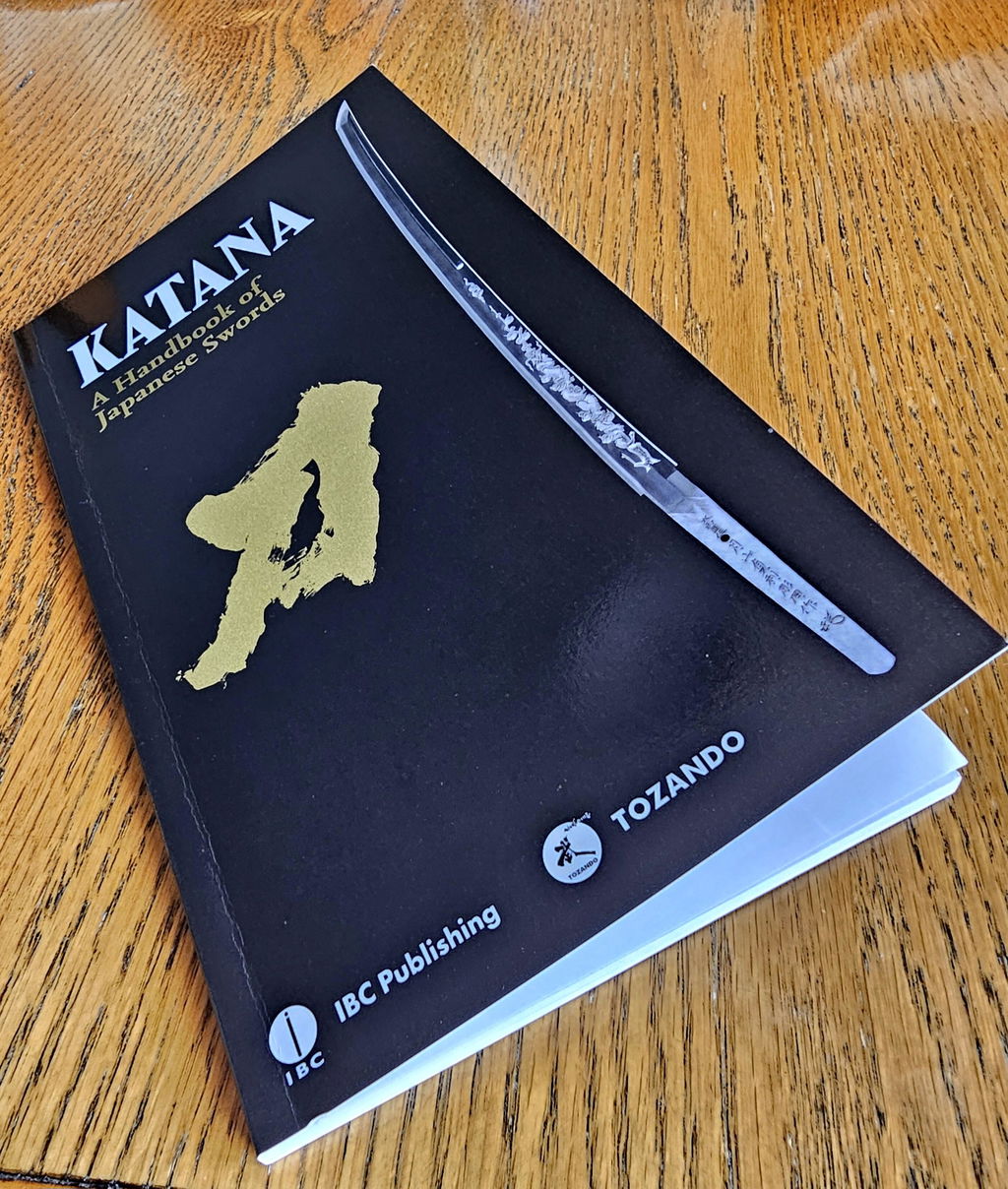
Gallery Tozando in Kyoto and our online collection feature works by Mukansa-level smiths — fully documented, NBTHK certified, and shipped directly from Japan to collectors in over 30 countries. Enquire about availability, commissions, and specific smiths.
In Closing — The Living Proof
The Mukansa swordsmith is the living proof that a tradition over a thousand years old has not merely survived but continues to achieve excellence. Every blade produced by a Mukansa master connects the collector directly to the best that this tradition can produce in the present — and through that present, to the entire history of the craft that shaped it.
To own a sword by a Mukansa smith is to own the tradition at its current peak. It is the most direct possible connection between your collection and the living continuity of Japanese swordsmithing — verified by Japan's most rigorous appraisal system, documented from the moment of forging, and representative of an achievement that fewer than forty craftspeople have ever reached.
The road to Mukansa takes decades. The blade that emerges at the end of that road takes its place in a lineage that stretches back to the Kamakura period — and forward into whatever future the tradition will create.
Sources: Tozando Katana Shop — "What is Mukansa?"; Tokyo Nihonto — "Top 15 Famous Japanese Swordsmiths"; Markus Sesko — "Mukansa/Ningen-Kokuhō List" (2024); Bushido Shop — "Mukansa Swordsmiths: Masters Beyond Judgment"; SwordIs — "Top 10 Famous Japanese Swordsmiths from History and Today"; Wikipedia — Yoshindo Yoshihara, Masamine Sumitani; Art Knife Invitational — Bio Yoshindo Yoshihara; Amazon — The Art of the Japanese Sword (Yoshihara / Kapp); Toshoko Knife Arts — "Tatsuto Yamano: The Path of a Young Swordsmith."
Note: "Active" status reflects available information as of May 2026. Swordsmith availability for commissions varies; contact Tozando for current information. The Mukansa list reflects designations through 2019 per available public records; additional designations may have been made subsequently.

Leave a comment: