

There is a belief circulating in Western Japanese sword collecting communities that is repeated so often and so confidently that many newcomers accept it as established fact: if a sword has no NBTHK certificate, it is probably fake. This belief is understandable — it follows logically from the collecting conventions of coins, stamps, sports cards, watches, and most other Western collectibles, where the absence of third-party authentication genuinely is a red flag. The problem is that Japanese swords do not work like those collecting categories. The NBTHK certification process is voluntary, expensive, logistically demanding, and available to only a fraction of the genuine nihonto that exist in the world. "No certificate" means one specific thing: the question has not been formally asked. It does not mean the answer is no.
Why "Certificate = Authentic" Works Elsewhere — and Why It Fails Here
In most Western collecting categories, the rule is straightforward: a third-party certificate from a recognised grading or authentication body is a reliable indicator of authenticity, and its absence is a reliable reason for caution. This rule works because of specific structural features of those markets — and because those features are absent in the Japanese sword market, the rule does not transfer.
- Certification is fast — days to weeks, not months
- Certification is affordable relative to item value
- Certification can be done domestically in most countries
- The item does not need to travel internationally
- Multiple competing certification bodies exist
- Certified items command a large premium, creating strong incentive
- Forgeries are common enough that authentication is essential
- Uncertified items are genuinely harder to sell
- Certification requires physical presence in Japan — twice yearly events
- Submission costs ¥40,000+ per blade before logistics
- International shipping of a nihonto is a legal, documented process
- Waiting time from submission to result can be months
- Millions of genuine registered nihonto predate the NBTHK system
- Many owners never knew the system existed or chose not to engage
- Certified items sell for more — but uncertified genuine blades sell too
- Forgery detection requires specialist eye, not just a certificate check
The structural difference is decisive. When certification is fast, cheap, and local, rational owners of genuine items will certify them. When certification is slow, expensive, and requires international shipping, many rational owners of genuine items will not certify them — especially if they purchased for personal appreciation rather than resale, if they acquired through estate inheritance, or if they simply were not aware the system existed.
The absence of a certificate tells you that the owner did not submit the blade for examination. It tells you nothing about whether the blade would pass that examination if submitted. These are completely different pieces of information — and confusing them is the source of the misconception.
What the NBTHK Certification Process Actually Involves
To understand why so many genuine nihonto lack NBTHK papers, it helps to understand precisely what the certification process requires. This is not widely known outside Japan — and when Western collectors learn the practical details, the surprise of uncertified genuine blades tends to dissolve.
Seven Reasons a Genuine Blade Has No Certificate
When you encounter an uncertified nihonto from a reputable Japanese dealer, one or more of the following typically explains the absence of papers — none of which have any bearing on the blade's authenticity.
The most common reason by a significant margin. Japan has an estimated 2.5 million registered nihonto. The NBTHK has certified a fraction of these. The vast majority of genuine, registered, legally-documented Japanese swords have simply never been submitted for examination — because their owners purchased for personal appreciation, because they inherited the blade and had no interest in the market, because they were unaware the system existed, or because they did not consider the cost and logistics worthwhile. This is not suspicious. It is the mathematical reality of a voluntary certification system applied to millions of objects.
A blade that was certified thirty or forty years ago may have become separated from its papers through multiple ownership changes, estate dispersals, storage re-organisation, or simple record-keeping failures. The NBTHK maintains its own records, and a specialist dealer can often trace a blade's certification history even when the physical papers are absent. A blade that was once certified and whose papers were lost is not an uncertified blade in the meaningful sense — it is a blade awaiting resubmission, which any owner can pursue.
The post-war period saw enormous quantities of nihonto change hands rapidly — through Allied occupation-era confiscation and return programmes, estate settlements, and the rapid social changes of the 1940s through 1960s. The NBTHK's certification system took years to reach broad public awareness, and many blades registered in this period were never subsequently submitted. An uncertified blade from a family collection established in the 1950s may simply reflect an owner who never encountered the NBTHK system at all.
In Japan's tightly-networked sword world, certain blades and certain collections are known to specialist dealers and appraisers without formal documentation. A blade that has been examined informally by multiple respected specialists, and whose quality and attribution are agreed upon within the community, may never be submitted to the NBTHK simply because formal certification adds nothing to the knowledge already available about it. This is more common in Japan's domestic market than in international collecting, but it represents a genuine category of uncertified genuine blades.
For a blade worth ¥300,000–¥400,000, the cost of submission (fees, shipping, insurance, logistics, waiting time) may represent 10–15% of the blade's value — for an uncertain outcome. An owner who knows the blade is genuine, plans to keep it, and has no pressing need for a formal certificate may rationally decide that the cost and complexity are not worthwhile. This is not a suspicious decision. It is a practical one that many genuine owners make every year.
Reputable dealers sometimes offer uncertified genuine blades at prices that reflect the absence of certification — giving buyers the opportunity to acquire the blade, submit it themselves, and potentially realise a significant gain if it certifies at the expected level. This is a legitimate and often excellent route into the market for collectors with the knowledge and patience to navigate it. Tozando's specialists can advise on whether a specific uncertified piece is a strong candidate for NBTHK submission.
For certain categories of blade — particularly Edo-period regional work where attribution is inherently general, or blades where the physical condition limits what formal examination can add — the value of NBTHK submission is limited. An owner who has had the blade assessed informally and knows what it is may see no purpose in formal certification that will likely confirm what is already known at modest attribution specificity. This is a specialist-level judgement, but it is a legitimate one.
the question was not formally asked.
It does not mean the answer is no."
What Actually Detects Counterfeits — and What Doesn't
The deeper problem with "certificate = authentic" as a rule is that it misidentifies how Japanese sword forgeries actually work — and therefore misidentifies what protection actually looks like.
The most dangerous forgeries in the nihonto market are not uncertified blades. They are blades with fraudulent certificates — certificates from bodies that sound authoritative but are not the NBTHK, or in rare cases, counterfeit NBTHK papers on genuine blades that the certificate misattributes. A buyer who uses "has a certificate" as their primary authenticity test is not protected against the most sophisticated fraud in the market. They are protected only against the most obvious fraud — which a basic check of the issuing body's legitimacy would also detect.
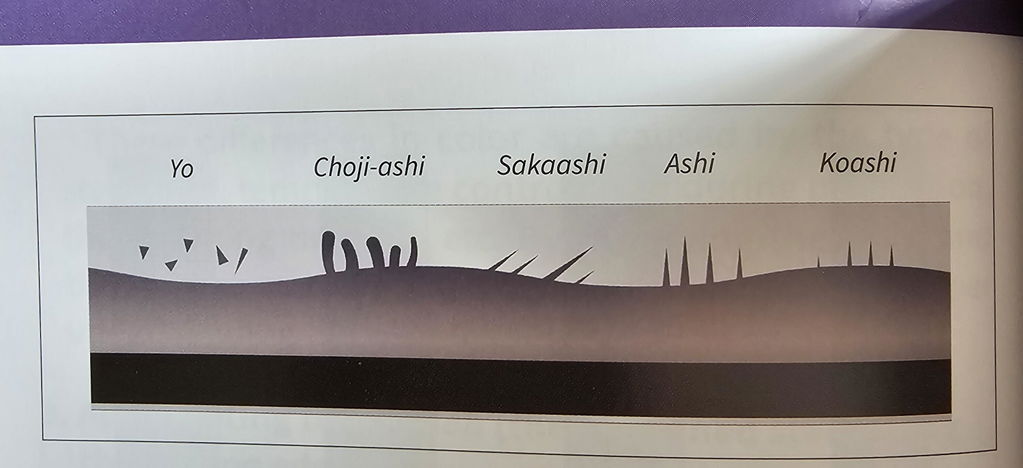
What actually detects counterfeits in the nihonto market is specialist knowledge applied to the physical object: the jihada, the hamon, the hataraki, the nakago condition, the geometry of the sugata, the consistency of the steel's appearance with the claimed period and school. These are things that can be assessed on an uncertified blade as readily as a certified one — and that a forged certificate on a fake blade cannot fake for an experienced eye.
How Tozando Assesses and Describes Uncertified Pieces
Every piece in Tozando's collection — certified or uncertified — is assessed by our specialists before being listed. For uncertified pieces, this assessment draws on the same body of knowledge that underpins our evaluation of certified blades: the physical examination of the jihada and hamon, the assessment of the nakago condition and its consistency with the claimed period, the evaluation of the sugata and its period-appropriateness, and the comparison with documented examples from the same tradition.
When we list an uncertified blade, we say so explicitly — and we explain what our assessment found, what the physical evidence suggests about period and school, and what a buyer considering NBTHK submission might expect. We do not describe uncertified blades as certified, and we do not price them as if they were. The price of an uncertified blade reflects the absence of papers — which is precisely the opportunity for a buyer with knowledge and patience.
We are also available to advise any buyer of an uncertified piece on the NBTHK submission process — what it involves, what it costs, what outcome might reasonably be expected for a specific blade, and how to arrange it from outside Japan. This is part of the service we provide to collectors at every stage of their development.
every piece described with complete transparency
Tozando's collection includes both NBTHK-certified pieces and uncertified genuine nihonto — each described honestly, priced accordingly, and assessed by specialists with nearly four decades of experience. If you are considering an uncertified piece and want to know more about its potential for certification, contact our specialists before you decide.
In Closing — The Question Not Asked Is Not the Question Answered
The "certificate = authentic" rule transfers to Japanese swords from other collecting categories because it feels logical: if a sword is genuine, why wouldn't the owner certify it? The answer, as this article has shown, is that certification is voluntary, expensive, logistically demanding, temporally constrained, and historically recent relative to the tradition it covers. Most owners of genuine nihonto have never certified them. This is not suspicious. It is simply the reality of a voluntary system applied to millions of objects across centuries of ownership.
The rule also fails in the other direction: it implies that a certificate is sufficient protection against fraud. It is not. The most effective protection in the nihonto market is specialist knowledge applied to the physical object — which is why the identity of the dealer matters more than the presence of papers.
An uncertified blade from a long-established, specialist Japanese dealer is not a blade whose authenticity is in question. It is a blade whose formal paperwork has not yet been requested. Those are completely different things — and understanding the difference opens up a significant portion of the nihonto market that the "certificate = authentic" rule has placed, incorrectly, off-limits.
The estimated figure of 2.5 million registered nihonto in Japan is drawn from commonly cited industry estimates and is consistent across multiple specialist sources. NBTHK examination fees and process details reflect current practice as of 2026 and may change; verify current fees directly with the NBTHK for any submission. The characterisation of the NBTHK shinsa schedule (approximately twice yearly) reflects standard practice; additional regional or special events may occur. The comparison with other collectibles categories reflects Tozando's observation of Western collector behaviour over nearly four decades of international dealing — it is not sourced from a specific study. The article's central claim — that uncertified genuine nihonto are common and that certification absence is not evidence of inauthenticity — is consistent with the position of every specialist Japanese sword dealer and the NBTHK's own published guidance.

Leave a comment: