

Today, Japan's approximately 300 licensed swordsmiths are all men. This is a fact — and it is also, when placed in the full context of the tradition's history, a more complicated fact than it first appears. Because in the mid-to-late Edo period, in the western part of what is now Okayama Prefecture, a woman forged Japanese swords. She was recognised in her own time as a skilled practitioner. She signed her blades. Several of them survive. And in 2025, on the other side of that long tradition, a woman in Tokyo's Ome district is producing tamahagane — the very steel from which Japanese swords are made — as the world's only female murage. This article tells both stories: the historical exception who became a quiet landmark, and the contemporary practitioner who is redefining what participation in Japan's sword tradition can look like.
Otsuki Gen — The Woman Who Forged in Edo-Period Bitchu
Otsuki Gen — known familiarly as O-Gen — was born into a swordsmithing family in Bitchu Province, the western part of present-day Okayama Prefecture. Her family belonged to the Ebara Kunishige school, a tradition tracing its lineage to the distinguished Bitchu Mizuta line — a lineage with deep roots in the same western Okayama region where Tozando's Bizen Osafune Bussankan operates today.
The story of how she came to forge is one of obligation, loss, and quiet determination rather than ambition. She lost her father at 16, was raised by her uncle Banjuro, and when Banjuro himself fell gravely ill, he implored her to prevent the family lineage from dying out — entrusting her with the oral transmission of the swordsmith's secrets. She was 21 years old. She accepted.
The path that followed was not easy. Struggling to master the craft, she made a 100-day vow of prayer at her family shrine — and during this period encountered a travelling swordsmith from Chikushi (present-day Fukuoka Prefecture) named Nobukuni, who recognised her aptitude and gave her careful instruction. From that point, her work became known beyond her immediate region. She went on to marry the twelfth-generation Jinbei Kunishige — also a swordsmith, also in poor health — and continued forging to maintain the family's craft and transmit it to the next generation. She worked until the end of her life, dying in 1808 at the age of 76.
Her contemporaries gave her the title Onna-Kunishige — "Female Kunishige" — an honorific that placed her within the tradition she had entered through necessity and mastered through skill. It was not a consolation title. It was an acknowledgment of quality.
The Blades She Left Behind
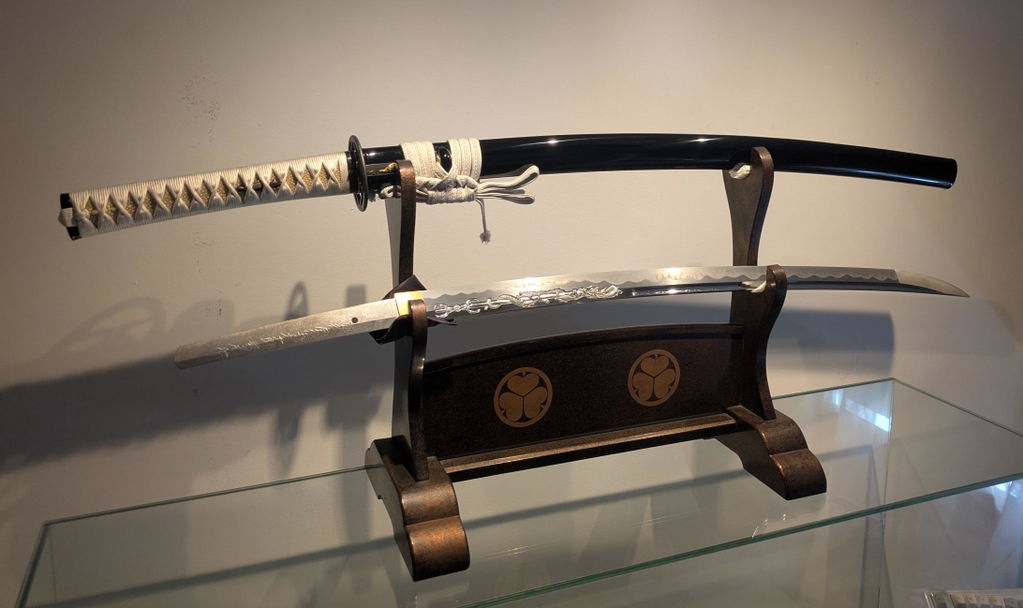
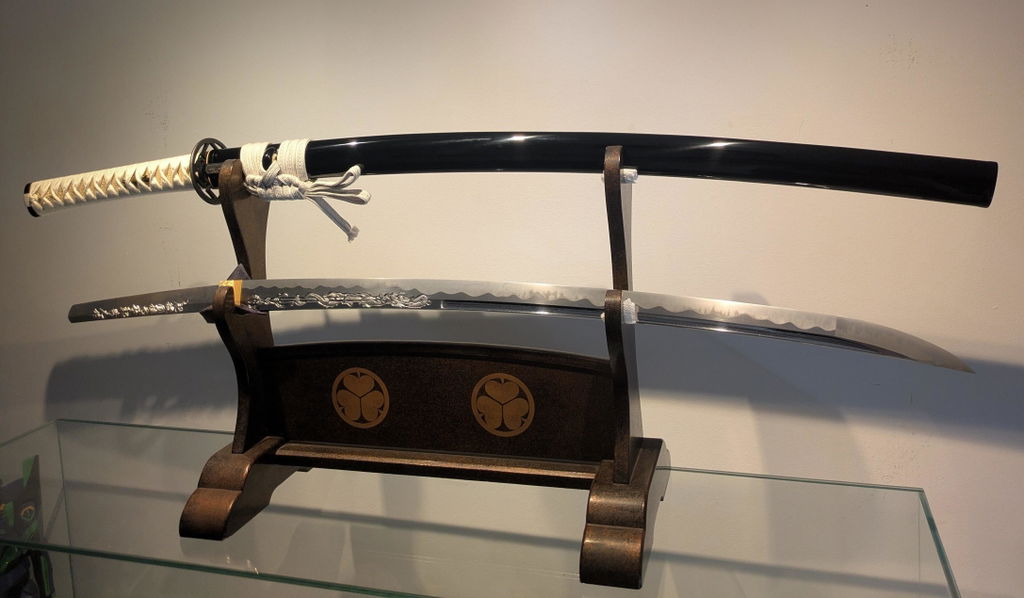
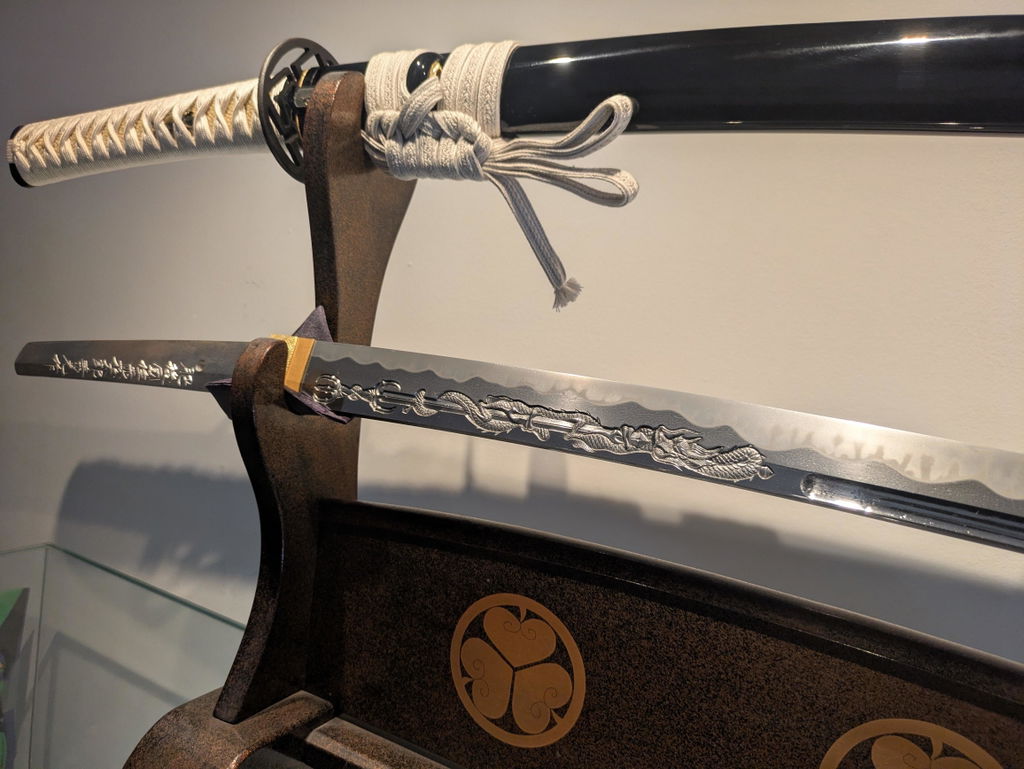
The works that Otsuki Gen produced and that survive are all tantō — short blades under one shaku (approximately 30 centimetres). It is generally considered that the physical demands of forging longer blades made them impractical for her. The tantō format demands no less technical mastery than longer blades; its shorter canvas simply concentrates the same craft into a smaller space.
Those who have examined her surviving works describe them as carrying a particular warmth — a quality distinct from the austere precision of the great male smiths of her tradition, without being lesser for the difference. A portrait of her, painted at her son's commission by a Kano-school artist, shows a woman of small build but noticeably strong arms, with a gaze described as sharp yet gentle. It is one of the very few portraits of any Edo-period swordsmith — male or female — that survives.
Her work was signed. The signature on a tantō by Otsuki Gen is the record of a practitioner who operated within the tradition's standards, was recognised as meeting those standards, and transmitted the craft to the generation that followed her. That is what the tradition asks. She delivered it.
She entered it to keep her family's craft alive.
The quality of her work made the rest inevitable."
Women and the Sword Tradition — A More Complex History
The assumption that women have always been excluded from Japan's sword-making tradition is historically shakier than it appears. When you consider the time required to complete a single sword and the volume of production demanded throughout Japanese history, it is more difficult to argue that women were not involved than to accept that they were. Historical paintings from before the Edo period show women engaged in sword-related activities. The notion of the sword as strictly male territory becomes widespread only in the late Edo and Meiji periods — very late in the tradition's long history.
Historical photographs from the wartime period show women working in large numbers at sword polishing facilities. The picture of absolute female exclusion from the sword world is, historically, a relatively recent and relatively brief phenomenon.
In recent years that picture has further softened. Among today's sword-related crafts — polishing, habaki-making, handle-wrapping, metal fittings — women now practice in growing numbers. The primary exception remains the licensed swordsmith category, where the physical demands of sustained heavy forging and the structure of the traditional apprenticeship system have made entry rare. As of 2026, there are no female licensed swordsmiths in Japan. What there is, at the very foundation of the swordsmith's work, is Hirata Nodoka.
Hirata Nodoka — The World's Only Female Murage
Hirata Nodoka was born in Okayama City in 1998 — the same prefecture where Otsuki Gen forged her tantō two centuries earlier, and the same prefecture that is home to Bizen Osafune, the historical heart of Japanese sword production where Tozando operates its Bussankan facility. The geographical connection is not incidental: Okayama's relationship with the sword tradition runs deep across time.
She met her future husband Hirata Sukehira — then an apprentice swordsmith training under Ueda Sukeisada, a master of self-made tamahagane at Bizen Osafune — and married him in 2018. Together they established the Hirata Tantoujou workshop in Ome City, Tokyo in 2019. Nodoka learned tatara smelting from her husband and took on the role of murage — the technical director of the smelting operation, responsible for producing the tamahagane from which blades are forged.
The murage's role is foundational. Tamahagane — the specific steel produced by smelting iron sand in a traditional tatara furnace — is the material from which every genuine Japanese sword begins. Only around four workshops in Japan are currently capable of producing their own tamahagane, making the Hirata Tantoujou one of a tiny handful with complete vertical integration from raw material to finished blade. Nodoka is, as far as is known, the only woman in the world currently working as a murage in the traditional tatara smelting process.
She is also the mother of three children. In interviews, she has spoken about her drive to keep improving even when her husband considers the work finished — and about her hope to attract more women to the sword-making world. The workshop has attracted international attention: the Hirata Tantoujou cooperated on sound recording for the worldwide theatrical release of the "Demon Slayer — Kimetsu no Yaiba" film in 2023, providing forge sounds for a production seen by millions of viewers globally.
Otsuki Gen forged in Bitchu Province — the western part of what is now Okayama Prefecture. Hirata Nodoka was born in Okayama City. Nodoka's husband trained at Bizen Osafune under master swordsmith Ueda Sukeisada — the same Bizen Osafune where Tozando operates the Bussankan as Setouchi City's designated management operator, and where the Bizen Osafune Sword Museum houses one of Japan's most significant sword collections.
The thread connecting these two women — separated by two hundred years — runs through the same geography: a region that has been producing swords for eight centuries, that contains the historical epicentre of Japanese sword-making, and that continues to be a living centre of the tradition today. When Tozando's specialists at the Bizen Osafune Bussankan describe the Bizen tradition to international collectors, they are describing a tradition that Otsuki Gen was part of, in the broader regional sense — and that Hirata Nodoka's husband apprenticed in directly.
This is not a coincidence. Okayama's relationship with the sword tradition is not merely historical. It is active, continuous, and producing remarkable people in both the past and the present.
What These Two Lives Tell Us About the Tradition
Otsuki Gen did not choose swordsmithing freely. She entered it to honour a dying uncle's wish and prevent a family lineage from extinction. The tradition did not welcome her with open arms — it simply did not stop her, and eventually had to acknowledge what she had done. Her story is not one of emancipation. It is one of persistence, and of skill that spoke for itself when no other argument was available.
Hirata Nodoka's story is different in almost every surface detail — she entered freely, she is publicly celebrated, and she speaks openly about her ambitions for the tradition. But the essential quality is similar: a person who encountered something serious and brought seriousness to it in return.
What both stories illustrate is that the tradition's standards are not gendered, even if access to the tradition has sometimes been. The tamahagane does not know who produced it. The tantō does not know who forged it. The hamon does not know whose hands applied the clay. What the finished work shows is the quality of the craft — and on that measure, both women produced work that their contemporaries and successors have had to take seriously.
each blade a record of craft and human decision
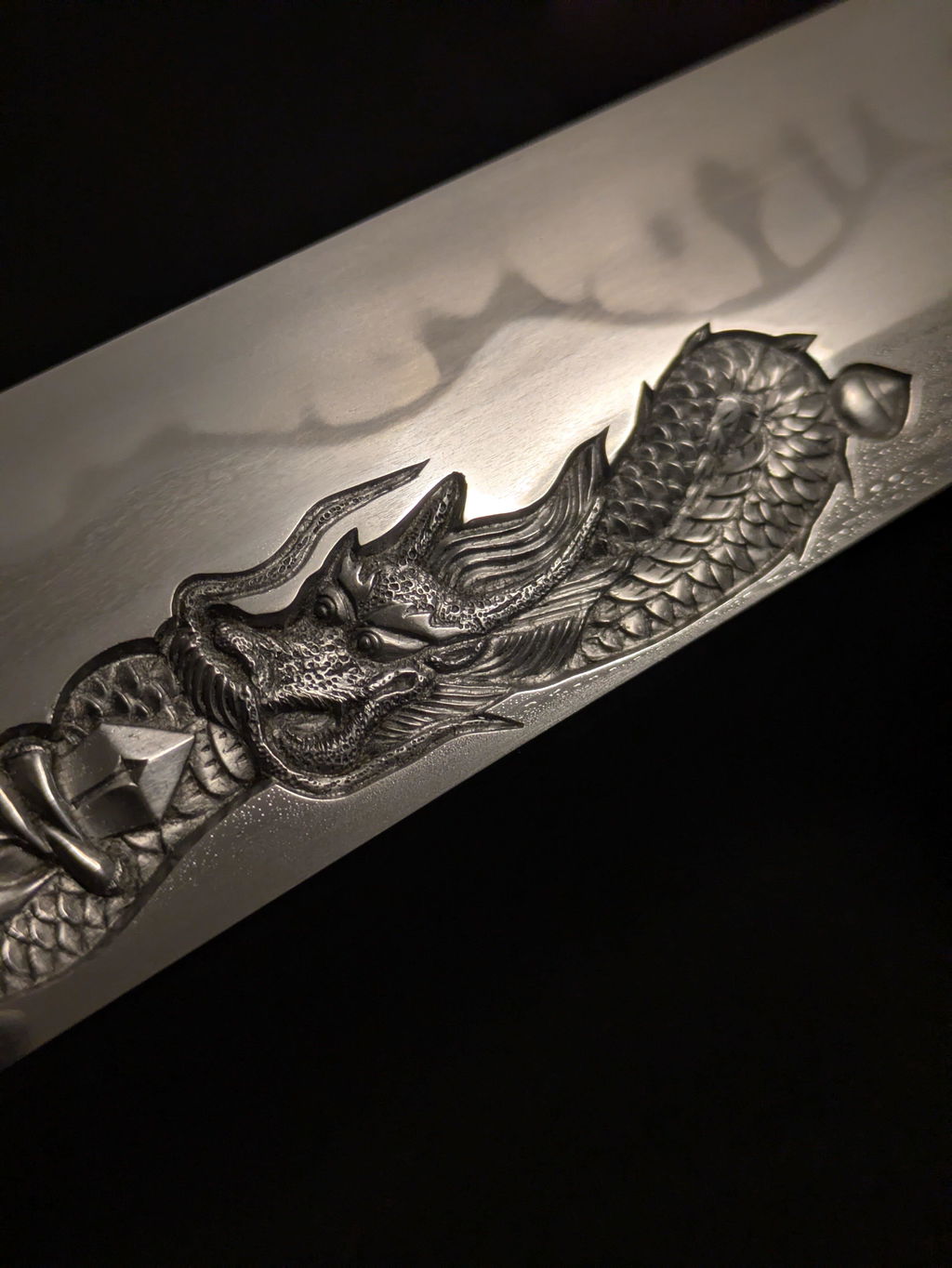
Every blade in Tozando's collection — antique or contemporary, signed or unsigned, celebrated school or quiet regional tradition — is the product of the same fundamental process: a person, a forge, tamahagane steel, and accumulated knowledge refined over a thousand years. Browse our collection or contact our specialists.
In Closing — The Steel Does Not Know
There is a temptation, when telling a story like Otsuki Gen's, to foreground the surprise — to present the exception as a curiosity against the rule. This article has tried to resist that temptation. Not because her story is unremarkable, but because framing it as remarkable does her a disservice: it implies that the quality of her work requires special explanation, that we need to contextualise the gender before we can appreciate the craft.
The signed tantō she left behind do not require that framing. They exist in the same category as every other signed blade in the nihonto tradition — as the records of a specific person's specific decisions, made at a specific temperature, in a specific moment, with a specific piece of steel. The steel did not know who was holding the hammer.
What survived is what survived: blades of genuine quality, made by a person of genuine skill, who chose to keep forging when stopping would have been easier. Two centuries later, in a workshop in Ome City, another person from Okayama is making the same choice every day at the tatara furnace. The tradition continues — as it always has — by being practised.
Sources: 和樂web — "え!女性の刀鍛冶もいたってホント?刀職の種類と役割を徹底解説!" (2020); 名宝屋 / Meihaku.jp — "刀工(刀匠)の流派・刀派"; AFFLUENT — "平田鍛刀場 代表 村下 平田のどか" (2025); 日立建機「拝啓・現場小町」(2022); TOKYO UPDATES (東京都) — "千年続く日本刀の洗練された魅力" (2023); 女性しごと応援ナビ; 日テレNEWS / Yahoo!ニュース — "'日本で唯一'女性の「村下」" (April 2024); My Home, My Ome; 平田鍛刀場公式サイト (hiratatantoujou.com). Otsuki Gen's dates (c.1732–1808) represent the scholarly consensus across cited sources. Hirata Nodoka's details are from published interviews as of 2025. The number of licensed swordsmiths (approximately 300, all male as of 2026) is consistent across multiple specialist sources.

Leave a comment: