Antique Japanese Wakizashi Sword - Mumei, Shinto Era (36.6 cm)
¥200,000 ¥240,000

This blade has been acquired. Discover other exceptional swords currently available in our collection.


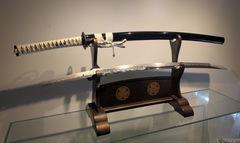
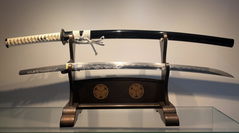
A sword in which the assured traditional technique of the Yasumoto Yoshimitsu school and a keen modern skill are fused. Beyond the fine quality of the blade — set off by a splendid, well-balanced bō-hi — the harmony with its mounting is beautiful: a tsuba in a dragonfly design and a refined leather-wrapped hilt. It is a highly satisfying piece for both practical use and appreciation.
Wakichi (real name Tsuji Kazuhiro), based in Miyako in Rikuchū province (present-day Iwate), trained rigorously under the master smith Yasumoto Yoshimitsu, legitimately inheriting the traditional forging technique carried down from the old-sword (kotō) period and its dignified formative beauty. Not content to rest on the skill handed down from his teacher, he has devoted himself earnestly to swordmaking; his outstanding ability is highly regarded in the modern sword world, and he has built a firm record of numerous selections and awards at the Shinsaku Meitō-ten (New Swords Exhibition) and other exhibitions. Fusing the sure traditional methods of the Yasumoto school with his own high aesthetic, he continues to produce works of a dignity and overwhelming presence that approach the classic masterpieces of the Bizen and Sōshū traditions — one of the representative masters of the contemporary sword world.
The jigane is a densely forged itame, smoothly packed, showing a beautiful skin in which the quality of the forging and the clarity of the steel stand out. Clear ko-nie gather evenly across the whole surface, giving a deep, transparent luster and a sturdy beauty as the light shifts. The hamon is a fine midare: a leisurely notare mixed with gunome, with fine ko-nie gathering bright and clear along the temper edge. Along the rising and falling line of the temper, nie and nioi are densely worked, showing a dynamic, gorgeous expression under the light — a powerful finish, executed with Wakichi's high hardening skill, that recalls the traditions of Sōshū-den and Bizen-den. As a brand-new work, fresh from the forge, it is in perfect, as-made condition, with no flaw or rust of any kind.
A mounting built on the theme of the dragonfly (tonbo), an emblem of martial honor, pursuing both refined aesthetics and practical function. Because the dragonfly only ever advances and never retreats, it was called the "victory insect" (katsumushi) and beloved of the samurai as a symbol of never turning back. A black stone-grain lacquer (kuro-ishime-nuri) saya gives off a quiet dignity, while a tsuba arranged with dragonflies and wave crests adds a sense of movement. The hilt — black same (ray skin) bound in a moro-tsumami-maki wrap with brown cowhide backing cord — offers an excellent grip, and gold dragonfly menuki glint elegantly between the wraps. With a solid-silver habaki and a gold-brown sageo in harmony, it is a supreme piece in which traditional craft and dignified bearing are fused.
A pristine, freshly made katana by Wakichi of Rikuchū — its densely forged itame ground and bright, dynamic notare-gunome temper carried on a robust blade with a bō-hi, and completed by a handsome dragonfly-themed koshirae. A first-rank modern work, equally rewarding to wield and to appreciate, ready to enjoy exactly as it left the forge.
¥200,000 ¥240,000

¥400,000 ¥430,000

¥390,000 ¥410,000

¥270,000 ¥290,000

¥300,000 ¥330,000


Every blade reflects generations of knowledge, discipline, and precision passed down through traditional Japanese swordmaking. From the forging of steel to the final finishing touches, each piece is shaped with patience, mastery, and deep respect for heritage.

From carefully selected materials to the refined finishing of every surface, each sword is crafted and presented with uncompromising attention to detail. Our commitment to authenticity ensures every piece reflects true tradition, lasting quality, and enduring cultural value.

Designed with balance, simplicity, and purpose, our blades embody the harmony between refined form and skilled craftsmanship. Each sword represents a thoughtful union of strength, elegance, and the timeless discipline of Japanese artisans.