Antique Japanese Wakizashi Sword - Mumei, Shinto Era (36.6 cm)
¥200,000 ¥240,000

This blade has been acquired. Discover other exceptional swords currently available in our collection.


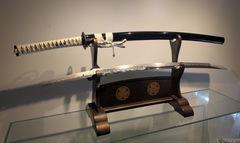
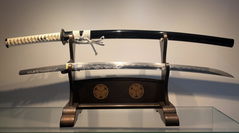
An ubu (original-length), unsigned (mumei) wakizashi judged to date from around the mid-Edo period, complete with its period mounting (koshirae). A healthy, trim shinogi-zukuri blade is paired with a high-toned jidai koshirae whose heavy copper kojiri (scabbard-end fitting) carries the dignified Maru ni Mitsu-gashiwa (three oak leaves within a circle) family crest — a piece of real appreciation and collection value.
The blade is freshly polished and in sound condition. Along the shinogi ridge near the base there is a patch of aged black rust running about 4.8 cm — evidence that the sword was never over-polished, its shape and soundness deliberately preserved, and something to be enjoyed as the historical depth peculiar to an old blade. The jigane is an itame-hada with a standing tendency, well packed, showing fine, orderly flowing forging lines across the hira-ji; fine ji-nie lend a clear depth to the whole surface. The hamon is based on a calm, composed suguha, with a soft, moist nioiguchi along the boundary. Within the edge run delicate ko-ashi, and along the temper line appears a hazy, nijūba-like double-line activity together with fine ko-nie — simple at first glance, yet possessed of real depth for the viewer. The tang (nakago) remains ubu, never shortened by a later hand, retaining its natural age patina and the beauty of its original finish.
A shinogi-zukuri wakizashi with a trim shinogi line, a tight mune (back), and a powerful mihaba. Both width and kasane are generous, with a moderate sori; the solid heft felt the moment it is taken in hand fully expresses both the refinement and the martial robustness of the mid-Edo period.
Copper kojiri with the "Maru ni Mitsu-gashiwa" crest: the kojiri that finishes the scabbard tip is made of thick, weighty copper, its center struck with the high-toned Maru ni Mitsu-gashiwa family crest. The three-oak-leaf (mitsu-gashiwa) device — because the old leaves do not fall until new buds appear — symbolizes the flourishing of descendants and the rising fortune of a house, a crest associated with families of note; its certain weight and presence convey the discernment of the samurai to this day. The mounting is rounded out by a plain, sturdy iron tsuba that makes the most of the texture of the iron, finely worked menuki, and a tight hilt wrap (tsuka-maki) — a harmonious and dignified ensemble throughout.
A refined mid-Edo blade shape, a healthy ground and edge alive with ji-nie, ashi and yō, and a substantial period koshirae set off by the Maru ni Mitsu-gashiwa crest — together they make this a highly attractive piece, for appreciation and for the collection alike.
¥200,000 ¥240,000

¥400,000 ¥430,000

¥390,000 ¥410,000

¥270,000 ¥290,000

¥300,000 ¥330,000


Every blade reflects generations of knowledge, discipline, and precision passed down through traditional Japanese swordmaking. From the forging of steel to the final finishing touches, each piece is shaped with patience, mastery, and deep respect for heritage.

From carefully selected materials to the refined finishing of every surface, each sword is crafted and presented with uncompromising attention to detail. Our commitment to authenticity ensures every piece reflects true tradition, lasting quality, and enduring cultural value.

Designed with balance, simplicity, and purpose, our blades embody the harmony between refined form and skilled craftsmanship. Each sword represents a thoughtful union of strength, elegance, and the timeless discipline of Japanese artisans.