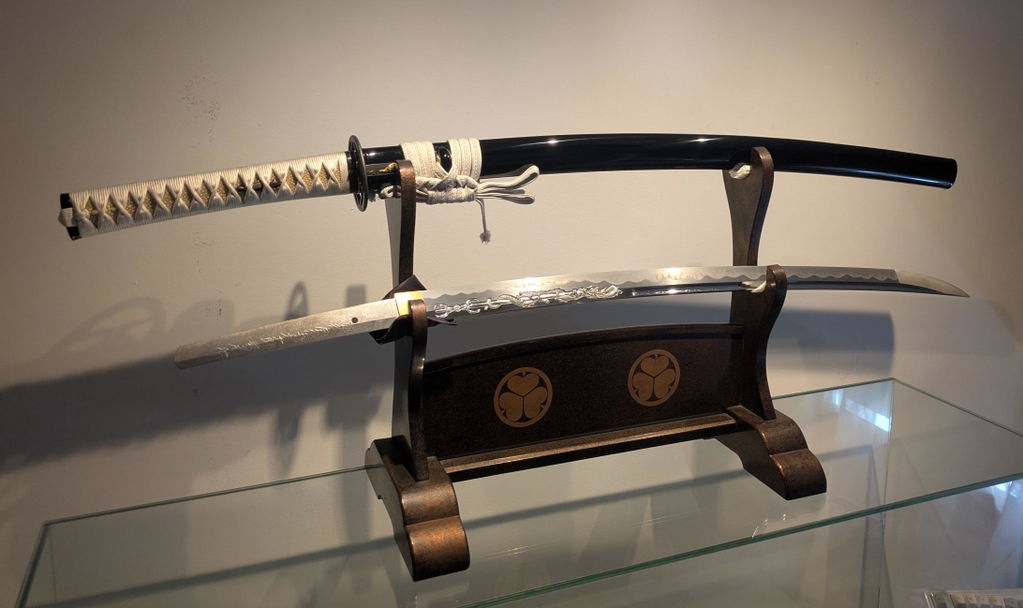
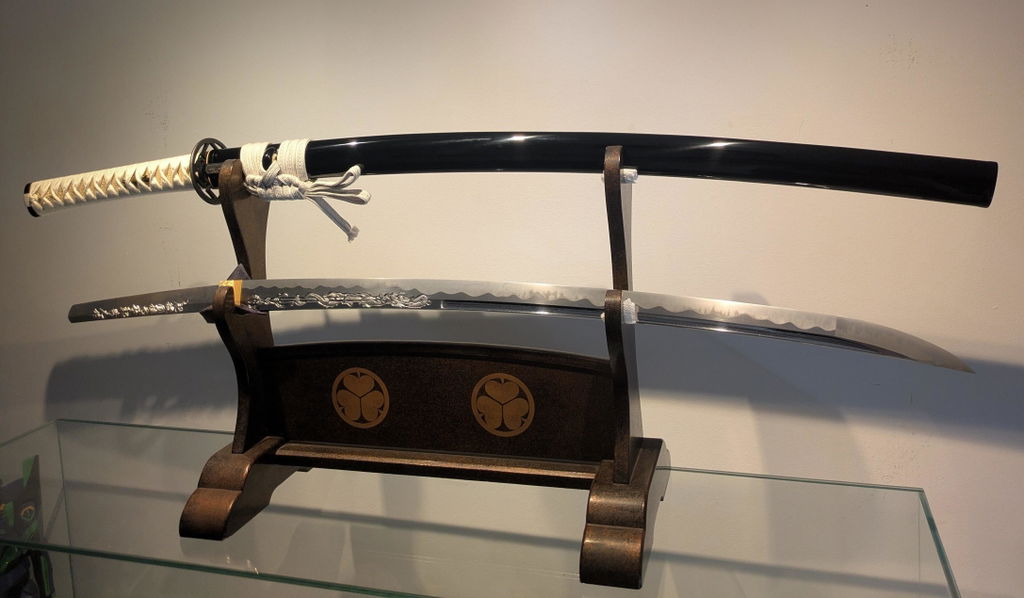
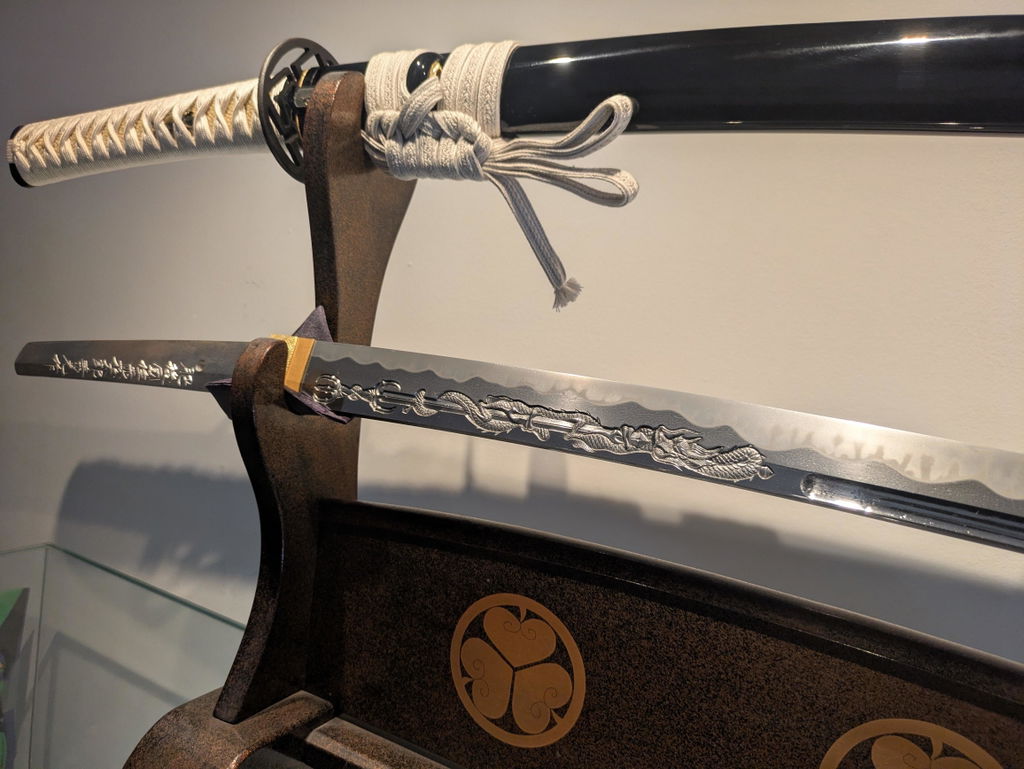
Antique Japanese Wakizashi Sword - Mumei, Shinto Era (36.6 cm)
¥200,000 ¥240,000

We present a long blade of 2 shaku 2 sun 7½ bu by Kanehisa, a distinguished smith of the Mino–Seki tradition, awarded Hozon Tōken certification by the NBTHK (Nihon Bijutsu Tōken Hozon Kyōkai) in December 2024. Here is the very essence of the Mino smiths on whom famous warlords relied through the warring-states turmoil from the Meiō into the Tenbun era. Preserved in superb, freshly polished condition, it has an exceptional heft and solidity that transmit to the palm the moment it is grasped — a mass of steel forged without the slightest compromise, whose presence captivates the viewer in an instant.
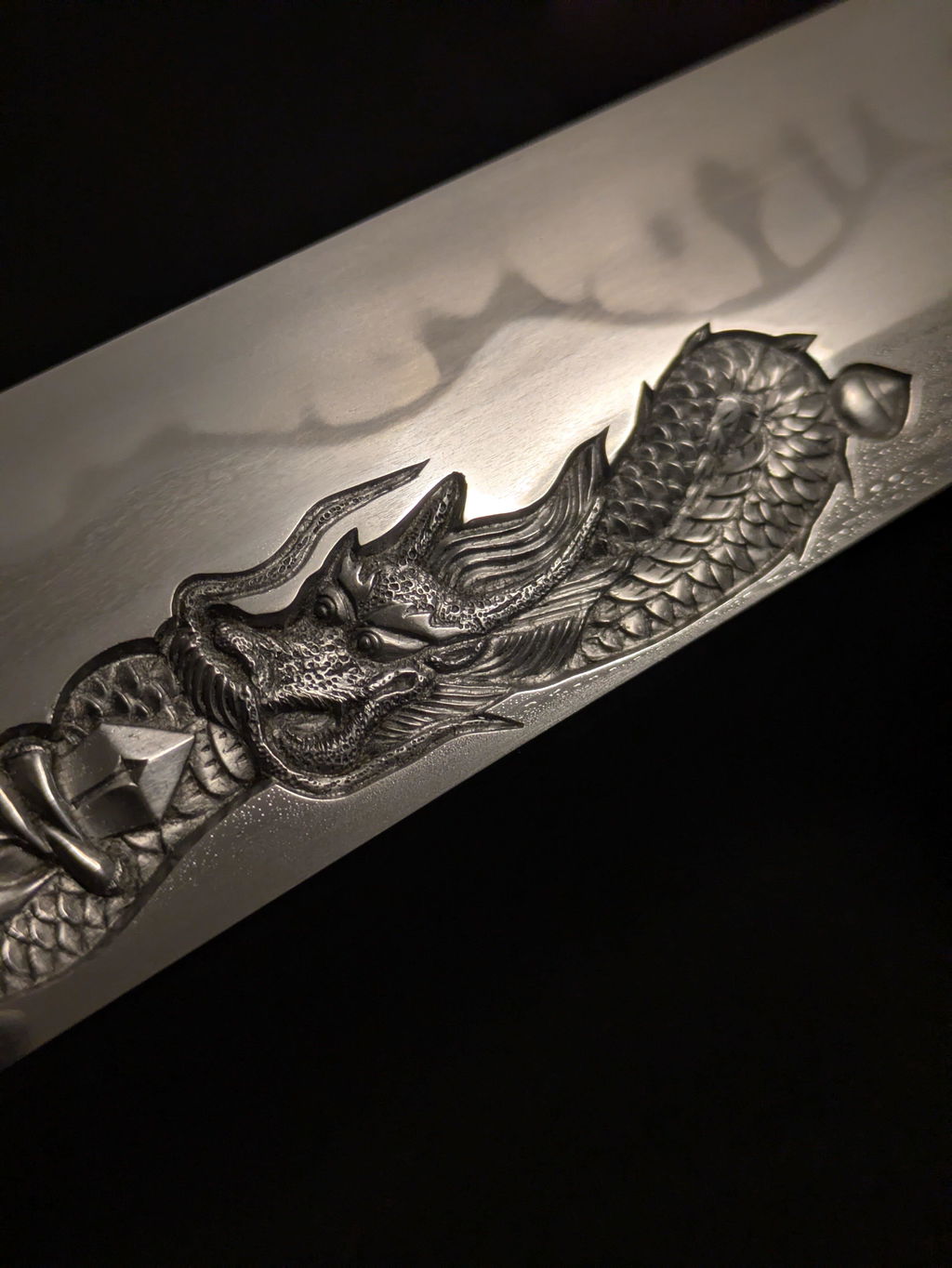
Carefully polished, the blade is remarkably sound, with very few flaws. A little rust near the ha-machi and some discoloration at the mune-machi are honorable marks (homare) of a blade that has survived many ages, and they only heighten its historical poetry. The jigane is a nie-deki itame, densely packed and partly mixed with mokume, asserting the clear steel texture peculiar to Mino work. The hamon is based on a faultless, well-composed chū-suguha, with kinsen ("golden lines") within; scattered tobiyaki (detached islands of temper) lend richly varied points of interest amid its quiet. The temper edge is tightly drawn, with fine ko-nie that make it bright and clear. Tobiyaki also appear on the mune, giving an effect that even suggests hitatsura (full temper). The tang (nakago) is wrapped in the deep black rust that the years have nurtured, from which the strong chisel-strokes of the signature Kanehisa stand out clearly.
For its length of 2 shaku 2 sun 7½ bu, the blade shows a gracefully curved sori and a dignified figure that does not weaken toward the tip. Both mihaba and kasane are well retained, and the overwhelming heft and sturdy, no-nonsense style felt in the hand are the very summit of practical beauty — a form that embodies the aesthetic of the Mino sword, refined nobility housed within boldness.
Kanehisa, who won renown in Mino-province Seki in the late Muromachi period, was a skilled maker representative of the Seki smiths who swept the age of war under the byword "does not break, does not bend" (orezu magarazu). Prized by warlords across the country for overwhelming reliability in real combat, their blades at the same time boasted a very high level of completeness as works of art. A blade of such fine quality as this speaks to the smith's high technical skill, and is particularly esteemed among enthusiasts as a precious legacy of his hand.
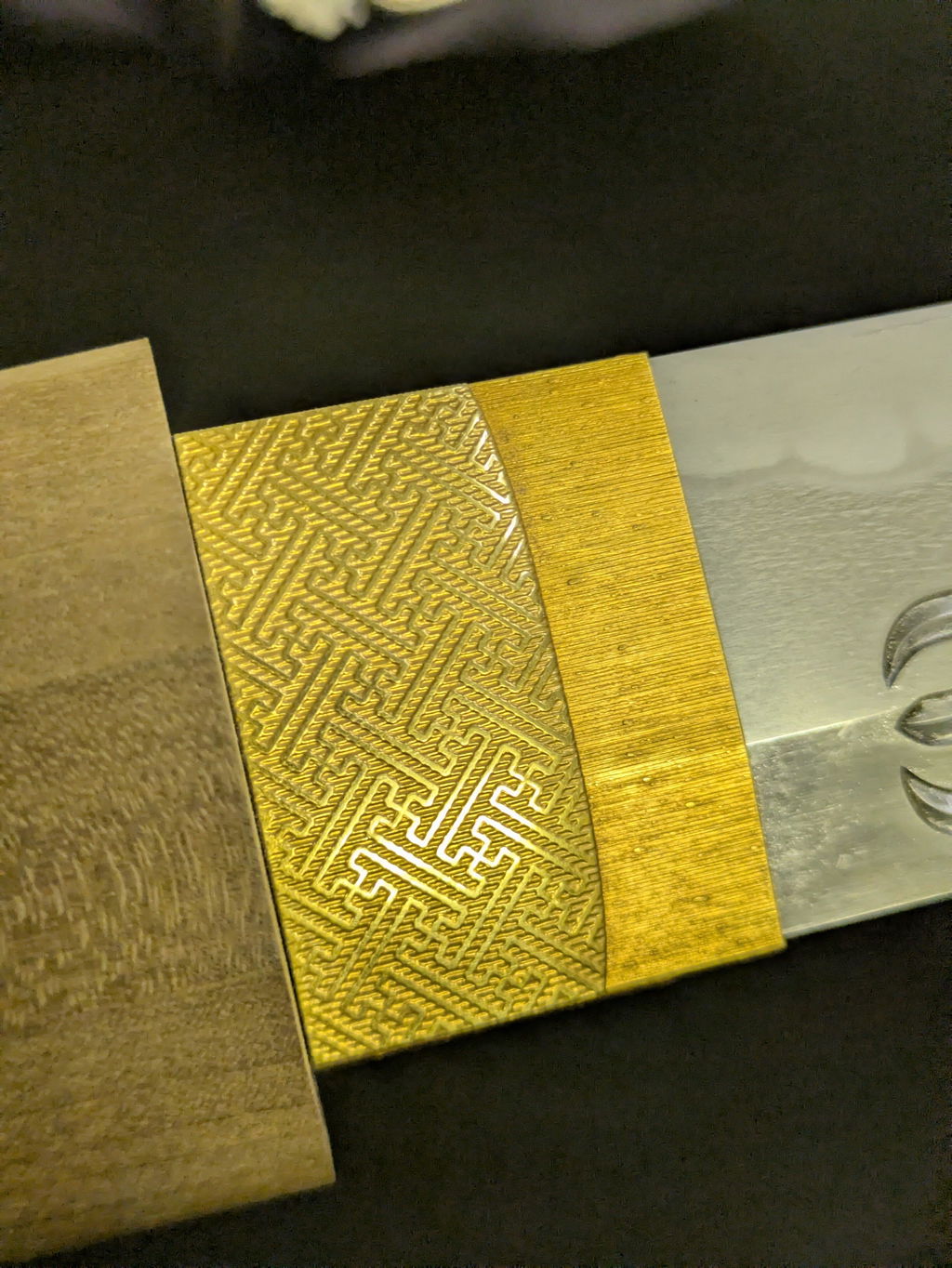
The blade is kept in a fine shirasaya that shows at a glance how carefully it has been handed down. The habaki supporting the blade is finished in a solid-silver manner with fine slanted file-work (shigure-yasuri), a dense and high-toned design that tightens the whole piece — a specification through which one senses the unstinting passion and respect that generations of sword lovers have poured into it.
In the age spanning the Meiō to the Tenbun eras, Mino was a center of the warring-states upheaval, where fierce lords such as Saitō Dōsan contended for supremacy. As life-and-death battles became the norm, it was the swords of Mino that were forged as the very lifeline of the warriors. Born of the intersection of a turbulent age and a master smith's spirit, this blade still pulses with the taut atmosphere of the time and the resolve of the samurai.
A fine cutting blade forged in the upheavals of the Meiō and Tenbun eras, entrusted with a warrior's very fate. With its substantial, weighty body, its keen and lucid ground and edge, and the unwavering beauty of its straight temper, it is a historic, Hozon Tōken-designated sword in which the skill and spirit of Kanehisa, a master representative of late-Muromachi Mino–Seki, are distilled.
¥200,000 ¥240,000

¥400,000 ¥430,000

¥390,000 ¥410,000

¥270,000 ¥290,000

¥300,000 ¥330,000


Every blade reflects generations of knowledge, discipline, and precision passed down through traditional Japanese swordmaking. From the forging of steel to the final finishing touches, each piece is shaped with patience, mastery, and deep respect for heritage.

From carefully selected materials to the refined finishing of every surface, each sword is crafted and presented with uncompromising attention to detail. Our commitment to authenticity ensures every piece reflects true tradition, lasting quality, and enduring cultural value.

Designed with balance, simplicity, and purpose, our blades embody the harmony between refined form and skilled craftsmanship. Each sword represents a thoughtful union of strength, elegance, and the timeless discipline of Japanese artisans.