

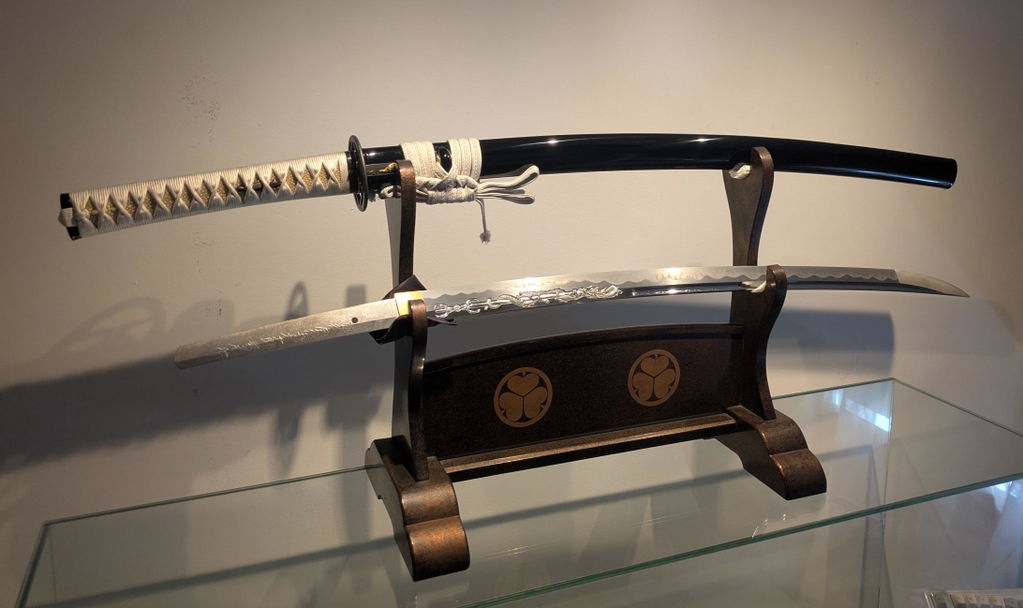
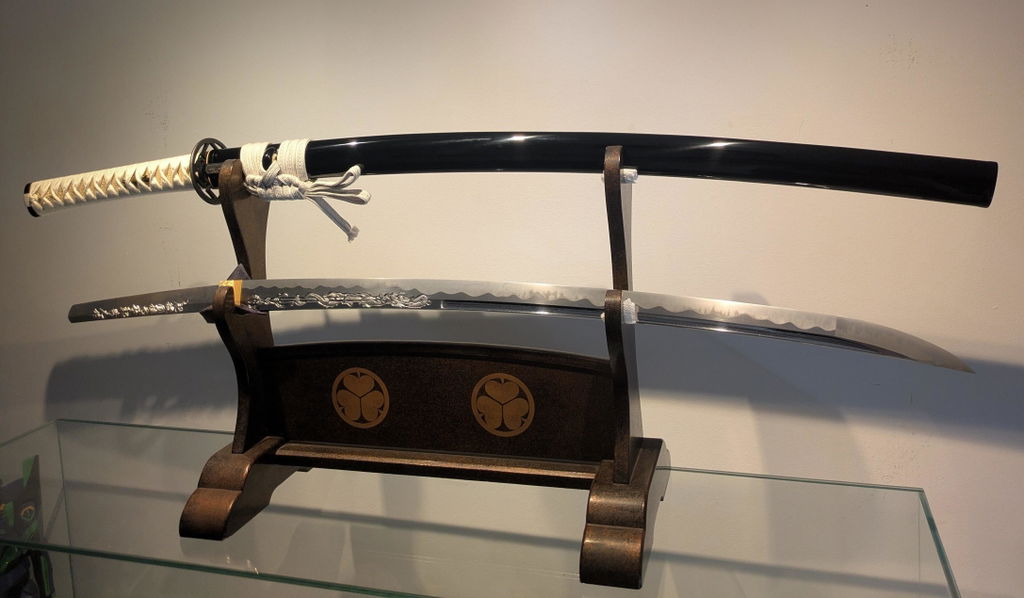
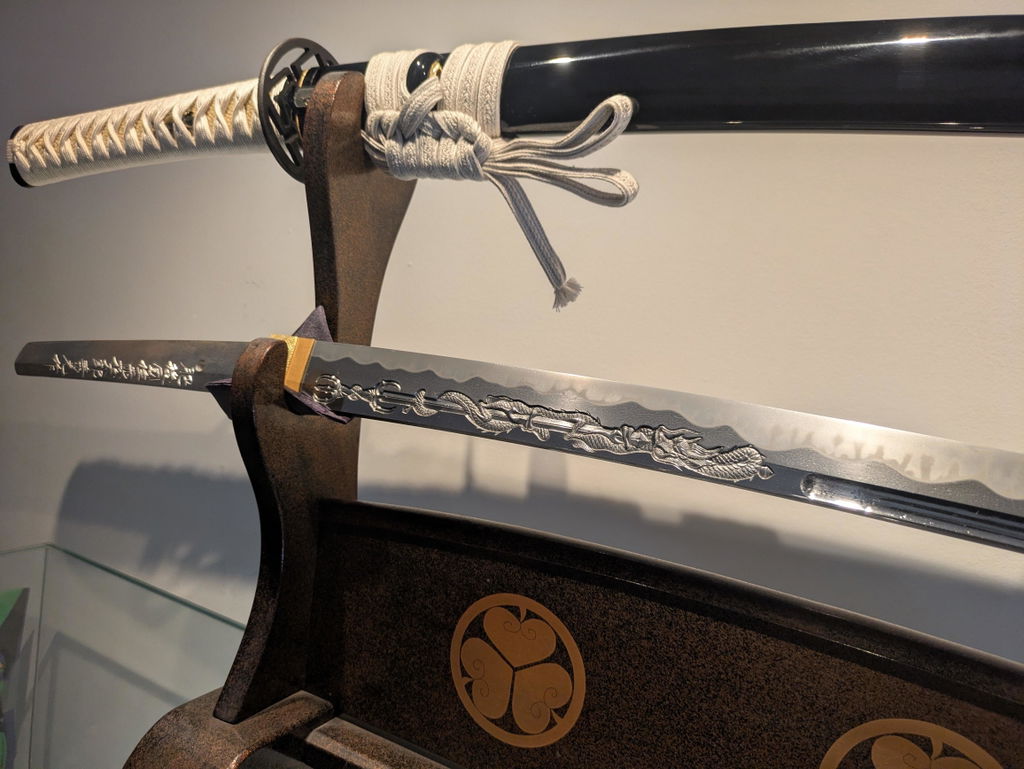
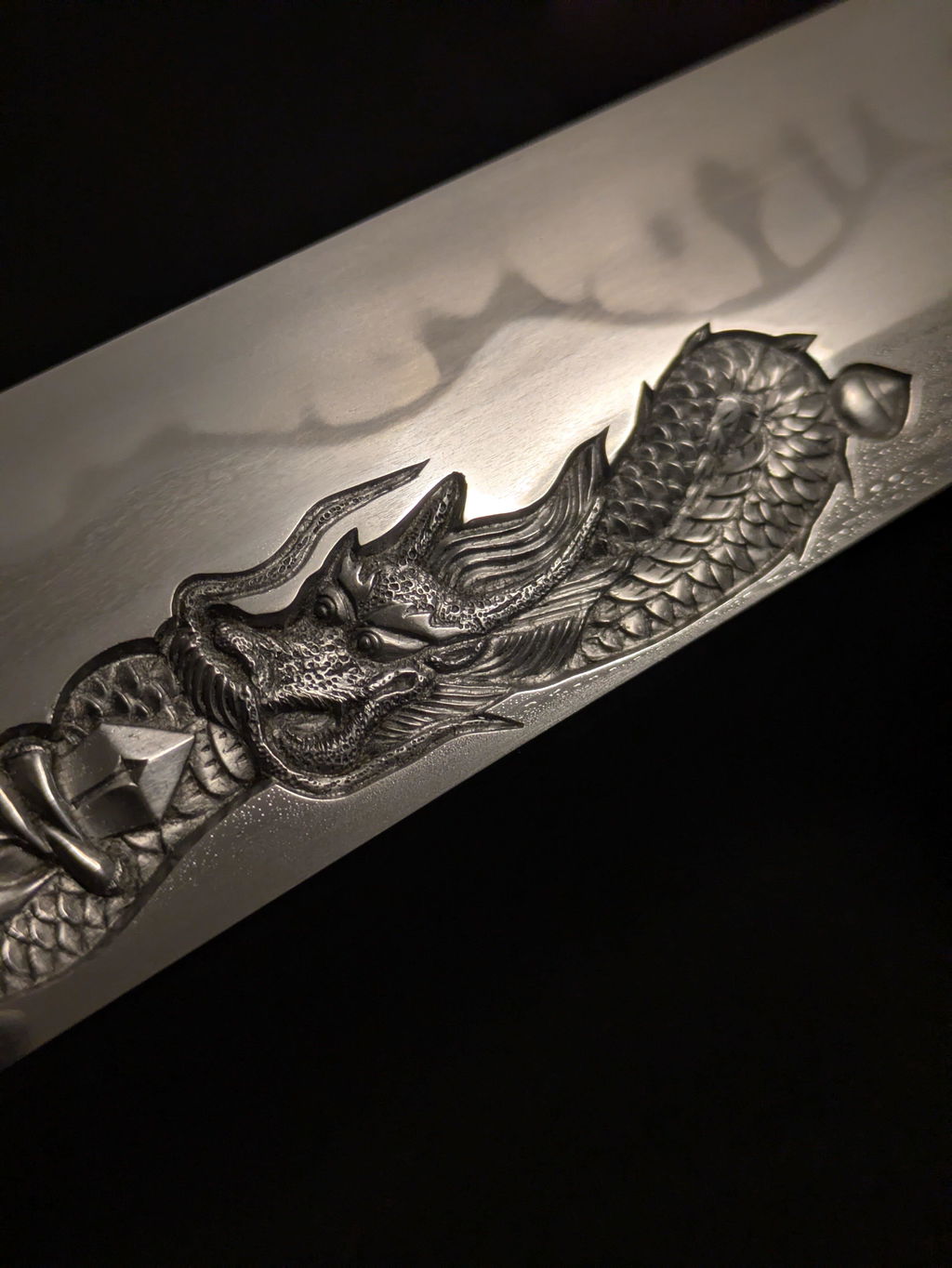
A collector contacted Tozando asking to purchase a sword by a specific Mukansa smith — one of Japan's roughly ten living masters who have been formally recognised as beyond competitive judgment by the NBTHK. The question was straightforward: "Do you have one in stock, and if not, how long would I need to wait?" The answer required some explanation. A Mukansa sword is not a product that can be ordered and delivered on a timeline you control. It exists at the intersection of five separate constraints, any one of which alone would make it scarce. Together, they make it one of the rarest handmade objects available anywhere in the world. This article explains exactly why — and what to do about it.
First — What Mukansa Actually Means
Mukansa (無鑑査) means "exempt from examination." In the context of the NBTHK's annual modern sword exhibition, it designates a smith whose competitive record is so established that their work is accepted for display without the standard jury review process. The formal criteria are exacting: a swordsmith must have won at least 15 prizes at the Modern Sword Art Exhibition, of which at least 8 must be special awards. The smith must also have won the Prince Takamatsu Memorial Prize — the highest individual award — at least twice.
Since these prizes are awarded annually, and a smith can only win once per year, it takes at least 15 years to accumulate 15 prizes even if selected every year — a long and arduous process. In practice, most smiths take considerably longer. The Mukansa designation is therefore not merely a recognition of current skill — it is a recognition of sustained excellence over a minimum of fifteen years of competitive exhibition at the highest level of Japanese sword art.
Above Mukansa sits only one designation: Ningen Kokuhō (Living National Treasure), awarded by the Japanese government for contribution to Important Intangible Cultural Properties. Of all Japan's currently active swordsmiths, only a tiny number hold this designation. The entire hierarchy of modern Japanese swordsmithing, from apprentice to Living National Treasure, narrows to a vanishingly small group at the top — and the supply of their work is constrained at every level of that narrowing.
Five Constraints — Why the Supply Is So Small
Only a limited number of individuals are officially licensed to forge swords, and each licensed smith is restricted to producing a maximum of two swords per month, totaling 24 per year. This is not a guild convention or a voluntary quality standard — it is a government regulation enforced through the licensing system. Every blade must be individually registered with the prefectural Board of Education. Producing more than the legal limit is a licensing violation.
The cap applies equally to every licensed smith in Japan — the most junior apprentice who has just received their license and the most celebrated Living National Treasure face exactly the same legal maximum. For a Mukansa smith whose work commands $30,000–$80,000 per blade, 24 blades per year is an absolute ceiling on annual output regardless of demand.
Tamahagane is produced only three or four times a year by the Society for Preservation of Japanese Art Swords, and access is strictly rationed to licensed smiths. The tamahagane smelting process — conducted at a traditional tatara furnace over three to four consecutive days and nights — produces a limited quantity of raw steel, and that steel must be allocated across all of Japan's approximately 300 licensed smiths.
A Mukansa-level smith working on a significant blade will select only the finest portions of their tamahagane allocation for that piece — rejecting steel that does not meet their standard for the specific work. The practical effect is that the real material constraint is not the 24-blade cap but the quality of available tamahagane in any given year. In a year when the tatara yields less exceptional steel, a top smith may produce fewer than their legal maximum — not because of any rule, but because the material does not warrant their best work.
A significant blade by a Mukansa smith is not produced in a day or a week. The forging process alone — heating, folding, shaping the steel through hundreds of hammer blows, applying the clay for differential hardening, quenching — takes days of concentrated work. But the smith's labour is only the beginning. The finished blade must then pass through a sequence of specialist craftspeople: the tōgishi (polisher), the habaki maker, the shirasaya craftsman, and — if koshirae is requested — the lacquerer, the handle wrapper, and the fitting makers.
A top-level polisher working on a Mukansa blade may spend two to three weeks on the polish alone. The total time from forge to finished, documented, registered blade — ready for sale or commission delivery — is typically several months per piece. A smith who is working at their highest level is not producing 24 blades per year. They are producing perhaps 10 to 15, of which the finest may represent six months or more of total work across all the craftspeople involved.
A Mukansa smith's designation requires continued participation in the NBTHK's annual Modern Sword Art Exhibition. To maintain their standing — and to remain eligible for the Masamune Award, which sits above the Mukansa designation — active smiths continue to submit competition-level work each year. These are the pieces into which they pour their most ambitious creative effort.
The Masamune Award is given only to those Mukansa swordsmiths who have exhibited work of exceptional quality — it is considered the pinnacle of the sword world. A smith pursuing this award is working at a level of intensity that leaves limited bandwidth for commissions. Their finest work — the blades that would most interest serious collectors — is often exhibited first, and may be sold to institutions or serious Japanese collectors before it is ever offered internationally.
A Mukansa smith with a five-year waiting list has that waiting list because they have existing clients who have been waiting for years, existing dealers who have established relationships through years of purchases, and existing obligations — to students, to regional authorities, to cultural institutions — that take priority over new enquiries. Walking up to a Mukansa smith and requesting a commission without an existing relationship or an established intermediary is not simply unlikely to succeed — it is structurally unlikely to even receive a response.
This is where specialist dealers with long-term relationships in Japan's sword world become not merely useful but essential. A dealer who has worked with a specific Mukansa smith over many years — who has handled their work, brought their pieces to international collectors, and built a track record of responsible stewardship — has a position in that smith's allocation that no individual buyer, however motivated, can replicate on their own.
international collectors each year?
Fewer than 50 Mukansa blades per year reach the international market — across all smiths, all grades, all dealers worldwide. Against a global collector base that has grown significantly in the past decade, this supply is structurally inadequate. The waiting lists, the prices, and the requirement for established relationships are not artificial constraints. They are the inevitable consequence of genuine scarcity.
Their output is spoken for before the steel reaches the forge."
The Path to Mukansa — Why the Title Takes a Lifetime
What to Actually Do — A Practical Guide for Serious Collectors
- Establish a relationship with a specialist dealer before you need one. The time to build a relationship with a dealer who has access to Mukansa work is not when you are ready to buy — it is years before. A dealer who knows you, understands your taste, and trusts you as a collector is in a position to allocate pieces to you when they become available. A cold enquiry from an unknown buyer is almost never prioritised.
- Be specific about which smith's work interests you — and why. Mukansa smiths are not interchangeable. Each has a distinctive aesthetic: a preference for specific hamon forms, specific steel-working techniques, a characteristic relationship to a classical school. Knowing which smith's work resonates with you — and being able to articulate why — demonstrates the seriousness that opens doors.
- Consider the secondary market alongside new commissions. A significant blade by a Mukansa smith that has already been completed, registered, and placed in a previous collection sometimes becomes available when collections are dispersed. These pieces are fully documented, already polished, and available without the waiting list that a new commission requires. They may carry additional provenance interest from their previous ownership history.
- Understand that price negotiation is rarely appropriate. The market for Mukansa work is supply-constrained, not demand-constrained. A smith with a five-year waiting list has no incentive to negotiate price. The collector who approaches a Mukansa acquisition as a price negotiation is demonstrating a misunderstanding of the market that is itself disqualifying for serious consideration.
- For Gallery Tozando's modern sword collection — enquire directly. Tozando's relationships with Japan's contemporary sword world, built over nearly four decades, include direct connections to smiths at the highest levels of the tradition. When Mukansa work becomes available through these relationships, it appears in our collection before it reaches the broader market. Enquiring directly and establishing your interest is the most direct path available.
where Mukansa work reaches international collectors
Tozando's Gallery Tozando in Kyoto maintains direct relationships with contemporary Japanese swordsmiths across the full range of the living tradition — including Mukansa-level masters. When significant modern work becomes available through these relationships, we make it accessible to international collectors through our online collection. Register your interest and tell us which tradition and style you are drawn to — we will notify you when relevant pieces become available.
In Closing — Scarcity Is the Point
The constraints on Mukansa sword availability are not problems to be solved. They are the direct expression of what makes this work significant. A government production cap that limits output to 24 blades per year exists precisely because an unlimited supply of legally designated nihonto would devalue and eventually destroy the tradition the law is designed to protect. A waiting list of five years exists because the work takes the time it takes, and compromising the time compromises the work. A requirement for established relationships exists because the smiths at this level have the luxury — earned through decades of work — of choosing who receives their finest pieces.
The collector who understands all of this is not frustrated by it. They are engaged by it. The scarcity of Mukansa work is not a market inefficiency. It is a feature of a tradition that has survived a thousand years precisely because it has never allowed convenience or commercial pressure to substitute for quality and time.
You cannot simply buy a Mukansa sword whenever you want. What you can do is build the relationships, develop the knowledge, and demonstrate the seriousness that places you in a position to acquire one when the moment arrives. That preparation is itself a form of respect for the tradition — and it is where the collecting life with these pieces actually begins.
Sources: Tozando Katana Shop — "Masters Beyond Judgment: An Introduction to Mukansa Swordsmiths" (2026), "Modern Japanese Swordsmiths — A Living Tradition" (April 2026), "Japanese Sword in Crisis" (March 2026); Tokyo Nihonto — "Japanese Swordsmiths Today" (April 2026); japaneseswordindex.com — "Shinken"; thejapanesesword.com — FAQ. Production cap figures (24 blades/year) are confirmed by multiple independent sources and reflect Japanese government regulations as of 2026. Mukansa criteria reflect NBTHK's formal published requirements.
Note: The estimate of "fewer than 50 Mukansa blades reaching the international market annually" is a calculated approximation based on known production constraints and is not an officially tracked statistic. Active Mukansa smith count reflects current estimates and is subject to change as smiths retire, achieve designation, or have designation withdrawn. Waiting list figures are representative of market conditions as reported by specialist dealers and collectors.

Leave a comment: