

Your Japanese sword has arrived. The box is in front of you. Inside is something that took months to acquire, was forged by a trained craftsperson using techniques refined over centuries, and travelled thousands of kilometres to reach you. The instinct is to open it immediately, draw the blade, and examine it under the light. That instinct is completely understandable — and there is a right way to act on it. This guide covers the first thirty days of owning a Japanese sword: what to do when the box arrives, what to check, what not to do, and how to establish the maintenance habits that will keep your blade in excellent condition for decades.
The First 30 Days — A Timeline
Open the outer packaging carefully. Tozando ships blades with multiple layers of protection. Work through them methodically rather than tearing through — the packaging materials can be reused for future transport.
Check the documentation first. Before examining the blade itself, locate and review all accompanying documents: any NBTHK or NBSK certificate (included where the blade is certified), and any sayagaki documentation. Many genuine nihonto are sold without certification — uncertified blades do not come with a certificate, which is entirely normal. Note that the Japanese government export permit is submitted to Japanese customs at the point of export — it does not travel with the blade to you. If anything appears damaged in transit, contact Tozando before handling the blade further.
Draw the blade slowly. With the saya horizontal or angled slightly downward, draw the blade with the edge facing upward and away from you. Never draw quickly — the kissaki (tip) is the most vulnerable point of the blade and can be damaged by contact with the saya opening if drawn carelessly. The first draw should be slow and deliberate.
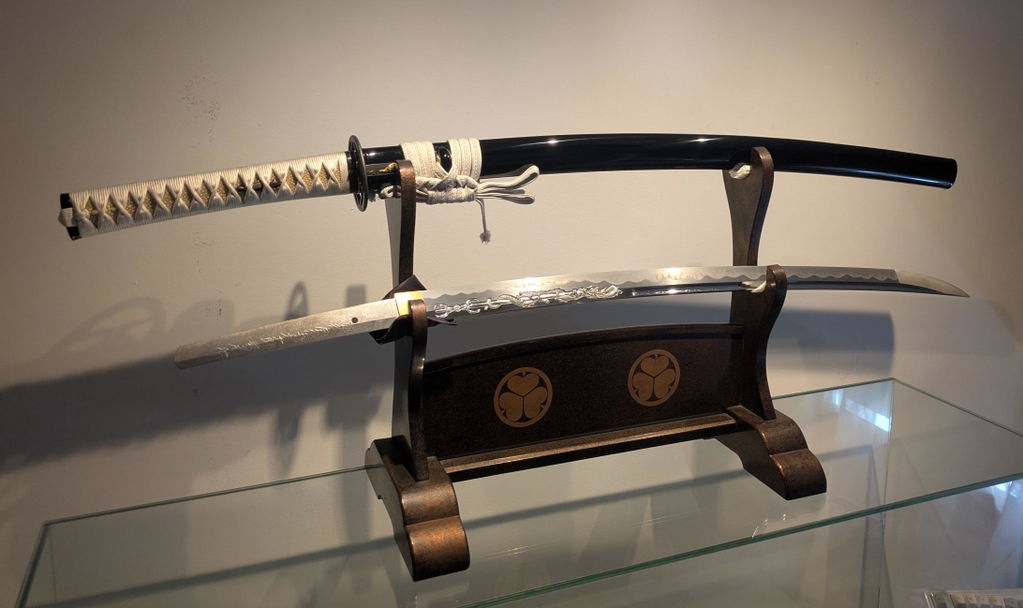
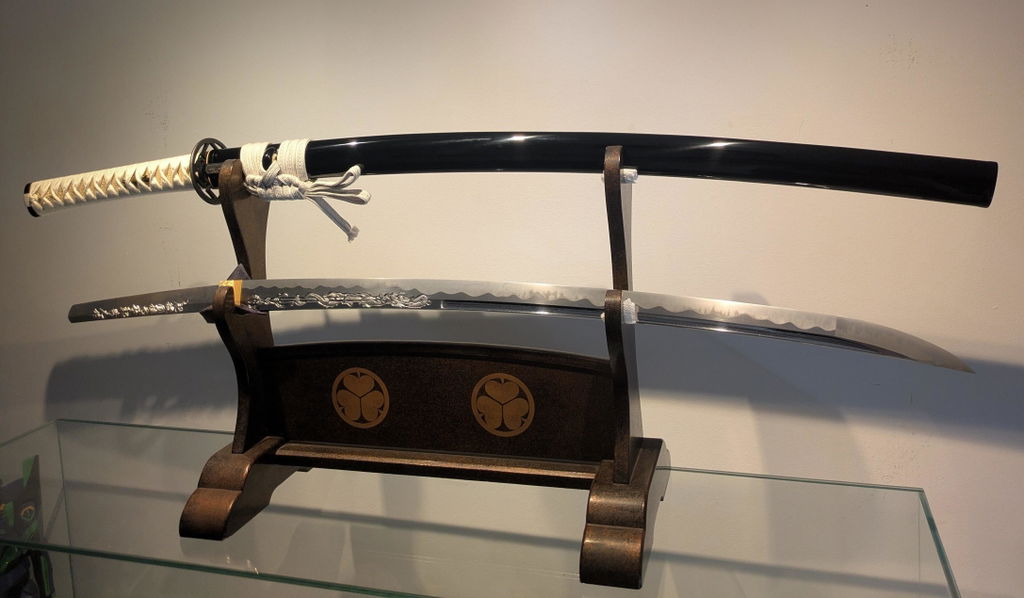
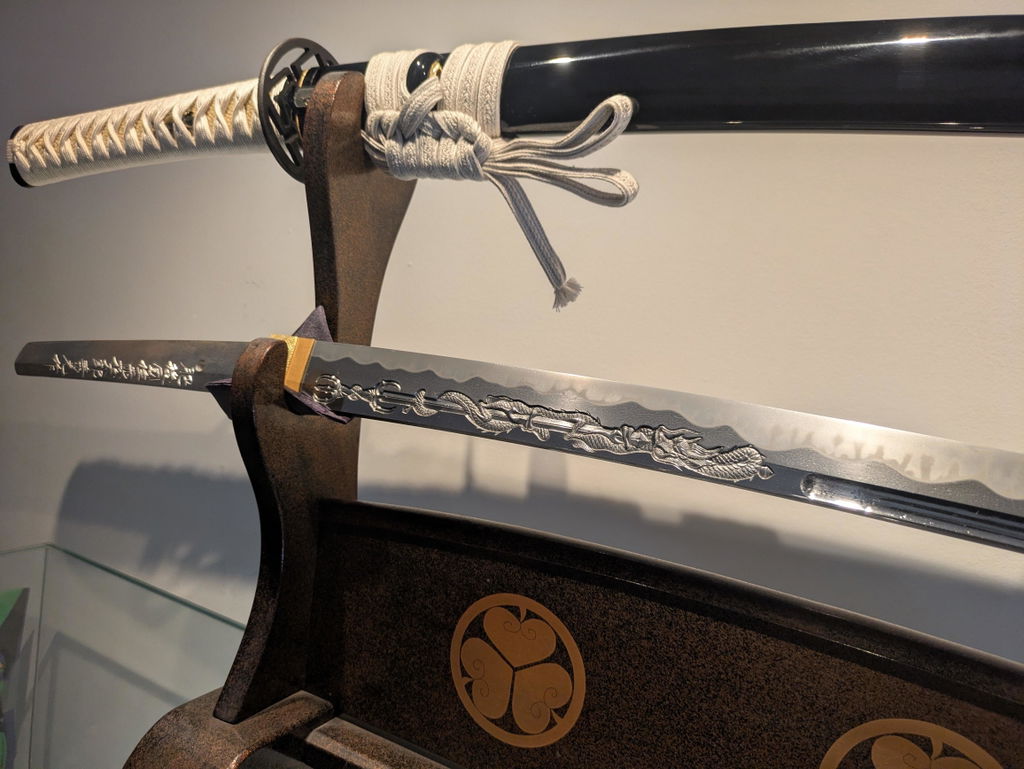
Examine, do not touch. Hold the tsuka (or the saya if the blade is in shirasaya) and observe the blade under good directional light — a single angled light source that casts the jihada and hamon into relief. Look at the entire blade surface. Note the hamon character, the jihada pattern, the condition of the polish. This examination should take several minutes. You will see different things each time you look.
Your first task as the blade's new owner is to apply a fresh coat of chōji oil and ensure the blade surface is clean after its journey. This is not a complex procedure, but it should be done correctly.
What you need: nuguigami, uchiko (for blades other than very fine antiques), chōji oil and an abura-nuguishi (oil applicator). Tozando's nuguigami comes in large sheets that you cut to a comfortable size yourself — two sheets is typically sufficient for a complete session. If you do not yet have nuguigami, good-quality tissue paper (soft, lint-free, unscented) is a perfectly adequate substitute until your maintenance kit arrives. If you do not have a maintenance kit yet, Tozando's kit contains everything required and can be ordered with your blade.
The sequence:
1. Cut or fold nuguigami to a comfortable size and wipe the blade from base to tip in a single smooth stroke — one side, then the other. Never drag the paper back toward the base. Repeat with fresh sections of paper until the paper comes away clean. Tissue paper works equally well if nuguigami is not yet available.
2. If the blade is not an extremely fine antique, apply uchiko by tapping the ball lightly along both sides of the blade. Wipe clean with fresh nuguigami, working base to tip.
3. Apply 2–3 drops of chōji oil to the abura-nuguishi. Wipe evenly along the blade from base to tip — both sides. The coat should be barely visible: a slight sheen, not a film.
4. Return the blade to the saya. The first maintenance session is complete.
A Japanese sword shipped from Kyoto to your home — whether in Europe, North America, Australia, or elsewhere — has moved between different climatic environments. The blade needs time to acclimatise to the humidity and temperature of its new home, and so do you: the first week is about learning what your environment means for the blade's long-term care.
Humidity is the primary concern. Japanese swords rust. It is not a question of whether but of when and how fast — and humidity is the primary driver. The ideal storage environment is between 40% and 60% relative humidity. Below 40%, the wood of the shirasaya or saya can dry and crack; above 60%, the risk of surface oxidation increases significantly.
Check your storage location. Where you store the blade matters more than how you maintain it. A bedroom closet in a climate-controlled home is usually fine. A basement, garage, or attic — anywhere with significant humidity fluctuation — requires either a climate-controlled case or more frequent maintenance checks.
A simple hygrometer (humidity gauge) placed near your storage location costs very little and gives you the information you need to make intelligent decisions about maintenance frequency. If you live in a humid climate, you will need to maintain more frequently than the standard 3-month interval.
The documentation that arrived with your blade is part of the blade's value. The NBTHK or NBSK certificate, the export permit, any sayagaki records — these should be stored carefully and kept with the blade. A blade with complete documentation is worth more than the same blade without it; more importantly, these documents are the chain of evidence that makes authentication straightforward for any future appraiser or buyer.
What to do with the documents:
Store original certificates flat — not folded — in an acid-free sleeve or folder. Keep them with the blade, not in a separate location. Make high-quality scans of all documents and store them digitally in at least two locations (cloud and local). The physical documents cannot be replaced if lost; the scans give you a working record even if the originals are unavailable.
Photograph the blade. Within the first two weeks, take a complete photographic record of the blade: full length on both sides, close-ups of the hamon from base to kissaki, the nakago with any inscription, and the habaki and fittings. These photographs establish the blade's condition at the time of your acquisition — invaluable for insurance purposes and for tracking any changes over time.
Consider insurance. A genuine nihonto is a significant financial asset. Standard homeowner's or renter's insurance typically covers collectibles at replacement value — but "replacement value" for a specific antique blade is not straightforward. A rider or separate fine art policy that covers the blade at agreed value is worth investigating.
The most valuable thing you can do in the first month of owning a Japanese sword is also the simplest: look at it. Repeatedly, carefully, under different lighting conditions, from different angles. The jihada and hamon of a genuine nihonto reveal more detail the more carefully and frequently they are examined — features that were invisible on the first inspection become clear after the tenth.
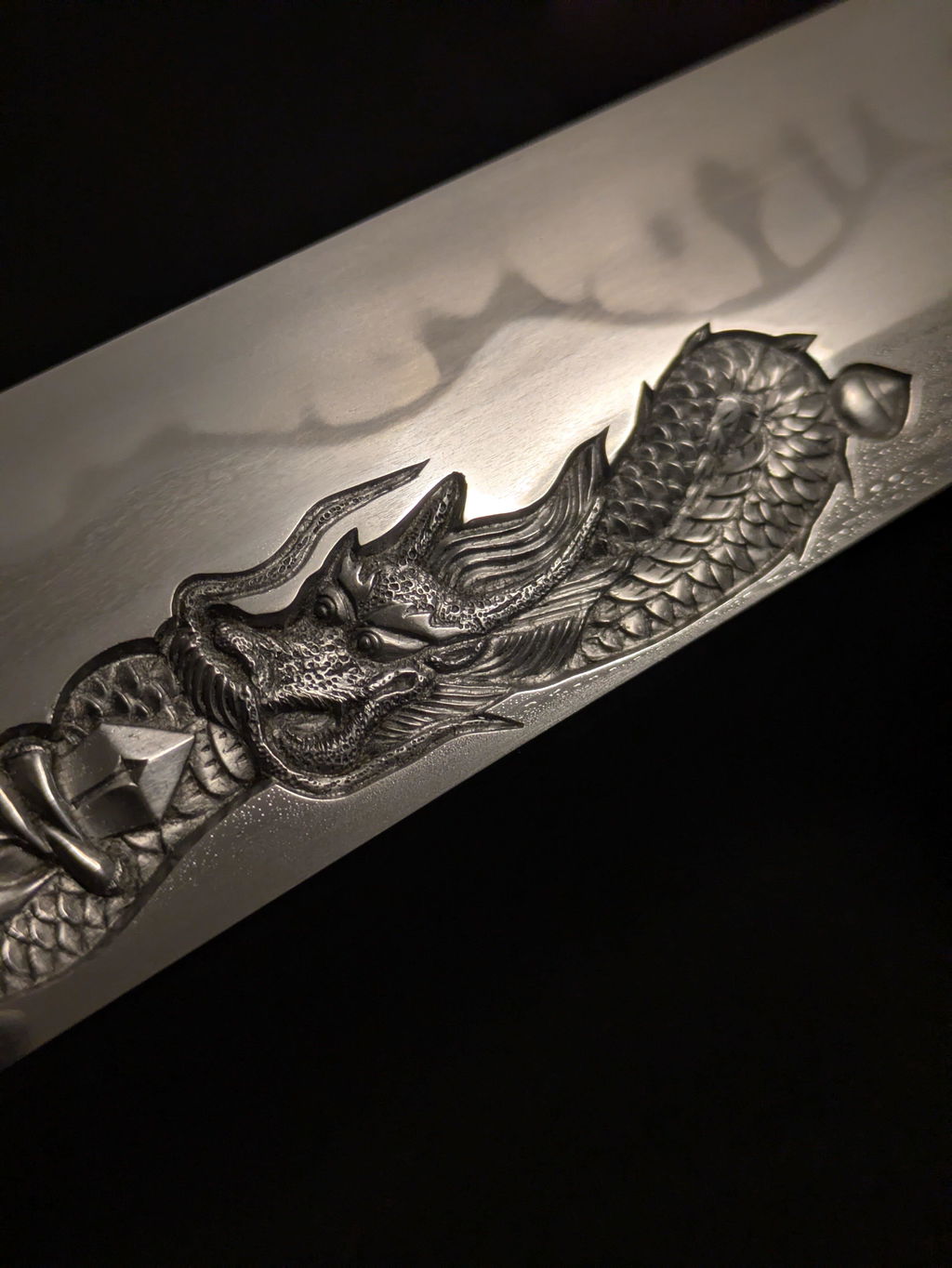
Lighting matters enormously. Under overhead ambient light, a Japanese sword looks like a piece of polished metal. Under a single directional light source — a lamp angled at 30 to 45 degrees to the blade surface — the jihada comes alive: the grain pattern, the activities within it (chikei, yubashiri, nie), the character of the hamon's nioiguchi, the presence of hataraki within the hamon itself. Spend time with the blade under different angles of directional light.
Read the description alongside the blade. Tozando's listing description for your blade describes specific features — the jihada type, the hamon character, the nakago condition. Use the description as a guide for what to look for. When the description says "tight nioiguchi," look for the crisp boundary where the hardened edge meets the softer body. When it says "abundant nie," look for the bright individual crystalline points within the hamon. Learning to see what is described builds the eye that will serve you throughout your collecting life.
They are about learning to see what you own —
and establishing the habits that will protect it."
The First 30 Days — Quick Reference Checklist
- Day 1: Check any accompanying documentation (certificate where included). Draw slowly. Examine under directional light without touching the surface.
- Days 1–3: Complete first maintenance session — remove transit oil, apply fresh chōji oil. Have nuguigami and chōji oil ready before the blade arrives.
- Week 1: Identify storage location. Check humidity with a hygrometer. Understand your climate's implications for maintenance frequency.
- Week 2: Scan all documentation and store digitally. Photograph the blade completely — both sides, close-ups of hamon, nakago, and fittings. Consider insurance.
- Weeks 3–4: Spend time examining the blade under directional light. Read the listing description alongside the physical blade. Begin developing your eye.
- Month 3: Second maintenance session — oil change on the standard 3-month interval. This becomes your ongoing maintenance rhythm.
every order on request
Tozando's complete maintenance kit — authentic uchiko, dedicated chōji sword oil, nuguigami, and mekugi-nuki — can be ordered with your blade or separately. Every tool in the kit is the same quality used by Tozando's specialists in Kyoto. If you have questions about care for a specific blade, our specialists are available to advise.
In Closing — The Beginning of a Long Relationship
The first 30 days of owning a Japanese sword are not technically demanding. One maintenance session. A storage location check. Some documentation and photography. And time spent simply looking at what you now own.
What the first month actually establishes is something more important than technical competence: it establishes a relationship with the object. A Japanese sword that is regularly examined under proper lighting, properly maintained, and thoughtfully stored is one that its owner comes to know — its specific hamon character, the way the jihada catches different angles of light, the particular way it draws from the saya. That knowledge is part of what makes collecting nihonto inexhaustible as a pursuit.
The blade that arrived in the box this week has been in existence for years, decades, or centuries. With the habits established in the first 30 days, it will still be in excellent condition when it leaves your hands — whenever and to whoever that may be. That continuity is part of what you are now responsible for. It is a responsibility the tradition takes seriously. So should you.

Leave a comment: