

Every year, hundreds of thousands of swords described as "katana" are manufactured in China, the Philippines, and other countries outside Japan — using modern industrial steel, machine-ground edges, and mass-production techniques. They can be beautiful objects. Some are well-made. And none of them are Japanese swords. The reason is not national chauvinism or legal technicality. It is material: a genuine Japanese sword (nihonto) is made from tamahagane — a steel produced by a single specific process, using iron sand from Japan's riverbeds, in a clay furnace called a tatara, by a process that has not fundamentally changed in over a thousand years. No tamahagane, no nihonto. That is not an opinion. It is the definition.
What Tamahagane Actually Is
Tamahagane (玉鋼) means "jewel steel" or "precious steel" — tama (玉) meaning precious or jewel-like, hagane (鋼) meaning steel. The name is apt: tamahagane is not produced in abundance, it is not uniform, and it cannot be manufactured by any modern industrial method without losing the properties that make it what it is.
Tamahagane is an iron-carbon alloy with a carbon content typically ranging between 0.6% and 1.5% — higher than most modern steels, which gives it the capacity for extreme hardness, and variable within a single bloom, which gives the swordsmith the range of material needed to construct a blade with a hard edge and a tough spine from a single source. The variability that would be a defect in industrial steel production is, in tamahagane, a feature — one that the swordsmith exploits deliberately in the forging process.
The raw material is satetsu (砂鉄) — iron sand, found in Japan's riverbeds and coastal deposits, particularly in regions with ancient volcanic geology. The iron sand's specific mineral composition — its ratio of magnetite to other iron oxides, the trace elements present in the local geology — contributes to the specific character of the steel produced from it. Tamahagane made from Shimane Prefecture's satetsu is not chemically identical to tamahagane that might be produced from iron sand elsewhere. The material is geographically specific in a way that industrially produced steel is not.
The Tatara — Three Days and Three Nights
The tatara is a rectangular clay furnace approximately 1.2 metres high, 3 metres long, and 1 metre wide — rebuilt from scratch before each smelting session, because the heat and the chemical reactions of smelting destroy the clay structure from the inside. A tatara is used once and then dismantled.
What Tamahagane Gives the Swordsmith — and Why It Cannot Be Replaced
The question a materials engineer would ask is obvious: why not use modern high-carbon steel? It is more uniform, more consistent, more predictable, and dramatically cheaper. The answer operates on two levels.
The technical answer: tamahagane's variability — its range of carbon concentrations within a single bloom — gives the swordsmith the material needed to create the defining structural feature of a Japanese sword: a blade with a hard high-carbon edge (capable of extreme sharpness) and a tough low-carbon core and spine (capable of absorbing impact without breaking). This combination, achieved by selectively using different parts of the tamahagane bloom for different structural roles and welding them together in the forging process, is what gives the nihonto its legendary combination of sharpness and resilience. Modern high-carbon steel is too uniform — it cannot be used in the same way.
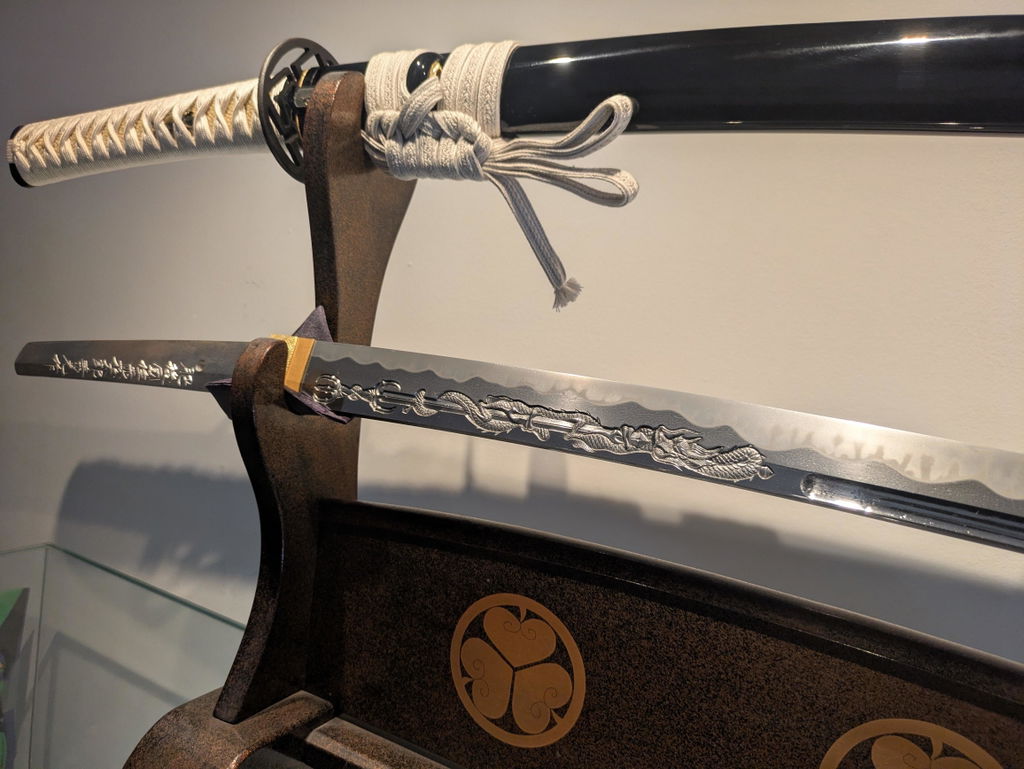
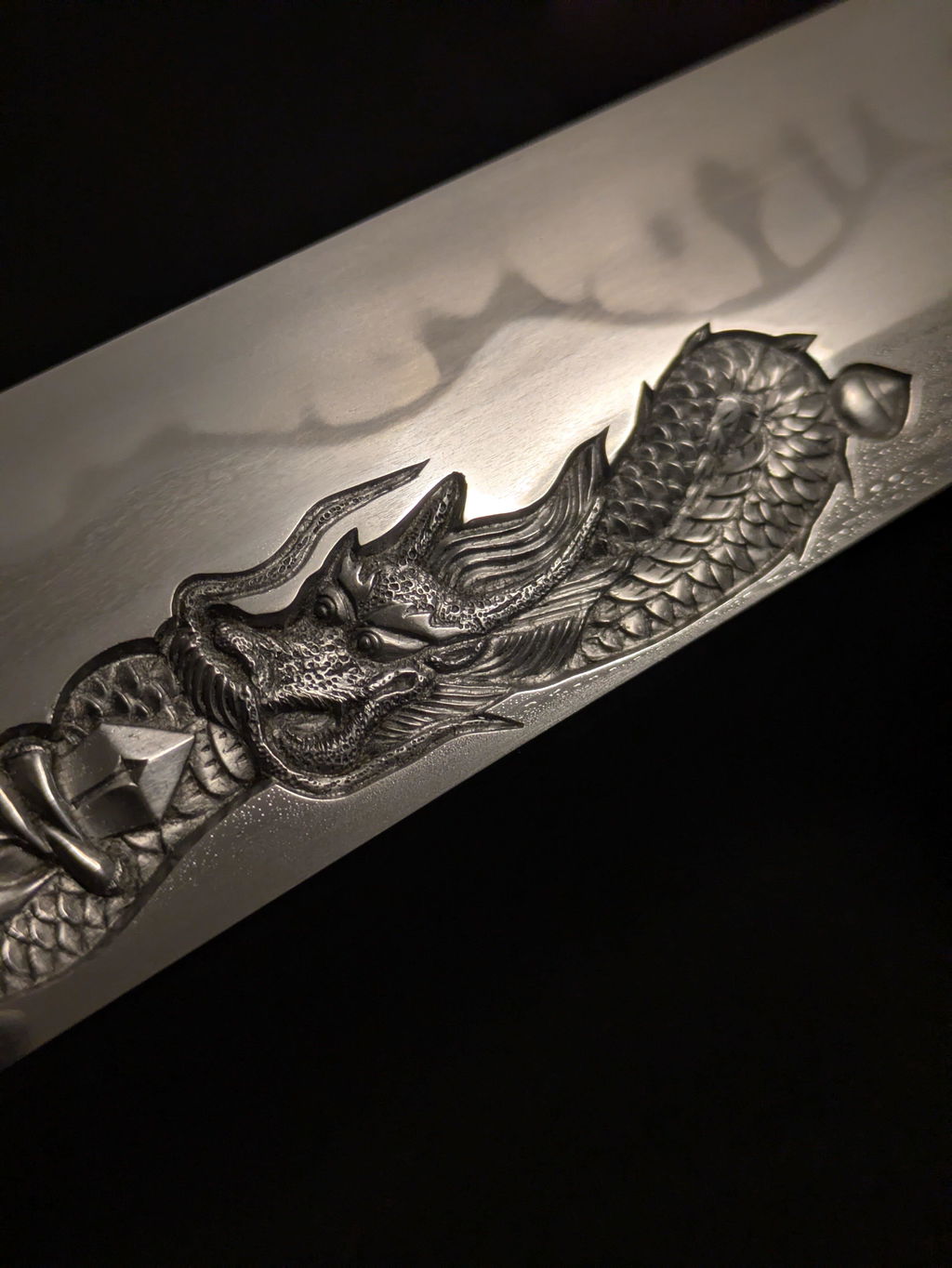
The aesthetic answer: the jihada — the grain pattern visible in the polished surface of a Japanese sword — is the direct visual record of the tamahagane's structure and the swordsmith's forging process. The itame, mokume, masame, and other jihada patterns that collectors study and appraisers use as attribution evidence are only possible because tamahagane's folded structure produces a layered steel whose grain becomes visible under polishing. A sword made from modern industrial steel, however beautifully forged, does not produce a jihada. There is no grain to reveal. The polished surface is simply mirror-flat — aesthetically different in kind, not just degree, from a genuine nihonto's surface.
written in the steel by a thousand years of refinement,
readable by anyone who knows how to look."
Why Mass-Produced "Katana" Are Not Japanese Swords — The Definition Problem
This is where the tamahagane question becomes directly relevant to collectors navigating the market. Every year, large quantities of swords described as "katana," "samurai sword," or — more problematically — "handmade Japanese sword" are produced outside Japan using modern industrial steel. They are sold online, often at prices that seem remarkably accessible for something described as authentic. Some are aesthetically pleasing objects. And none of them are nihonto.
- Tamahagane from Japanese iron sand — the only material that produces a genuine jihada
- Forged by a government-licensed swordsmith after minimum 7-year apprenticeship
- Maximum 24 blades per smith per year — structural scarcity
- Government registered (Token Toroku-sho) — gives the blade its legal identity
- Polished surface reveals jihada — the grain pattern unique to tamahagane
- NBTHK certification available — independent authentication of quality and attribution
- Legally exportable with proper documentation
- Industrial high-carbon or stainless steel — no jihada possible regardless of polish quality
- No licensing system — no limit on production volume or quality
- Mass-produced — sometimes in quantities of thousands per month
- No government registration — cannot be legally imported into Japan as a sword
- Polished surface is mirror-flat — no grain pattern visible regardless of lighting
- No NBTHK certification possible — certification requires genuine tamahagane construction
- May face import restrictions in various countries depending on local weapons law
The practical implication for collectors is straightforward: the presence or absence of a jihada — visible under directional lighting as a grain pattern in the steel — is one of the most immediate and reliable indicators of genuine tamahagane construction. A sword with no visible jihada, regardless of its price, its seller's claims, or the aesthetic quality of its fittings, is not a genuine nihonto. This is not a matter of connoisseurship or specialist knowledge. It is a material fact that anyone can verify with a flashlight and a basic understanding of what to look for.
Tamahagane in the Living Tradition — What Today's Smiths Work With
The approximately 300 licensed swordsmiths currently active in Japan all depend on the same source of tamahagane — the Nittoho Tatara in Shimane Prefecture, whose annual output of 3 to 4 tons is distributed by the Society for the Preservation of Japanese Art Swords. Each smith receives an allocation based on their production record and needs. For the finest smiths — those working at Mukansa level, whose individual blades may take weeks of intensive work — the tamahagane allocation is always insufficient.
This scarcity is not a logistical problem to be solved. It is structural to the tradition. The Nittoho Tatara operates at the scale it does because the traditional tatara process cannot be scaled without changing what it produces. Doubling the output would require either doubling the number of tatara operations — each of which requires a master murage whose knowledge cannot be quickly replicated — or compromising the process in ways that would change the material's character.
When Tozando carries a newly forged blade by a Mukansa-level smith — a blade that may have taken weeks to forge, months to polish, and represents the summit of the living tradition — the tamahagane in that blade came from the same source that has supplied Japan's swordsmiths for decades: a single tatara in Shimane, operating only in winter, run by people who learned the murage's art through years of direct transmission. That lineage of material is part of what you acquire when you acquire a genuine nihonto.
in Tozando's collection
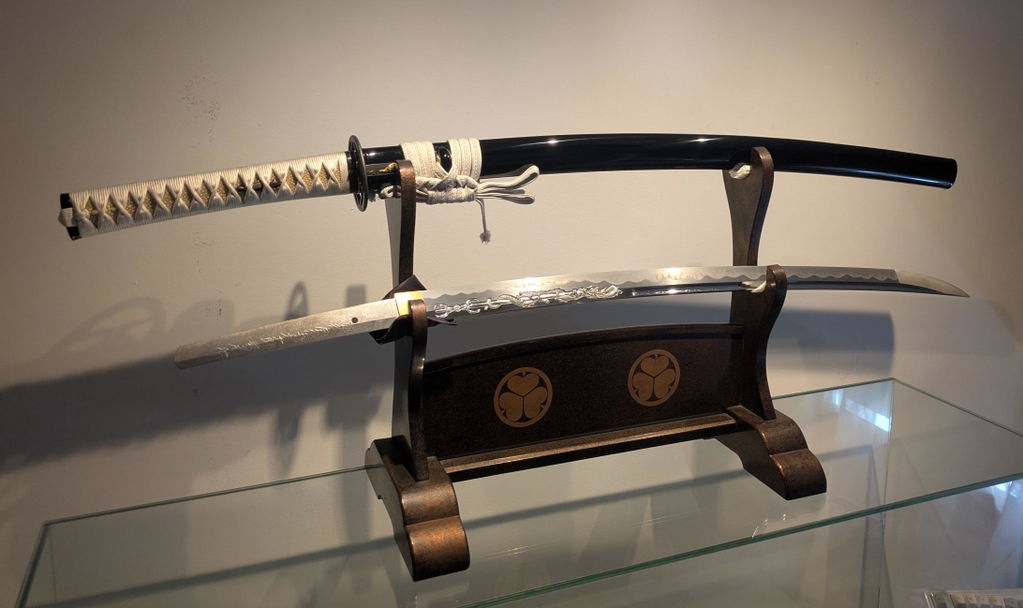
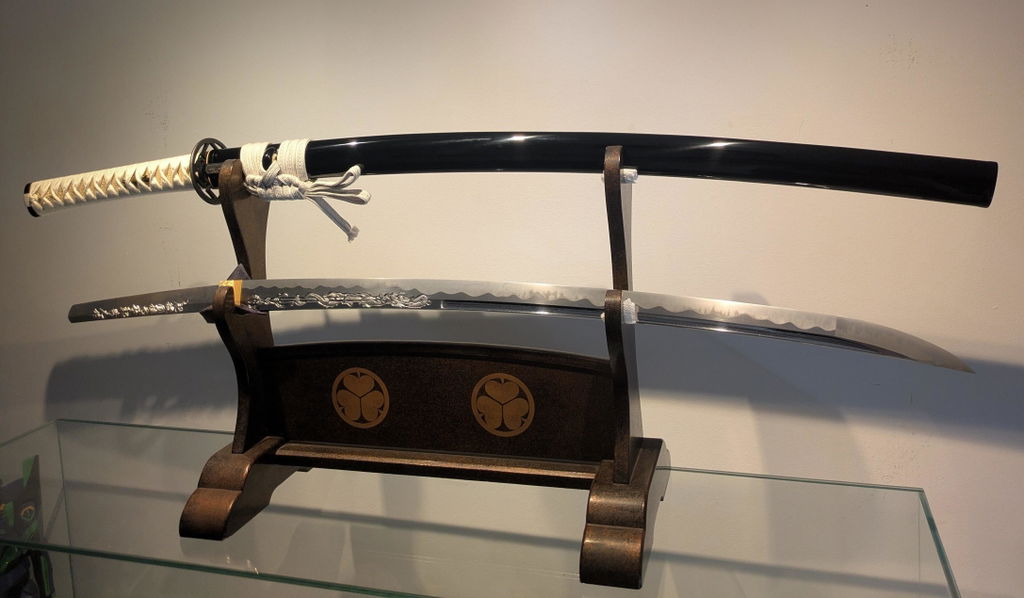
Every blade in Tozando's collection — antique or newly forged — is a genuine nihonto made from tamahagane by a licensed Japanese swordsmith. The jihada that distinguishes tamahagane steel from industrial alternatives is visible in every piece we carry, under proper directional lighting. Browse our collection or contact our specialists to discuss what tamahagane construction looks like in any specific piece.
In Closing — The Steel That Makes the Sword
Tamahagane is, by any industrial measure, an inefficient way to make steel. Nine tons of iron sand and eleven tons of charcoal, consumed over three days and nights by a team working without pause, to produce two and a half tons of material that must then be sorted, allocated, and worked by licensed craftspeople under a production limit of 24 blades per year. The cost is extraordinary. The output is tiny. And there is no substitute.
There is no substitute because tamahagane's properties — its variability of carbon content, its folded grain structure, the jihada it produces under polishing — cannot be replicated by any industrial process. The steel is what it is because of how it is made, and how it is made cannot be meaningfully simplified without changing what results. This is, in the end, why the term "Japanese sword" has a specific and defensible meaning: not because of national pride or commercial protectionism, but because the material from which a genuine nihonto is made is genuinely different from any alternative, and that difference is visible, measurable, and aesthetically significant.
Every genuine nihonto carries tamahagane that was iron sand in a Japanese riverbed before a murage made it steel. That lineage — from sand to tatara to bloom to blade — is part of what you hold when you hold a real Japanese sword. It is not a story the seller tells. It is in the steel itself, readable in the grain of the jihada by anyone who knows how to look.

Leave a comment: