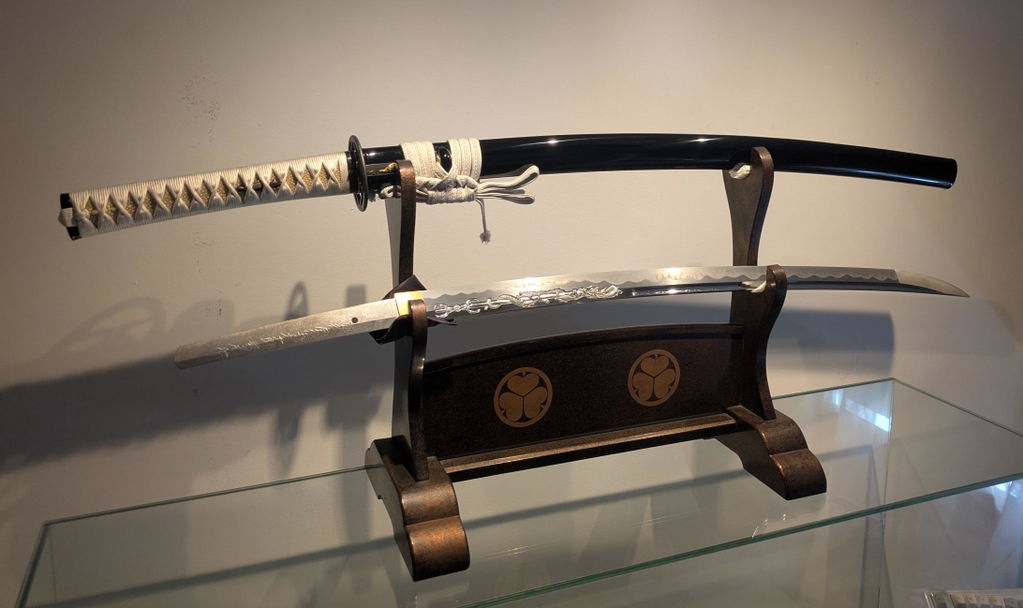
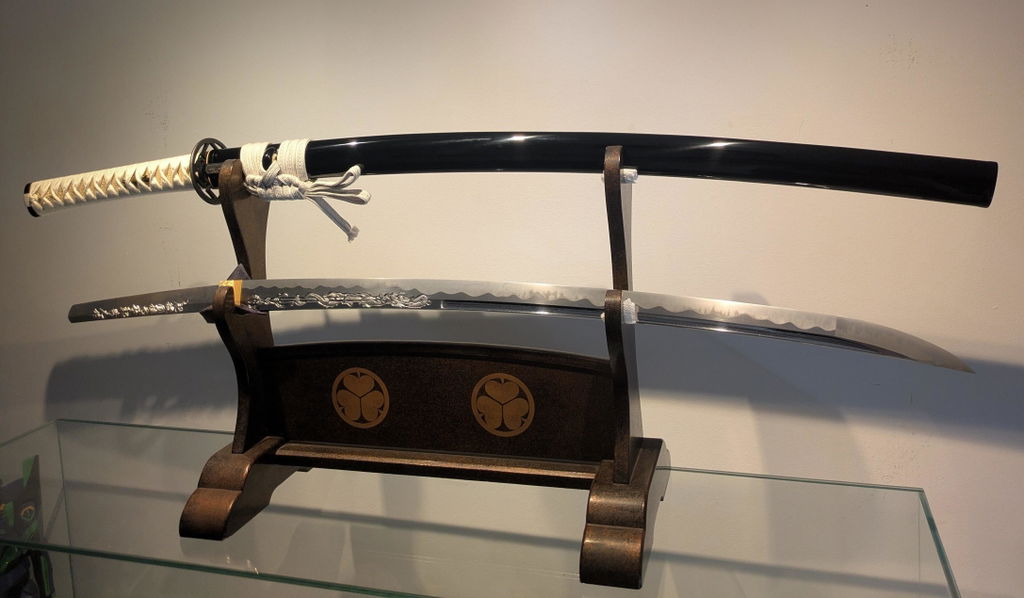
Antique Japanese Katana Sword - Mumei, Shinshinto Era - NBTHK Hozon Token(73.2 cm)
¥1,100,000 ¥1,150,000

This blade has been acquired. Discover other exceptional swords currently available in our collection.


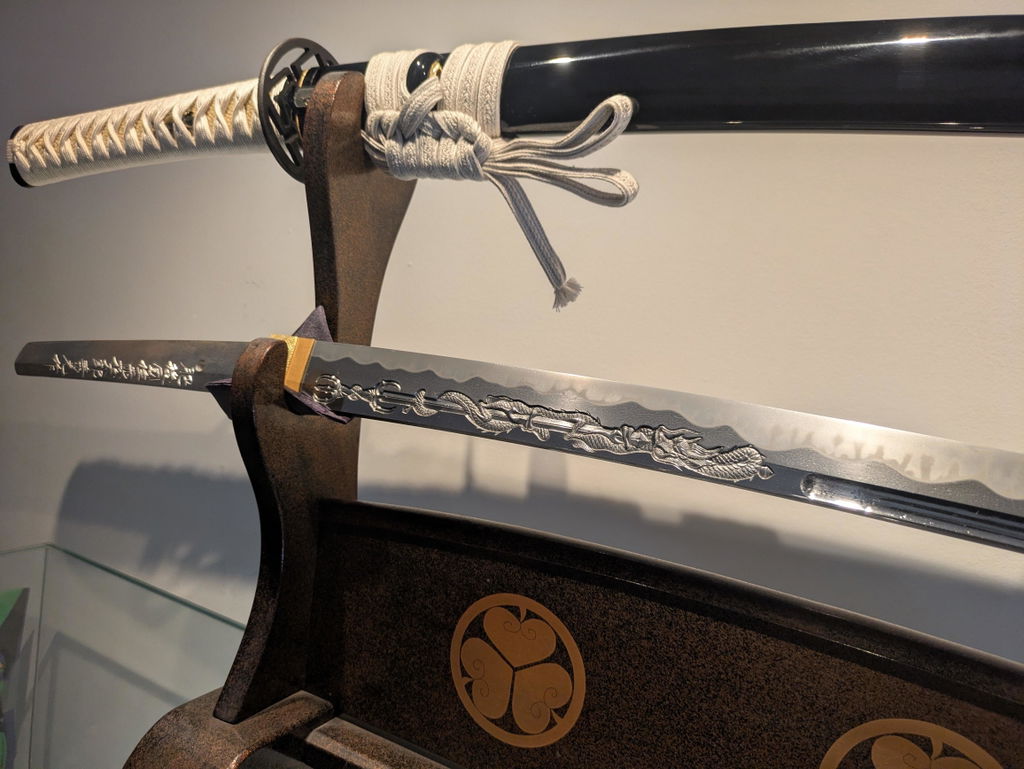
An unsigned (mumei) wakizashi attributed to the Mino Senjuin school and judged to have been made in Mino province around the Bunmei era (1469–1487) of the mid-Muromachi period. It is papered by the NBTHK (Nihon Bijutsu Tōken Hozon Kyōkai) as a Hozon Tōken ("sword worthy of preservation") under the attribution "Mino Senjuin." Freshly polished, nearly flawless, and carved with a bō-hi (straight groove) on both faces, it carries the quiet flavor of a genuine kotō (old sword).
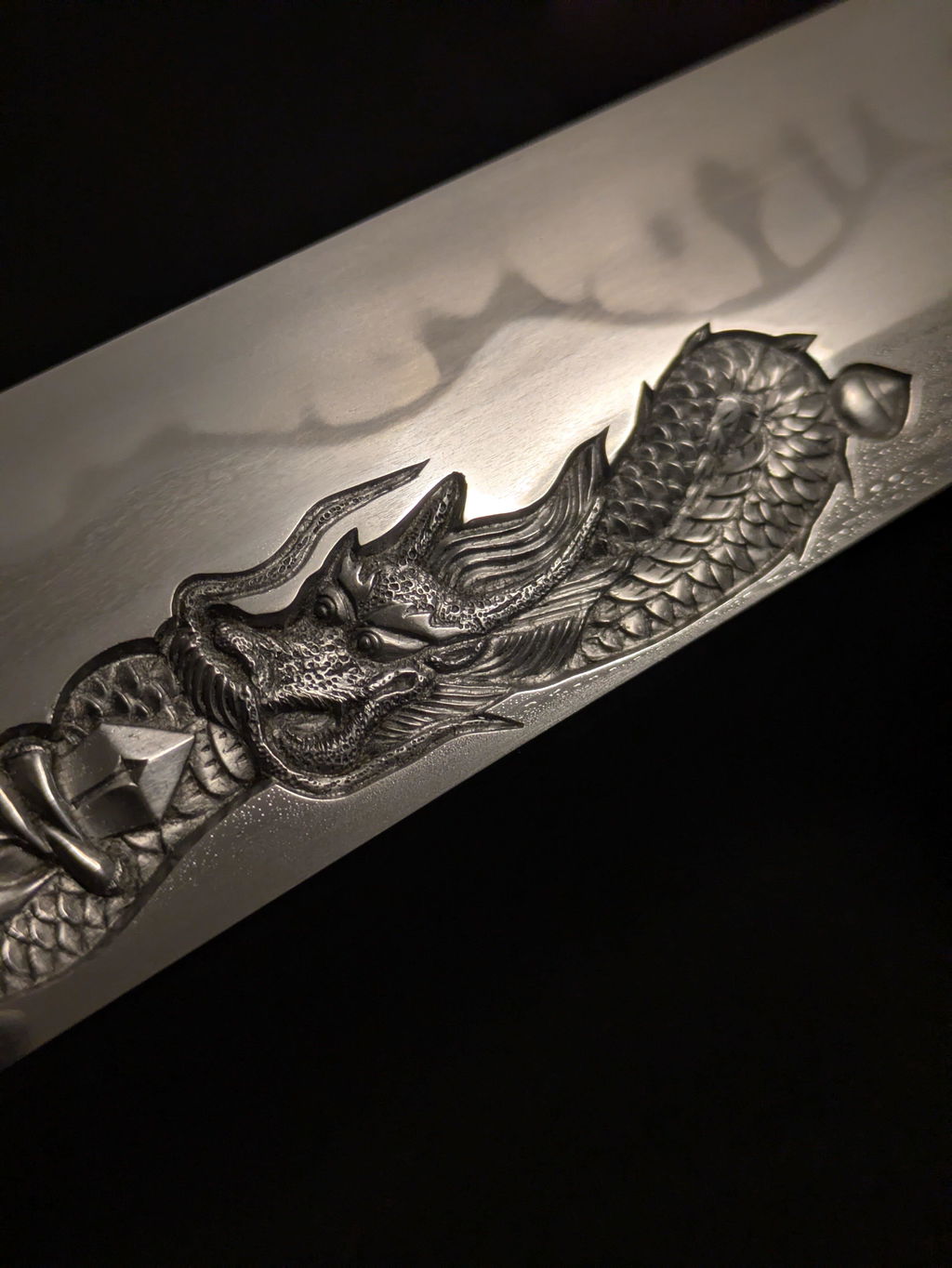
In fresh polish with only the very faintest of surface scratches (usukizu), the blade is otherwise essentially flawless, and both ground and edge are exceptionally sound (kenzen). The jigane is an itame (wood-grain) mixed actively with mokume (burl grain), through which chikei — dark, lustrous lines of gathered steel — can be seen. The hamon is a ko-gunome mixed with ko-chōji (small clove-outline), set against a softly misty, faintly moist nioiguchi (urumi-gokoro) — a temper full of the understated, classical character of early Mino work with its Yamato Senjuin roots.
At a nagasa of 42.2 cm (about 1 shaku 4 sun) with 1.0 cm of sori, this is a slender, well-balanced wakizashi. The bō-hi running the full length of both faces lightens the blade and gives it a crisp, elegant line, while the near-mirror polish shows the steel and temper to full effect.
The tang (nakago) is unsigned (mumei). The Senjuin school is one of the oldest lines of the Yamato tradition, taking its name from the Senjuin-in temple precinct of old Nara; smiths of this lineage who settled and worked in Mino are attributed as Mino Senjuin, and their blades bridge the refined Yamato manner and the emerging Mino tradition of the Muromachi age. On the strength of its shape, steel, and temper, the NBTHK has judged this blade to be a work of that group and certified it as a Hozon Tōken.
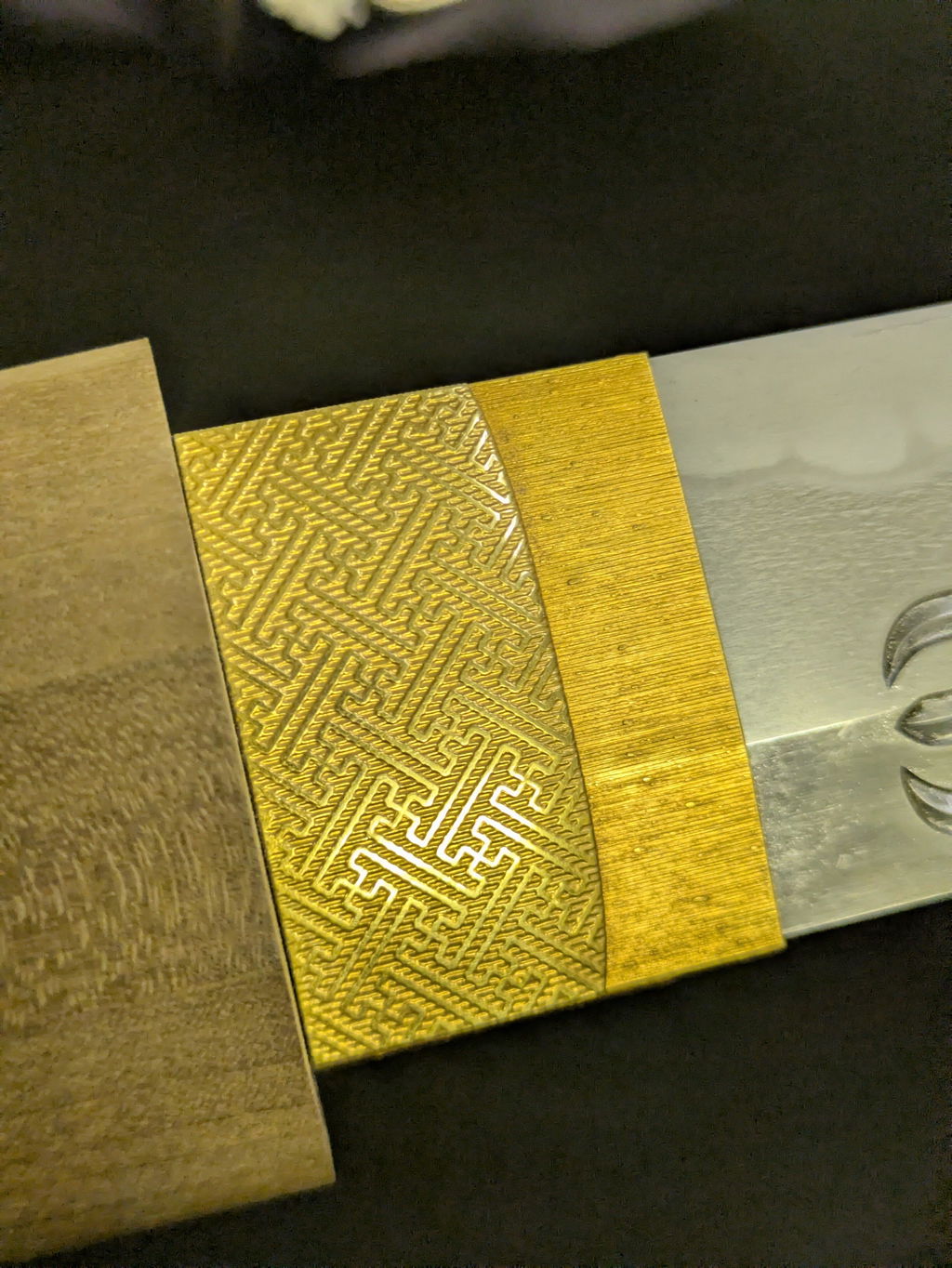
The wakizashi is preserved in a plain wood shirasaya (resting scabbard) with a brushed copper-alloy habaki (blade collar) — the customary way of storing and protecting a fine old blade, keeping all the attention on the sword itself.
A healthy, freshly polished Muromachi wakizashi in shirasaya, its lively itame-and-mokume steel and softly tempered ko-gunome edge set off by bō-hi on both faces, and papered by the NBTHK as Mino Senjuin — an approachable, well-documented kotō ready to study and enjoy exactly as it is.
¥1,100,000 ¥1,150,000

¥200,000 ¥240,000

¥400,000 ¥430,000

¥390,000 ¥410,000

¥270,000 ¥290,000

¥300,000 ¥330,000


Every blade reflects generations of knowledge, discipline, and precision passed down through traditional Japanese swordmaking. From the forging of steel to the final finishing touches, each piece is shaped with patience, mastery, and deep respect for heritage.

From carefully selected materials to the refined finishing of every surface, each sword is crafted and presented with uncompromising attention to detail. Our commitment to authenticity ensures every piece reflects true tradition, lasting quality, and enduring cultural value.

Designed with balance, simplicity, and purpose, our blades embody the harmony between refined form and skilled craftsmanship. Each sword represents a thoughtful union of strength, elegance, and the timeless discipline of Japanese artisans.