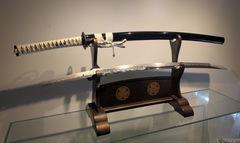
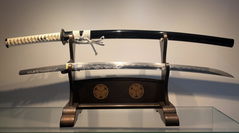
Antique Japanese Wakizashi Sword - Mumei, Shinto Era (36.6 cm)
¥200,000 ¥240,000

We are pleased to present a remarkable unokubi-zukuri tantō signed "Ichinohira" (一平), associated with the famous Ichinohira Yasuyo (一平安代) lineage of Satsuma Province, preserved in pristine, flawless condition. Housed in a shirasaya with historic sayagaki, this blade carries an extraordinary provenance: documented as a treasured heirloom passed down through the powerful Shimazu family of Satsuma, and later recovered from the United States in the fall of 1976 by the renowned sword scholar Dr. Fukunaga Suiken.
The signature "Ichinohira" links directly to one of Satsuma Province's most celebrated Shintō-era masters, Ichinohira Yasuyo, who served the Shimazu clan and produced numerous revered masterpieces.
This piece carries an exceptional historical lineage verified by its sayagaki:
The blade is preserved in flawless, pristine condition, entirely free of flaws, chips, or rust. The jigane is a finely wrought itame-hada (wood-grain pattern), presenting a clear and healthy steel surface. The hamon is a gentle, elegant notare (wavy temper line) crafted with subtle nuance. The bōshi (tip temper) enters straight (massugu) and turns back neatly in a compact circle (ko-maru ni kaeru), bringing a precise and balanced finish to the point.
Crafted in the distinctive unokubi-zukuri (cormorant's-neck style), a striking structure in which the central ridge thins out before widening again near the point. With no curvature (mu-sori, 0.0 cm) and light in the hand (90 g, blade only), this form creates a dynamic, elegant silhouette that combines sleek grace with classical Japanese cutlery aesthetics.
The blade is safely housed in a clean, traditional shirasaya (plain wood resting scabbard). The scabbard features detailed black-ink sayagaki (inscriptions) written on both sides:
Note on Fukunaga Suiken (福永酔剣, 1914–2003): Born in Kumamoto (real name Katsumi Fukunaga), he was a medical doctor, army lieutenant, and assistant professor at Kumamoto University, as well as one of modern Japan's most distinguished and influential Japanese sword researchers and authors.
Boasting a rare unokubi-zukuri form, pristine health, Satsuma Shimazu family provenance, and a documented post-war recovery history by Dr. Fukunaga Suiken — this Ichinohira tantō is a truly unique collector's treasure, rich in historical significance.
¥200,000 ¥240,000

¥400,000 ¥430,000

¥390,000 ¥410,000

¥270,000 ¥290,000

¥300,000 ¥330,000


Every blade reflects generations of knowledge, discipline, and precision passed down through traditional Japanese swordmaking. From the forging of steel to the final finishing touches, each piece is shaped with patience, mastery, and deep respect for heritage.

From carefully selected materials to the refined finishing of every surface, each sword is crafted and presented with uncompromising attention to detail. Our commitment to authenticity ensures every piece reflects true tradition, lasting quality, and enduring cultural value.

Designed with balance, simplicity, and purpose, our blades embody the harmony between refined form and skilled craftsmanship. Each sword represents a thoughtful union of strength, elegance, and the timeless discipline of Japanese artisans.