Antique Japanese Wakizashi Sword - Mumei, Shinto Era (36.6 cm)
¥200,000 ¥240,000

This blade has been acquired. Discover other exceptional swords currently available in our collection.


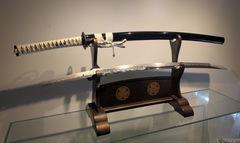
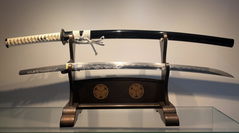
An unsigned (mumei) katana in original, un-shortened (ubu) condition, judged to date from the mid-to-late Edo period. Over 2 shaku 3 sun in length with a generous 2.2 cm curvature, it has a beautiful, well-balanced form, and comes complete in an antique uchigatana koshirae.
The blade is in good condition, freshly polished and very nearly flawless, with outstanding workmanship in both ground and edge. The jigane is a very well-worked ko-itame (fine wood-grain), forged so tightly it takes on an almost mirror-like finish. The hamon is a gunome with a soft, misty nioiguchi, mixing into notare around the monouchi (the striking area near the point). Within the edge, inazuma ("lightning") and ashi ("feet") appear generously — lively, luminous activity that rewards close viewing.
At a nagasa of over 2 shaku 3 sun (70.2 cm) with 2.2 cm of sori, the blade has the elegant, purposeful silhouette of a classic katana — long and gracefully curved, a pleasure to view and to hold.
The tang (nakago) is unsigned. Many fine Edo-period blades were made without a signature, and being ubu — never shortened — this katana retains its original form and character exactly as it left the smith. For the collector, an unsigned blade is a chance to appreciate a sword on its own merits: its shape, steel, and temper, rather than a name.
The sword comes in an antique uchigatana koshirae with a black-lacquer saya. The iron tsuba is pierced with a cherry-blossom (sakura) design, and the hilt is wrapped in black cord over white same (ray skin) with figural fuchi-kashira — a mounting of quiet, practical dignity in the taste of the samurai age.
A handsome, full-length ubu katana in fresh polish, its tightly forged ko-itame steel and lively gunome temper housed in a complete antique mounting — a genuine Edo-period sword ready to appreciate as it is.
¥200,000 ¥240,000

¥400,000 ¥430,000

¥390,000 ¥410,000

¥270,000 ¥290,000

¥300,000 ¥330,000


Every blade reflects generations of knowledge, discipline, and precision passed down through traditional Japanese swordmaking. From the forging of steel to the final finishing touches, each piece is shaped with patience, mastery, and deep respect for heritage.

From carefully selected materials to the refined finishing of every surface, each sword is crafted and presented with uncompromising attention to detail. Our commitment to authenticity ensures every piece reflects true tradition, lasting quality, and enduring cultural value.

Designed with balance, simplicity, and purpose, our blades embody the harmony between refined form and skilled craftsmanship. Each sword represents a thoughtful union of strength, elegance, and the timeless discipline of Japanese artisans.