Antique Japanese Wakizashi Sword - Mumei, Shinto Era (36.6 cm)
¥200,000 ¥240,000

This blade has been acquired. Discover other exceptional swords currently available in our collection.


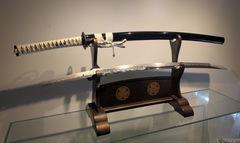
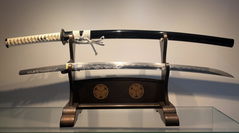
This exceptionally unique katana features a blade with only the Tokugawa-associated three-leaf hollyhock crest carved into the nakago, mounted with a majestic handachi koshirae.
The blade's preservation is in an old-honed state but has been fully sharpened, presenting a nearly flawless, sound condition. The jigane features a well-defined itame grain with some mokume mixed in, and chikei is also visible. The hamon is a bright, tight nioi-kuchi with choji mixed in, displaying completely different expressions on the sashi-omote and sashi-ura. Sunagashi and kinsuji are also present.
The nakago is carved with the Tokugawa family's three-leaf hollyhock crest. The swordsmith permitted to engrave the three-leaf hollyhock crest was Echizen Yasutsugu, active in the early Edo period. Therefore, this unmarked blade is presumed to be Yasutsugu's work.
The first Echizen Yasutsugu (1554-1621) was a swordsmith employed by the Tokugawa shogunate in the early Edo period, originally from Shimosaka in Omi Province. He served Yuki Hideyasu, whose patronage led to his exceptional skills being highly valued. He was granted the character “Yasu” and the hollyhock crest by Tokugawa Ieyasu, and flourished in Edo. He is a representative swordsmith of the Shinto period during the Keicho era, renowned as a master craftsman skilled in works using Nanbantetsu iron and in reproducing famous swords.
The koshirae features an imposing Handachi mounting. It is a complete half tachi specification, equipped with a Kabuto-gane(tsuka-gashira) and fuchi for the tachi, Sekigane reinforced fittings on the scabbard, and an Ishizuki at the scabbard's base. The coarse-grained Ishime lacquer finish perfectly suits the image of a rugged warrior. The tsukamaki (handle wrap) shows signs of fraying due to age. For an additional fee (¥10,000), it can be rewound. Please specify this request when ordering.
This set, featuring both a storage shirasaya and a striking Handachi-style koshirae, along with a rare blade engraved solely with the Tokugawa family crest, holds exceptional value.
Don't miss this opportunity.
Please contact us if the katana you are looking for is not listed here.
¥200,000 ¥240,000

¥400,000 ¥430,000

¥390,000 ¥410,000

¥270,000 ¥290,000

¥300,000 ¥330,000


Every blade reflects generations of knowledge, discipline, and precision passed down through traditional Japanese swordmaking. From the forging of steel to the final finishing touches, each piece is shaped with patience, mastery, and deep respect for heritage.

From carefully selected materials to the refined finishing of every surface, each sword is crafted and presented with uncompromising attention to detail. Our commitment to authenticity ensures every piece reflects true tradition, lasting quality, and enduring cultural value.

Designed with balance, simplicity, and purpose, our blades embody the harmony between refined form and skilled craftsmanship. Each sword represents a thoughtful union of strength, elegance, and the timeless discipline of Japanese artisans.