

There is one place in Japan where the entire world of the Japanese sword — its history, its production, its scholarship, and its living practice — exists within a single complex of buildings that you can explore in a day. That place is the Bizen Osafune Token no Sato (備前おさふね刀剣の里) in Setouchi City, Okayama Prefecture. This is not merely a museum. It is a working complex where swords are being forged today, where the full range of traditional sword-related crafts is practised in public view, and where the National Treasure that gave rise to one of Japan's most celebrated cultural campaigns is displayed. Tozando has operated the Fureai Bussan-kan within this complex as its designated manager — and this is our complete guide to everything you will find there.
Why Bizen — The Context That Makes This Place Significant
The town of Osafune in present-day Setouchi City has been producing Japanese swords since the Heian period. During the Kamakura period — the tradition's acknowledged golden age — Bizen was the dominant sword-producing region in Japan by a margin that is almost impossible to overstate. Of the approximately 2.7 million registered Japanese swords that survive today, roughly half are of Bizen origin. Of the 111 swords designated National Treasures of Japan, 47 — more than 40% — are Bizen-den blades.
The school most associated with Bizen's classical period is the Osafune school (長船派), founded by the smith Mitsutada in the mid-Kamakura period and continued through generations of his descendants — most notably his son Nagamitsu and grandson Kagemitsu. These smiths produced the choji hamon and layered jihada that define the Bizen aesthetic at its height, and their blades remain among the most studied and sought works in the entire nihonto tradition.
The Bizen Osafune Token no Sato exists precisely because this tradition never fully disappeared. The complex's founding was motivated by the recognition that the living craft deserved a dedicated institution — not merely to preserve the historical record, but to continue the practice.
Tozando's daily presence at the heart of the tradition
Tozando has been appointed by Setouchi City as the designated management operator (指定管理者) of the Fureai Bussan-kan (ふれあい物産館) — the commercial facility within the Token no Sato complex. This appointment reflects a relationship of institutional trust between Tozando and the city's cultural authorities that has developed over decades of engagement with the Bizen tradition.
For Tozando's specialists, the Bizen Osafune complex is not a destination but a daily working environment. The swordsmiths forging in the Tanjo-ba adjacent to where our staff work, the museum's collection of Kamakura-period masterworks a short walk from our facility, the scholars and craftspeople who pass through the complex — all of this is part of the professional context in which Tozando's understanding of the nihonto tradition has developed. When Tozando describes a Bizen-den blade in our collection, that description is written by people for whom Bizen Osafune is not a historical abstraction but a present reality visited regularly.
The Complete Facility Guide — What to See and Do
The museum is one of Japan's very few institutions dedicated exclusively to Japanese swords — displaying approximately 40 blades across two floors, with a permanent collection supplemented by approximately six special exhibitions per year. The collection centres on Bizen-den work spanning from the Heian through the early modern period, with examples from all major Bizen schools including Fukuoka Ichimonji, Osafune, and the later Ko-Bizen tradition.
The centrepiece of the current collection is Sanchomo (山鳥毛) — a tachi designated a National Treasure of Japan, forged in the 13th century by a Fukuoka Ichimonji smith. Sanchomo's presence here is the result of an extraordinary repatriation project driven by Setouchi City, which raised public funds to bring the blade back to its place of origin — where it is now displayed for the benefit of collectors and the general public alike. The blade's flowing o-choji hamon and the quality of its jihada represent the Bizen tradition at its absolute historical peak.
The museum also includes the "Token no Sekai" (刀剣の世界) exhibition space — an accessible introduction to Japanese swords and their cultural context, with hands-on elements including tamahagane and whetstone samples that visitors can touch. This section is particularly well-suited to first-time visitors who want context before viewing the main collection.
The Tanjo-ba is a working forge — not a museum exhibit or a reconstruction, but an active production facility where licensed swordsmiths (tokusho, 刀匠) are currently making Japanese swords using traditional tamahagane and traditional methods. The forge is open for observation; visitors can watch the smiths at work through the viewing area.
On the second Sunday of each month, the complex holds a public Koushiki Tanren (公開古式鍛錬) — a public demonstration of the ancient forging process, during which tamahagane is heated to 1,200°C and forged by the smith and assistants in the traditional manner. The physical drama of this process — the intensity of the heat, the coordination between the smith and his assistants, the shower of sparks as the steel is struck — is something that no photograph or film adequately conveys. International visitors who time their visit to coincide with the Koushiki Tanren are consistently affected by it in a way that changes their understanding of what a Japanese sword actually is.
The term aizuchi wo utsu (相槌を打つ) — meaning "to respond in agreement" — derives from the call-and-response rhythm of the smith and assistants striking the steel in turn. Watching the Koushiki Tanren is, among other things, an encounter with the linguistic origin of a phrase that every Japanese speaker uses regularly without necessarily knowing where it comes from.
The Token Kobo is a publicly accessible workshop space where practitioners of each of the subsidiary crafts that complete a Japanese sword — polishing (togishi), carving (horimono), scabbard-making (saya-shi), handle-wrapping (tsuka-maki), and related skills — work in view of visitors. These are not demonstration performances; the craftspeople are doing their actual work, and visitors are observing live professional practice.
This is, globally, an extraordinarily rare opportunity. The craft of Japanese sword polishing in particular — the togishi's art of revealing the jihada and hamon through progressively finer whetstones — is one of the most demanding and least-documented skills in the entire Japanese craft tradition. Watching a togishi work on an actual blade, with the jihada gradually coming alive under the whetstone, is an experience that no book or museum exhibit can substitute for.
Imaizumi Toshimitsu (今泉俊光, 1898–1977) is known as the "father of the Bizen revival" — the smith whose research, practice, and teaching restored the authentic Bizen-den techniques that had been partially lost in the post-Meiji modernisation period. The memorial hall dedicated to him preserves his original tools, documents, and a record of his contribution to the tradition.
Understanding Imaizumi's role helps visitors grasp something important about the complex as a whole: what exists here is not a frozen historical exhibit but an active continuation of a practice that was deliberately reconstructed through scholarly and practical effort within living memory. The swordsmiths forging in the Tanjo-ba adjacent to this memorial hall are the direct inheritors of Imaizumi's work.
The Kenshu-kan is a multi-purpose hall used for scholarly presentations, group events, and the complex's ongoing educational programmes. On the first and third Saturdays of each month, it hosts the Kozuka Seisaku Koza (小刀製作講座) — a small-knife making course in which participants work with real materials under instruction from a licensed smith to produce a small blade of their own.
The Kozuka Seisaku Koza is one of the most direct hands-on encounters with sword-making technique available to the general public anywhere in Japan. Participants leave with a blade they have made themselves and a practical understanding of why sword-making is as demanding as it is. Advance booking is recommended; international visitors should contact the complex in advance to confirm availability and language support.
The Fureai Bussan-kan is the commercial facility within the complex, managed by Tozando as designated operator. It is both a shop and a visitor support facility — and for collectors making the journey to Bizen Osafune, it is the natural first stop.
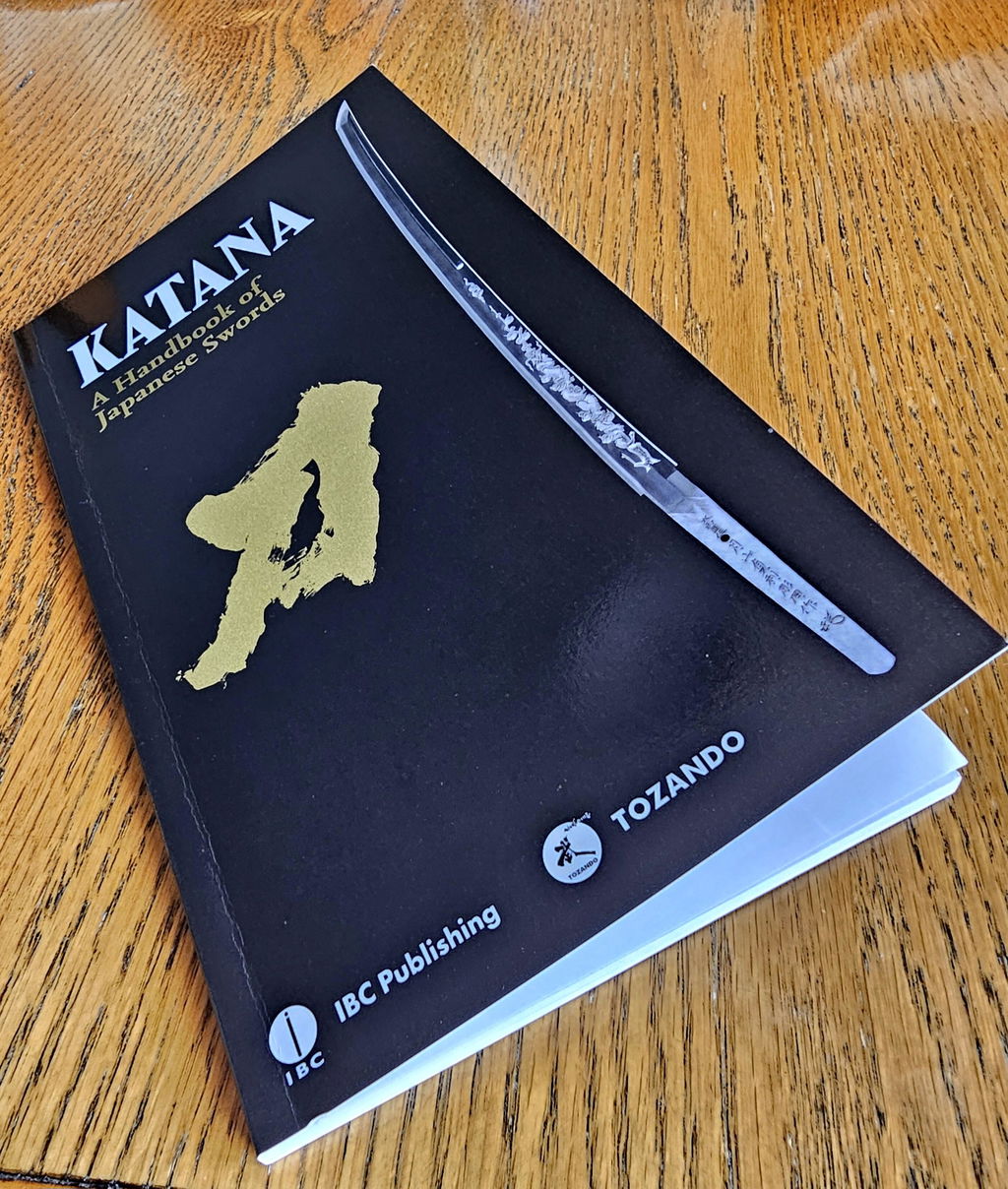
The shop carries: authentic Japanese swords and imitation swords (居合刀 / 模造刀); Sanchomo-related merchandise — the complex's most distinctive souvenir range, developed around the repatriation of the National Treasure; specialist books and publications on Japanese swords and Bizen-den in particular; local Bizen sake and confectionery; and a range of smaller souvenirs and gifts. A particular highlight is the Bussan-kan's original gacha machine — a capsule toy dispenser containing Bizen Osafune-themed collectibles that has become an unexpected favourite with international visitors.
The facility also provides a rest area with free Wi-Fi and a self-service coffee station — a practical amenity that makes the Bussan-kan a useful base during a full-day visit to the complex. Tozando staff are available to answer questions about the swords on display in the museum, the complex's facilities, and Japanese sword collecting more broadly.
It is the standard against which everything
being made in the forge next door is measured."
Practical Information — Planning Your Visit
or browse Bizen-den blades from anywhere in the world
The tradition you will see practised at Bizen Osafune is the same tradition represented in Tozando's antique collection — blades from the Kamakura, Muromachi, and later periods by smiths of the Bizen schools. Whether you visit us in Kyoto after your time at the complex, or browse our collection from home, our specialists are available to connect what you see at Bizen Osafune to specific pieces in our inventory.
In Closing — Why This Place Matters
There are Japanese sword museums in Tokyo, in Kyoto, in cities across Japan. What makes Bizen Osafune different is not merely the quality of the collection — though the presence of Sanchomo alone would justify a journey from anywhere in the world. It is the combination: a museum of genuine depth, a working forge, open craft workshops, a hands-on teaching programme, and a commercial facility managed by one of Japan's most experienced sword dealers, all within a single complex in the town where half of Japan's surviving National Treasure swords were made.
International visitors — particularly the tour groups from France and the United States who have been arriving in increasing numbers — are drawn by the Koushiki Tanren above all else. Watching tamahagane heated to 1,200°C and struck into the shape of a blade by craftspeople working in a tradition unchanged for centuries is not an experience that can be replicated elsewhere. It is not a performance; it is the thing itself.
Tozando's daily presence at Bizen Osafune — through our management of the Fureai Bussan-kan — is not incidental to our identity as a Japanese sword dealer. It is part of the foundation of it. The tradition we describe in our collection, the blades we authenticate and present to collectors around the world, the craft we have spent thirty-five years engaging with — all of it connects back to this place, and to the smiths who are working here today.

Leave a comment: