

Every antique Japanese sword has a history. That history is part of what makes it remarkable — the accumulation of centuries, the passage through hands now unknown, the survival of wars and fires and the simple entropy of time. But there is something an antique sword cannot give you, no matter how significant its provenance or how extraordinary its quality: it cannot make you the first. Somewhere in its past, someone else held it before the steel had cooled. Someone else was the first to draw it, the first to care for it, the first to pass it on. That position — first owner, first name on the record, the person at the beginning of the blade's human history — belongs to whoever commissioned it the day it was made. For a newly forged sword, that person can be you.
What an Antique Sword Cannot Give You
This is not a criticism of antique swords. The finest surviving blades of the Kamakura period are among the most remarkable objects ever made — technically, aesthetically, and historically. Nothing in this article is intended to diminish them or the experience of owning them.
But consider what the provenance of a great antique sword actually contains. A blade made in the 13th century has passed through, conservatively, fifteen to twenty owners in its lifetime — more, if it changed hands frequently. Some of those owners are known. Most are not. The documentation may be partial, inconsistent, or entirely absent for large stretches of the blade's history. When you acquire the blade, you are acquiring the end of that chain — not the beginning of it. You are one more name in a sequence that started eight hundred years ago without you.
There is nothing wrong with this. The accumulated history is part of what the antique sword is. But it means that your relationship to the blade is, by definition, that of a recipient — someone who received what others made, owned, and passed on.
A newly forged sword inverts this relationship entirely.
The First Name — What It Means to Begin the Record
When a newly forged sword is registered with the Japanese government, its Token Toroku-sho (刀剣登録証 — the registration certificate that gives the blade its legal identity in Japan) is issued for the first time. That certificate has never existed before. The blade it describes has never existed before. The smith named on it has just completed something that, in its specific form, is unique in the world and will never be repeated.
When you become the first owner of that blade, your name — or the name you have given for the acquisition — enters the blade's record at the beginning. Not partway through a long chain of custody. Not as one more name in a sequence of fifteen. At the beginning. Before anyone else. The first human relationship this blade has ever had — outside of the smith who made it — is with you.
This is not merely symbolic. In Japanese culture, the concept of daidai (代々) — the transmission of valued objects through family lines across generations — attaches deep significance to the origin of that chain. An object whose first named owner is your grandfather carries a different weight from an object acquired anonymously. An object whose first named owner is you carries the greatest weight of all: every subsequent generation inherits both the blade and the knowledge that it began with you.
The Conversation with the Smith — An Experience Antiques Cannot Offer
There is another dimension of newly forged sword ownership that no antique, however magnificent, can provide: the living smith.
When you commission a blade from a Mukansa-level smith — or even from a highly accomplished younger smith working toward that recognition — you are entering into a relationship with a living person whose specific knowledge, aesthetic sensibility, and technical mastery will be expressed in the object made for you. You can tell him about yourself. About what draws you to the tradition. About the school whose work moves you most, the hamon character you find most compelling, the blade length and balance that suits your aesthetic. He can respond — not with a catalogue choice, but with a craftsperson's considered judgement about how to give you what you are describing, in steel, using techniques he has spent decades developing.
This conversation — between collector and smith, across the distance of language and culture that Tozando's specialists bridge — is something that the collector of antique swords can never have. The Kamakura-period master who made a great Bizen blade is not available for questions. His aesthetic choices are documented in the physical object; they cannot be modified, explained, or extended. The living smith's choices are still being made. You can participate in them.
Originality — The Thing That Cannot Be Mass-Produced
Japanese law limits licensed swordsmiths to 24 blades per year. In practice, the finest smiths — working at the level of care and attention that produces genuinely significant work — make far fewer. A Mukansa-level smith may complete ten to fifteen blades in a year that meet his own standards. Of those, only a fraction will be available for private commission rather than competition submission or gallery sale.
This constraint is not a commercial inconvenience. It is the physical expression of what makes the object what it is. A blade that takes weeks of intensive work to produce — whose every element reflects sustained, concentrated attention from a craftsperson of the highest level — cannot be accelerated without ceasing to be that thing. The scarcity is inherent to the quality.
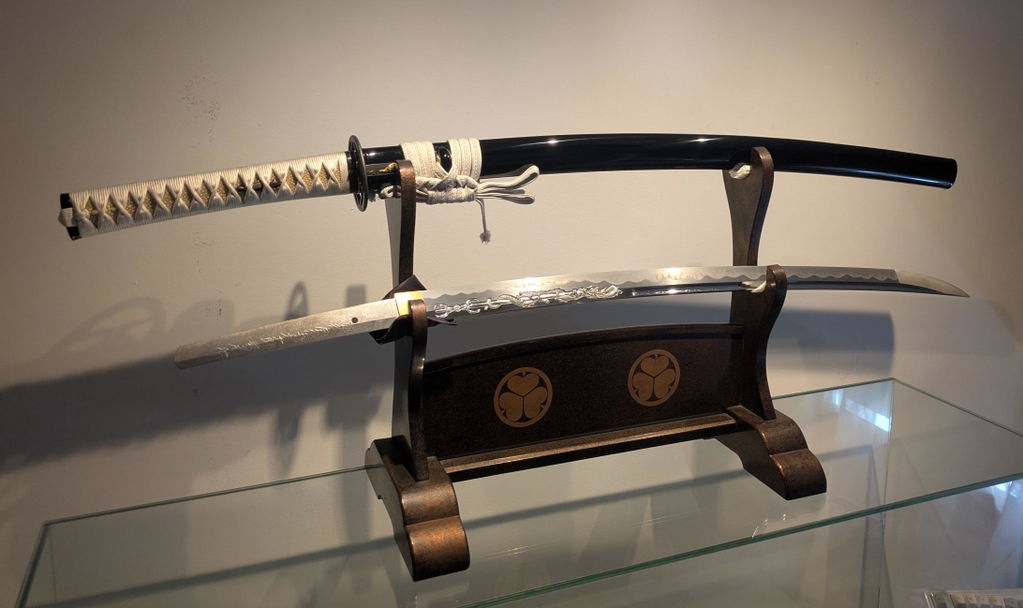
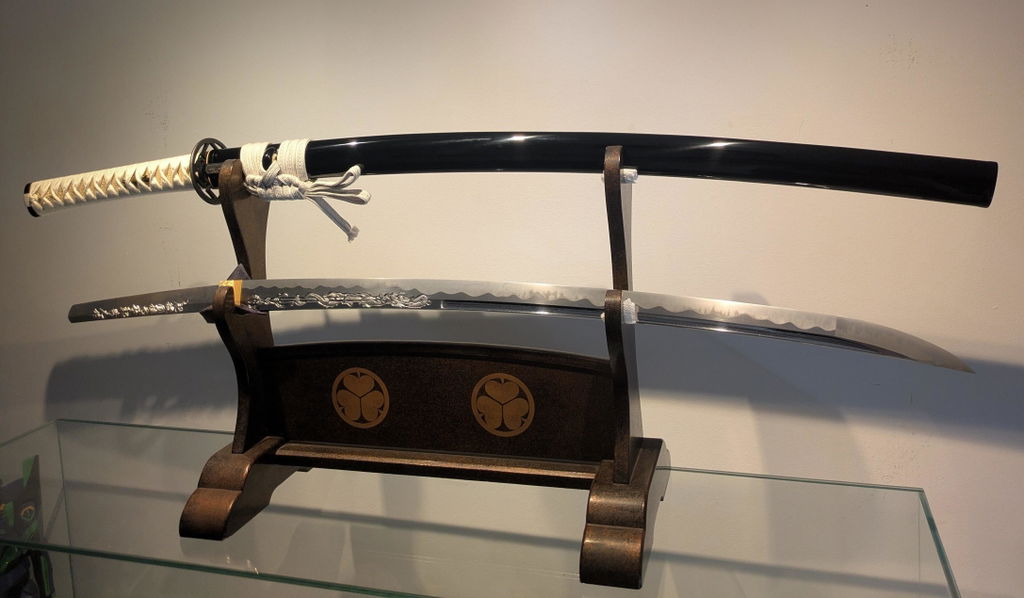
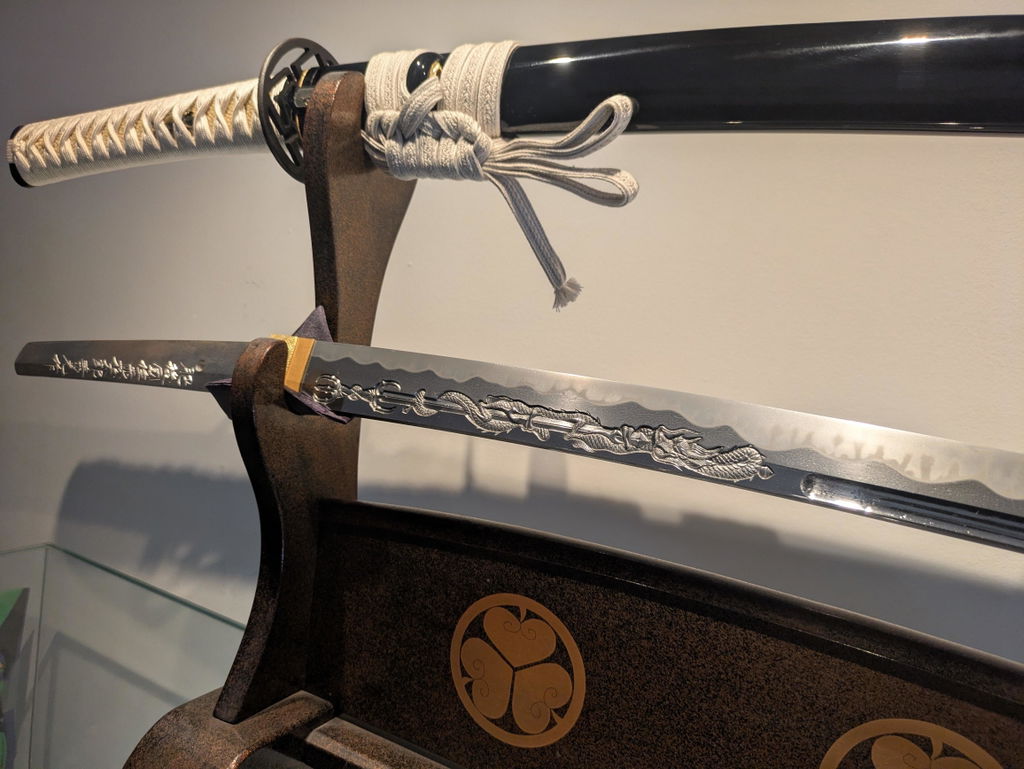
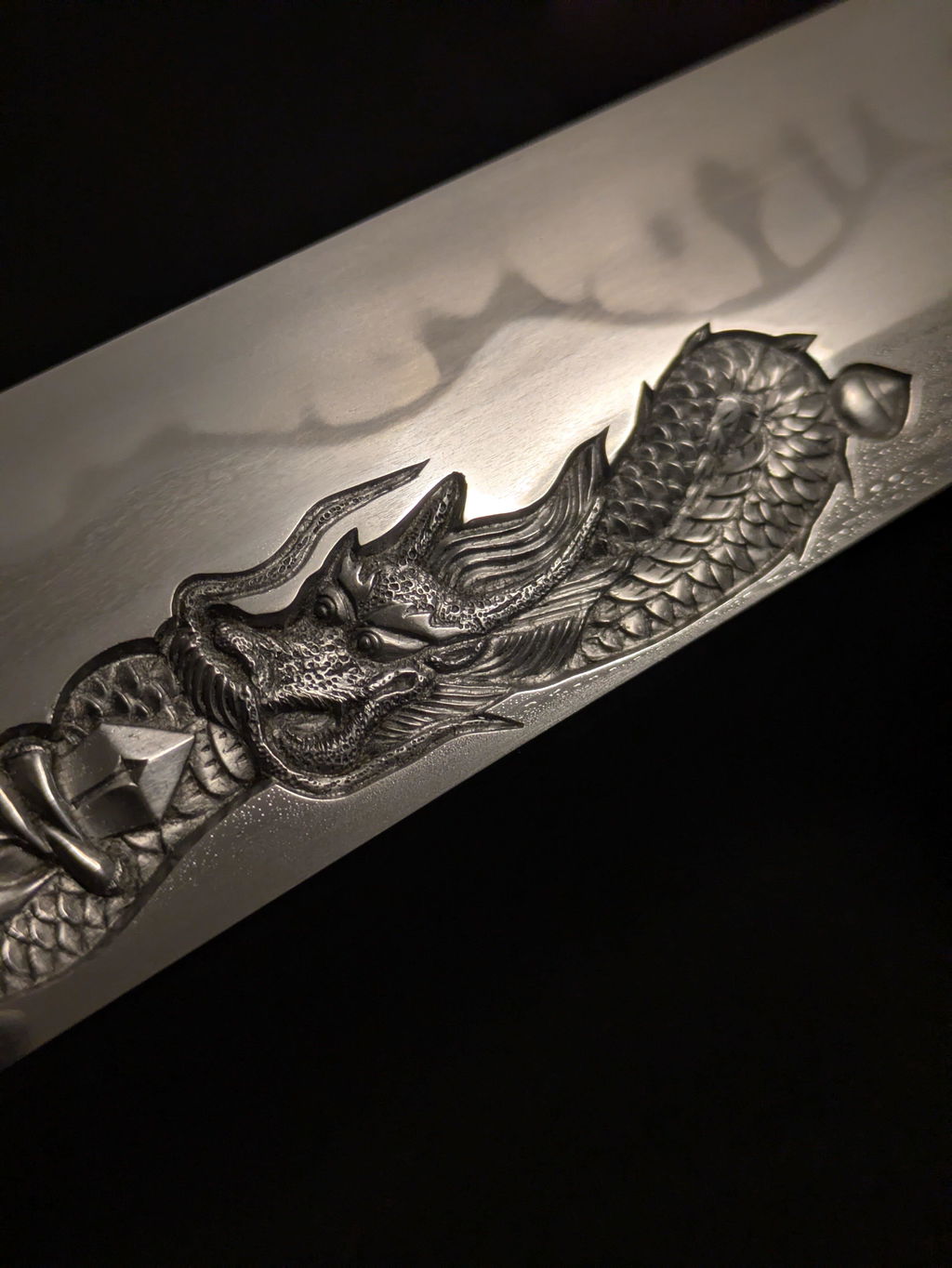
What you receive from a commissioned newly forged sword is therefore something genuinely original in a sense that has almost disappeared from the modern world: an object made for you, by a specific named person, using skills transmitted through a lineage of masters reaching back a thousand years, that will never be duplicated. Not a limited edition. Not a personalised version of a standard product. A singular object that did not exist before the commission was placed, and whose existence begins with your decision to want it.
and what it says about where it began
The great private collections of nihonto were built over generations. The most significant pieces in any collection are typically those with the longest and most coherent ownership history — not because age confers quality, but because continuity confers meaning. A blade that has been in one family for five generations is a different object, in terms of what it represents, from a blade recently acquired from a dealer.
A newly forged sword acquired today begins that history now. In fifty years, it will be a blade with a fifty-year documented provenance, traceable to its first owner. In a hundred years, it will carry a century of family history. The smith's certificate, the NBSK Shinsakuto Shomeisho, the commission correspondence, the original registration — all of these documents travel with the blade and accumulate meaning as the generations pass.
The person who commissions a blade today is not merely acquiring an object. They are starting a record that their children, grandchildren, and descendants beyond them will inherit — a record that begins with their name, in their generation, with their decision to want this specific thing made. That is not something you can acquire secondhand. It can only be started once, by one person, at the beginning.
the weight of everyone who held it before.
A newly forged sword comes to you carrying nothing —
waiting for you to be the first weight it carries."
The Smith's Signature — Witnessed, Not Inherited
Every signed nihonto carries its smith's name on the nakago. For antique swords, that signature is the subject of appraisal, debate, and certification — because the smith is not available to confirm it, and the passage of centuries creates uncertainty that only expert examination can address. The NBTHK's entire certification apparatus exists, in significant part, to answer the question: is this signature genuine?
For a newly forged sword, this question does not arise. The smith who signs the nakago is alive. He signed it. The NBSK certificate he issues confirms it. You can, if you wish, visit his forge and watch him work. The signature on your blade's nakago is not a subject of historical reconstruction — it is a contemporary fact, witnessed rather than inferred.
This matters in ways that will compound over time. In two hundred years, a blade signed by one of today's greatest living smiths — Yoshihara Yoshindo, Ono Yoshimitsu, or whichever names the tradition's future scholars single out as this generation's masters — will be an antique with fully documented provenance, a confirmed attribution, and a chain of ownership that began with someone who acquired the blade when the smith was alive and the signature was fresh. The collector who commissions from a great living smith today occupies, relative to the future, the same position that the Kamakura-period patron who commissioned from Nagamitsu occupies relative to us.
Not a Comparison — A Different Relationship
This article has not argued that newly forged swords are superior to antiques, or that the appeal of the one should replace the appeal of the other. The finest collectors of nihonto typically own both — antiques for the depth of history they carry, newly forged works for the living relationship they represent. These are not competing choices; they are different relationships with different objects, each offering something the other cannot.
What a newly forged sword offers is specific and irreplaceable: the position of first owner, the conversation with the living smith, the origination of a provenance chain that did not exist before you decided to begin it, and the knowledge that what you are passing on carries your name at the beginning of its human story. These are not arguments for the newly forged sword over the antique. They are arguments for the newly forged sword on its own terms — as an experience of ownership unlike any other that the nihonto tradition makes possible.
or browse what is available now
Tozando works with Japan's finest living swordsmiths to facilitate commissions for collectors worldwide. Whether you have a specific school tradition, hamon style, or smith in mind — or whether you are at the beginning of that conversation — our specialists can guide you through the process from the first enquiry to the blade's arrival at your door.
Further Reading — Related Articles
In Closing — The Privilege of Beginning
Every great collection has to start somewhere. Every long provenance chain has a first link. Every blade that future generations will study as a historical object was, at some point, new — held by someone who was not acquiring history but creating it.
The collector who acquires a newly forged sword from a great living smith is doing something that the collector of antiques, however distinguished their collection, cannot do: they are at the beginning. The blade they hold has never been held before. The smith who made it is alive and can be met. The documentation is complete and unambiguous. The provenance chain starts here, now, with this person's name.
That position — first, original, the beginning of the record — is available only once for each blade, to one person, at one moment. For a newly forged sword, that moment is now, and that person can be you.

Leave a comment: