

Every Japanese sword needs somewhere to live. For some blades that means a koshirae — a full, wearable mounting that lets the sword be handled and admired as it was meant to be. For others it means a shirasaya — a plain wooden scabbard that rests and protects the steel for the long term. Most serious collections end up needing both, and sooner or later a blade needs to move from one to the other. This guide explains both directions, and how we handle them from here in Japan.
Koshirae and shirasaya: two homes for one blade
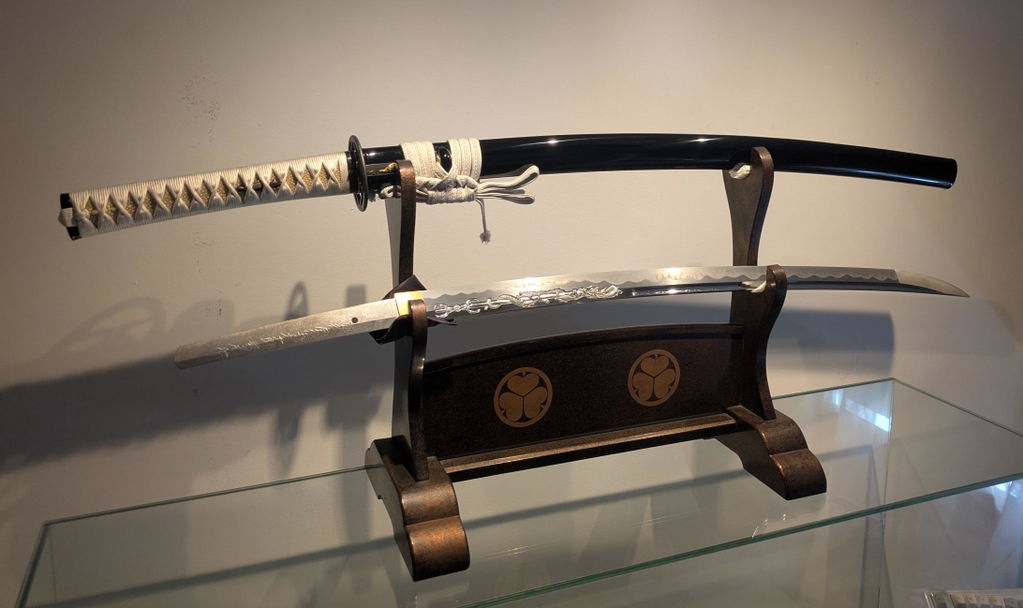
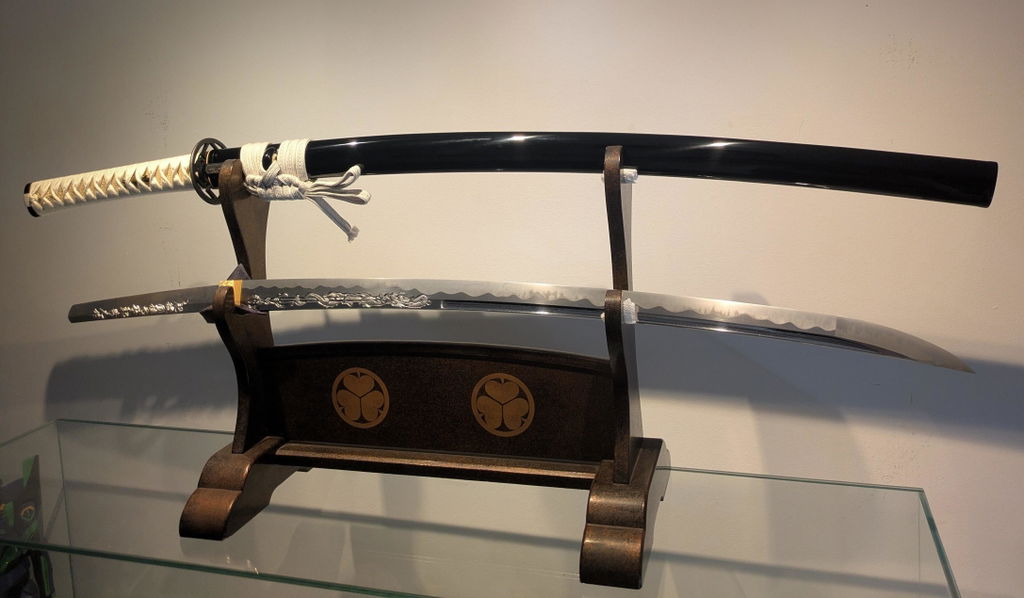
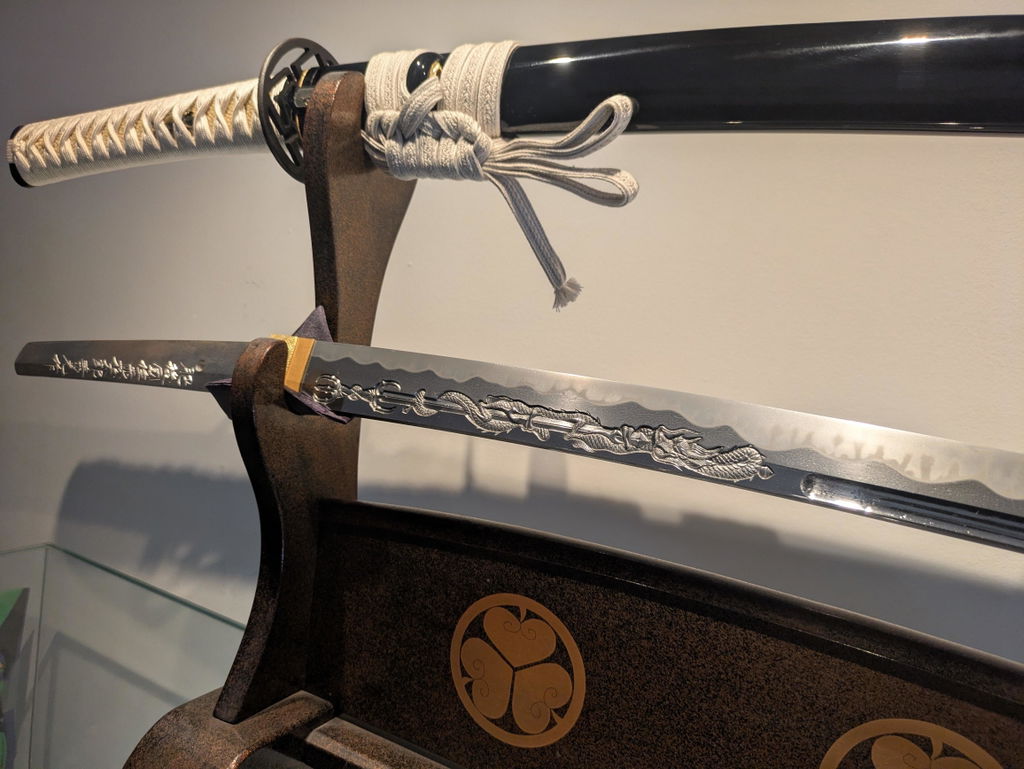
A koshirae is the complete, mounted form of a sword: the lacquered scabbard (saya), the wrapped hilt (tsuka), the guard (tsuba) and the smaller fittings (fuchi-kashira, menuki, kojiri). It is made to be worn, drawn and displayed — the sword as a living object.
A shirasaya (literally "white scabbard") is the opposite in spirit: a plain, untreated magnolia-wood (honoki) scabbard and hilt with no fittings and no lacquer. It is never meant to be worn. Its single purpose is preservation — the bare wood breathes, draws away moisture, and lets a fine blade rest safely for years or decades.
Because the two serve different purposes, collectors routinely own a blade in one form and want the other. There are two common situations, and we are seeing both more and more.
Direction 1 — You have a blade in shirasaya, and want a koshirae
Many fine antique and newly forged blades are sold in shirasaya alone. The shirasaya keeps the steel safe, but it cannot show the sword at its best. Commissioning a koshirae turns that resting blade into a complete, personal work of art — mounted to your taste and to the exact measurements of your blade.
A koshirae for every purpose and budget
A mounting does not have to be a major commission. Tell us how you intend to use the sword and what you would like to spend, and we will propose fittings to match — anywhere along this spectrum:
- Practical mountings for iaido and battō — durable, well-balanced koshirae built for drawing and cutting (tameshigiri) practice, using quality production fittings at an accessible price.
- Collector koshirae — antique or newly made fittings chosen around a theme, balancing beauty and value.
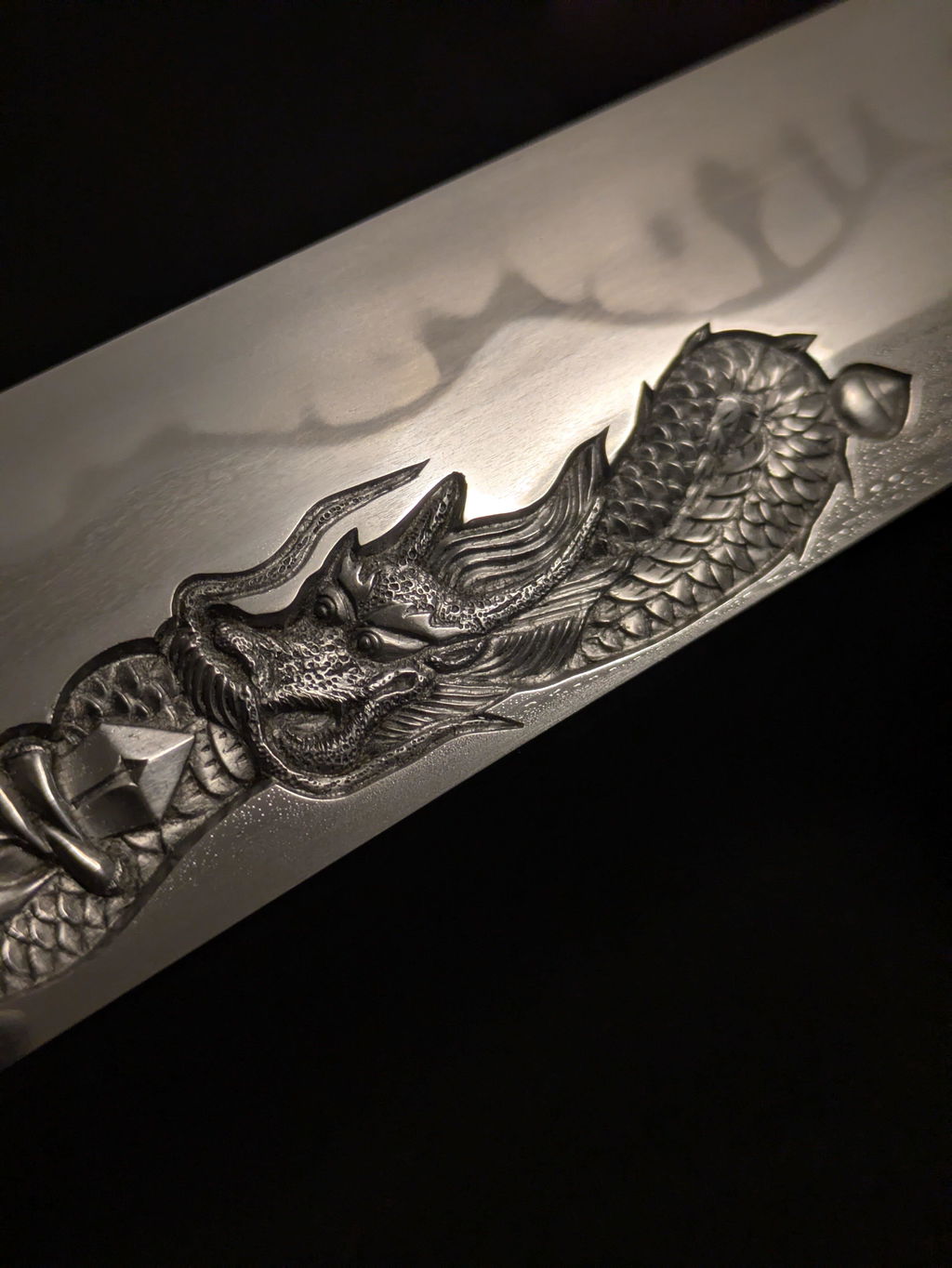
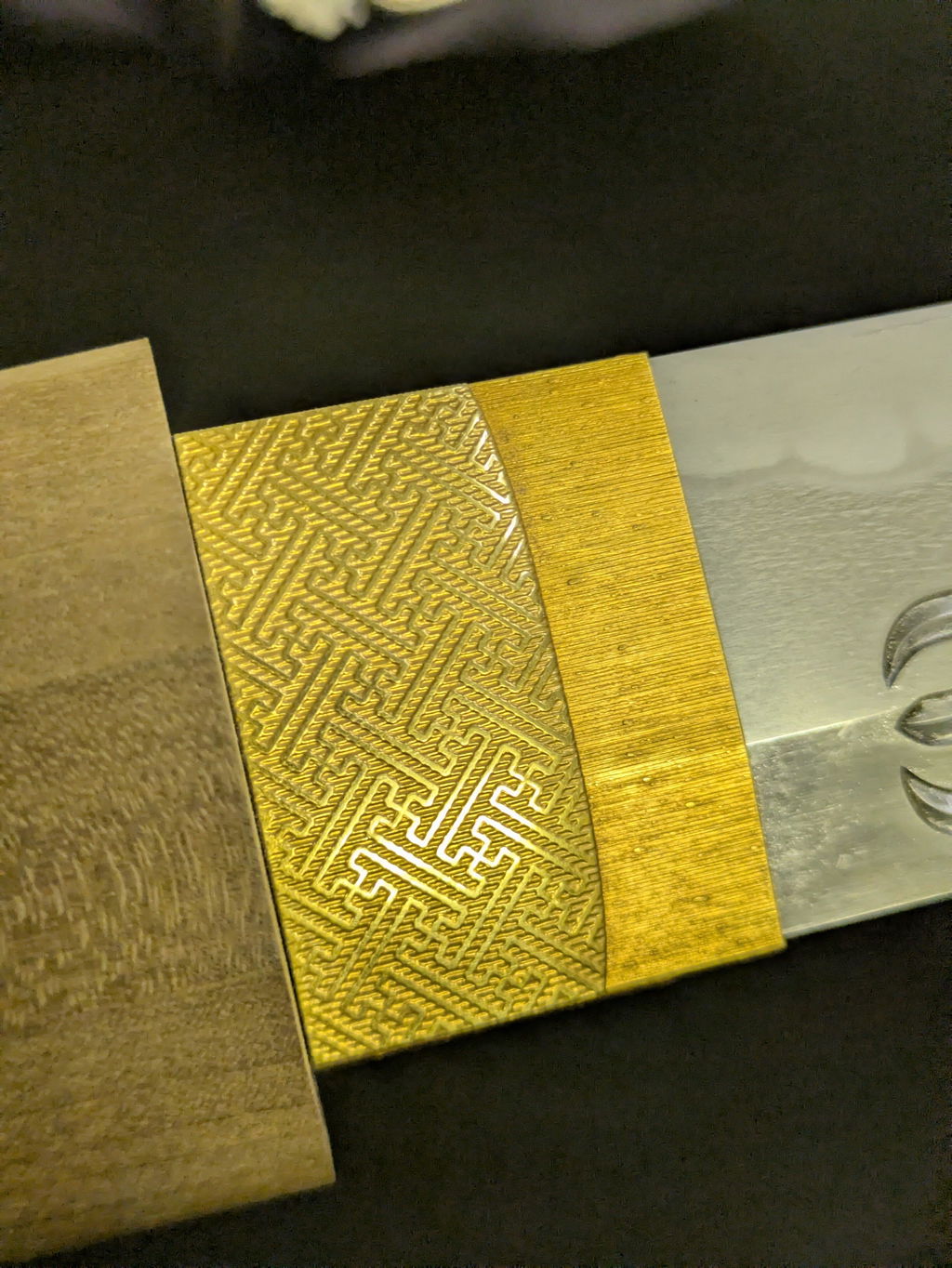
- Art-grade, one-off fittings by a sōken kinkō (装剣金工, a master sword-fitting metal artist) — tsuba, menuki and fuchi-kashira hand-carved and inlaid to your own design.
Bought your blade elsewhere? Mount it in Japan and export it once
This service is not only for blades bought from us. If you acquired a blade in shirasaya from another Japanese dealer, there is a real advantage to having it mounted in Japan before it is ever exported:
- Ask your dealer to send the blade to us within Japan — a simple domestic transfer, not an international shipment.
- We craft your koshirae and fit it to the blade.
- We prepare the cultural-property export paperwork and ship you a single, finished sword.
The result: you pay for one international shipment and clear customs once — with the sword fully mounted — instead of importing a blade, shipping it back to Japan to be mounted, and importing it again. No overseas workshop can offer this, because the work happens here.
Direction 2 — You have a blade in koshirae, and want a shirasaya (and tsunagi)
The reverse is just as important, and increasingly common. If your sword is mounted in a koshirae but you want to protect the blade for the long term, the right answer is a custom shirasaya shaped precisely to your blade. Untreated honoki wood lets the steel rest safely, away from the lacquer, adhesives and fittings of a working mounting — the conditions a blade should be stored in for years.
What a tsunagi is, and why you need one
Here is the detail many owners do not realise until they move a blade into shirasaya: a koshirae is built around a blade. Remove the blade and the mounting loses its fit and its shape — the hilt can loosen and the whole assembly can no longer be safely displayed.
The solution is a tsunagi (繋ぎ) — a wooden "blade" carved to the exact dimensions of the real one. Slipped into the koshirae in place of the steel, the tsunagi keeps the mounting fully assembled, correctly fitted and ready to display. You keep the best of both worlds: the blade rests safely in its shirasaya, and the koshirae remains whole and presentable.
This is the classic arrangement in a serious collection — the steel preserved in shirasaya, the koshirae displayed with its tsunagi. We can make the shirasaya, the tsunagi, or both.
How a commission works (either direction)
- 1. Enquiry & quote. Send us photos of your sword, its dimensions (nagasa, sori, motohaba) and its papers/registration. We discuss what you want and provide a quotation.
- 2. Send us the sword. Have it delivered to us in Japan (ideal for a blade bought from a Japanese dealer — see above), or ship it to us as agreed, fully insured.
- 3. Design & craft. For a koshirae we finalise materials, colours and fittings with you; for a shirasaya and tsunagi we take exact measurements from the blade. Our artisans then make each part by hand.
- 4. Inspection. The finished work is checked and fitted, and we share photos before shipping.
- 5. Export & delivery. We prepare the export documentation and ship your sword — fully insured — as a single finished piece.
What we need from you
For an accurate quote and a precise fit, please have ready: clear photos of the blade and (if relevant) the existing koshirae; the key dimensions; and the sword's registration/authentication papers. For a sword already in Japan, its registration certificate (torokusho) travels with it and is used to prepare the export documentation. We will guide you through exactly what to include.
Timeline, cost and shipping
Because every commission is made to order, cost and timing depend on what you choose — from an affordable, practical mounting to an art-grade koshirae with one-off fittings, or a shirasaya and tsunagi made to preserve a prized blade. A full koshirae typically takes several months; a precise quotation and lead time are confirmed once we have seen the sword and agreed the specification. Overseas commissions are welcome — please allow additional time for the import process, and be sure to ship the sword to Japan fully insured. We handle the finished export and ship with full insurance and English-language support throughout.
Frequently asked questions
Can you mount a blade I bought from another dealer?
Yes — that is exactly what this service is for. Wherever in Japan you bought your blade, have it delivered to us and we will craft its koshirae and export the finished sword to you as one piece.
I have a sword in koshirae — can you make a shirasaya and tsunagi for it?
Yes. We make a custom shirasaya shaped to your blade for safe long-term rest, and a tsunagi cut to your blade's exact dimensions so the koshirae stays assembled and displayable. Order the shirasaya, the tsunagi, or both.
Why rest a blade in shirasaya instead of keeping it in koshirae?
A koshirae is for handling and display; its lacquer, fittings and tighter environment are not ideal for long-term storage. Plain honoki shirasaya lets the steel breathe and stay stable, which is why it is the traditional choice for preservation.
Can you make an affordable koshirae for iaido or battō practice?
Yes. Alongside art-grade commissions we make practical, well-balanced mountings for martial-arts use with quality production fittings, kept to your budget.
Do you handle the export paperwork?
Yes. We prepare the required cultural-property export documentation and ship the finished sword to you, fully insured.
Commission yours
Whichever direction you need — a koshirae for a blade in shirasaya, or a shirasaya and tsunagi for a blade in koshirae — we would be glad to help. See the full service, process and indicative pricing on our Custom Koshirae & Sword Mounting page, or contact us with a few photos of your sword and we will reply with a proposal.
Every commission is individually made to order; materials, fittings, finishes and lead time vary by piece and are confirmed in your personal quotation.

Leave a comment: