

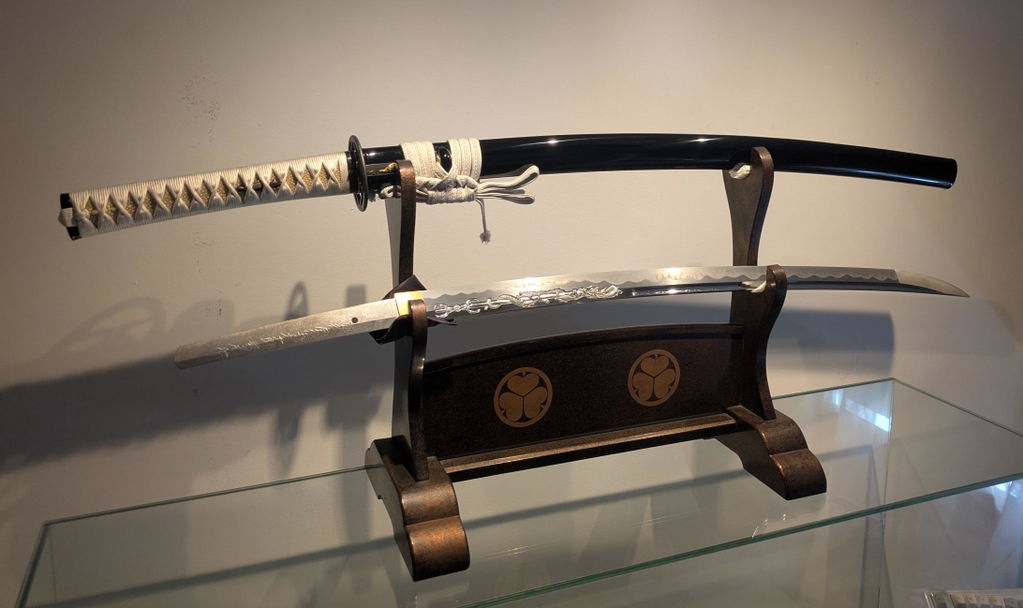
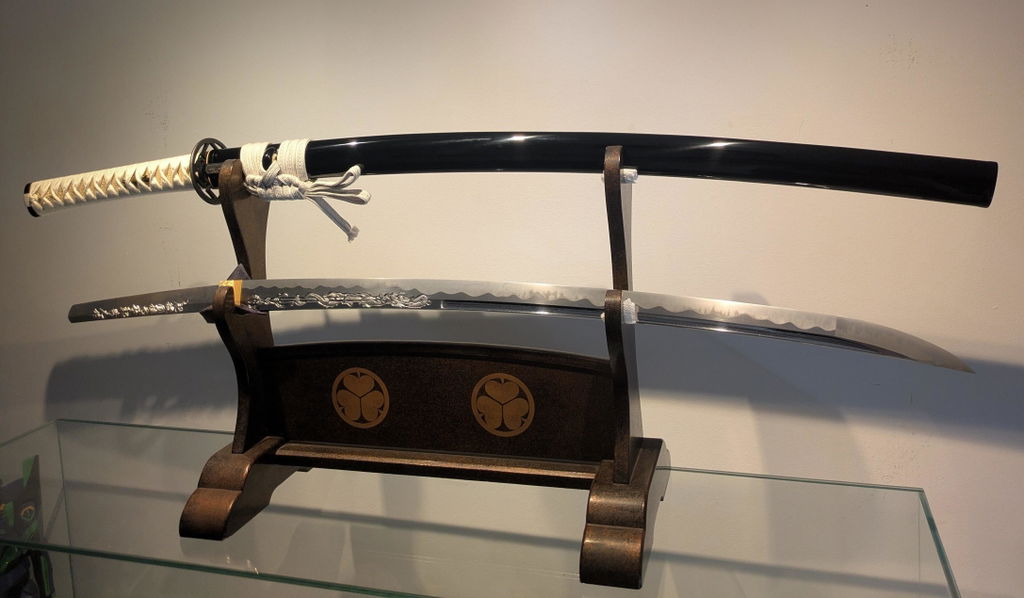
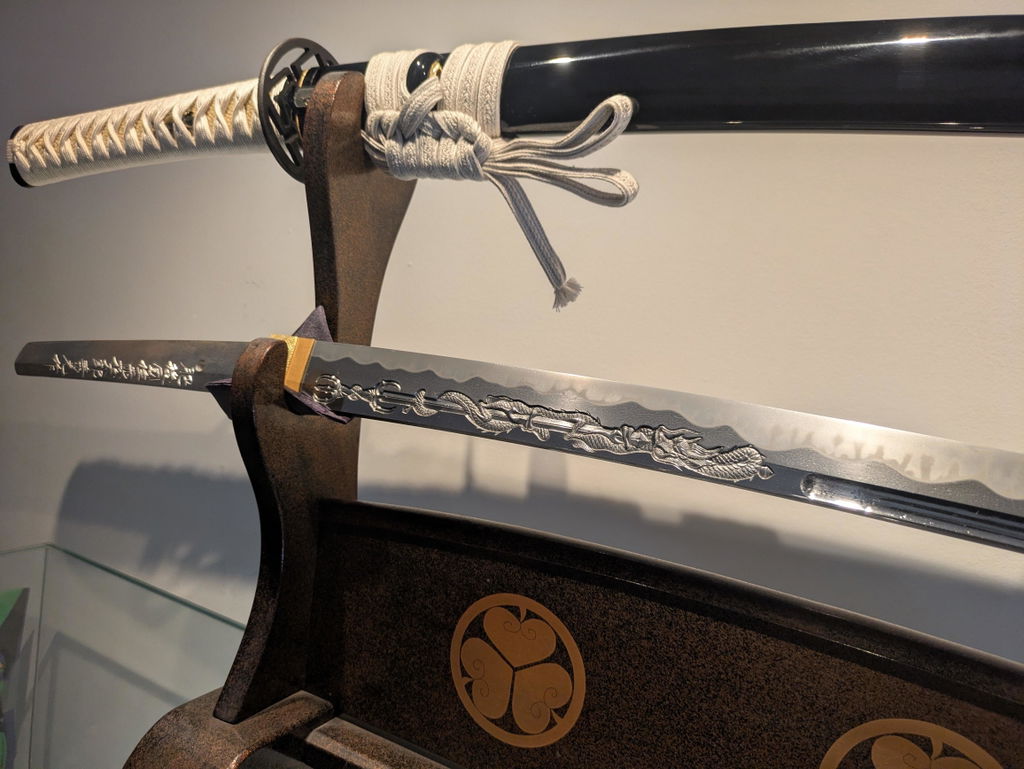
If you visit the showrooms of Japan's established sword dealers — the specialists who have been trading nihonto for decades in Tokyo, Osaka, and Kyoto — you will find, in the vast majority of cases, antique blades. Koto-period tachi, Shinto katana, Shinshinto wakizashi: the accumulated craft of centuries, traded between collectors and dealers in a market with well-established conventions. What you will find far less frequently are modern fine art swords — the works of Japan's living licensed swordsmiths, produced today using the same tamahagane and the same techniques that produced the tradition's historical masterworks. This absence is not accidental. There are specific, structural reasons why Japan's sword dealers find modern fine art swords commercially unattractive — and understanding those reasons explains why Tozando's decision to actively engage with the contemporary tradition represents a genuine and deliberate departure from industry convention.
The Commercial Reality — Why Antique Swords Are a Better Business
To understand why dealers avoid modern fine art swords, you first need to understand how the antique sword business actually works — and how differently the economics of the two categories behave.
The antique sword market operates, in many respects, like the antique car market. Established dealers participate in wholesale auctions and private trade events restricted to licensed dealers, where they can acquire blades at prices below retail. They buy from collectors who are liquidating collections, from estates, from dealers in other regions. The price at acquisition is negotiable — sometimes significantly below what the dealer expects to achieve on the retail market. The margin between wholesale acquisition cost and retail selling price is where the dealer's profit lives, and it is a margin the dealer controls through their expertise in identifying undervalued pieces and their relationships within the network.
Once an antique blade is in inventory, it can be sold at any point — today, next month, or next year. The inventory is liquid in the sense that its value is largely stable and the sale can be timed to match the dealer's cash flow needs. An antique sword is, in commercial terms, a relatively manageable asset: bought at a known cost, held at stable value, sold when the right buyer arrives.
Four Reasons Dealers Avoid Modern Fine Art Swords
Japan's licensed swordsmiths are legally limited to 24 blades per year. The finest smiths — working at the level of care that produces genuinely significant work — make considerably fewer. The total annual output of Japan's approximately 300 licensed smiths represents a very small number of finished blades entering the market each year.
More importantly, there is no wholesale market for newly forged swords. The dealer-only auctions and private trade events that allow antique dealers to acquire blades below retail do not exist for modern fine art swords. A dealer who wants to carry contemporary blades must acquire them at the same price as any other buyer — directly from the smith, or from a gallery or agent working with the smith. The structural advantage that experienced antique dealers enjoy — access to inventory below retail — simply does not apply.
In the antique market, the dealer's expertise creates value: the ability to identify a blade that is undervalued relative to its actual quality and significance, buy it at a lower price, and sell it at the price the market will support. This expertise-to-margin conversion is the economic engine of the antique sword business.
In the modern fine art sword market, the smith sets the price — and the price reflects the smith's assessment of the work's value. A Mukansa-level smith's blade is priced accordingly. There is no mechanism for a dealer to acquire it below that price and mark it up significantly. The dealer's margin on a modern fine art sword is therefore inherently thinner than on an antique of comparable value — even before the additional costs of relationship-building with smiths and the time required to develop genuine expertise in contemporary work.
One of the most distinctive features of the modern fine art sword market is the commission model — a collector engaging a smith to produce a blade to their specific requirements. This is, in many ways, the most appealing category of contemporary blade: a sword made for a specific person, by a specific smith, to a specific brief.
For a dealer facilitating such commissions, however, the cash flow implications are severe. A commission typically requires a deposit at the outset and the balance on completion — with completion taking anywhere from several months to over a year from the initial agreement. For the duration of that period, the dealer has capital committed to a transaction that will not generate a return until delivery. For a business that relies on inventory turnover to sustain cash flow, this is a significant structural problem. The antique dealer can sell a blade the day after acquiring it, if the right buyer presents. The commission dealer waits a year.
Antique sword expertise — the ability to read jihada, hamon, nakago evidence and make confident attributions — is built over years of handling historical blades. It is a form of knowledge that the established dealer community has developed across generations.
Modern fine art sword expertise requires a different kind of knowledge: understanding the contemporary smithing community, the relative standing of different smiths, the specific aesthetic and technical characteristics of each school currently practicing, the difference between a promising younger smith and one whose work has reached a level that justifies significant price. This is a separate expertise that most established antique dealers have not developed and have little incentive to invest in developing — particularly when the antique business they already understand continues to generate adequate returns.
- Wholesale acquisition possible through dealer auctions and private networks
- Price at acquisition is negotiable — margin is dealer-controlled
- Inventory is liquid — can be sold at any time
- Cash flow is predictable — acquisition cost known, sale price set by dealer
- Expertise is established — decades of accumulated knowledge within the industry
- NBTHK certification provides objective quality signal to buyers
- No wholesale market — acquisition at same price as any buyer
- Smith sets the price — margin is structurally thin
- Commissions tie up capital for 12+ months before return
- Finished pieces in the market are scarce — hard to build inventory
- Requires different expertise — contemporary smith community, living aesthetics
- Smaller established buyer pool than antique market
is straightforward and compelling.
Tozando understood this — and chose
the living tradition anyway."
not commercial optimisation
Tozando's decision to actively engage with modern fine art swords — to build Gallery Tozando, to develop relationships with Japan's finest living smiths, to facilitate international commissions despite the cash flow challenges, to invest in the expertise required to represent contemporary work honestly — was not driven by commercial analysis. The commercial analysis, as described above, points clearly in the other direction.
The decision was driven by a conviction that the Japanese sword-making tradition — more than 1,300 years of continuous practice, transmitted from master to student through a lineage that reaches from the Heian period to the present — must be supported as a living practice, not merely preserved as a historical record. A tradition that produces only antiques is a tradition in decline. The smiths forging today are not producing background material for future collectors of antiques; they are the continuation of the tradition itself — the same tradition that produced the Kamakura masterworks now in museums and private collections around the world.
Tozando's founding principle — tsuneni hitobito ni yorokobareru kigyō de aritsuzukeru, "to always be a company that brings joy to people" — extends to the smiths as much as to the collectors. Supporting the market for their work, making it accessible to international collectors who could not otherwise reach it, ensuring that the financial conditions exist for the next generation of smiths to train and develop — this is part of what "bringing joy to people" means in practice.
This is not a small commercial decision. It is a cultural commitment — one that costs more than the alternative, requires more investment of time and expertise, and generates thinner margins. Tozando makes it because the alternative is to be a passive observer of the tradition's decline, and that is not a role Tozando is willing to accept.
What This Means for the Collector
For an international collector who wants to engage with the contemporary tradition — to commission a blade from a living master, to acquire finished work by a smith whose technique they admire, to participate in the tradition as it exists today rather than only as it existed historically — the structural realities described in this article have a direct implication: the options are limited.
Most established Japanese sword dealers will not help you. Not because they are unhelpful, but because the commercial structure of the modern fine art sword market means they have not developed the relationships, expertise, or operational infrastructure to serve this need. The smiths themselves may not speak English, may not be set up to handle international payments and export documentation, and may have waiting lists that make direct approach impractical for a collector who cannot visit Japan.
Tozando's position in this gap — built deliberately, over years, at genuine commercial cost — is not a marketing claim. It is the consequence of a series of decisions that prioritised the tradition's continuity over the path of least commercial resistance. Gallery Tozando in Kyoto's Shogoin district exists because someone decided it should exist, at a time when the commercial case for it was not compelling. The relationships with Japan's finest living smiths exist because Tozando invested in building them, without certainty of commercial return.
For the collector who wants to engage with the living tradition, that investment is the resource they are drawing on when they contact Tozando's specialists.
from Japan's greatest living smiths
Browse Gallery Tozando's collection of modern fine art swords, or enquire about commissioning a blade from a living master. Tozando's specialists can advise on available works, current waiting times, and the commission process — in English, from Kyoto, with complete export documentation handled on your behalf.
In Closing — The Choice That Defines the Difference
The Japanese sword market will continue to trade antiques efficiently. The established commercial infrastructure — the dealer networks, the auction mechanisms, the NBTHK certification system — serves that market well. It does not need Tozando to function.
The living tradition — the smiths forging today, the schools transmitting technique to the next generation, the collectors who want to engage with the craft as it currently exists — needs something the antique market cannot provide: dealers willing to accept the commercial disadvantages of engagement with contemporary work because the alternative is to let the living tradition fend for itself in a market structurally biased against it.
Tozando is one of very few dealers anywhere in the world who has made that choice consistently, over years, at genuine commercial cost. The result — Gallery Tozando, the commission programme, the relationships with Japan's finest living smiths, the international collector base that has developed around it — is what a cultural commitment looks like when it is maintained over time. Not a marketing position. A decision, made repeatedly, in the knowledge of what it costs and why it matters.

Leave a comment: