

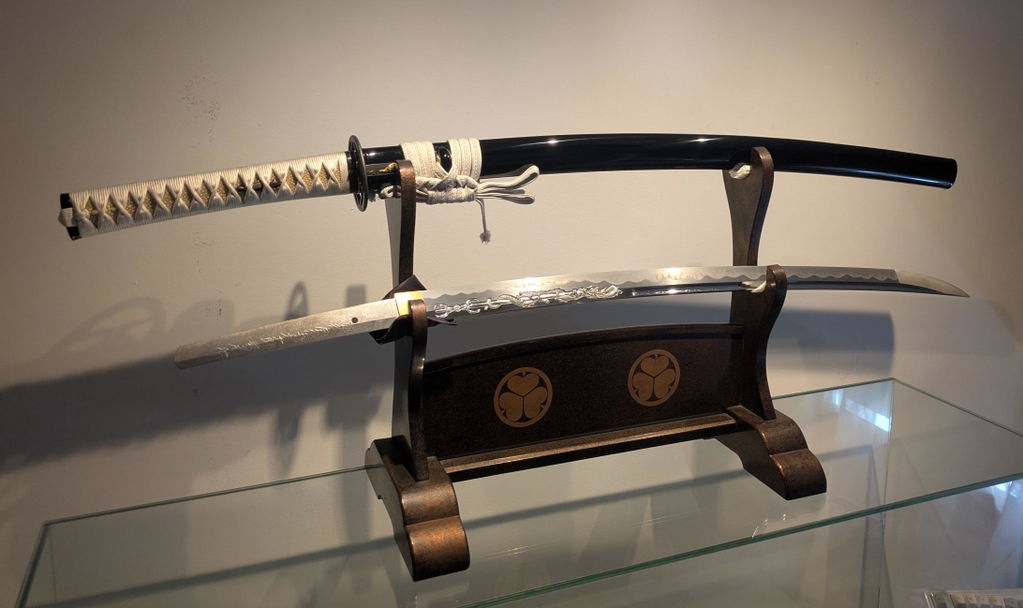
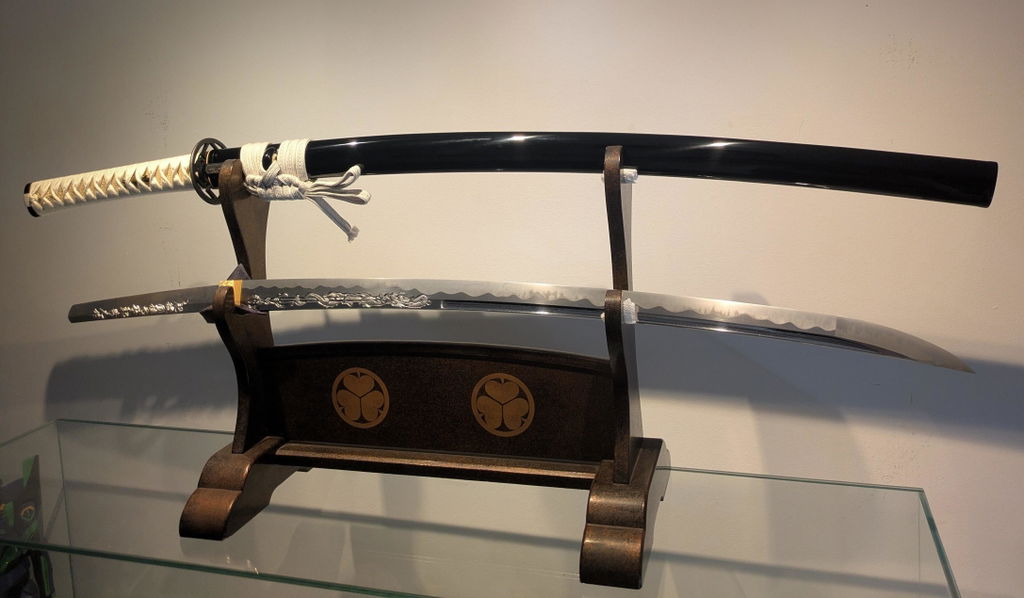
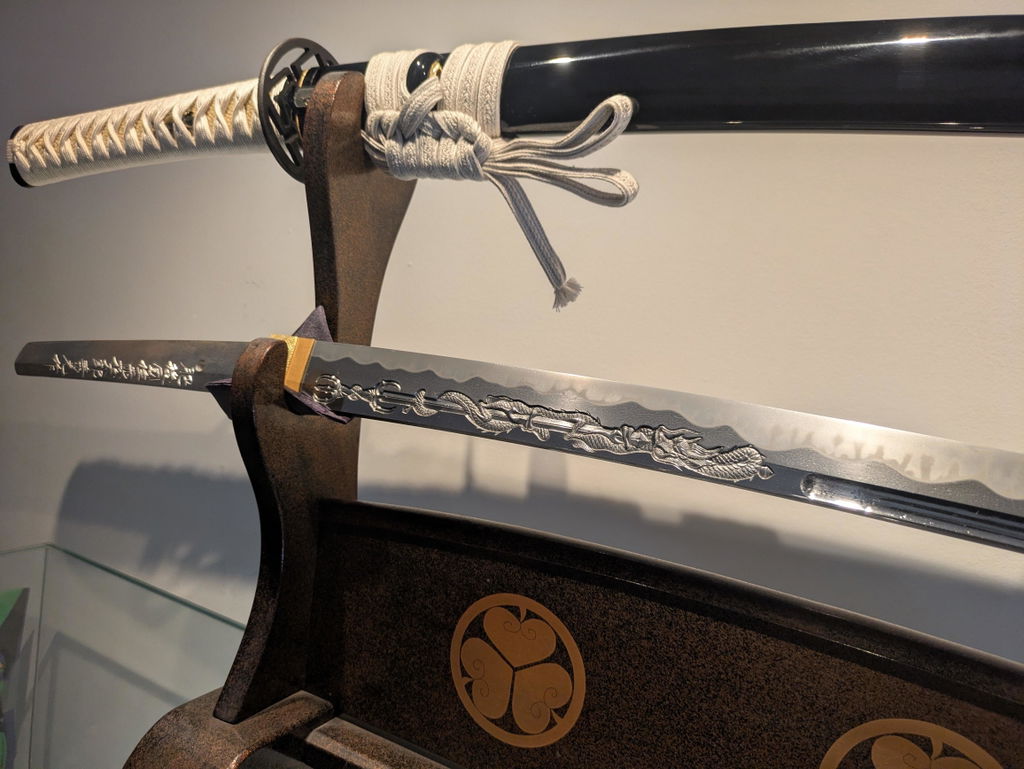
A new collector browsing Japanese sword listings for the first time will typically be drawn to koshirae — the blades presented in full lacquered mounts with tsuba, wrapped handles, and decorated scabbards. The visual appeal is immediate and understandable: this is what a samurai sword looks like in films, in museums, in the images that first created the interest. The plain white wooden scabbard of a shirasaya, by contrast, can seem almost disappointing — surely this unadorned wooden case means the blade is somehow lesser, somehow incomplete? This instinct, though entirely natural, can lead new collectors away from the best blades. The reality is the opposite of what the visual impression suggests: the finer a blade is, the more likely it is to be found in shirasaya. Understanding why this is true changes how every serious collector approaches the market.
Why the Best Blades End Up in Shirasaya
This is not an accident of history. It is the result of deliberate, informed decisions made by the people who have owned and cared for significant blades over the centuries.
Magnolia wood (honoki) breathes naturally, regulating moisture without trapping humidity against the blade. A blade stored in a well-fitted shirasaya, properly oiled, will deteriorate less over decades and centuries than the same blade in a lacquered koshirae saya. This knowledge has been part of Japanese sword culture for centuries — which is precisely why the custodians of significant blades have consistently chosen shirasaya for long-term preservation.
The pattern this creates in the market is consistent: blades that have been in knowledgeable hands — carefully maintained, stored correctly, submitted to NBTHK examination — are disproportionately found in shirasaya. Blades valued primarily for visual impact, stored in decorative koshirae and perhaps not maintained with the same care, are more likely to remain mounted. The mounting is not a reliable guide to the blade's quality — but it is often a guide to the quality of attention it has received.
- Immediate aesthetic appeal — lacquer, tsuba, and fittings create a complete visual impression
- May indicate the blade has been valued primarily for display
- Period koshirae in good condition is a genuine separate asset — but must be evaluated independently
- The blade's condition cannot be read from the koshirae's quality
- NBTHK examination is conducted with the blade removed — the mount is irrelevant to certification
- The blade has been prioritised over decoration — a deliberate, informed choice
- Long-term preservation has been the custodian's concern
- May carry a sayagaki — attribution by a recognised scholar, possible only on bare wood
- NBTHK-certified blades are almost always stored in shirasaya after certification
- Jihada and hamon can be examined directly, without removing from fittings
The Certification Evidence — Where NBTHK-Designated Blades Are Found
The clearest evidence comes from the NBTHK's own certification practice. When a blade is examined and certified, the certificate photographs show what the blade was submitted in — and at Tokubetsu Hozon level and above, the overwhelming majority are in shirasaya. This is both how blades are typically submitted and how knowledgeable collectors store them afterward.
has been cared for by someone
who understood what they had.
That is not nothing. It is, often,
the most important signal the listing gives you."
The Sayagaki — Documentation That Only Shirasaya Can Carry
There is a form of authentication documentation that appears exclusively on shirasaya and never on koshirae: the sayagaki (鞘書) — an attribution inscription brushed in sumi ink directly on the shirasaya's outer surface by a recognised scholar or appraiser.
A sayagaki by a significant figure — most notably Honma Kunzan or Sato Kanzan, the two leading 20th-century sword scholars — carries genuine authentication weight. The inscription records the blade's attribution, its dimensions, and the appraiser's assessment, in the appraiser's own hand, physically attached to the blade. Unlike a separate certificate, a sayagaki cannot be separated and reattached to a different blade. It is the most physically intimate form of authentication in the nihonto tradition — and it is possible only because bare magnolia wood accepts sumi ink in a way that lacquered koshirae never could.
When you encounter a blade in shirasaya and feel the instinct to scroll past it in favour of something with more visual impact, pause. Ask what the shirasaya tells you that the koshirae on the other listing does not.
A shirasaya blade with NBTHK Tokubetsu Hozon certification tells you: this blade has been examined by Japan's foremost authentication panel and found to be of above-average quality. A knowledgeable custodian has stored it correctly. The jihada and hamon are directly accessible for examination.
A koshirae blade without certification tells you: this blade is visually attractive in its current mounting. Nothing else about the blade itself is confirmed.
The collector who learns to read shirasaya as a positive signal — rather than a disappointing absence of decoration — will find that the best blades on the market become visible in a way they were not before. The finest antique nihonto in serious collections around the world are, in the vast majority of cases, in shirasaya. This is not an anomaly. It is how people who truly understand these objects have always chosen to keep them.
and look again at what the shirasaya tells you
Many of the most significant blades in Tozando's collection are in shirasaya. Browse with this article in mind — and contact our specialists if you would like help understanding what a specific listing's certification, sayagaki, or physical description means for its significance and value.
In Closing — The Lesson the Best Collectors Learn Early
Every experienced collector of nihonto reaches the same realisation at some point — usually after overlooking a significant blade because its shirasaya made it seem less exciting than a lesser sword in decorative koshirae. The realisation is simple: the mounting is not the blade. The lacquer, the tsuba, the fittings — these can be added, removed, replaced, and restored. The jihada and hamon in the steel cannot. When you assess a Japanese sword, you are assessing the steel. Everything else is context.
The shirasaya says something specific: that the person who last made decisions about this sword understood what mattered, and chose accordingly. That is not a trivial piece of information. In a market where genuine quality is always scarcer than apparent quality, a blade in shirasaya — especially one with certification or sayagaki — is often the clearest signal that you are looking at something real.
Do not overlook it. The finest blade you will ever own may be waiting in a plain wooden scabbard — because the people who recognised it for what it was made exactly the same choice.

Leave a comment: