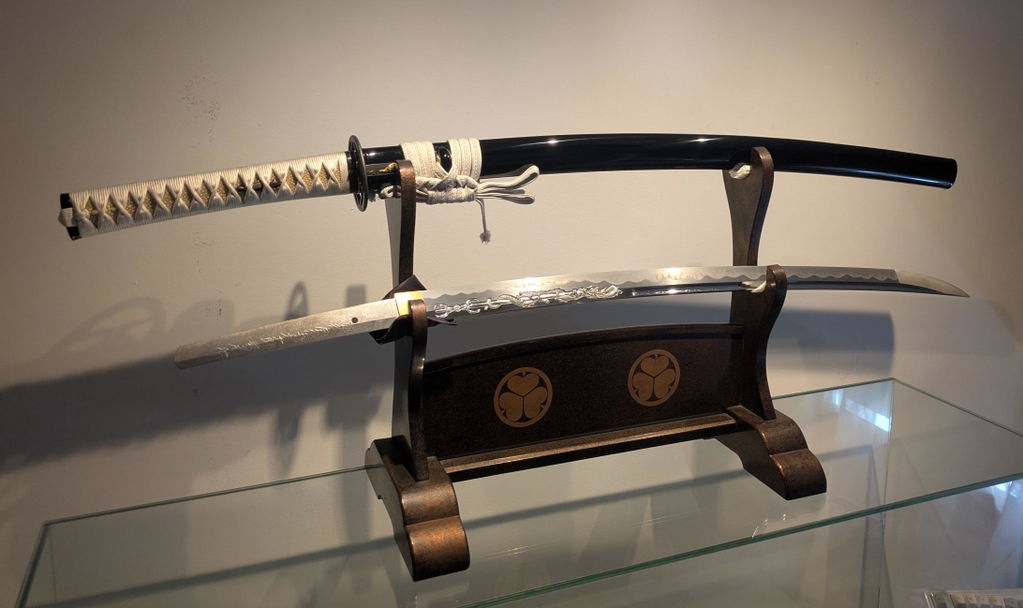
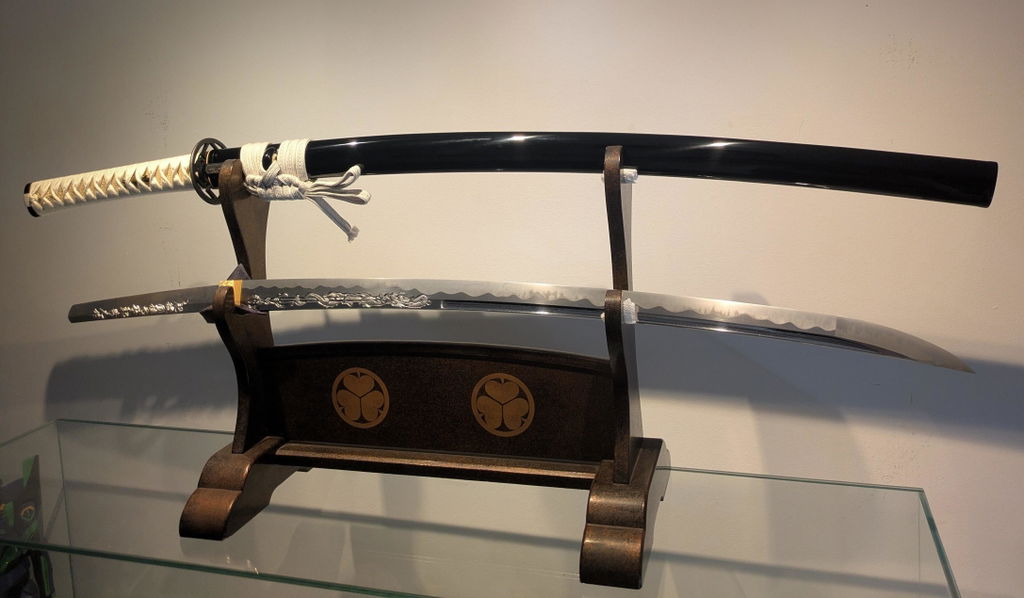
Antique Japanese Katana Sword - Mumei, Shinshinto Era - NBTHK Hozon Token(73.2 cm)
¥1,100,000 ¥1,150,000

This blade has been acquired. Discover other exceptional swords currently available in our collection.


Accompanied by an NBTHK Hozon Tōken ("Sword Worthy of Preservation") certificate.
A dynamic Kotō-era tantō whose bold, flame-like temper sweeps up over the ridge line in a hitatsura ("full temper") manner. Signed by name and dated, and accompanied by an NBTHK Hozon Tōken certificate, it is a work with nothing left wanting. The blade is in superb, thoroughly healthy condition, entirely free of flaws, rust or chips.
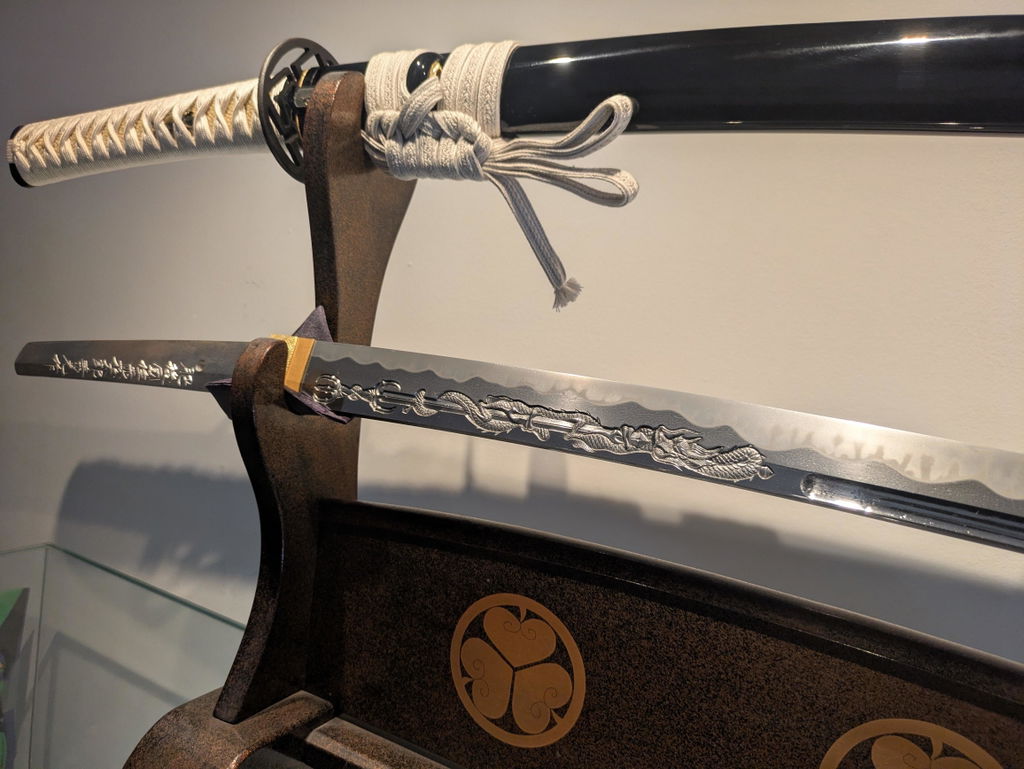
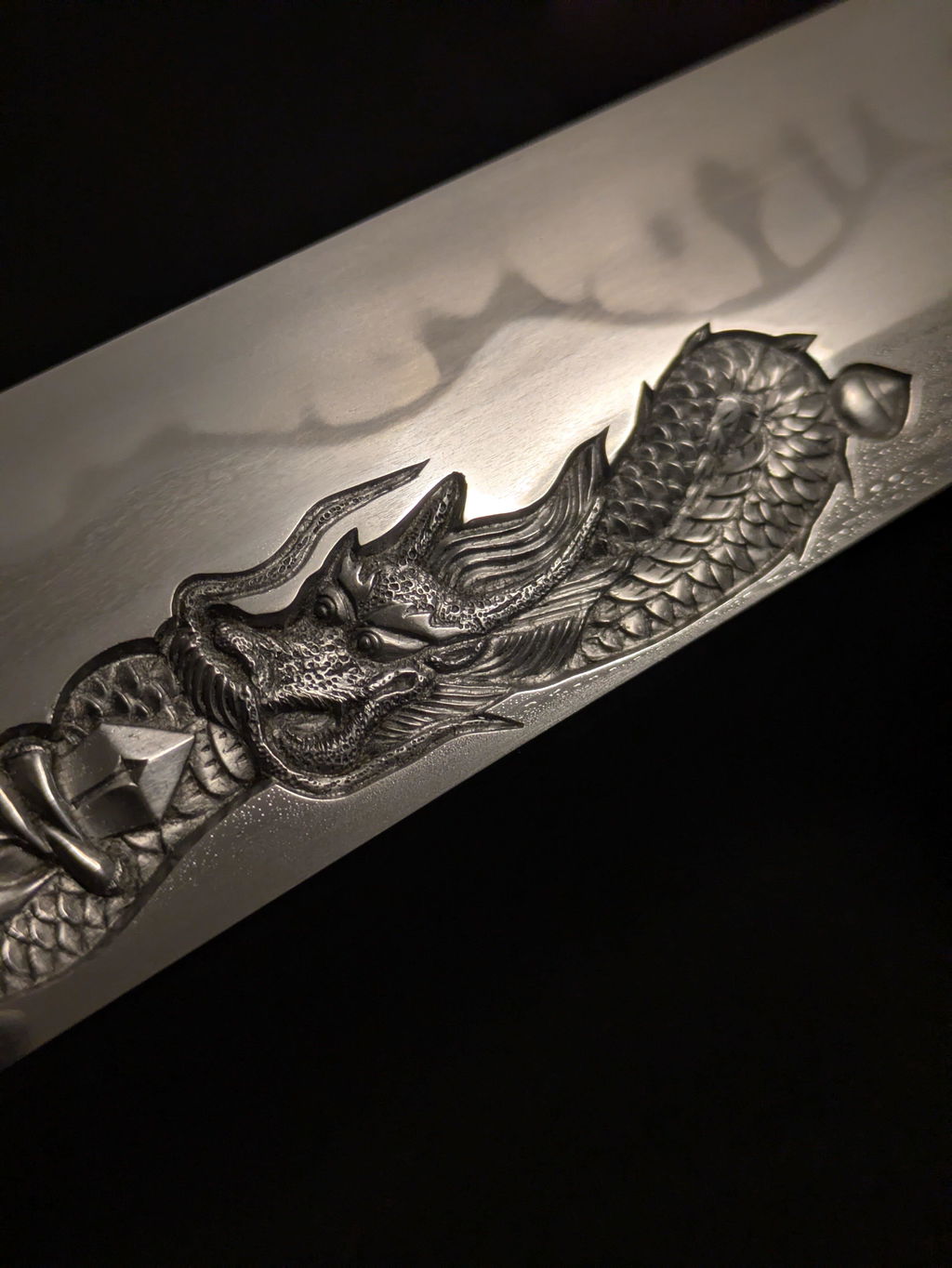
The jigane is a vivid itame grain covered in ji-nie, exactly the lively steel one hopes for in a Kotō work. The hamon is a striking, powerful gunome that rises from the bōshi and spreads across the whole shinogi-ji in a hitatsura-like effect, full of drama. The nioiguchi is soft, and kinsuji ("golden lines") play within the edge. The blade is in outstanding, healthy condition throughout.
The tang (nakago) is signed on the omote Hakushū-jū Hiroyoshi saku (伯州住広賀作) and dated on the ura Genki ni-nen ni-gatsu bi — a date in the second month of the Genki era. It records that the blade was made by Hiroyoshi, resident of Hōki province (Hakushū; present-day central-western Tottori). Two mekugi-ana are present.
Hiroyoshi was a swordsmith of Hōki province whose line continued from the Muromachi through the Edo period, with several smiths of the same name working across successive generations. By one account he was a pupil of Tsunahiro of Sōshū, and it is said that Yagyū Tajima-no-kami Munenori — the celebrated swordsman and sword instructor to the Tokugawa shōgun — favored Hiroyoshi's blades. The Hiroyoshi style recalls the late Sōshū and late Bizen traditions, and is known for work of real force and presence. In August 2025 the NBTHK certified this blade as an authentic work of Hiroyoshi and issued its Hozon Tōken paper.
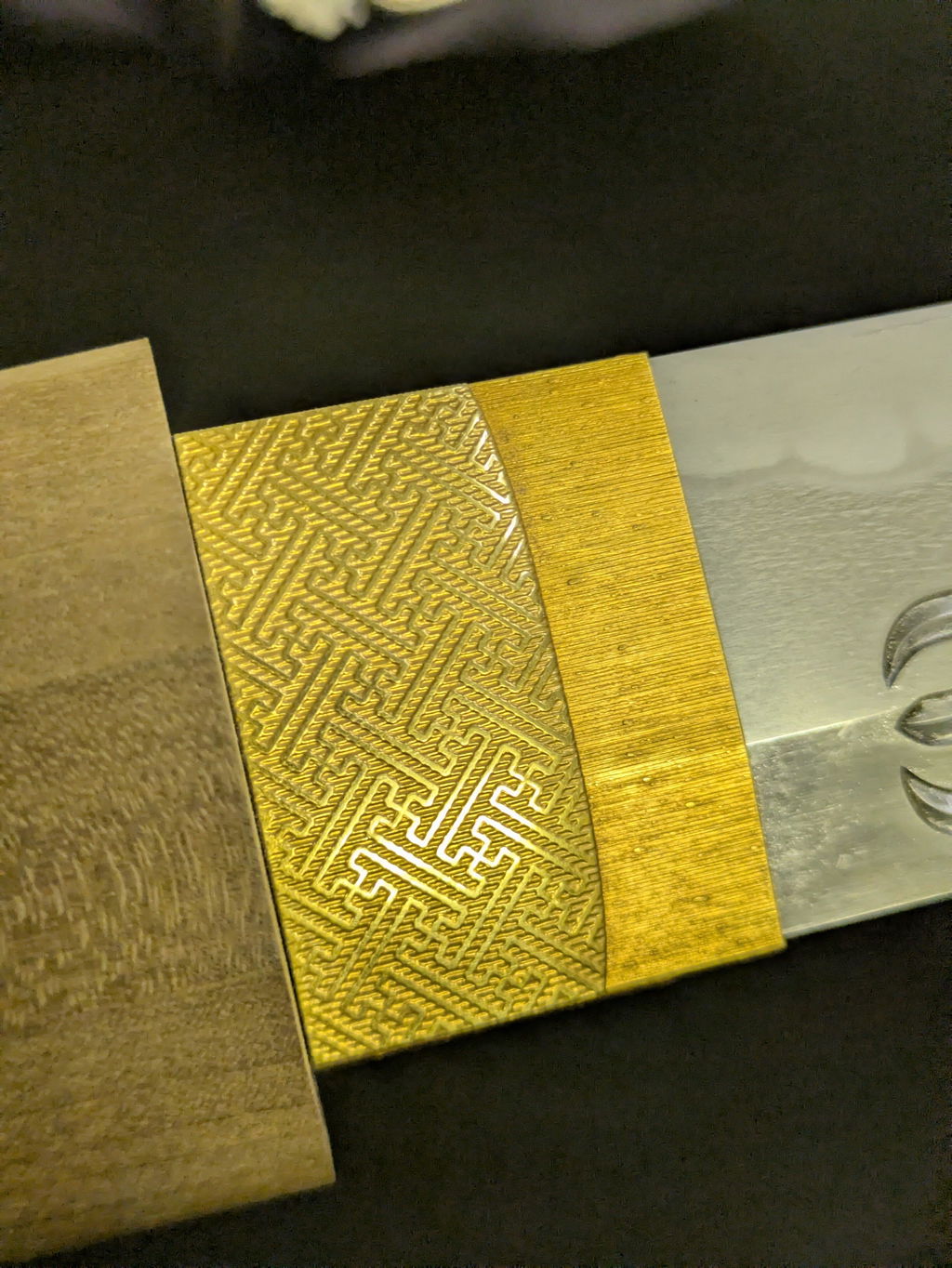
The sword comes in a fully lacquered aikuchi koshirae (a hilt-and-scabbard mounting without a tsuba), carrying the unmistakable air of a samurai household. The kōgai is unfortunately lost, but the kozuka is a piece of fine character.
A tantō of overwhelming presence — breathtaking at a glance — now available to become yours.
¥1,100,000 ¥1,150,000

¥200,000 ¥240,000

¥400,000 ¥430,000

¥390,000 ¥410,000

¥270,000 ¥290,000

¥300,000 ¥330,000


Every blade reflects generations of knowledge, discipline, and precision passed down through traditional Japanese swordmaking. From the forging of steel to the final finishing touches, each piece is shaped with patience, mastery, and deep respect for heritage.

From carefully selected materials to the refined finishing of every surface, each sword is crafted and presented with uncompromising attention to detail. Our commitment to authenticity ensures every piece reflects true tradition, lasting quality, and enduring cultural value.

Designed with balance, simplicity, and purpose, our blades embody the harmony between refined form and skilled craftsmanship. Each sword represents a thoughtful union of strength, elegance, and the timeless discipline of Japanese artisans.