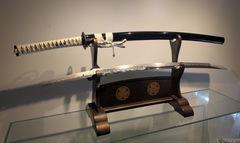
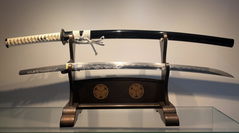
Antique Japanese Wakizashi Sword - Mumei, Shinto Era (36.6 cm)
¥200,000 ¥240,000

We are pleased to present an extraordinary Kōtō-period tantō of museum-grade preservation, carrying two distinct, high-level scholarly attributions from renowned appraisal authorities. Offered in flawless condition, the blade showcases a slender, serene suguha that echoes the pristine beauty of classical Yamato tradition, backed by official NBTHK Hozon Tōken certification alongside a historic paper by master researcher Kazuo Tokunō.
This piece is uniquely fascinating due to two distinct, highly respected appraisals.
Rai Hidetsugu (来秀次) — October 2000 appraisal: Authenticated with an appraisal paper by Kazuo Tokunō (founder of the United Association of Japanese Sword Research), who attributed the blade to Rai Hidetsugu, active during the Jōji era of the Nanboku-chō period. Said to be the son of Kunihide (a pupil of the 1st-generation Rai Kunitsugu), Hidetsugu is an enigmatic master whose surviving works are exceptionally rare.
Uda Kunihisa (宇多国久) — NBTHK Hozon certificate (August 2025): Officially certified as Hozon Tōken by the NBTHK, attributing the work to Kunihisa of the Uda school (son of Kunifusa). Originating from Uda in Yamato Province before relocating to Etchū Province in the late Kamakura period, the Uda school was famed for combining Yamato steel texture with formidable cutting capability.
Considering its substantial age, the blade remains in exceptionally superb preservation, entirely free of flaws, chips, or rust. Polished to perfection, the jigane is a tightly kneaded itame-hada (wood-grain pattern) enriched with visible chikei (dark lines within the steel) and yubashiri (spilling nie). The hamon is a refined, slender hoso-suguha (thin straight temper line) crafted in the spirit of Yamato-den — a design engineered for ultimate practical efficiency yet achieving breathtaking aesthetic purity. The bōshi (tip temper) enters straight (massugu) and turns back sharply (togatte kaeru).
A beautifully proportioned hira-zukuri tantō with a subtle, elegant uchizori (inward curvature). Measuring 24.4 cm in edge length, with a thickness of 5.7 mm and a motohaba of 25.2 mm, it offers a light (140 g) yet well-balanced in-hand presence, embodying the timeless grace of classic Kōtō daggers.
The blade is safely housed in a traditional shirasaya (plain wood resting scabbard), ensuring the pristine state of its polished steel and refined line is preserved for generations to come.
NBTHK Hozon Tōken (保存刀剣): issued August 2025, certifying the blade as an authentic, high-value Kōtō work by Uda Kunihisa. Kazuo Tokunō appraisal certificate: issued October 2000, attributing the blade to the Nanboku-chō master Rai Hidetsugu.
Boasting flawless, museum-grade health, a classic Kōtō aura, and a captivating history supported by both NBTHK certification and Kazuo Tokunō's appraisal, this unsigned ubu tantō is a rare jewel worthy of a centerpiece in any distinguished Japanese sword collection.
¥200,000 ¥240,000

¥400,000 ¥430,000

¥390,000 ¥410,000

¥270,000 ¥290,000

¥300,000 ¥330,000


Every blade reflects generations of knowledge, discipline, and precision passed down through traditional Japanese swordmaking. From the forging of steel to the final finishing touches, each piece is shaped with patience, mastery, and deep respect for heritage.

From carefully selected materials to the refined finishing of every surface, each sword is crafted and presented with uncompromising attention to detail. Our commitment to authenticity ensures every piece reflects true tradition, lasting quality, and enduring cultural value.

Designed with balance, simplicity, and purpose, our blades embody the harmony between refined form and skilled craftsmanship. Each sword represents a thoughtful union of strength, elegance, and the timeless discipline of Japanese artisans.