Every year, people around the world open an attic box, sort through a grandparent's belongings, or find a sword wrapped in cloth in a storage room — and face the same question: is this a real Japanese sword? The sword may have come back with a relative who served in the Pacific during World War II. It may have been in the family for generations with no clear story attached to it. It may have been purchased decades ago at an antique fair. Whatever the circumstances, the question is the same — and it deserves a proper answer. This guide will walk you through the key indicators that distinguish a genuine Japanese sword from the many non-genuine alternatives, explain the main categories of what you might have, and tell you exactly what to do next — whether the sword turns out to be a historical treasure or a well-made imitation.
Before anything else — safety and legal considerations
A Japanese sword is a sharp weapon, even if it appears old and neglected. Handle it with extreme care: always cut away from your body, never test the edge, and keep it away from children. If the sword is in a scabbard (saya), do not draw it unless you know how to handle it safely. Regarding legality: Japanese swords are legal to own in most countries but may be subject to import restrictions, registration requirements, or carrying laws that vary by jurisdiction. If you inherited a sword and are uncertain about its legal status where you live, consult local authorities before doing anything else with it.
The Three Main Categories — What You Might Have
Before examining specific details, it helps to understand the three main categories of sword that people typically find when they inherit or discover what appears to be a Japanese sword. Most swords fall clearly into one of these categories.
A genuine nihonto — a traditionally made Japanese sword
The real thing
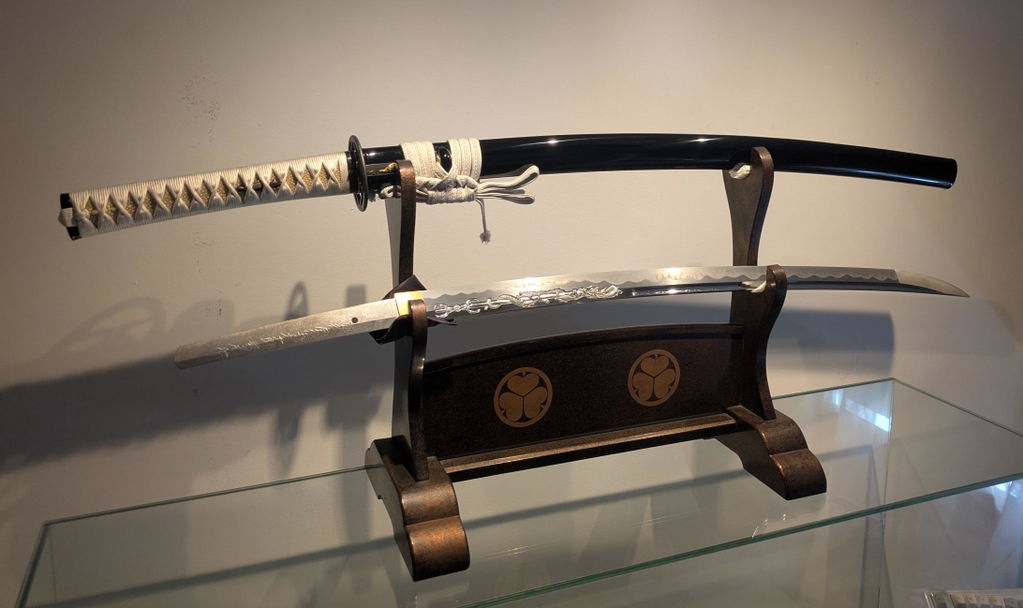
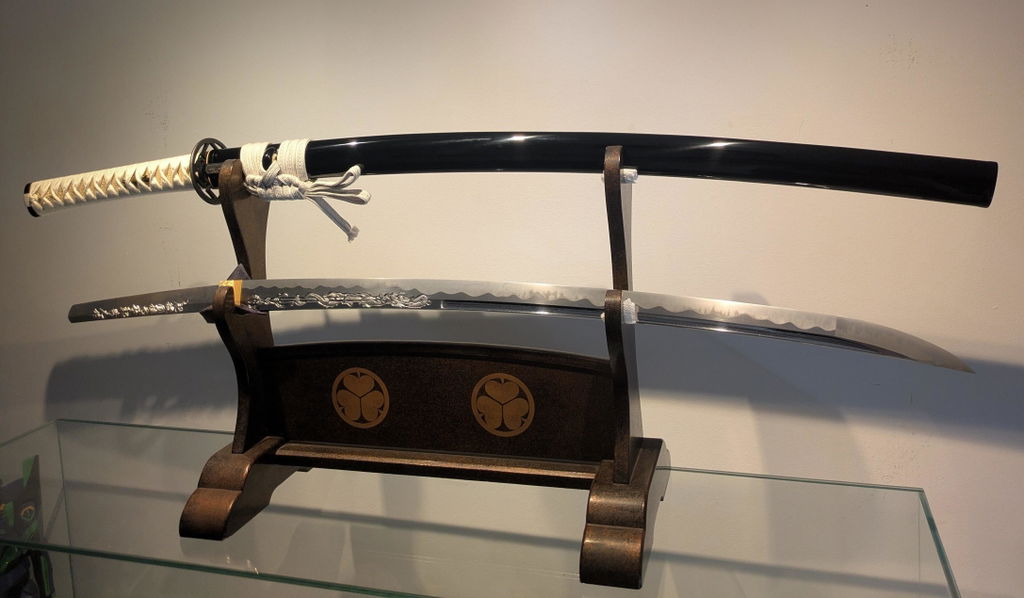
A genuine nihonto is a sword made in Japan using traditional methods — tamahagane steel, hand-forged by a licensed swordsmith, with a differential hardening process that creates the distinctive hamon (temper line). These swords were made from the Heian period through to the present day. Many swords brought back from Japan during and after World War II are genuine nihonto — produced by professional swordsmiths during the Showa period, and sometimes much older pieces that were family heirlooms before the war. A genuine nihonto, even in poor condition, has potential historical and monetary value and deserves proper identification.
A gunto — a World War II military sword
Historically significant
Many swords brought back from the Pacific by Allied soldiers were gunto (軍刀) — military-issue swords produced for Japanese officers during World War II. Gunto exist in two broad types: machine-made blades produced from industrial steel (Showato, 昭和刀), which are not considered genuine nihonto and are not legally registerable in Japan; and traditionally forged blades fitted in military mounts (called Shin-gunto), which may be genuine nihonto of real quality fitted into standard military koshirae. A gunto in military mounts is not necessarily a low-quality blade — the mounts tell you about the military period, not necessarily about the blade inside. Examining the blade itself is essential.
A non-genuine sword — decorative, replica, or Chinese-made
Very common
The majority of "Japanese swords" sold internationally — online, at tourist shops, through martial arts suppliers, and at antique fairs — are not genuine nihonto. They are decorative swords or functional training swords made from industrial steel, typically in China or other countries, to resemble Japanese swords in appearance. These are not worthless objects — many are well-made for their intended purpose — but they are not genuine nihonto and should not be confused with them. The single most important skill for anyone inheriting a sword is learning to distinguish a genuine nihonto from a well-made replica — and this guide will help you do exactly that.
The Physical Examination — What to Look For
A genuine Japanese sword has specific physical characteristics that cannot be faked at the price point of mass-produced alternatives. You do not need specialist knowledge to observe most of these — you need a good light source, a careful eye, and the checklist below.
Visual inspection checklist — examine each point carefully
🔍
The hamon — the temper line
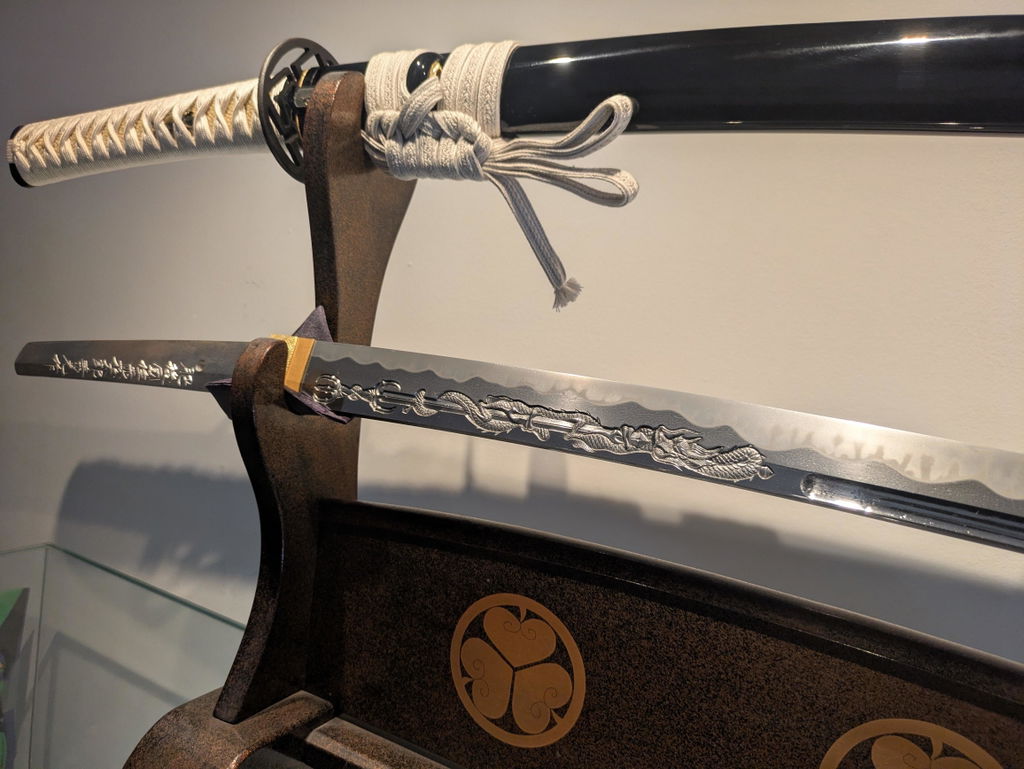
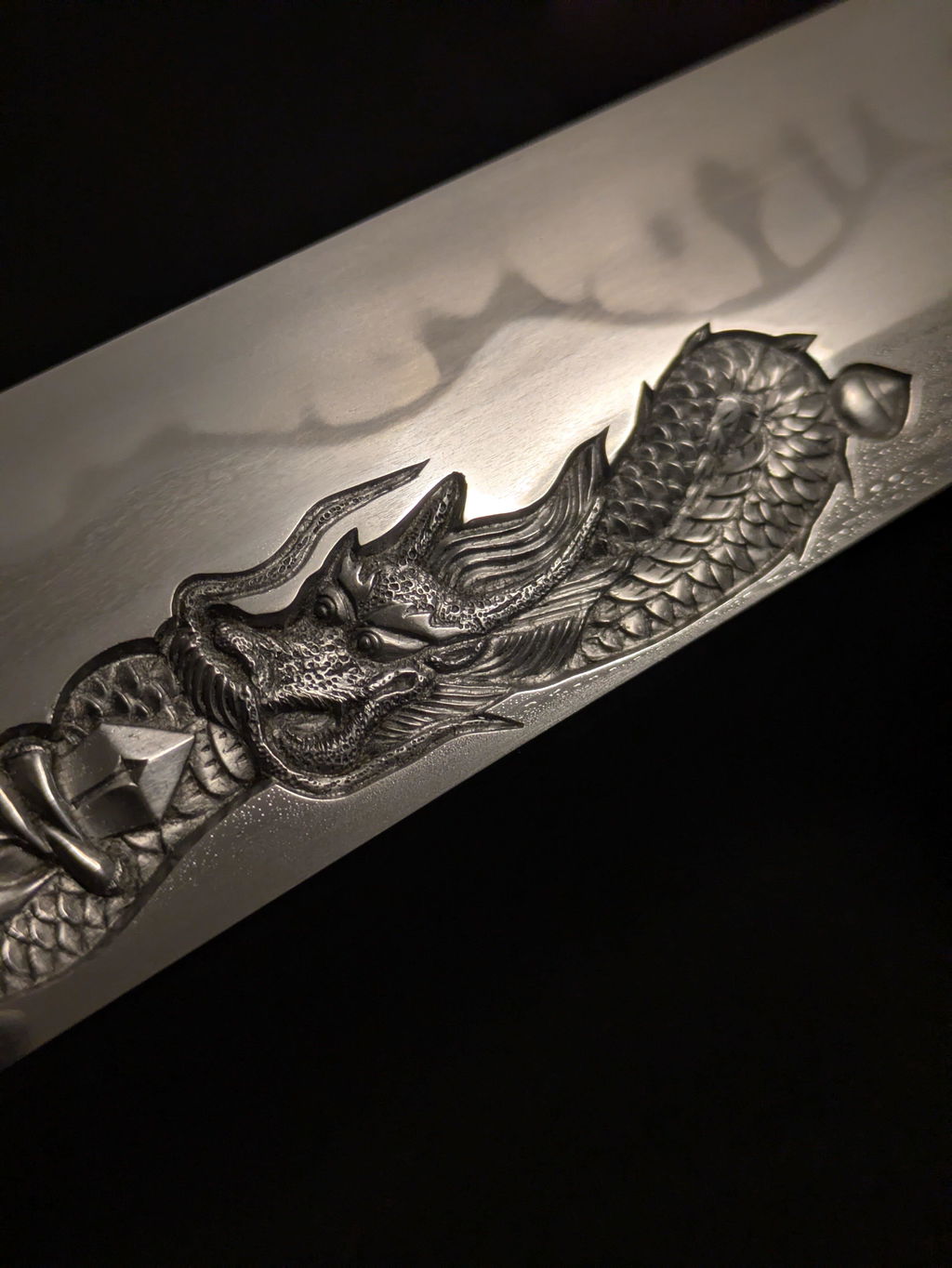
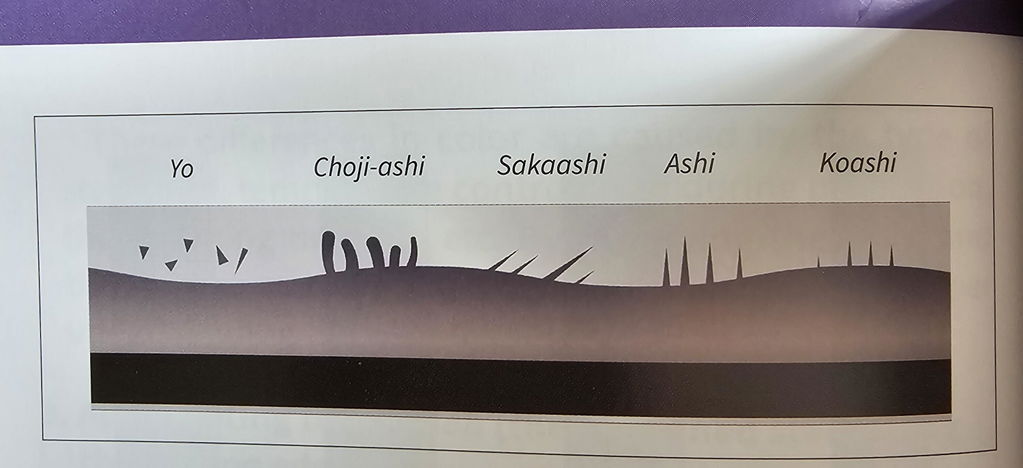
Hold the blade at an angle to a light source and look along the length of the blade. On a genuine nihonto, you will see a distinct line or pattern running along the lower portion of the blade — the hamon (刃文). It is not simply a bright area; it is a zone of different steel character, often showing a misty, cloudy boundary (nioi) and sometimes bright points or lines (nie) within it. No two hamon are identical. The hamon results from the differential hardening process that is specific to Japanese sword-making and cannot be replicated cheaply. On a non-genuine sword, the "hamon" is either absent, or is an etched or painted line that looks uniform, sharp-edged, and artificial.
Key indicator
🔍
The jihada — the grain pattern in the steel
Look at the body of the blade (the ji, between the hamon and the spine) under directional light. On a genuine nihonto, you will see a grain pattern in the steel — a subtle texture resembling wood grain, swirling burl, or fine layering — called the jihada (地肌). This pattern results from the folding and forging of tamahagane steel and is unique to traditionally made Japanese swords. On a non-genuine sword, the body of the blade will appear smooth and uniform — a featureless, mirror-like or satin surface with no grain character whatsoever.
Key indicator
🔍
The nakago — the tang inside the handle
If it is safe to do so, remove the handle (tsuka) by tapping out the bamboo or wooden peg (mekugi) through the hole in the handle. The tang (nakago, 茎) will be revealed. On a genuine nihonto, the nakago shows natural ageing — a dark, even patina called nakago-niku, sometimes with visible file marks (yasurime). There may be a signature (mei) carved into the tang. On a non-genuine sword, the tang will typically be bright, shiny, machine-finished metal — sometimes with a printed or stamped "signature" that looks mechanical rather than hand-carved.
Key indicator
🔍
The registration certificate (token toroku-sho)
A genuine nihonto that has been in Japan requires a government registration certificate (刀剣登録証) — a card-sized document issued by a Japanese prefectural board of education, recording the blade's physical description. If the sword came from Japan with its paperwork, look for this card. Its presence is strong evidence that the blade is a genuine nihonto — the registration system requires physical examination by a certified examiner. Its absence does not mean the sword is fake, but its presence is very meaningful.
Strong evidence
🔍
The weight and balance
Pick up the blade carefully. A genuine nihonto has a specific weight and balance that results from its construction — the differential hardening makes the edge harder and denser than the spine, and the blade's geometry distributes weight in a specific way. Genuine swords feel purposeful in the hand. Non-genuine swords are often either surprisingly light (thin industrial steel) or unbalanced in a way that feels generic. This is a subjective test and not conclusive alone — but a blade that feels fundamentally wrong in weight and balance is worth examining more carefully.
Supporting indicator
🔍
The bo-hi — the groove
Many Japanese swords have a groove running along the upper portion of the blade called a bo-hi (棒樋). On a genuine nihonto, this groove is cleanly and precisely cut, with a sharp internal profile and a specific termination point. On non-genuine swords, the groove is often machine-pressed rather than hand-cut — it will appear as a rounded channel rather than a cleanly carved groove, and may extend in ways that are inconsistent with genuine nihonto practice.
Supporting indicator
🔍
Clear signs of a non-genuine sword
Certain features immediately identify a sword as non-genuine: a "stainless steel" marking anywhere on the blade or tang (genuine nihonto are never made from stainless steel); a printed, etched, or stamped signature on the tang rather than hand-carved characters; a hamon that looks identical along the entire length with perfectly regular, mechanical-looking waves; absence of any grain character in the steel body; and a price at acquisition of under several hundred dollars (genuine nihonto do not exist in this price range).
Likely not genuine
"The jihada and hamon cannot be faked
at the price of a mass-produced sword.
If you can see grain in the steel
and a living temper line —
you are looking at something real."
The Most Common Scenario — Swords Brought Back from World War II
By far the most common situation Tozando's specialists encounter is a sword brought back from Japan by a soldier or veteran of the Pacific War, passed down through one or two generations of the family, and now in the possession of someone who has little information about it beyond "it came back with grandfather."
These swords deserve careful attention. Many of them are genuine nihonto of real quality — officers in the Imperial Japanese Army and Navy were expected to carry swords, and many carried family heirlooms or quality-commissioned pieces rather than mass-produced military blades. A sword in military mounts (Shin-gunto koshirae — a brown leather-wrapped handle with a metal tsuba and a brown lacquered saya) may contain a blade that was made centuries before the war.
The key examination for war-era swords is the blade itself, not the mounts. The military koshirae tells you about the period of use, not the blade's origin or quality. Remove the blade from its mounts carefully and examine the nakago: a hand-carved signature, natural dark patina, and visible file marks all suggest a traditionally made blade. A bright, machine-finished tang with stamped markings suggests a Showato — a non-traditional military-production blade.
A note on Showato (昭和刀) — machine-made military blades
Showato are blades produced during World War II using industrial steel and industrial methods rather than traditional tamahagane and hand-forging. They are historically significant as military artefacts but are not considered genuine nihonto by Japanese law — they cannot be registered in Japan and are not eligible for NBTHK certification. They are commonly found among war-era swords brought back by Allied veterans. A Showato can often be identified by a small stamp on the blade or nakago indicating the steel type, and by the absence of hamon and jihada character. They have collector value as military history objects but should not be confused with genuine nihonto.
If It Looks Genuine — What to Do Next
If your examination suggests the sword may be a genuine nihonto — you can see a hamon, there appears to be grain in the steel, the nakago shows natural patina — the next steps are straightforward.
Step 1
Do not clean it, polish it, or attempt to remove rust
This is the most important instruction. Any attempt to clean a genuine nihonto with household products, sandpaper, or wire brushes will damage it permanently and destroy value. Even well-intentioned cleaning can remove the jihada character and damage the hamon. Surface rust on an antique is not an emergency — a specialist can address it safely. Leave the blade exactly as it is until you have professional guidance.
Step 2
Photograph it thoroughly
Take clear photographs of: the full blade on both sides; the hamon along its length; the nakago (tang) showing any signature or markings; the koshirae (handle and scabbard) if present; and any accompanying documents. Good photographs allow a specialist to make a preliminary assessment remotely and advise on whether an in-person examination is warranted.
Step 3
Contact a specialist for a preliminary assessment
Send your photographs to a reputable Japanese sword specialist. From photographs, a specialist can offer useful initial observations — for example, whether a signature appears to be Japanese in character and style, how the mei might be read, and whether visible features are consistent with genuine nihonto or suggest a non-Japanese origin. However, a definitive assessment of authenticity requires physical examination. No photograph, however detailed, can reveal the jihada character, the quality of the hamon's nie and nioi, or the feel of the steel — the elements that ultimately determine what a blade is. Photographs are the right starting point; physical examination is what confirms the answer. Do not take the sword to a general antique dealer or auction house as a first step — specialists in Japanese swords are the appropriate first contact.
Step 4
Consider NBTHK certification for significant pieces
If preliminary assessment suggests the blade is a genuine nihonto of quality, NBTHK certification — examination by Japan's foremost authentication panel — is the definitive authentication. Tozando can advise on and facilitate this process for blades located outside Japan. A certified blade has documented provenance and authentication that significantly affects both its value and its long-term collector appeal.
Step 5
Decide: keep, sell, or donate
Once you know what you have, your options are clear. Many people who inherit genuine nihonto choose to keep them as family heirlooms with a now-understood historical context. Others choose to sell — Tozando can advise on the process and realistic value expectations for identified pieces. Donation to a museum or cultural institution is also an option for significant pieces whose owners prefer public preservation over private ownership.
What Genuine Nihonto Are Worth — Managing Expectations
This is the question most people ask first, and it deserves an honest answer. The value of genuine nihonto varies enormously — from a few hundred dollars for a Showa-period blade in poor condition to hundreds of thousands of dollars for an authenticated Kamakura-period masterwork. Most genuine nihonto that people inherit fall somewhere in between, and many factors affect value: period, school, smith attribution, condition, presence of NBTHK certification, and current market conditions.
The most important thing to know is that value cannot be determined from photographs alone — it requires physical examination. A blade that looks impressive in a photograph may have flaws invisible from an image (yakikire, significant rust, re-hardening) that substantially affect its value. A blade that looks unimpressive may have qualities visible only under directional light that make it significant.
What can be said with confidence: if the physical examination described above suggests you have a genuine nihonto, you have something worth taking seriously. Even modest genuine nihonto in average condition have value that warrants a specialist assessment. The cost of that assessment is very small relative to the potential value of the information it provides.
What to include when contacting Tozando for an assessment
When you contact us with photographs, the most useful information to include is: how the sword came to you and any family history attached to it; any documents or papers accompanying it (registration certificates, certificates of any kind, old receipts or auction records); the approximate length of the blade; and clear photographs as described in Step 2 above — in particular, close photographs of the nakago and any signature. From photographs we can comment on visible features such as signatures and markings, and advise on likely next steps. Please note that definitive authentication always requires physical examination — photographs are a useful starting point, not a substitute for handling the blade in person.
Not sure what you have? — we can help
Send us your photographs —
and we will tell you what we see
Tozando's specialists have been identifying, authenticating, and advising on Japanese swords for over thirty years — for collectors in more than seventy countries. If you have inherited or found a sword and want to know where to start, contact us with your photographs. We can share initial observations — on signatures, markings, and visible features — and advise on the most appropriate next steps, including whether physical examination or NBTHK certification is warranted.
In Closing — Whatever You Have, It Deserves to Be Known
The sword in your attic, your grandparent's closet, or your storage room has a story. Whether it turns out to be a Kamakura-period masterwork, a Showa-era military blade, or a well-made Chinese replica, knowing which it is matters — for your understanding of what you are holding, for any decisions about its future, and for the integrity of the historical record that genuine nihonto represent.
The process of finding out is straightforward. The physical examination described in this article will tell you whether the sword has the characteristics of genuine nihonto. A specialist assessment will tell you more. And if it turns out to be genuine — whatever its period, school, or condition — you will have in your hands an object that connects directly to a tradition of craft that has continued unbroken for more than a thousand years.
That connection is worth understanding. Whatever the sword turns out to be, the answer to "is it real?" is a question worth asking properly — and Tozando's specialists are here to help you find the answer.


Leave a comment: