

Japan's system of Living National Treasures — officially the holders of Important Intangible Cultural Properties (重要無形文化財保持者) — identifies individuals whose mastery of a traditional craft is considered so exceptional that the nation has a cultural interest in supporting their continued practice and transmission of knowledge. In the entire history of Japanese sword-making, only six swordsmiths have received this designation. These six men represent the highest official recognition that Japan's government has ever conferred on the craft of nihonto — and their work, taken together, tells the story of how a thousand-year-old tradition was kept alive, deepened, and passed forward in the twentieth century.
The Six — At a Glance
高橋貞次
宮入昭平(行平)
月山貞一(二代)
隅谷正峯
天田昭次
大隅俊平
The Six Masters — In Detail
Takahashi Sadatsugu holds a unique place in the history of Japanese swordsmithing: he was the first swordsmith ever to receive the Living National Treasure designation, in 1955 — just one year after the system was established. Born in Ehime Prefecture in 1902, he studied under the first-generation Gassan Sadaichi and later under Gassan Sadakatsu, before establishing his own forge under the name Ryusen Sadatsugu in Osaka.
His work is characterised by deep engagement with the Yamato-den and Soshu-den traditions — traditions whose characteristic nie-rich hamon and abundant surface activity he studied intensively from surviving Koto masterworks. He was particularly noted for his research into the steel qualities of ancient blades, approaching sword-making with a combination of traditional craft knowledge and systematic technical investigation that was ahead of its time in the postwar period.
Takahashi Sadatsugu founded the Ryusen school, which produced several distinguished students who carried his approach forward. His Masamune Prize victories confirmed what his designation had already signalled: that the new postwar sword-making tradition had, in him, a practitioner of genuinely exceptional quality. He died in 1968, thirteen years after his designation — leaving a body of work and a school that defined the first generation of postwar nihonto at its highest level.
Miyairi Shohei — who later took the formal smith name Yukihira — was designated in 1963 and represents one of the most influential lineages in the postwar tradition. Born in Nagano Prefecture, he studied under Kurihara Hikosaburo Akihide and established the Miyairi school in Nagano's Shiojiri city, a forge that would produce two of the tradition's most important figures.
His own work is associated with the Shinshu tradition — the regional style of Nagano Prefecture — and is characterised by clean, powerful sugata with hamon showing a characteristic activity rooted in his deep study of the Yamashiro and Soshu-den approaches. His research into ancient polishing techniques and his commitment to understanding the technical basis of Koto-period quality gave his work a scholarly depth that distinguished him from smiths who worked primarily by intuition and practice alone.
Miyairi Shohei's most enduring legacy may be his students. Among the smiths who trained at the Miyairi school were Amata Akitsugu and Osumi Toshihira — both of whom would themselves receive Living National Treasure designation in 1997. That a single forge produced three Living National Treasures is without precedent in the postwar tradition and speaks to the quality of instruction and environment Miyairi created.
The second-generation Gassan Sadaichi inherited one of the most distinctive lineages in the tradition — the Gassan school's signature ayasugi-hada (綾杉肌), a jihada pattern of undulating grain resembling cedar-wood growth rings, which is unique to this school and traced back to the Dewa Gassan smiths of the Heian and Kamakura periods. Born in 1907 as the son of the first Gassan Sadaichi (himself one of the Imperial Household Artists), he trained under his father and later under Gassan Sadakatsu.
What set the second Gassan apart from a merely accomplished school inheritor was the breadth of his technical mastery. While the ayasugi-hada was his school's hallmark, he also worked fluently in Soshu-den and Bizen-den styles, producing work in multiple traditions at the highest level. He received the Masamune Prize, produced sacred swords for the 60th Ise Shrine renewal ceremony (式年遷宮) in 1970, and was appointed Chairman of the All Japan Swordsmith Association — a combination of artistic, religious, and institutional recognition that reflects the scope of his standing in the tradition.
His designation in 1971 recognised not only his personal mastery but his role in transmitting the Gassan school's unique technical knowledge — the ayasugi-hada, which requires specific steel preparation and forging technique that only the Gassan lineage has maintained — to the next generation.
Sumitani Masamine stands as one of the most fully realised figures in the entire postwar tradition — a smith who combined exceptional technical mastery with deep scholarly research into ancient steel-making, and who produced a body of work whose aesthetic achievement in the Kamakura Bizen-den style has not been surpassed in the modern era.
Born in 1921 in Ishikawa Prefecture into a family that ran a soy-sauce business, he took the unusual path of studying mechanical engineering at Ritsumeikan University in Kyoto before entering sword-making — a combination of analytical training and practical craft that would prove formative. He studied under Sakurai Masayuki and later moved to Onomichi in Hiroshima before establishing his forge, the Sanryutei (傘笠亭), in Matsuto City in his home prefecture of Ishikawa.
His defining achievement was the development of the Sumitani-choji (隅谷丁子) — a choji hamon of extraordinary elaboration and beauty, inspired by the great Fukuoka Ichimonji blades of the Kamakura period but realised through his own research into the steel character and quenching techniques of that era. The Sumitani-choji, in which the clove-head elements appear to float in a luminous nioi boundary like flower petals drifting on water, is considered one of the finest achievements in modern hamon design. He won the Masamune Prize three times in the 1960s and was designated Living National Treasure in 1981.
His connections to the Imperial household were extraordinary: swords he made were presented by the Emperor as ceremonial gifts at the coming-of-age ceremonies of Princess Mako (1991), Crown Princess Masako (1993), and Princess Kako (1994). He also produced sacred swords for the Ise Shrine's ritual renewal. He died in December 1998 at the age of 77.
Amata Akitsugu's life story is one of the most remarkable in the modern tradition — a story of obsession, illness, recovery, and ultimately achievement at the very highest level. Born in 1927 in Niigata Prefecture as the son of a swordsmith, he was orphaned at nine when his father died, and went to Tokyo at thirteen to study at Kurihara Hikosaburo's sword-making school. He later trained at the Miyairi school under Miyairi Shohei.
His defining obsession was the quality of steel in Koto-period masterworks. Convinced that the jihada character of great Kamakura-period blades could only be reproduced by working with iron produced by the same methods as the original smiths — not commercially available tamahagane but self-smelted iron from locally sourced materials — he undertook a programme of iron research that pushed his physical limits. The effort led to a serious illness that left him an invalid for eight years in his early thirties. His recovery, at 41, produced a figure of extraordinary focus: he settled in Niigata Prefecture, selected his location for the specific properties of its local water and clay for differential hardening, and resumed forging with an intensity that would eventually produce the Masamune Prize three times (1968, 1977, 1985 and 1996) and Living National Treasure designation in 1997.
His work encompasses multiple tradition styles — Yamashiro-den, Soshu-den, and Bizen-den — with the jihada quality that his self-smelting research made possible as the distinguishing thread across all of them. He was Chairman of the All Japan Swordsmith Association. His blades are housed in the Amata Akitsugu Memorial Museum in Niigata, making them rarely available on the open market. He died in 2013 at the age of 85.
Osumi Toshihira received his Living National Treasure designation in the same year as his fellow Miyairi school graduate Amata Akitsugu — 1997 — completing the extraordinary record of a single forge producing three holders of Japan's highest craft designation. Born in 1932 in Gunma Prefecture, he trained at the Miyairi school before establishing his own forge there.
Where Amata pursued the full range of classical traditions, Osumi committed himself, with remarkable consistency, to a single aesthetic programme: the suguha (straight-line hamon) style of the Bichū Aoe school — a tradition from ancient Okayama Prefecture whose characteristic refined straight temper line represents one of the most demanding achievements in nihonto aesthetics. With the exception of his earliest work, he produced suguha blades throughout his entire career — a commitment to a single aesthetic vision over decades that is rare even among the most distinguished smiths.
His Ise Shrine commissions and his Masamune Prize victories confirmed the recognition his peers had long given him: that his suguha, achieved through tamahagane and techniques drawn from deep study of the Aoe tradition, represented the style at its contemporary best. He was designated Gunma Prefecture Important Intangible Cultural Property in 1977, twenty years before his national designation. He died in 2009 at the age of 77.
Not six of the best swordsmiths —
six whose mastery was considered
a national cultural resource
that Japan had an interest in preserving."
What These Six Represent — The Tradition's Self-Understanding
Looking at the six designations together reveals something important about how Japan's cultural authorities understood the nihonto tradition and what within it they considered most worth preserving.
Each of the six was not simply an excellent practitioner — each represented a specific technical or aesthetic achievement that the designation system sought to protect. Takahashi Sadatsugu's deep study of the Yamato and Soshu approaches. Miyairi Shohei's Shinshu tradition and his creation of an instructional lineage. Gassan Sadaichi's transmission of the ayasugi-hada, which exists only in this school. Sumitani Masamine's research-based recovery of Kamakura Bizen-den steel character. Amata Akitsugu's self-smelting programme and multi-tradition mastery. Osumi Toshihira's lifetime commitment to Bichū Aoe suguha.
The pattern is not of one highest style being rewarded repeatedly, but of the tradition's diversity — its range of schools, aesthetics, and technical approaches — being recognised and supported across a span of decades. The designation system functioned as the tradition's way of ensuring that no single branch of it would be lost in the transition from the pre-war to the post-war world.
Blades by the Living National Treasures — Collecting Context
For collectors, the works of the Living National Treasures represent the highest tier of the modern fine art sword market — and one of the most challenging to access. All six smiths are now deceased. Their combined lifetime output, filtered through the normal attrition of pieces held in permanent collections, museum ownership, and private estates unwilling to sell, means that authenticated works by any of the six appear on the market infrequently.
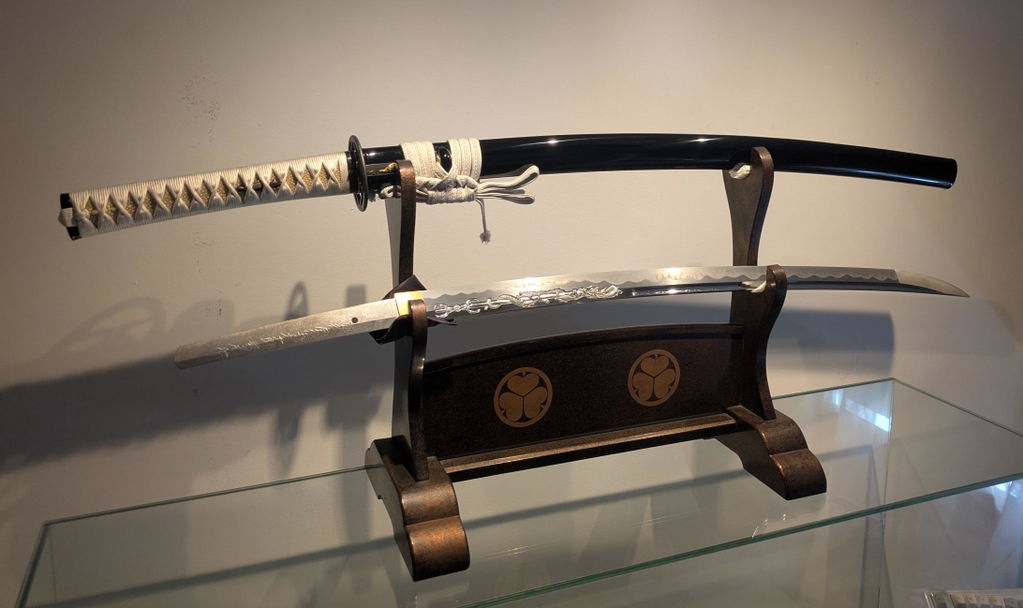
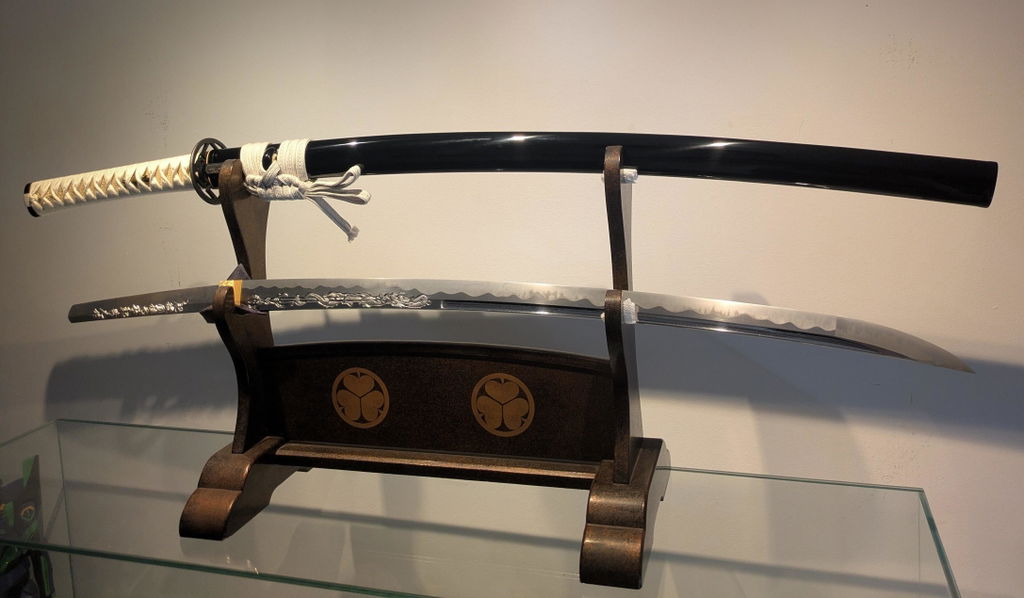
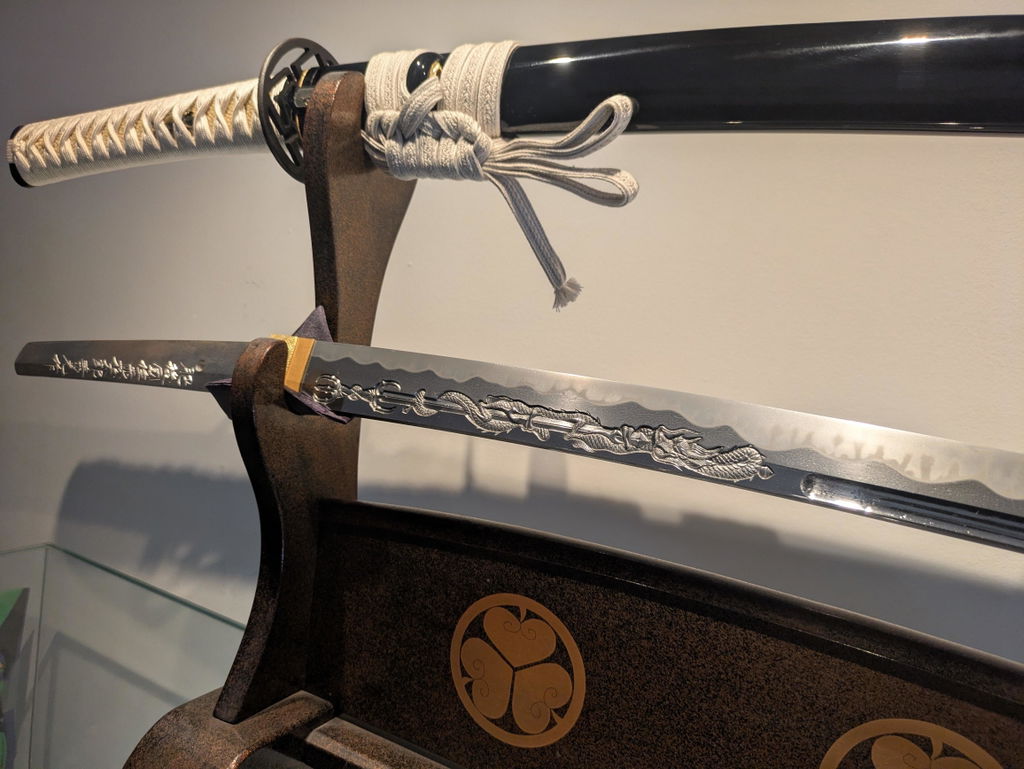
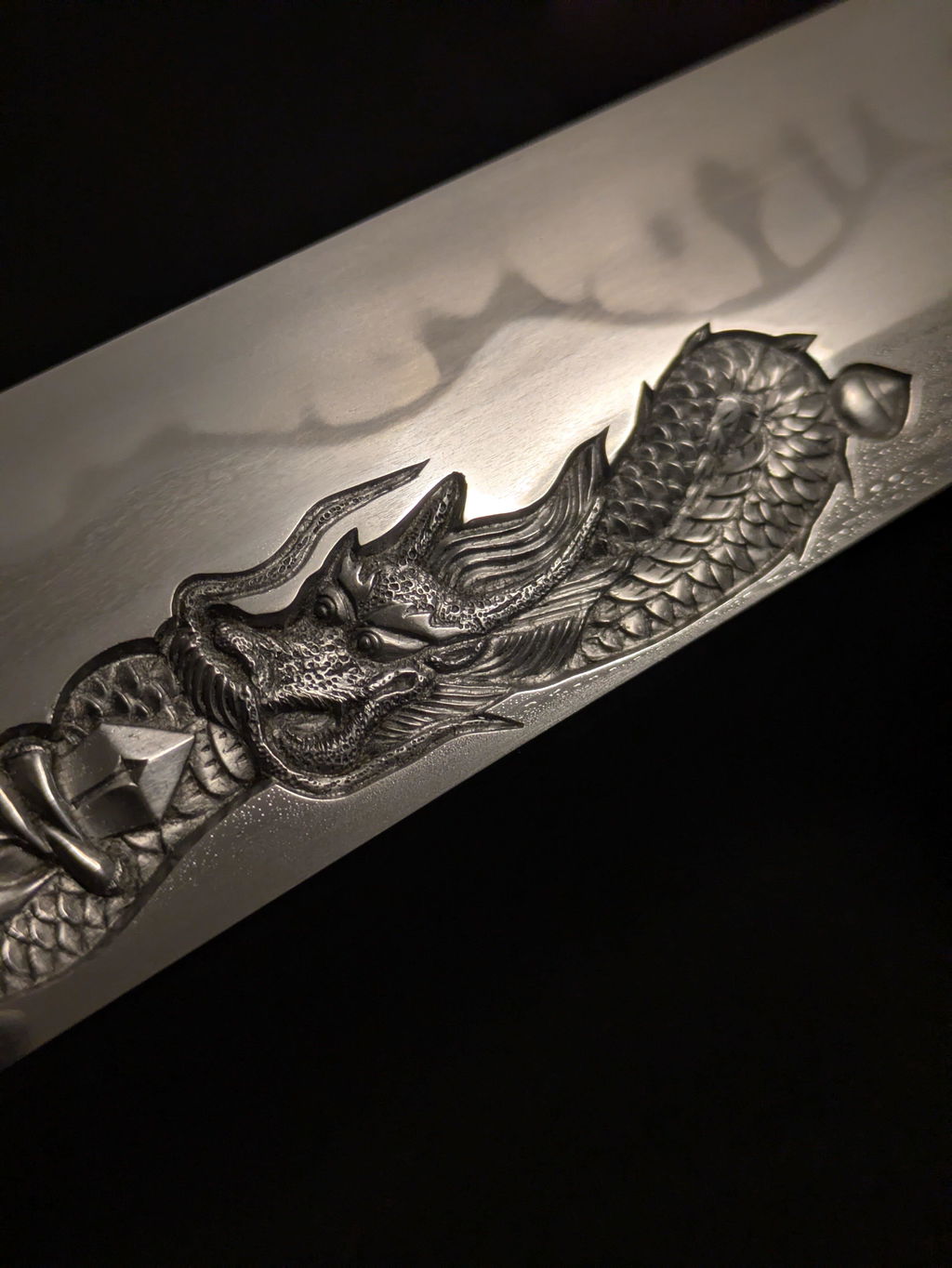
Tozando has sold a blade by Sumitani Masamine — an experience that confirmed both the extraordinary quality of his work and the rarity of such opportunities. When a blade by a Living National Treasure does become available through legitimate channels, it is an event in the sword world rather than a routine commercial transaction.
For collectors whose interest in the modern tradition extends to the works of its most distinguished practitioners, the appropriate approach is relationship-based rather than search-based — working with a specialist dealer who maintains awareness of significant pieces as they become available, rather than expecting to find them through conventional browsing. Tozando's team, with its extensive connections within Japan's sword world, is positioned to assist collectors in this way.
through Tozando's specialist network
Tozando has handled blades by Living National Treasures and maintains connections within Japan's sword world that make us aware of significant pieces as they become available. If you are a collector whose interest extends to works by the six Living National Treasures — or by other senior figures in the modern tradition — contact our specialists to discuss what may be possible.
In Closing — Six Names, One Tradition
The six Living National Treasures of Japanese swordsmithing were not chosen because they made beautiful objects, though they did. They were chosen because Japan's cultural authorities determined that what they knew — specific technical achievements, specific aesthetic programmes, specific ways of understanding and realising the properties of steel — was sufficiently important to the nation's cultural heritage to warrant official recognition and support for its transmission.
That determination was correct. The tradition that exists today — the 300 or so licensed swordsmiths currently active in Japan, the annual competitions, the Ise Shrine commissions, the works acquired by collectors around the world — is directly continuous with what these six men practised and taught. The lineages they founded or participated in are the lineages within which today's finest smiths trained.
To collect modern fine art nihonto seriously is, eventually, to find oneself in relationship to these six names — through the smiths they trained, the techniques they preserved, the aesthetic standards they set. Understanding who they were and what they achieved is not a detour from the collector's path. It is the path itself.

Leave a comment: