

Japan's nihonto tradition has produced hundreds of licensed swordsmiths in the postwar era. Virtually all of them share one background: born in Japan, raised in Japan, trained in Japan from within the cultural and linguistic context that the craft has always assumed. The question of whether someone from outside that context could enter the tradition — could learn the language, navigate the apprenticeship system, earn a place in a Japanese master's forge, and eventually receive the government licence to make authentic Japanese swords — was essentially unanswered until recently. Johan Leutwiler, born in Switzerland in 1989, answered it. In 2024, he became the first foreign-born smith to receive the Japanese government's licence to make nihonto — and today his forge, the Mitsutsuna Tanren Dojo in Mihara City, Hiroshima Prefecture, is producing blades that have already won recognition at Japan's most prestigious new sword competition.
The Beginning — Metal, a Brother, and an Exhibition
Johan Leutwiler grew up in the Canton of Valais in southwestern Switzerland, a region whose landscape and industry are defined by mountains and metalwork. His older brother worked in a metalworking shop, and at fourteen Johan followed him in — beginning an apprenticeship in ironwork that would give him the foundational skills he later recognised as unexpectedly relevant to what he eventually chose to do.
Around the age of seventeen, he encountered a Japanese sword at an exhibition. The experience was decisive. The sugata — the blade's form, its curvature, the relationship between the geometry and the steel — and the forging technique behind it presented a challenge that his existing metalworking experience gave him enough background to appreciate but nowhere near enough to understand. He began studying the tradition: its history, its techniques, its aesthetic principles. He also began practising iaido and kenjutsu — not as preparation for sword-making, but as a way of understanding what the swords were for and how they functioned in the hands.
At eighteen, he began studying Japanese independently. At the same time he took up shodo — Japanese calligraphy — an apparently tangential pursuit whose relationship to the sword world (both are arts of the brush and the blade, of form and precision) reflects the seriousness with which he was approaching the culture, not just the craft.
The Decision — and How He Prepared for It
The gap between being a European metalworker who admired Japanese swords and becoming a licensed Japanese swordsmith is not primarily a technical gap. The technical challenges are real and demanding — but they can be taught. The larger obstacles are linguistic, cultural, and institutional: entering a tradition that has never accepted an outsider, in a language that takes years to master, through a system that has no formal pathway for the situation you are in.
Leutwiler's approach to these obstacles was methodical. While still in Switzerland, he researched what the path actually looked like — and in doing so learned that the All Japan Swordsmith Association (全日本刀匠会) conducted training programmes for aspiring apprentices. After moving to Japan and completing his language study, he participated in one of those programmes in Okayama, where the sessions served as both an introduction to the craft and an opportunity for established smiths to assess potential candidates.
Two things in this account are worth noting. First: he came to Japan before he was ready to enter the apprenticeship system — specifically to attend language school and prepare. He did not arrive and expect the system to accommodate him in English. Second: the entry point to the apprenticeship was a training programme run by the swordsmith association — an institutional pathway, not a personal connection he arrived with.
Five Years with Kubo Yoshihiro
Kubo Yoshihiro — President of the All Japan Swordsmith Association, Mukansa swordsmith, and author of the foreword to Tozando's publication KATANA: A Handbook of Japanese Swords — accepted Leutwiler as his apprentice in 2019. The apprenticeship lasted five years, following the structure of traditional Japanese sword-making training: beginning with the most basic tasks and progressing through each stage of the craft as the student demonstrated readiness.
Leutwiler's account of the training sequence is worth reading carefully, because it illustrates what the path actually involves:
This is not a shortcut. The sequence he describes — cleaning before forging, small items before blades, each stage gated by demonstrated competence at the previous one — is the same sequence that every apprentice in the tradition has followed. The craft makes no accommodation for a candidate's prior metalworking experience or enthusiasm; the progression is earned, not granted.
In 2023, he completed the Agency for Cultural Affairs' mandatory training programme (美術刀剣刀匠技術保存研修会 — the Technical Preservation Training for Art Sword Smiths), the formal requirement for a government forging licence. In March 2024, the licence was issued. He became independent.
On Difficulty — and the Absence of It
A natural question about Leutwiler's path is: what was hardest? The answer he gives is not what most people expect.
This is a significant statement. The standard narrative about foreigners entering Japanese traditional crafts emphasises the barriers — the cultural distance, the language, the closed nature of master-apprentice relationships. Leutwiler's account does not dismiss these as non-existent; it describes what his response to them was. He prepared. He studied the language before he needed it. He approached the culture on its own terms rather than expecting it to approach him. The difficulty he chose to manage in advance — rather than encounter and react to.
What He Is Building — The Mitsutsuna Forge and What Comes Next
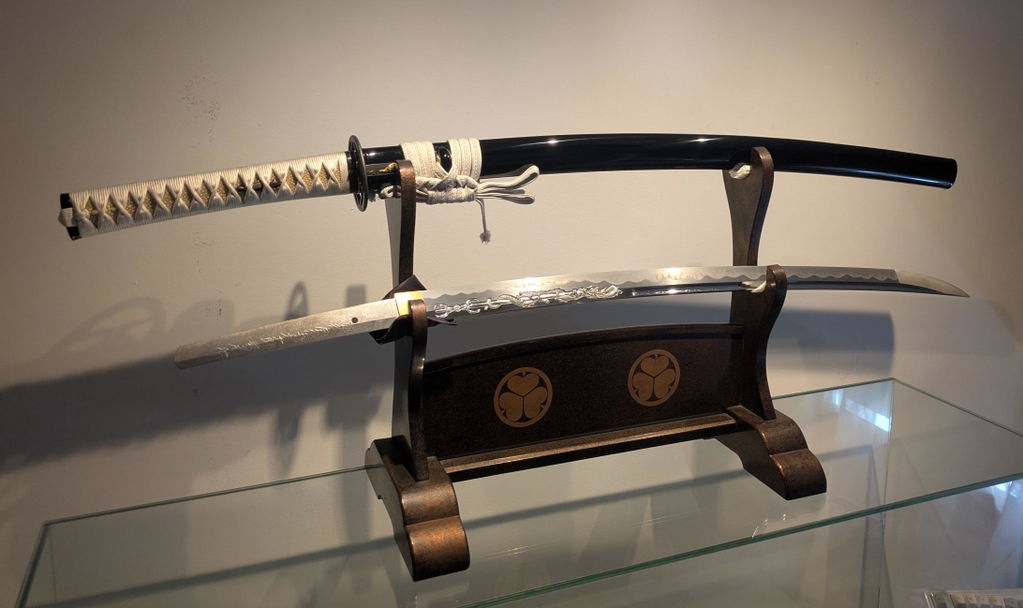
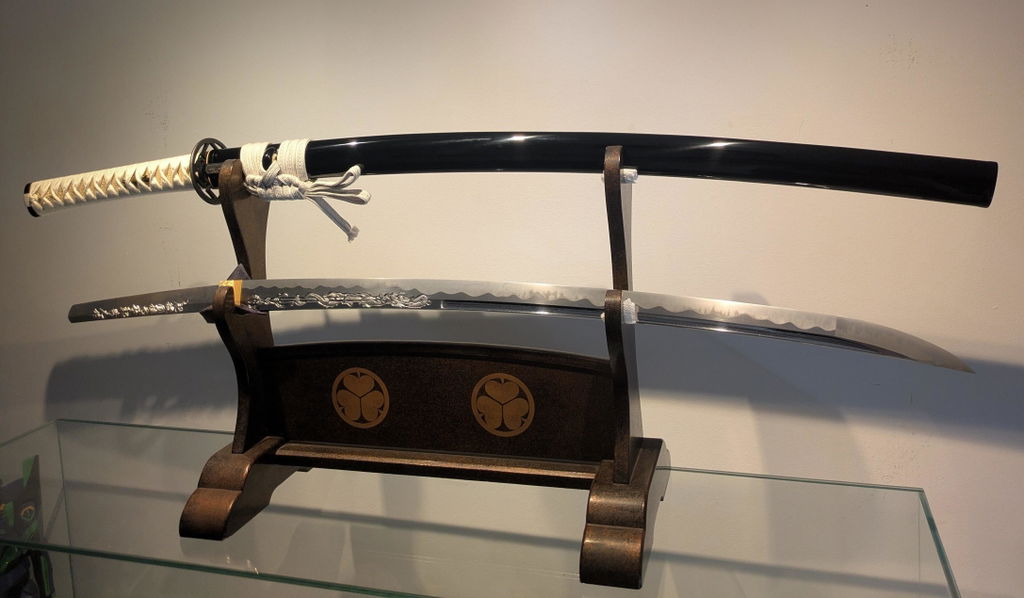
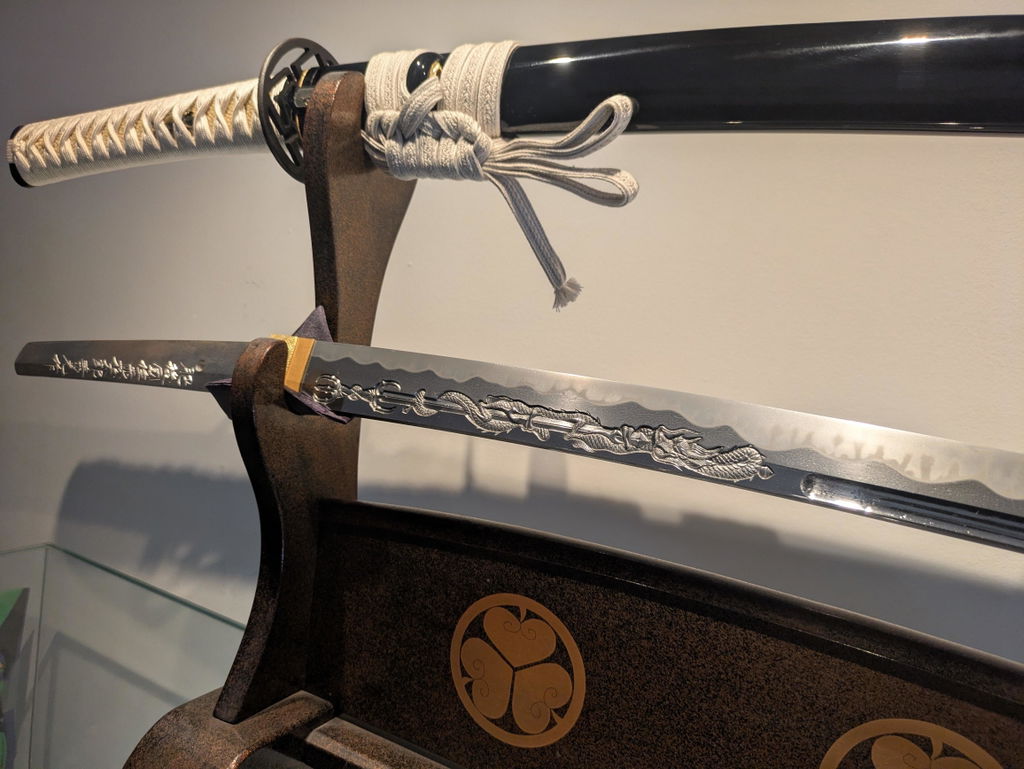
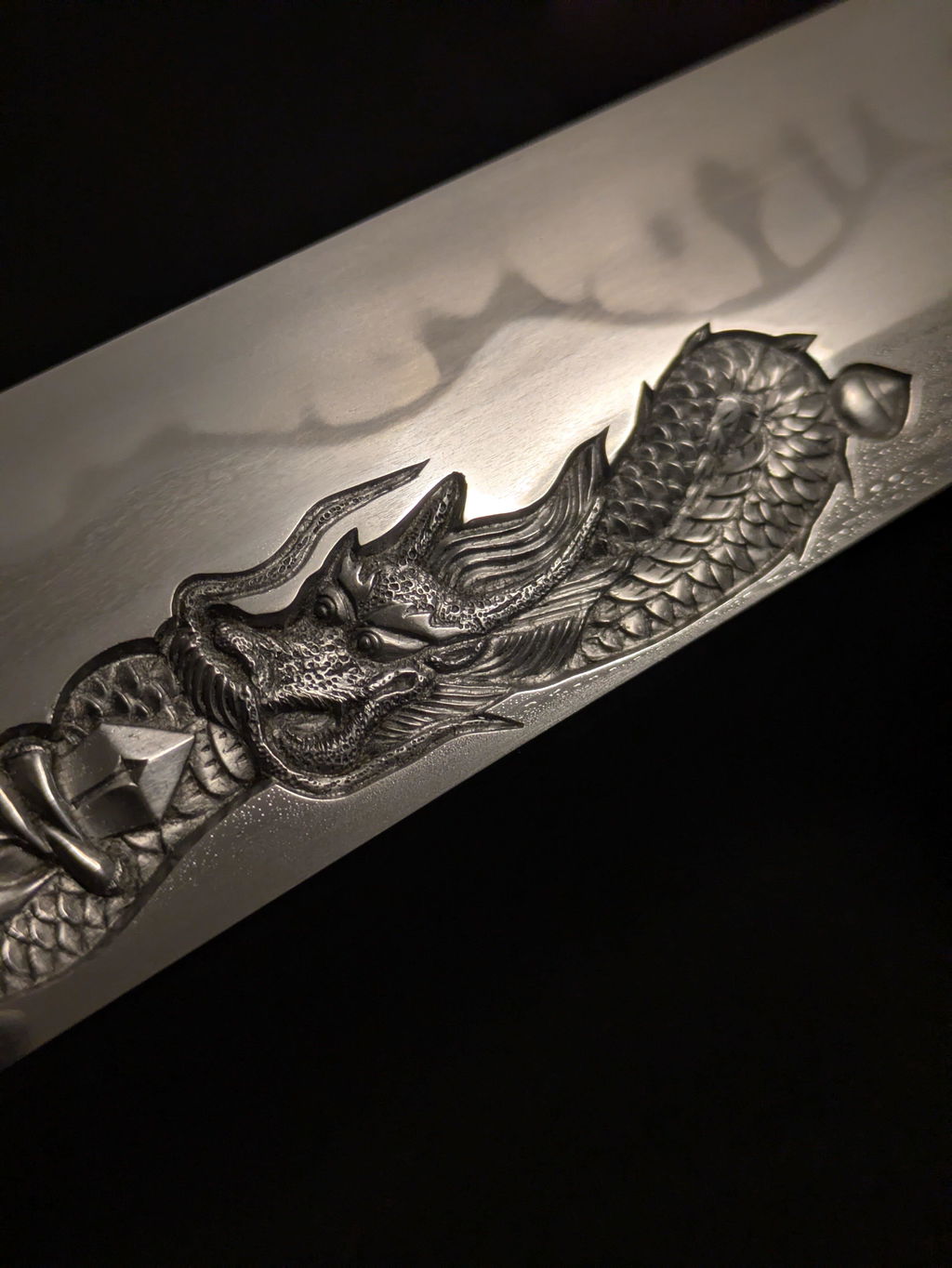
Since receiving his licence in 2024, Leutwiler has moved quickly. His first entry to the Gendai Toshoku-ten (現代刀職展) — the prestigious annual exhibition organised by the NBTHK, Japan's premier sword authentication body — resulted in two awards: the Effort Prize First Place and the New Talent Prize. First submission, two prizes. In 2026, he won again — a second consecutive year of recognition at the same competition.
In October 2026, his forge — the Mitsutsuna Tanren Dojo (光綱鍛錬道場) in Mihara City, Hiroshima Prefecture — was inaugurated with a traditional fire-lighting ceremony. Previously he had conducted forging in Shobara City and finishing work in Mihara separately; the new facility brings all stages of production under one roof. The forge's name, Mitsutsuna, will become his official smith name going forward.
The ambition here is worth noting: not to be the foreign swordsmith who succeeded in Japan, but to be a swordsmith whose work has its own distinctive qualities — independent of the novelty of his background. The background will always be part of his story. He is trying to ensure it is not the whole of it.
Many smiths work in Bizen-den.
I want something in my blades
that only mine have." — Johan Leutwiler
For Those Who Want to Follow — What the Path Actually Requires
Leutwiler's story generates a specific question in the minds of many readers: can I do this too? The honest answer is that the path exists — he has demonstrated that — but it requires understanding what it actually involves.
Tozando's Connection — and Why This Story Matters Here
Tozando's relationship with the All Japan Swordsmith Association — through which we offer newly commissioned blades at the same price the smith would charge directly — means that Kubo Yoshihiro, Johan's master, is a figure Tozando's collectors and specialists know well. Kubo wrote the foreword to our publication KATANA: A Handbook of Japanese Swords; his blades have been available through Tozando; his guidance on questions of sword maintenance and authenticity has informed the advice we give to collectors.
That Kubo chose to accept a foreign apprentice — and that the apprentice he accepted became the first foreign-born licensed nihonto smith — is a story that reflects something about both figures: about Kubo's confidence in the tradition's ability to transmit itself across cultural and linguistic distances when the student is genuinely prepared, and about Leutwiler's refusal to accept that the distance was an obstacle rather than a challenge.
The nihonto tradition is over a thousand years old. For most of that history, it was a tradition in which every smith was Japanese, born into the cultural context that produced the craft. Johan Leutwiler has changed that — not by asking the tradition to accommodate him, but by meeting it on its own terms.
through Tozando's specialist network
Tozando works directly with Japan's licensed swordsmiths — including those trained within the Kubo Yoshihiro lineage — to facilitate commissions for collectors worldwide. If Johan Leutwiler's story has deepened your interest in the living tradition, contact our specialists to discuss what a commission involves.
In Closing — What the First Means
Being first matters in a specific way: it proves that something is possible. Before Leutwiler received his licence, the question of whether a non-Japanese smith could complete the full path — language, apprenticeship, government authorisation, independent forge — was theoretical. It is no longer theoretical.
What the path required was not a modification of the tradition to accommodate an outsider. It required an outsider who was willing to meet the tradition on its own terms: learning the language before arriving, studying the culture as seriously as the craft, entering through the legitimate institutional pathway, serving the full apprenticeship, earning the licence by completing what the licence requires. Leutwiler did not ask the tradition to change. He changed himself until he could enter it.
The Mitsutsuna Tanren Dojo in Mihara City is now producing blades that have won recognition at Japan's most prestigious new sword competition. The smith who makes them is Swiss. The swords are nihonto. Both of those things are true simultaneously — and will remain true for every blade that carries the Mitsutsuna signature going forward.

Leave a comment: