

When a Japanese film production needs swords, armour, or martial arts equipment for a period drama, they face a specific problem: audiences can tell the difference between authentic equipment and props, even if they cannot articulate exactly how. The weight is wrong. The balance is wrong. The way an actor holds a genuine sword is different from the way they hold something that looks like one. The productions that care about this — the ones that want to get it right — need a specialist. For four films spanning 2013 to 2019, and for television programmes reaching millions of viewers across Japan, that specialist has been Tozando.
and audiences feel what they cannot see
A Japanese period drama lives or dies on the credibility of its physical world. The swords, the armour, the martial arts equipment — these are not background dressing. In a film about a swordsman, the sword is a character. Its weight determines how the actor moves. Its balance determines how the draw and return look on screen. Its proportions and geometry determine whether the blade reads as a weapon or as a prop.
Directors who understand this — who have done the research, who have perhaps practised martial arts themselves — recognise immediately that the equipment available from general prop houses is not adequate for the level of authenticity they require. They need a specialist who can provide genuine equipment, authenticate its historical accuracy for the period depicted, and advise on how that equipment would have been used by the characters who carried it.
This is a specific and demanding form of expertise. It requires deep knowledge of nihonto construction, of the historical development of sword fittings and armour across different periods, and of the practical realities of how these objects were used. It is, in short, the same expertise that Tozando applies every day in selecting and describing the blades in our collection — brought to bear on a different kind of problem.
The Films — Four Productions, Four Collaborations
Director Mikami Yasuo's return to theatrical film-making after three decades — released nationally across 85 screens and selected for international film festivals including Hawaii and Dallas, with distribution in 12 countries. The film's commitment to historical authenticity extended throughout the production design, with particular attention to the swords carried by the central characters.
A major studio production reaching a broad national audience. While the film's primary setting is contemporary rather than historical, it features martial arts training sequences whose authenticity required specialist input on equipment and practice form.
An adaptation of the acclaimed novel by Fujisawa Shū, centred on kendo and the relationship between a troubled young practitioner and his teacher. The film's credibility depended on the authenticity of the kendo practice depicted — the equipment, the form, and the specific character of kendo training at a serious level.
Director Mikami Yasuo's second collaboration with Tozando — and the most demanding in terms of sword consultancy. A major period drama depicting Miyamoto Musashi's celebrated engagements: the Yoshioka school confrontations, the battle at Ichijoji-sagarimatsu, and the final duel at Ganryujima against Sasaki Kojiro. The production's ambition was a historically grounded depiction of Musashi's world — one that required swords appropriate to the Azuchi-Momoyama period that would withstand close scrutiny on screen.
The film was invited to the Shanghai International Film Festival and achieved wide national distribution, with Matsudaira Ken — one of Japan's most recognised period drama actors — as Sasaki Kojiro and Hosoda Yoshihiko as Musashi.
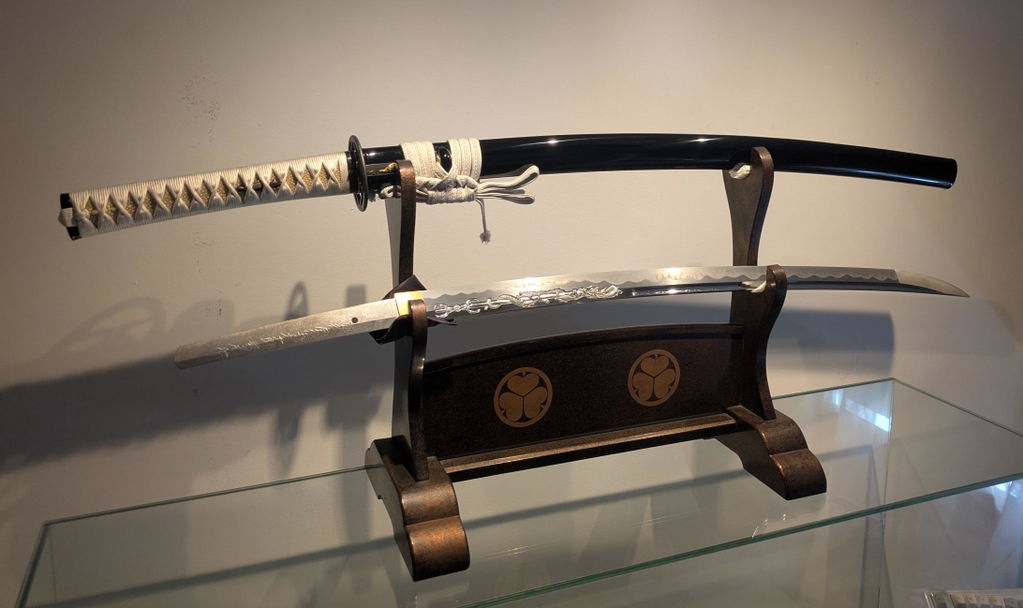
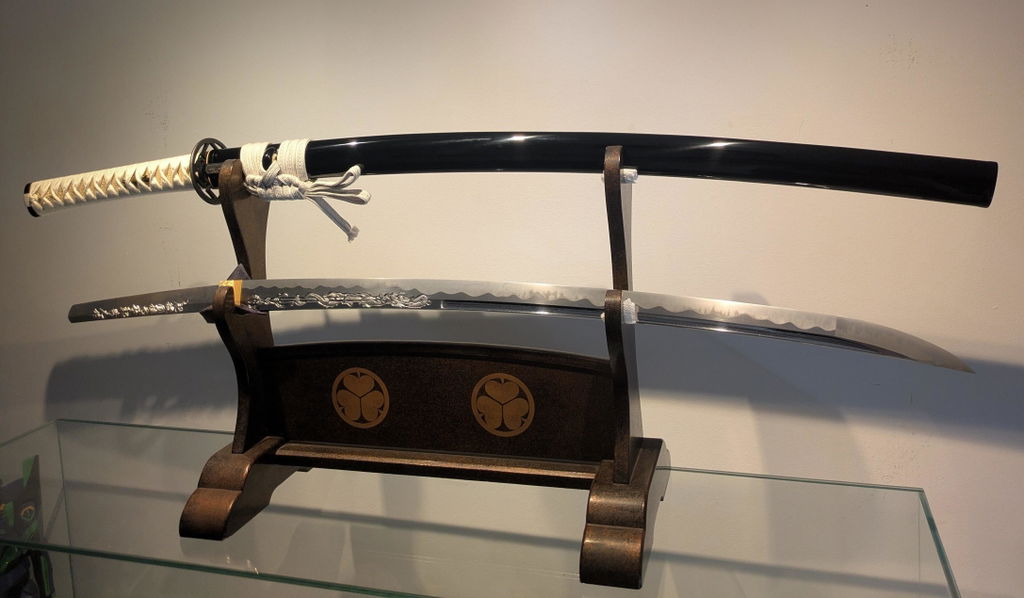
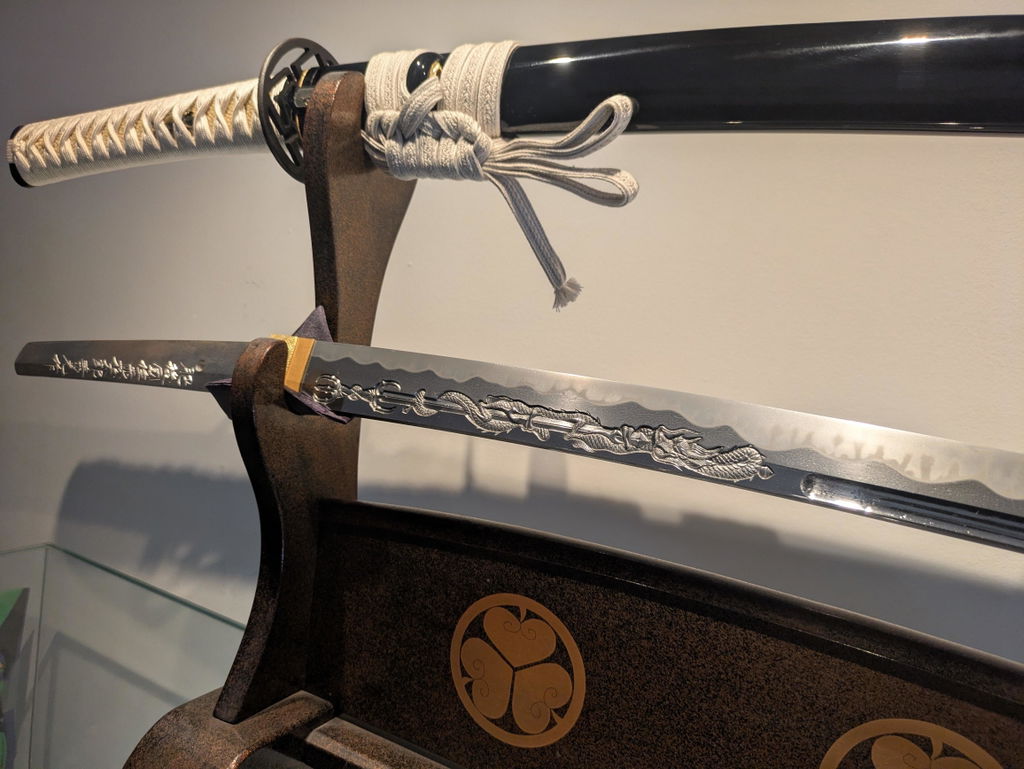
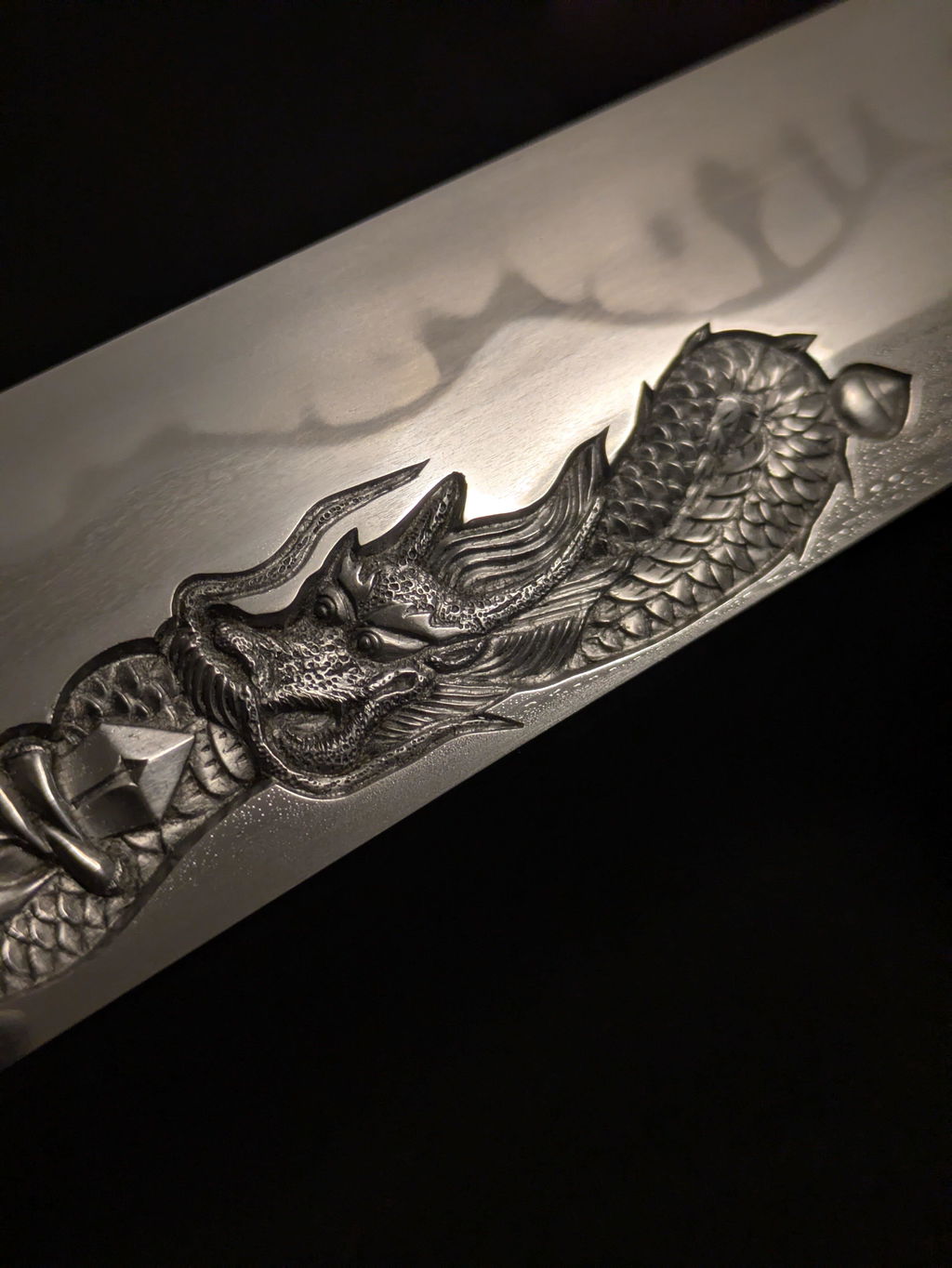
The design of Kojiro's sword presented a specific challenge: historically, Sasaki Kojiro was associated with a blade known as the monohoshi-zao ("laundry pole") — a sword of exceptional length, approximately three shaku (around 90cm blade length). For the film, the sword's design referenced the Bizen Osafune Nagamitsu tradition, consistent with the period. The finished blade — longer and heavier than any standard production prop — required Matsudaira Ken to practise extensively before filming. As he described in the film's production materials: "When I held it, it felt like I was actually wearing a sword." The weight and balance of a genuine sword, as opposed to a lightweight prop, informed the entire performance.
Its weight, its balance, its proportions —
these are not details. They are the performance."
Television — Tozando in Japan's Living Rooms
Beyond the film productions, Tozando has been featured across Japan's television landscape — from national network broadcasts to regional programmes, from entertainment formats to serious cultural coverage. Each appearance reflects a different dimension of what Tozando represents: the world's premier specialist in Japanese swords and martial arts equipment, based in Kyoto, accessible to anyone with a genuine interest.
or visit us in Kyoto
The same expertise that authenticated the swords for four Japanese feature films is available to every collector who contacts Tozando's specialists. Browse our collection, or visit one of our three Kyoto locations to see the swords in person.
In Closing — The Credential That Cannot Be Scripted
A director preparing a period film about Miyamoto Musashi cannot afford to get the swords wrong. The audience — or at least the part of the audience that matters, the part that knows what a genuine Azuchi-Momoyama period sword looks like — will notice immediately. The production's credibility is at stake. The director's reputation is at stake. The actor's performance is at stake, because an actor who holds a genuine sword holds it differently from an actor holding a prop.
When Director Mikami Yasuo, for the second time, engaged Tozando to authenticate and produce the principal swords for his film about Musashi and Kojiro, he was making a specific professional judgement: that Tozando's knowledge of Japanese swords was reliable enough to stake his production's authenticity on it. That judgement was not made lightly. It was made by a director who practises martial arts himself, who has spent years studying the period, and who understands the difference between adequate and correct.
The same knowledge. The same standard. The same commitment to getting it right — whether the audience is a cinema full of viewers, a television audience of millions, or a single collector in New Zealand or Norway who has trusted us to describe a blade honestly and ship it correctly. The credential does not change with the context. The standard does not change with the audience. That is what thirty-five years of doing this correctly looks like.
Film credits confirmed from official sources including Wikipedia (武蔵 -むさし-, 蠢動 -しゅんどう-), official film websites, and Tozando's direct records of each production collaboration. Character-by-character sword design details for 武蔵 -むさし- are drawn from the special production interview between Matsudaira Ken and Kimura Takahiko (Tozando President) published in the film's official booklet (歴増, pp.16–21, April 2019). The six characters whose swords Yamamoto Yasumasa of Tozando designed — Musashi, Kojiro, Yoshioka Seijuro, Yoshioka Denshichiro, Yoshioka Shichizaemon, and Sawamura Yoshishige — are confirmed from Tozando's internal production records. Television appearances confirmed from broadcast records and programme archives. All production details — directors, cast, release dates, festival selections — are drawn from publicly available sources and reflect information accurate as of August 2026.

Leave a comment: