Antique Japanese Wakizashi Sword - Mumei, Shinto Era (36.6 cm)
¥200,000 ¥240,000

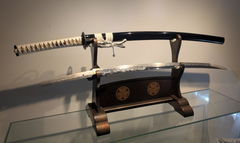
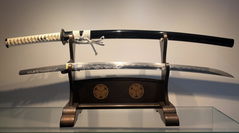
An ubu (original-length), unsigned (mumei) yoroidōshi (armor-piercing dagger) of the mid-Edo period, built with the overwhelming thickness and solidity of a kasane exceeding 1.1 cm. Freshly polished, with a solid, substantial feel in both width and thickness, and accompanied by an elaborate vermilion-lacquer inrō-kizami period mounting, it carries the beauty and dignity of the martial arts into the present day.
Freshly polished, the blade shows almost no faults — essentially flawless, with a ground and edge that are both exceptionally sound. The jigane is a packed itame-hada with fine ji-nie, displaying the beauty of finely honed steel. The hamon is a clear suguha of delicate nie-deki — a plain, robust, and sturdy finish that conveys the sharpness and high practicality distinctive of a yoroidōshi. The tang (nakago) is ubu and unaltered, unsigned.
In the age when samurai fought clad in armor, the yoroidōshi was the blade used to deliver the finishing blow in close-quarter combat. To thrust swiftly through the gaps in an opponent's armor, it has a short blade length, a narrow width, and a heavy, notably thick kasane, giving it a cross-section close to a triangle — a form built entirely for penetrating power.
With a kasane exceeding 1.1 cm, this is an extraordinarily thick blade. Though of tanto length, the sense of weight and impact when taken in hand is in a class of its own, letting one fully feel the strength of the practical dagger on which a samurai relied as his last resort on the field of battle.
The dagger comes with a well-preserved vermilion-lacquer (shu-nuri) inrō-kizami scabbard of deep, rich color. The fuchi-kashira and hilt are set with the Maru ni Chigai Taka-no-ha ("crossed hawk feathers within a circle") family crest, with elaborate raised menuki. Since ancient times the hawk has been a symbol of valor, strength, and nobility, and was much favored by the samurai; hawk feathers were also prized as material for arrow fletching, and so were adopted into family crests as emblems of enduring martial fortune and the pride of a warrior house. A kozuka decorated with maple leaves in maki-e is also included, making the mounting as a whole a most dignified and high-toned ensemble.
A sound, freshly polished yoroidōshi tanto boasting the rare, massive thickness of a kasane over 1.1 cm, together with a high-grade vermilion inrō-kizami koshirae bearing the crossed-hawk-feather crest — a supreme piece that conveys the fighting spirit of the warrior house.
¥200,000 ¥240,000

¥400,000 ¥430,000

¥390,000 ¥410,000

¥270,000 ¥290,000

¥300,000 ¥330,000


Every blade reflects generations of knowledge, discipline, and precision passed down through traditional Japanese swordmaking. From the forging of steel to the final finishing touches, each piece is shaped with patience, mastery, and deep respect for heritage.

From carefully selected materials to the refined finishing of every surface, each sword is crafted and presented with uncompromising attention to detail. Our commitment to authenticity ensures every piece reflects true tradition, lasting quality, and enduring cultural value.

Designed with balance, simplicity, and purpose, our blades embody the harmony between refined form and skilled craftsmanship. Each sword represents a thoughtful union of strength, elegance, and the timeless discipline of Japanese artisans.