Antique Japanese Wakizashi Sword - Mumei, Shinto Era (36.6 cm)
¥200,000 ¥240,000

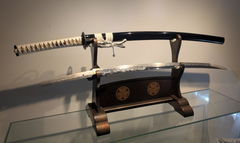
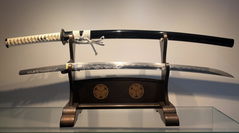
Clothed in the refined chic of Edo. Its standing ō-itame grain and clear notare hamon are set off by a period koshirae with a finely wrought aogai-mijin-nuri saya and arabesque-engraved fittings, deepening the flavor of history in this blade.
The jigane is an ō-itame-hada (large wood-grain pattern) showing a powerful, standing-grain feel (hadadachi-gokoro). Fine ji-nie (steel martensite particles) are firmly laid, allowing one to dynamically appreciate the sturdy, robust steel and the deeply expressive surface typical of the Shintō period. The hamon is based on a relaxed ko-notare (small undulating line), mixed with gunome (irregular clove-shaped pattern) and togari-gokoro (pointed-tip elements), the temper edge brightly shining with luminous ko-nie. Within the hamon, soft ashi enter quietly, so that one can fully enjoy the work of a bright, clear ji and ha.
The blade has been polished, in a state in which the characteristics of the ji and ha can be clearly appreciated. Some light rust (usu-sabi) can be seen on the mune (spine) and on the jihada (surface of the steel), but there are no major flaws or fatal forging cracks. As an ubu, mumei piece of its age, it is sound, maintaining a flavorful condition that conveys the genuine history of a blade that has survived long years.
Both the mihaba (width) and kasane (thickness) stand firm, and with a slight, flowing sori (curve), the blade draws the beautiful lines of a dignified hira-zukuri form. its well-judged taper from base to tip and its flawless profile combine a powerful presence with refined beauty. The nakago (tang) is "ubu mumei" (unaltered and unsigned), retaining the form it held at the time of forging, its deep rust color of age enhancing its antique charm.
The blade is accompanied by an elegant period koshirae that conveys to the present day the refined taste of the samurai of the time. From the exquisite carving of the metal fittings to the decoration of the saya, it is a splendid piece in which the spirit and prayers of Edo are concentrated.
The saya (scabbard) is finished in "aogai-mijin-nuri," a high-grade lacquer technique in which finely crushed shell is worked into the lacquer and then polished out. The aogai (blue shell) glitters in rainbow colors as the light shifts, recalling the stars of the night sky, combining beauty with practical durability. The kurigata (cord-fastening fitting) was carefully filled and smoothed in a later period, and can be enjoyed as a mark of the aging of a piece that has been treasured over the years.
The metal fittings — fuchi-gashira, kaeri-tsuno, and kojiri — are of warm-toned copper, delicately decorated with "kebori karakusa" (fine-line arabesque) engraving. The arabesque, which depicts vines that extend without end, has since ancient times been regarded as a highly auspicious pattern symbolizing the prosperity of the household, longevity, and flourishing.
The accompanying kozuka (utility knife handle) depicts, in high-relief carving with gold inlay and rich in poetic feeling, a "deer" standing in a field where autumn grasses sway, and a supple "crescent moon" floating above. The crescent moon signifies "the fulfillment of wishes and development," while the deer, also considered a messenger of the gods, signifies "good fortune and longevity," and together they reflect the tranquil elegance of autumn familiar from the world of waka poetry. The blade is also fitted with a warm, copper-toned double habaki (blade collar), which enhances the dignity of this fine blade.
A very flavorful large tantō, in which the simple, powerful form of an ubu, mumei blade is perfectly harmonized with an elegant Edo-period aogai-mijin-nuri koshirae. Even the carefully repaired traces of the kurigata and the slight light rust that remains, signs of the passage of time, convey the atmosphere and dignity unique to a "genuine period piece" that has lived through long years alongside its admirers. A blade to keep close at hand, to enjoy caring for and appreciating every day, and to treasure for years to come together with a koshirae of auspicious design praying for prosperity and longevity.
¥200,000 ¥240,000

¥400,000 ¥430,000

¥390,000 ¥410,000

¥270,000 ¥290,000

¥300,000 ¥330,000


Every blade reflects generations of knowledge, discipline, and precision passed down through traditional Japanese swordmaking. From the forging of steel to the final finishing touches, each piece is shaped with patience, mastery, and deep respect for heritage.

From carefully selected materials to the refined finishing of every surface, each sword is crafted and presented with uncompromising attention to detail. Our commitment to authenticity ensures every piece reflects true tradition, lasting quality, and enduring cultural value.

Designed with balance, simplicity, and purpose, our blades embody the harmony between refined form and skilled craftsmanship. Each sword represents a thoughtful union of strength, elegance, and the timeless discipline of Japanese artisans.