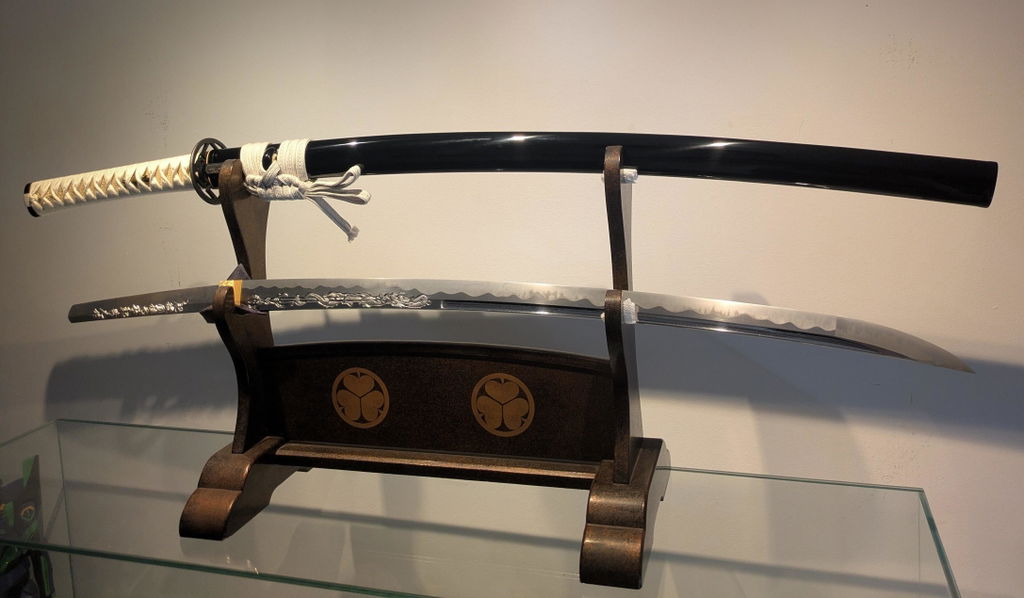
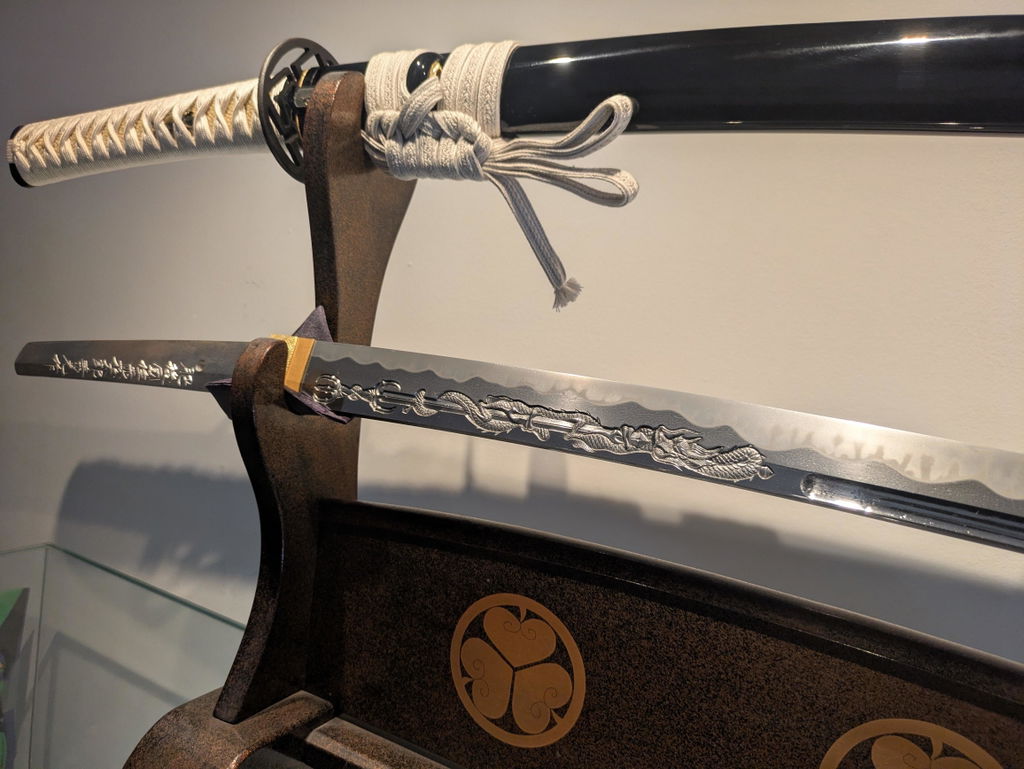
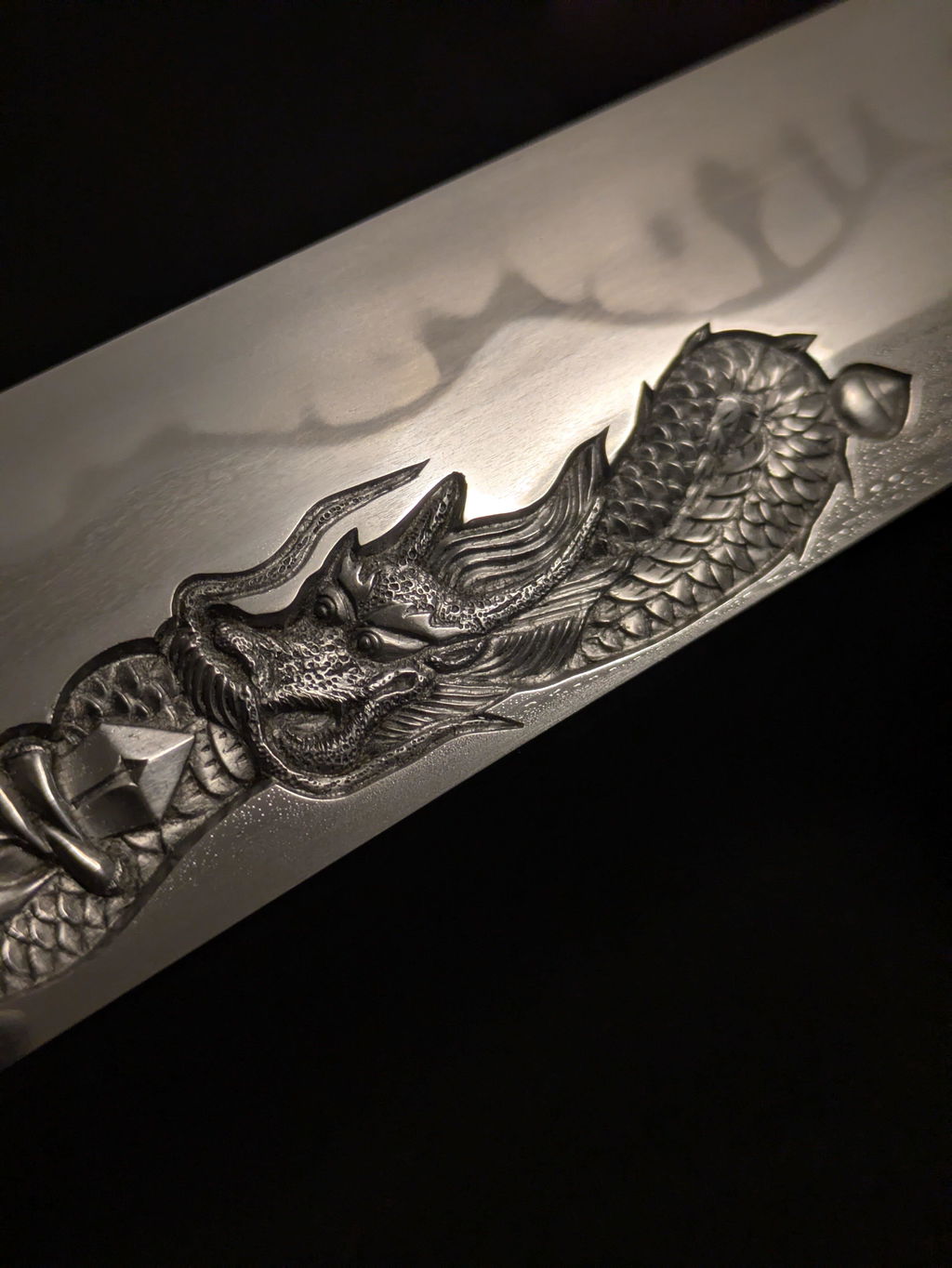
Antique Japanese Katana Sword - Mumei, Shinshinto Era - NBTHK Hozon Token(73.2 cm)
¥1,100,000 ¥1,150,000

This blade has been acquired. Discover other exceptional swords currently available in our collection.


An NBTHK (Nihon Bijutsu Tōken Hozon Kyōkai) Hozon Tōken-certified blade by Bishū Osafune Kiyomitsu, a master representative of Bizen province in the late Muromachi period. This is an extremely rare moroha-zukuri (double-edged) custom breast-dagger (kaiken), carrying the clear date of Tenbun 10, 2nd month (1541) — the very height of the Warring States. Forged in the thick of the Sengoku age, when samurai staked their survival on the blade, it is a careful chūmon-uchi (custom order) far removed from the practical mass work of the day — a piece of historical value and overwhelming presence that conveys a ferocity and a warrior's obsession far beyond what its small size would suggest.
Because of an old polish, minute time-worn scuffs and some roughness can be seen on the surface, with a patch of black rust near the mune-machi — but these are honorable marks (homare) of a blade that guarded its owner through the years, the living proof of a sword that survived the Sengoku age. The essential ground and edge have endured half a millennium in thoroughly sound condition. The jigane is a powerfully forged itame, retaining the texture and strength peculiar to sue-Bizen. The hamon is based on a suguha, its temper edge tightly drawn, bright and clear — asserting Kiyomitsu's outstanding skill. The tang (nakago) is covered in a deep, flavorful black rust that has come through the age of war, clearly cut on the front (omote) with Bishū Osafune Kiyomitsu and on the reverse (ura) with the date Tenbun 10, 2nd month — a precious piece of documentary evidence from the history of the Sengoku period, more satisfying than one could ask for.
The moroha-zukuri, with an edge tempered on both faces, is among the most technically demanding of all tanto shapes — a rare form made only with special intent. It is thought to have been specially ordered from the master Kiyomitsu, amid the harsh backdrop of the Tenbun era, by a warlord of high rank as a kaiken for self-defense or as a blade carrying a resolve unto death. The taut tension transmitted the moment it is taken in hand, and the refined mass proper to a custom piece, are magnificent.
In the late Muromachi period (sue-Bizen), Kiyomitsu stood at the summit of the Osafune school, sharing its popularity with the Sukesada line. For an outstanding sharpness and high practicality equal to the harshest battlefield, the Osafune smiths won the absolute trust of warlords across the country. In an age that also left much "kazu-uchi" (bundle-made) work, a dated chūmon-uchi such as this — inscribed with the year and month — is a special piece in which Kiyomitsu's skill is fully displayed, and is a high-value object of regard among collectors today.
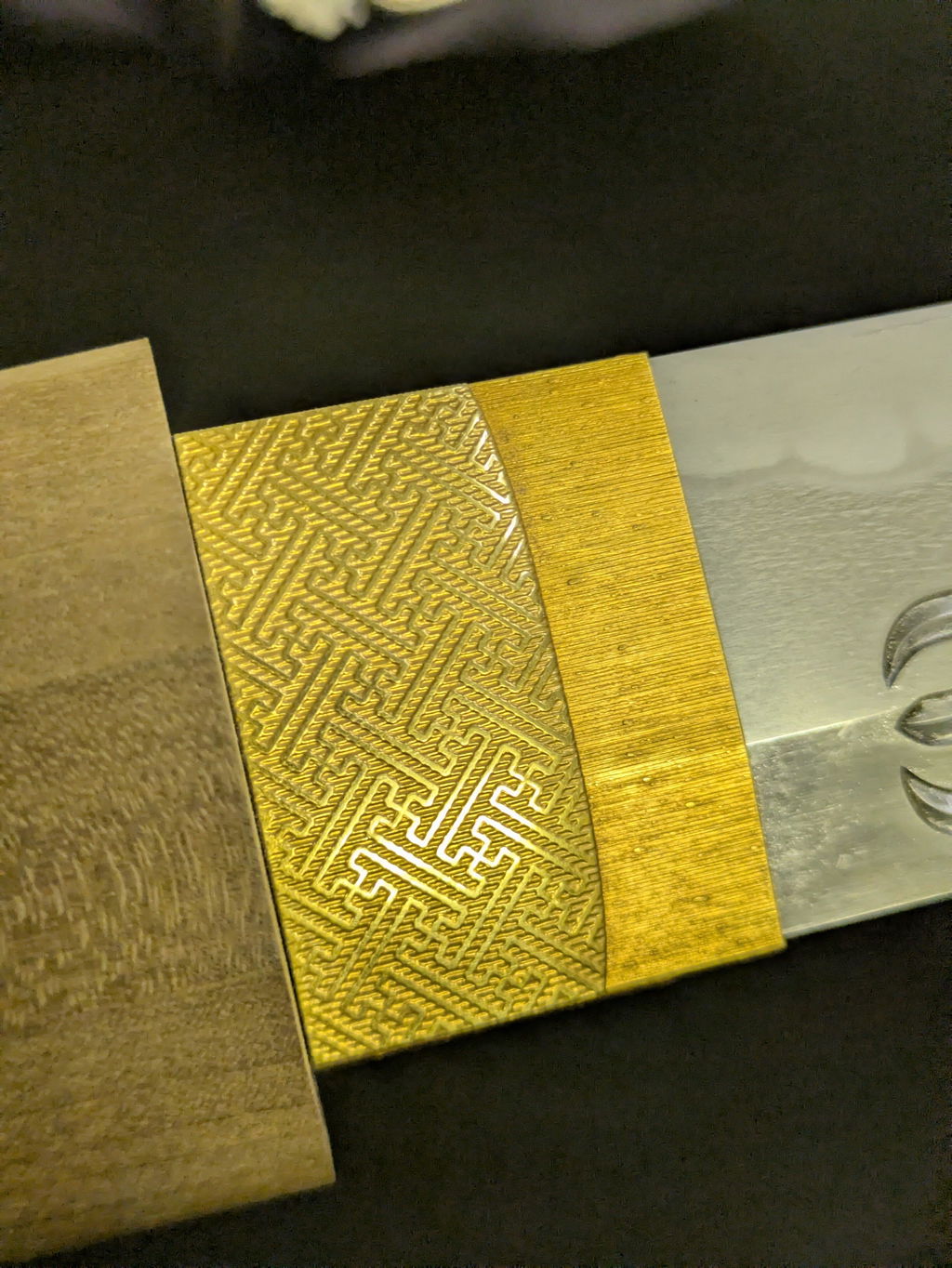
The blade comes in a fine shirasaya that safely protects and hands it down. There is some chipping on the hilt portion that speaks of the many times it saw service, but the habaki — of solid-silver appearance, with fine slanted file-work (shigure-yasuri) on a silver ground — is very carefully made, telling of how the generations of owners treasured and cherished this Sengoku legacy.
Tenbun 10 (1541) may be called the very peak of the age of upheaval, when Sengoku warlords vied fiercely for supremacy across Japan: the year Takeda Shingen expelled his father Nobutora to succeed to the headship of Kai, and Mōri Motonari crushed the great Amago army at the Battle of Yoshida-Kōriyama. It was just two years before the arrival of the matchlock gun (1543) — and the breath of an age in which warlords relied on the pure power of iron, on skill, and on their own spirit, dwells heavily in this blade.
An exceptionally rare moroha-zukuri custom dagger that carries into the present the very air of "Tenbun 10," when the Sengoku struggle for supremacy raged. With the assured soundness that lives within its old-polish character, and a supreme form in which Kiyomitsu's resolve is inscribed — experience history in your own hand, together with the endorsement of the NBTHK Hozon Tōken.
¥1,100,000 ¥1,150,000

¥200,000 ¥240,000

¥400,000 ¥430,000

¥390,000 ¥410,000

¥270,000 ¥290,000

¥300,000 ¥330,000


Every blade reflects generations of knowledge, discipline, and precision passed down through traditional Japanese swordmaking. From the forging of steel to the final finishing touches, each piece is shaped with patience, mastery, and deep respect for heritage.

From carefully selected materials to the refined finishing of every surface, each sword is crafted and presented with uncompromising attention to detail. Our commitment to authenticity ensures every piece reflects true tradition, lasting quality, and enduring cultural value.

Designed with balance, simplicity, and purpose, our blades embody the harmony between refined form and skilled craftsmanship. Each sword represents a thoughtful union of strength, elegance, and the timeless discipline of Japanese artisans.