Antique Japanese Katana Sword - Mumei, Shinshinto Era - NBTHK Hozon Token(73.2 cm)
¥1,100,000 ¥1,150,000

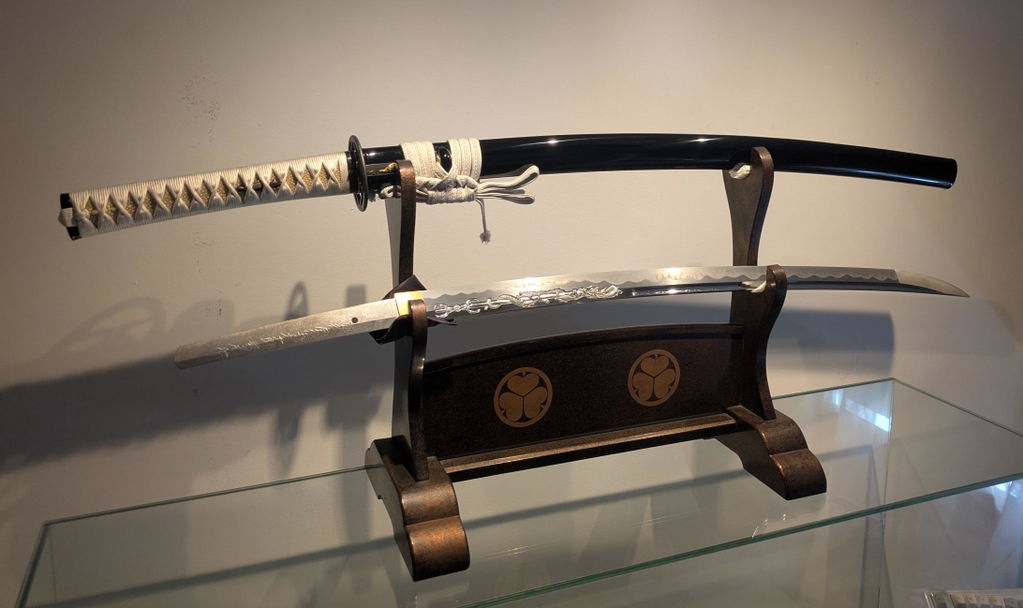
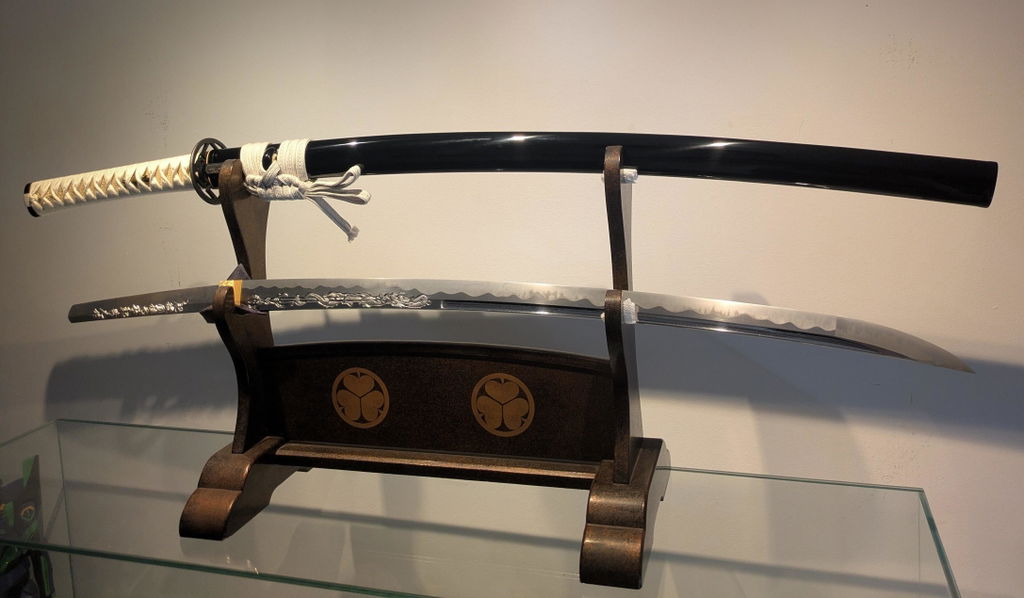
An overwhelmingly powerful blade at 1,060 g. This is a work of true dedication, forged in Reiwa 8 (2026) by Akamatsu Tarō Kanemitsu — a leading name of the historic Akamatsu Tarō lineage of Higo Kumamoto — as he took on the very essence of the Bakumatsu master Minamoto Kiyomaro. Its long, extraordinarily powerful form is fused perfectly with a jigane and hamon of both refinement and strength — a supreme work fully deserving to be called the pinnacle of contemporary swordsmithing. This masterpiece showcases Kanemitsu's overwhelming skill, pursuing the bold, expansive form and vivid hamon reminiscent of Minamoto Kiyomaro, the great Bakumatsu-era smith whose style the Akamatsu Tarō lineage considers its truest specialty and signature achievement.
Akamatsu Tarō Kanemitsu (real name: Kimura Mitsuhiro), a resident swordsmith of Higo Province, was born into the Kimura family, a distinguished house that served as official sword-forging retainers to the Sagara domain during the Edo period, and he has faithfully inherited the advanced forging techniques and refined aesthetic sensibility cultivated over generations. Rather than resting on the name of his prestigious lineage, he has devoted himself earnestly to swordmaking, and his outstanding skill is highly regarded in the contemporary sword world, where he has built a firm reputation as a regular prizewinner at exhibitions and new-sword competitions. Fusing his own sensibility with the aesthetics and traditional techniques of old master smiths — foremost among them the Bakumatsu-era genius Minamoto Kiyomaro — he continues to produce works possessing the dignified elegance and overwhelming presence that approach those of the old masters, making him one of the rare swordsmiths who represent the contemporary sword world today.
Selected career highlights:
Minamoto Kiyomaro is counted, alongside Suishinshi Masahide and Taikei Naotane, as one of the "Edo Sansaku" (Three Great Smiths of Edo), and — owing to his turbulent life and his extraordinary, almost otherworldly genius for forging — he is regarded as the finest swordsmith of the Bakumatsu period, earning the nickname "Yotsuya Masamune."
Kiyomaro's greatest appeal lies in the fusion of a bold, imposing form with a vivid, powerful hamon full of spirited energy. He drew on the broad mihaba and long, extended ō-kissaki (large point) reminiscent of old blades from the Nanboku-chō period, and tempered hamon of intense nie-deki (nie-based) activity that approach the masterworks of the Sōshū tradition — the Shizu school and Masamune himself. His blades, imbued with exceptional technical skill and an intense individual character, have continued to captivate sword enthusiasts across time and place, and remain extremely highly prized as top-tier named blades even today.
The Akamatsu Tarō lineage regards the revival of Kiyomaro's power and brilliance in the present day as the supreme mission of its own artistic style, and in this work, smith Kanemitsu has perfectly interpreted and masterfully reproduced Kiyomaro's aesthetic.
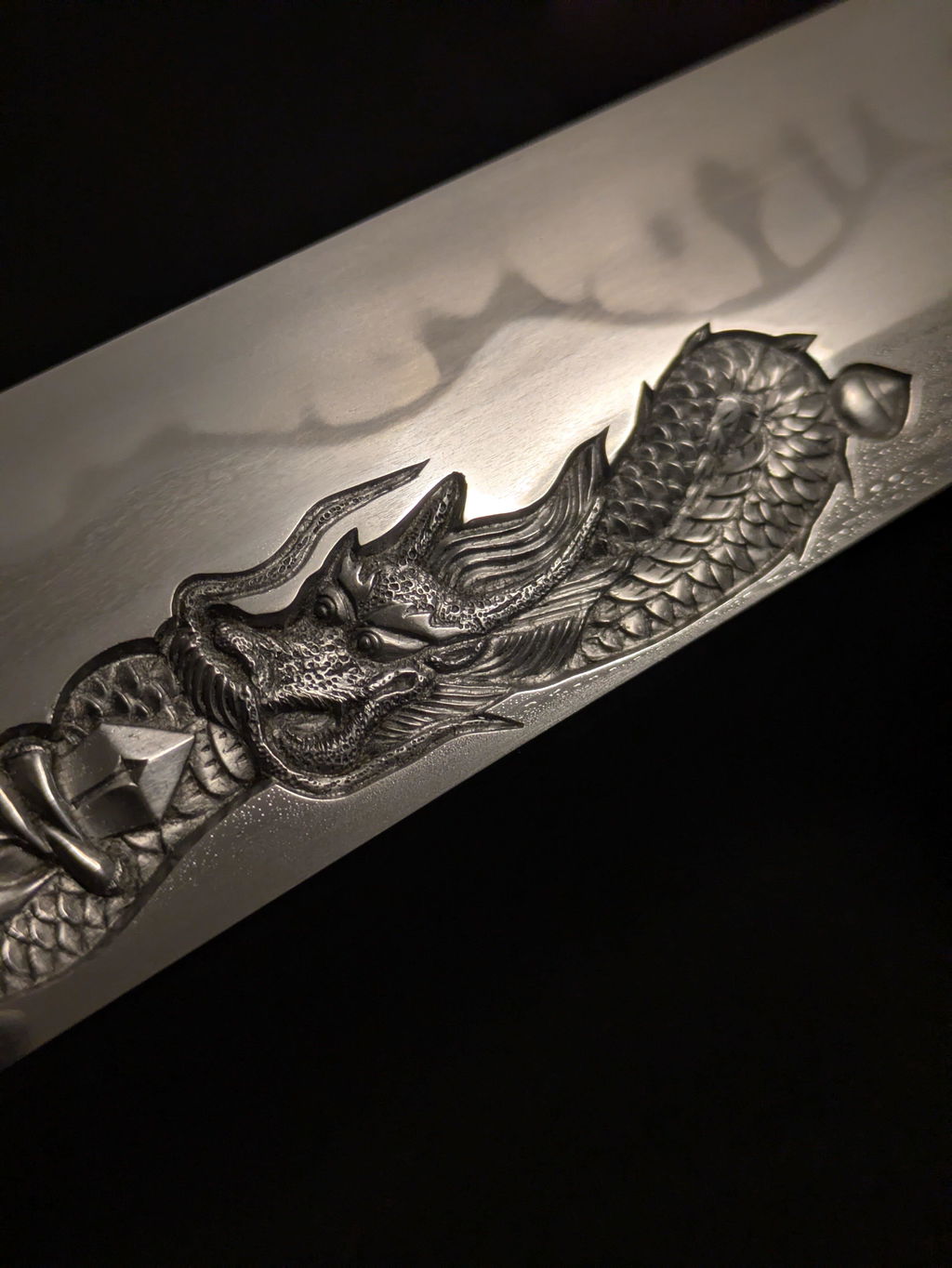
The jigane is a finely and densely packed itame (wood-grain pattern), its steel superbly refined to yield a clear, almost translucent surface. The forging carries great strength without ever becoming coarse, so that a calm, refined elegance defines the steel throughout.
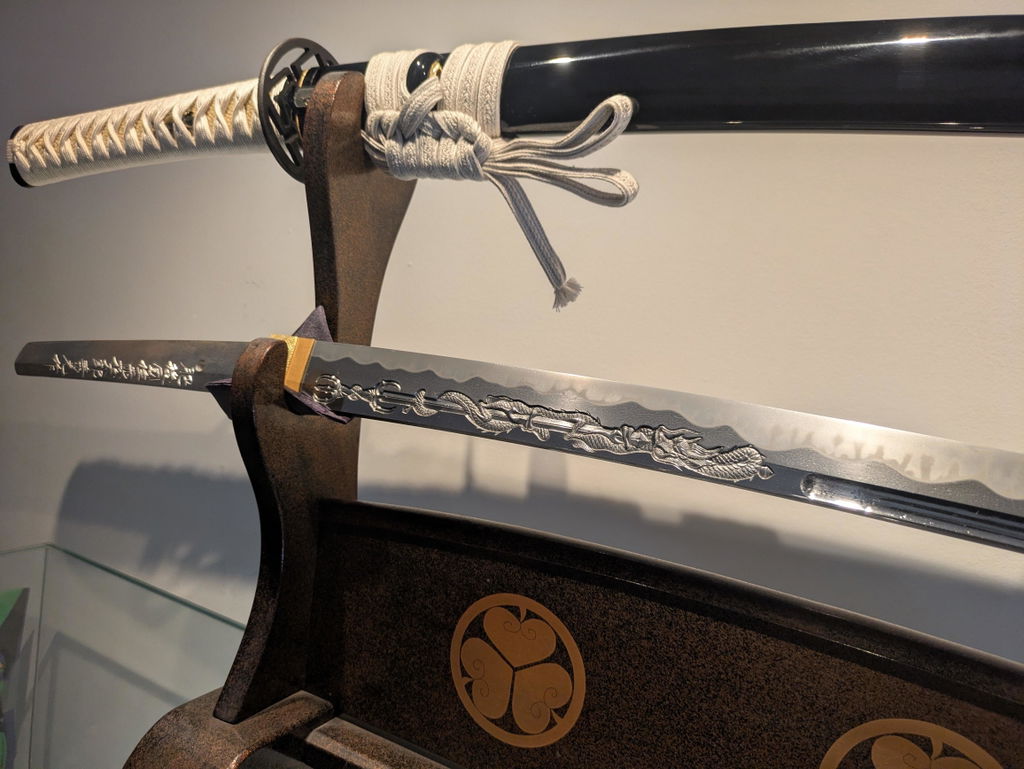
The hamon is a vivid, dynamic gunome-chōji-midare (irregular clove-and-wave pattern), in which undulating gunome are interspersed with flamboyant chōji (clove-shaped) heads; the temper edge is bright and clear, with nie and nioi settling deep within the wave-like undulations. Within the hamon, ashi, yō, and other fine activity appear abundantly, and the bōshi (tip temper) rolls into a lively midare-komi before turning back firmly — the whole blade radiating a vitality in which calm and intensity coexist.
The blade boasts a powerful shinogi-zukuri form with an ō-kissaki (large point) — broad in mihaba (width), generously wide even at the sakihaba (width near the tip), and substantial in kasane (thickness), the very hallmarks of a true Kiyomaro-style interpretation. At 1,060 g (1.06 kg) for the blade alone and a nagasa (edge length) of 77.4 cm, it carries an overwhelming heft — the moment it is taken in hand, its weighty, commanding presence is immediately apparent.
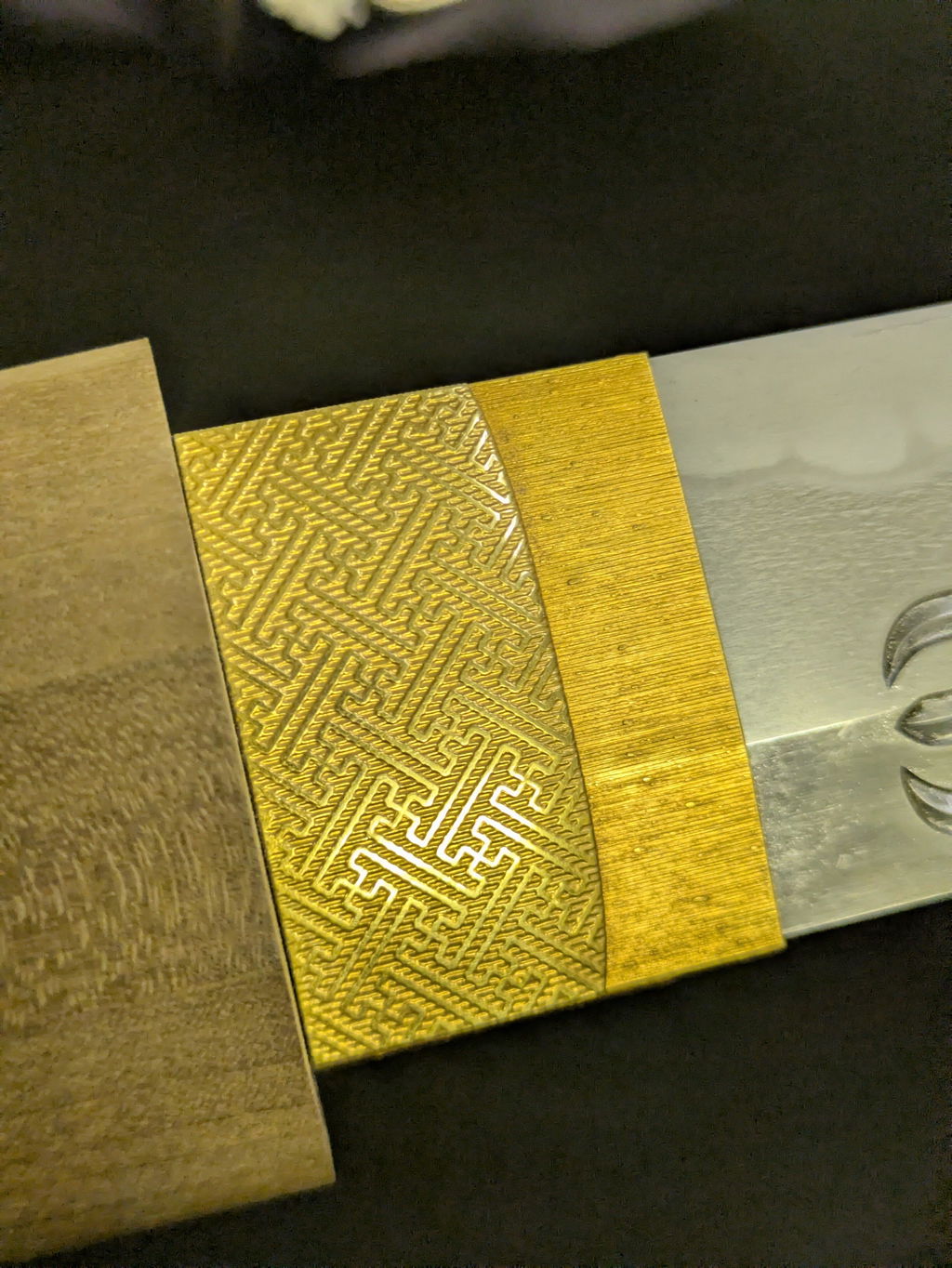
The blade is housed in a shirasaya (plain wood resting scabbard), fitted with an elegant gin-ichijū (single-layer silver) habaki. Free of extraneous decoration, this shirasaya is made purely to protect and preserve the blade's soundness and beauty in their finest state. It offers an ideal state of preservation for passing this fine blade on to future generations.
A katana that embodies the full strength of the Akamatsu Tarō lineage at its most ambitious — a direct homage to Minamoto Kiyomaro, uniting refined, transparent jigane with a dynamic gunome-chōji-midare hamon in a bold, ō-kissaki form of true physical presence. Freshly completed and in pristine, as-forged condition, this is a supreme piece for both serious practice and connoisseurship, offered at the height of its maker's powers.
¥1,100,000 ¥1,150,000

¥200,000 ¥240,000

¥400,000 ¥430,000

¥390,000 ¥410,000

¥270,000 ¥290,000

¥300,000 ¥330,000


Every blade reflects generations of knowledge, discipline, and precision passed down through traditional Japanese swordmaking. From the forging of steel to the final finishing touches, each piece is shaped with patience, mastery, and deep respect for heritage.

From carefully selected materials to the refined finishing of every surface, each sword is crafted and presented with uncompromising attention to detail. Our commitment to authenticity ensures every piece reflects true tradition, lasting quality, and enduring cultural value.

Designed with balance, simplicity, and purpose, our blades embody the harmony between refined form and skilled craftsmanship. Each sword represents a thoughtful union of strength, elegance, and the timeless discipline of Japanese artisans.