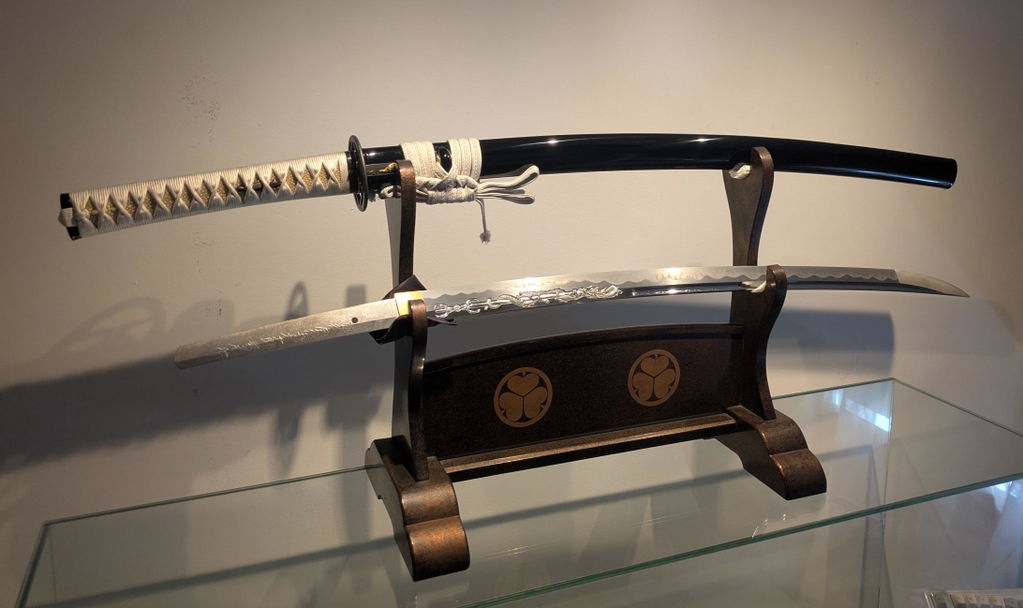
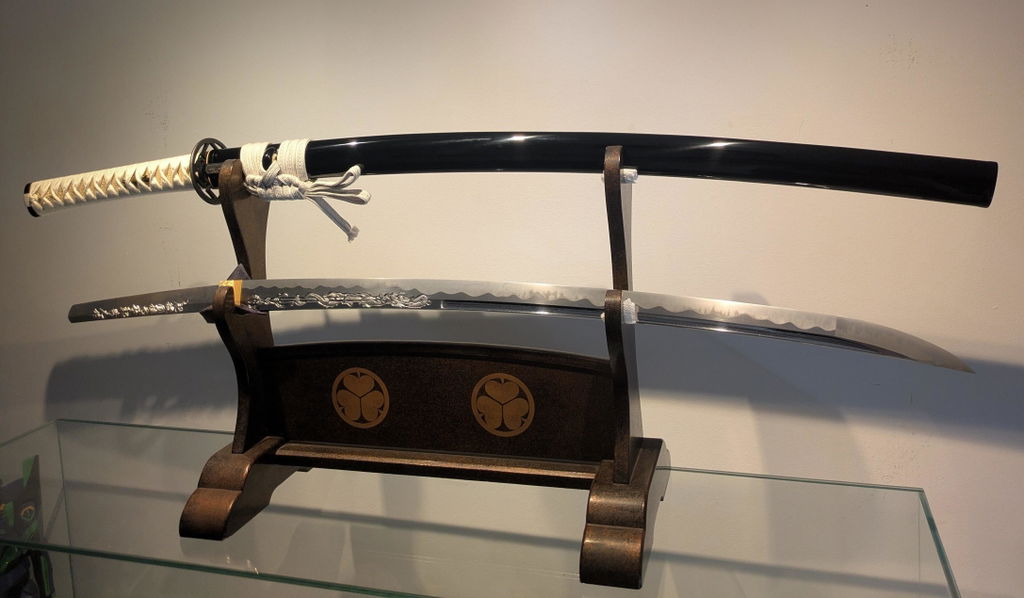
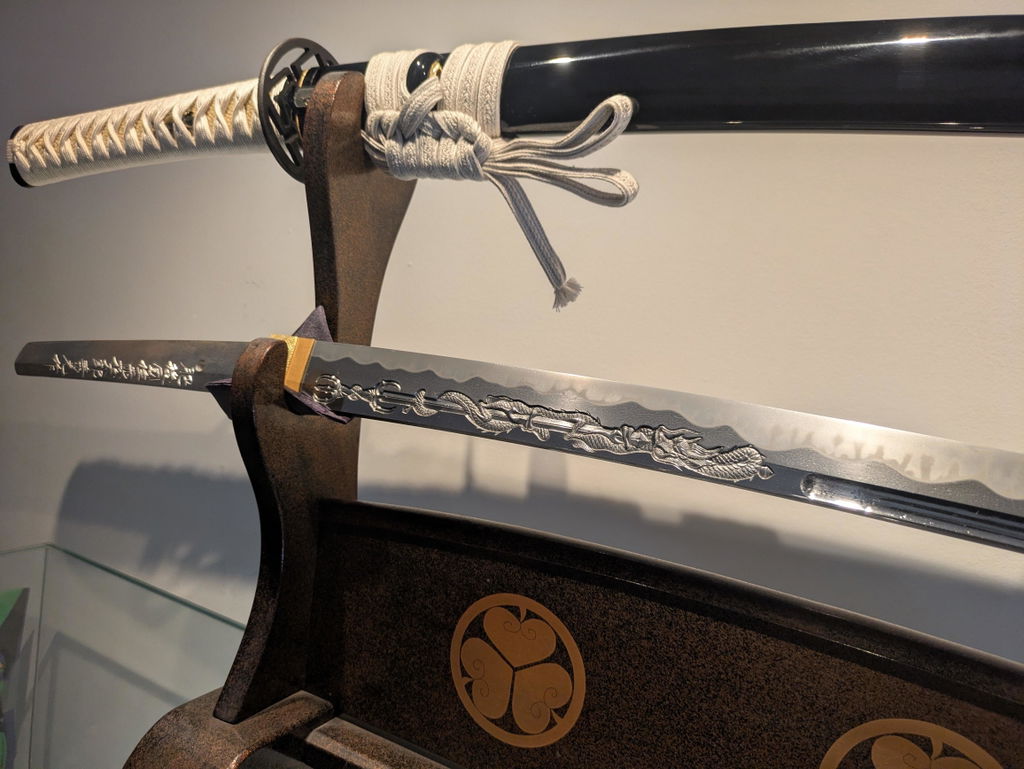
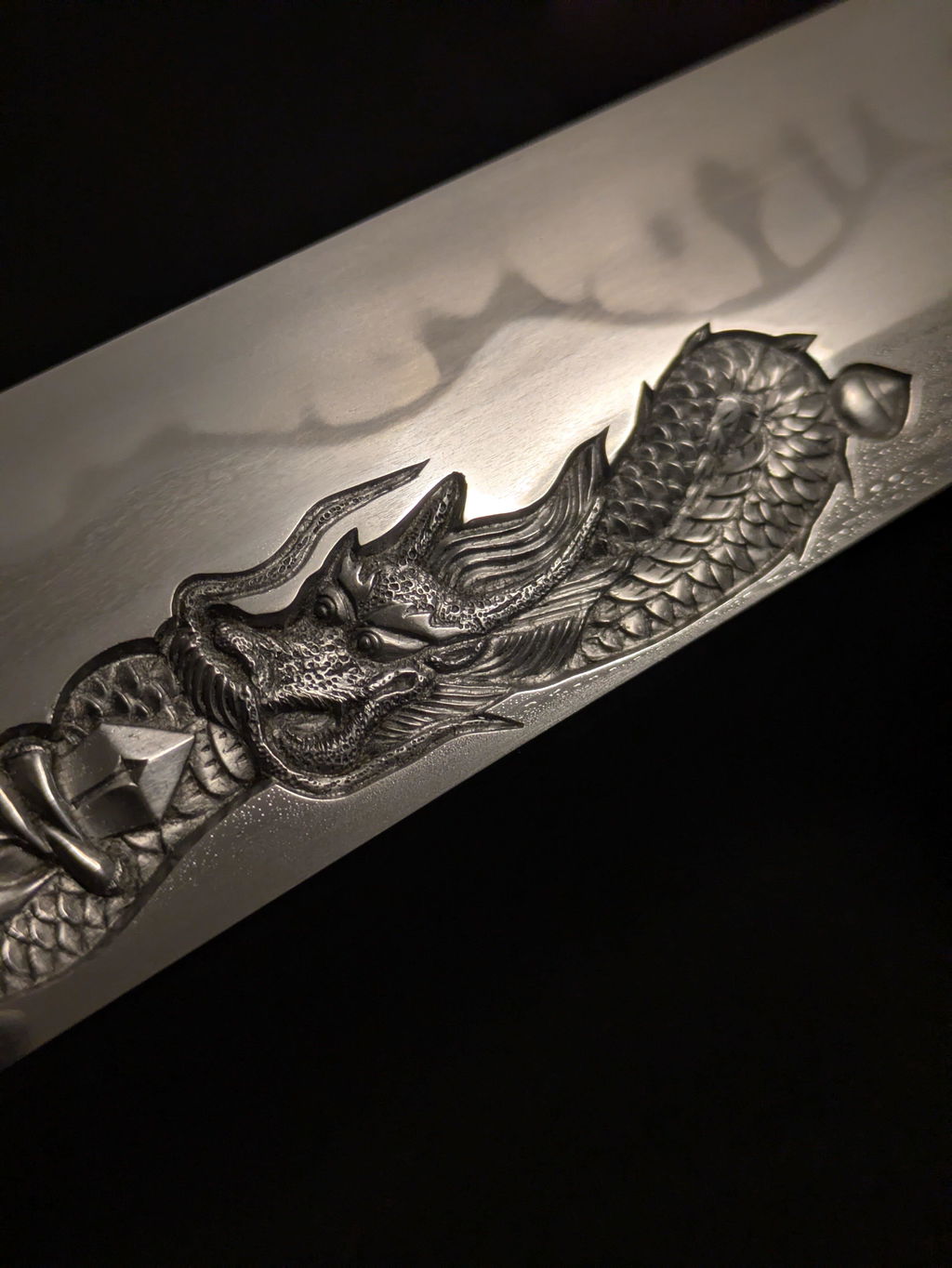
Antique Japanese Katana Sword - Mumei, Shinshinto Era - NBTHK Hozon Token(73.2 cm)
¥1,100,000 ¥1,150,000

We are pleased to present a katana dated Shōwa 44 (1969) by Okimitsu (2nd generation, real name Hara Hiroshi), heir to the celebrated Oki Province smithing name whose blades earned enormous trust during the Shōwa military-sword period for their outstanding sharpness and toughness. Weighing a full 1,000 g (1 kg) for the blade alone, this is an exceptionally sound and powerful work from the smith's mature period in his 40s, when his technical skill and expressive command were approaching their peak. Its dense, honest forging and vividly animated hamon combine practical, battle-ready beauty with genuine artistic value in equal measure.
Okimitsu (2nd generation, real name Hara Hiroshi) inherited a celebrated swordsmithing name active on Nishinoshima, in the Oki district of Shimane Prefecture. The Okimitsu name was recognized for its army-commissioned swordsmiths (rikugun juyo tōkō), repeatedly placing among the top ranks at numerous exhibitions, including the Army Military Sword Technique Encouragement Exhibition, and was counted among the most accomplished smithing lines of the Shōwa military-sword period. Blades bearing this name, carefully forged from select Yasugi steel, combined remarkable toughness with a cutting sharpness so extreme it was described as ferocious, earning the deep trust of soldiers, test-cutters, and sword enthusiasts of the day. This particular blade, forged in Shōwa 44 (1969) when the second-generation Okimitsu was in his 40s, represents his technique and artistry at their most fully matured.
The jigane is a finely and meticulously packed itame (wood-grain pattern), its steel forging exceptionally sound and displaying a beautiful, clear, almost transparent surface. Despite the strength of the forging, it never becomes coarse, and a calm, refined beauty of the jigane stands out prominently. The hamon is a gunome (irregular clove-shaped pattern) rich in undulation, mixed with the flamboyant heads of chōji (clove-shaped motifs); the temper edge is bright and clear, with nie and nioi settling deep within the wave-like irregularity. In places, katagochi-gunome (shoulder-dropping gunome) can also be seen, giving the work a dynamic finish. Within the hamon, fine activity such as ashi and yō appears abundantly, and the bōshi (tip temper) rolls into a midare-komi and turns back firmly — an accomplished work brimming with vitality, in which calm and intensity coexist.
This shinogi-zukuri blade shows a moderate curve and a powerful, well-balanced silhouette, with a sound, substantial form in both mihaba (width) and kasane (thickness). At a full 1 kg (1,000 g) for the blade alone, it carries an overwhelming heft — the moment it is taken in hand, its weighty, commanding presence is immediately apparent. The nakago (tang) is ubu (unaltered) and in excellent condition, its sujichigai (diagonal cross-hatch) filing marks still crisp, with the signature "Oki-no-kuni-jū Okimitsu saku" (隠岐国住沖光作) and the reverse date "Shōwa yonjūyo-nen ichigatsu-hi" (昭和四十四年一月日 / a day in January, Shōwa 44 / 1969) cut firmly and with great vigor by chisel.
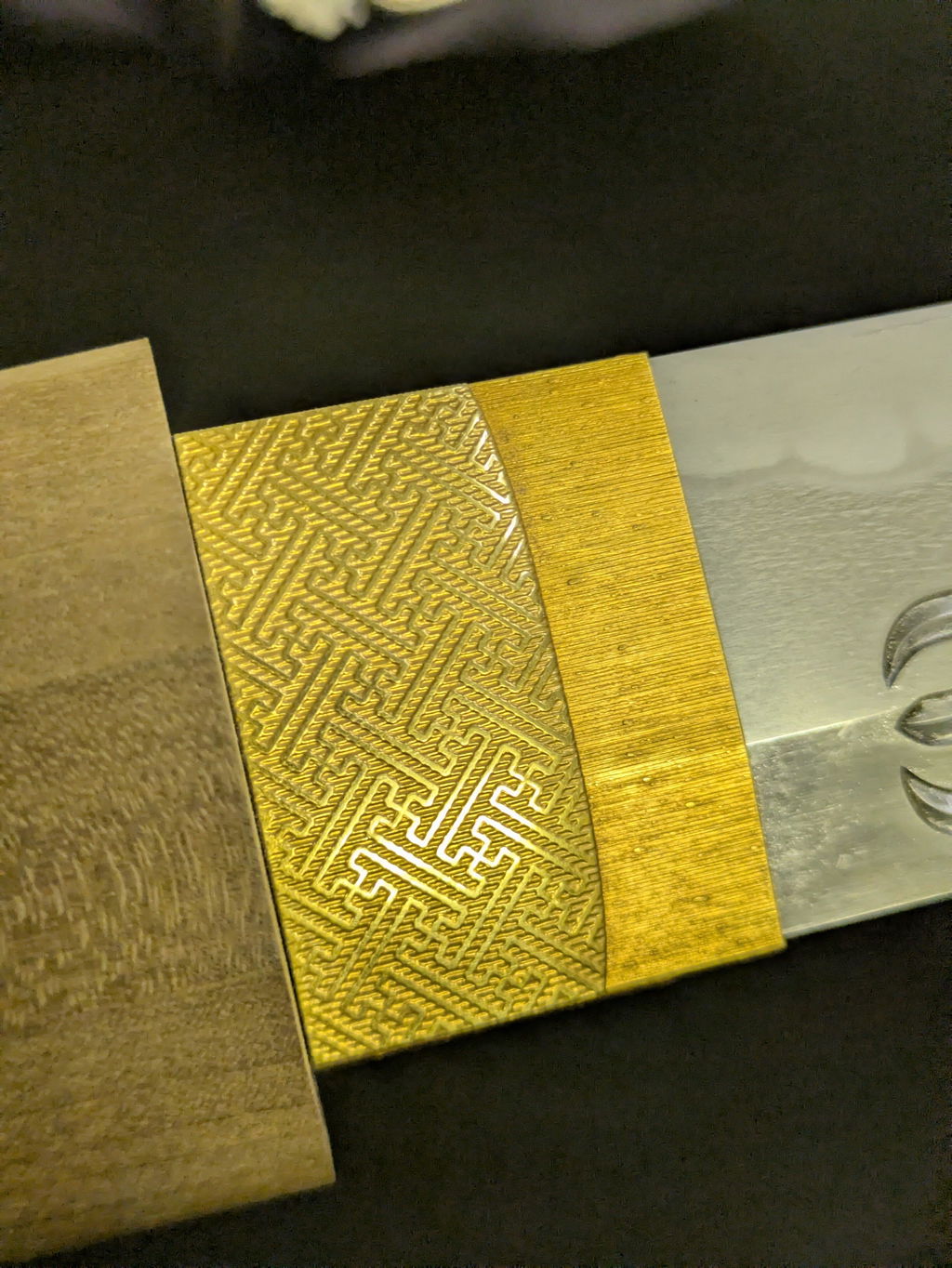
The blade is housed in a shirasaya (plain wood resting scabbard) in excellent condition. Free of extraneous decoration, the shirasaya is made purely to protect and preserve the blade's soundness and beauty in their finest state, offering an ideal means of passing this fine blade on to future generations.
A supremely sound masterwork left to us by Okimitsu of Oki Province, one of the foremost makers of true fighting swords. With the weighty, 1 kg heft felt the instant it is taken in hand and its powerful form, this blade carries an imposing presence that seems to choose its owner. A bold, superlative work in which practical, battle-ready beauty and genuine artistic value meet in perfect balance.
¥1,100,000 ¥1,150,000

¥200,000 ¥240,000

¥400,000 ¥430,000

¥390,000 ¥410,000

¥270,000 ¥290,000

¥300,000 ¥330,000


Every blade reflects generations of knowledge, discipline, and precision passed down through traditional Japanese swordmaking. From the forging of steel to the final finishing touches, each piece is shaped with patience, mastery, and deep respect for heritage.

From carefully selected materials to the refined finishing of every surface, each sword is crafted and presented with uncompromising attention to detail. Our commitment to authenticity ensures every piece reflects true tradition, lasting quality, and enduring cultural value.

Designed with balance, simplicity, and purpose, our blades embody the harmony between refined form and skilled craftsmanship. Each sword represents a thoughtful union of strength, elegance, and the timeless discipline of Japanese artisans.