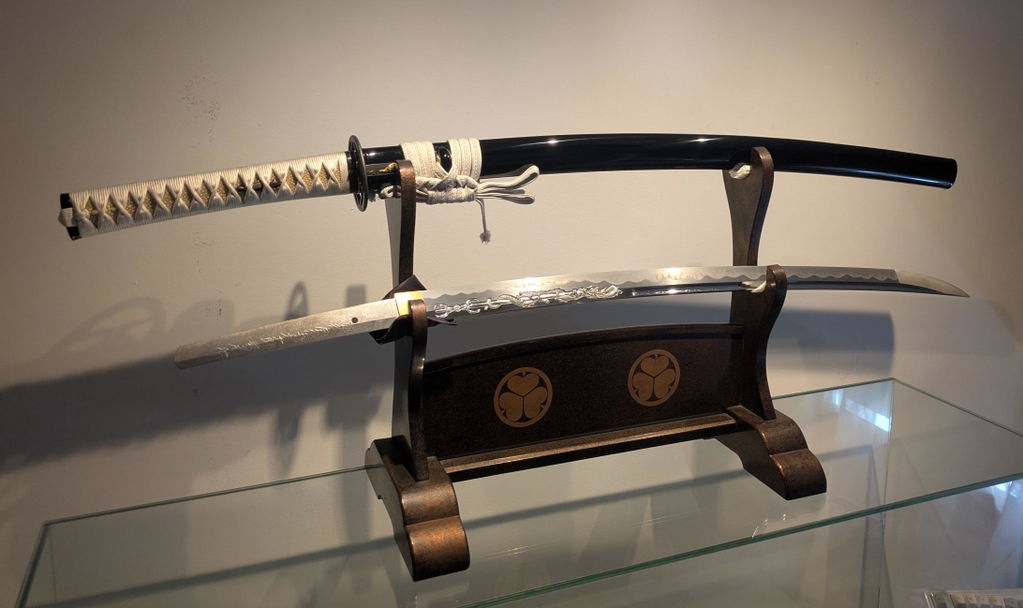
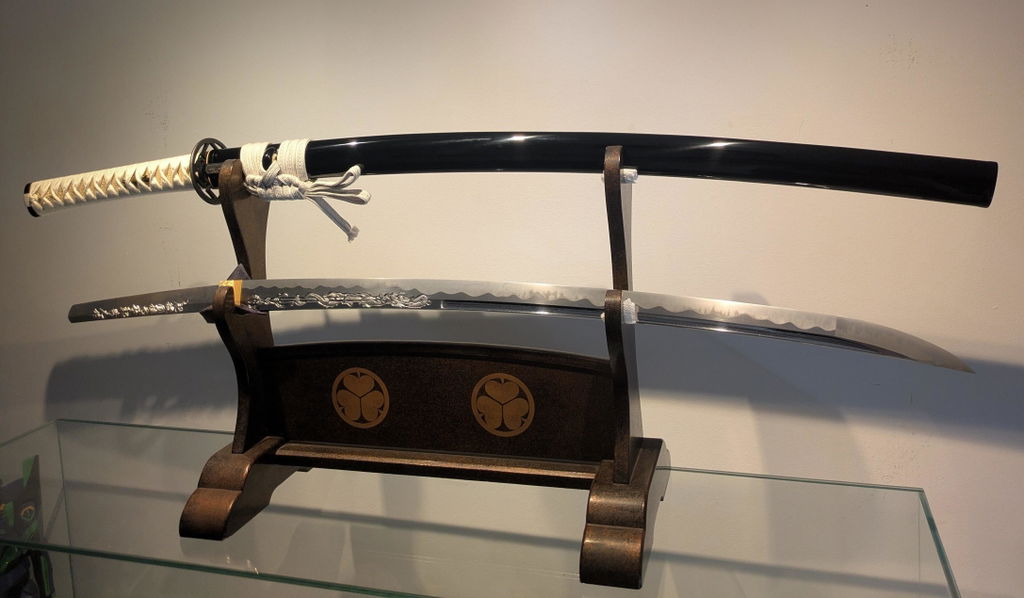
Antique Japanese Katana Sword - Mumei, Shinshinto Era - NBTHK Hozon Token(73.2 cm)
¥1,100,000 ¥1,150,000

The spirit of the bakumatsu genius Minamoto Kiyomaro, recreated with the finest technique of the modern age. A supreme, incomparably powerful Kiyomaro-utsushi forged by Akamatsu Tarō Kanetsugu, one of the foremost swordsmiths working today. The bakumatsu genius Minamoto Kiyomaro — hailed in the Edo sword world as the "Masamune of Yotsuya" and famed for a turbulent life and a legacy of masterpieces — pursued an overwhelming cutting power and the beauty of nie. The maker who has most perfectly interpreted and elevated that ideal in our own day is the Yatsushiro (Kumamoto) master Akamatsu Tarō Kanetsugu (real name Kimura Kanetsugu). The clear, limpid ground born of the collector-coveted self-smelted steel (jika-seitetsu), and the dynamic, brilliantly lucid tempered midare, make this a first-rank artistic asset to be handed down with pride to the next generation — a chance to enjoy the perfect ground and temper of a blade fresh from the forge, impossible in an antique sword. The sword comes with a newly-made-sword certificate (shinsakutō shōmeisho) issued by the Society for the Promotion of Japanese Sword Culture (Nihontō Bunka Shinkō Kyōkai).
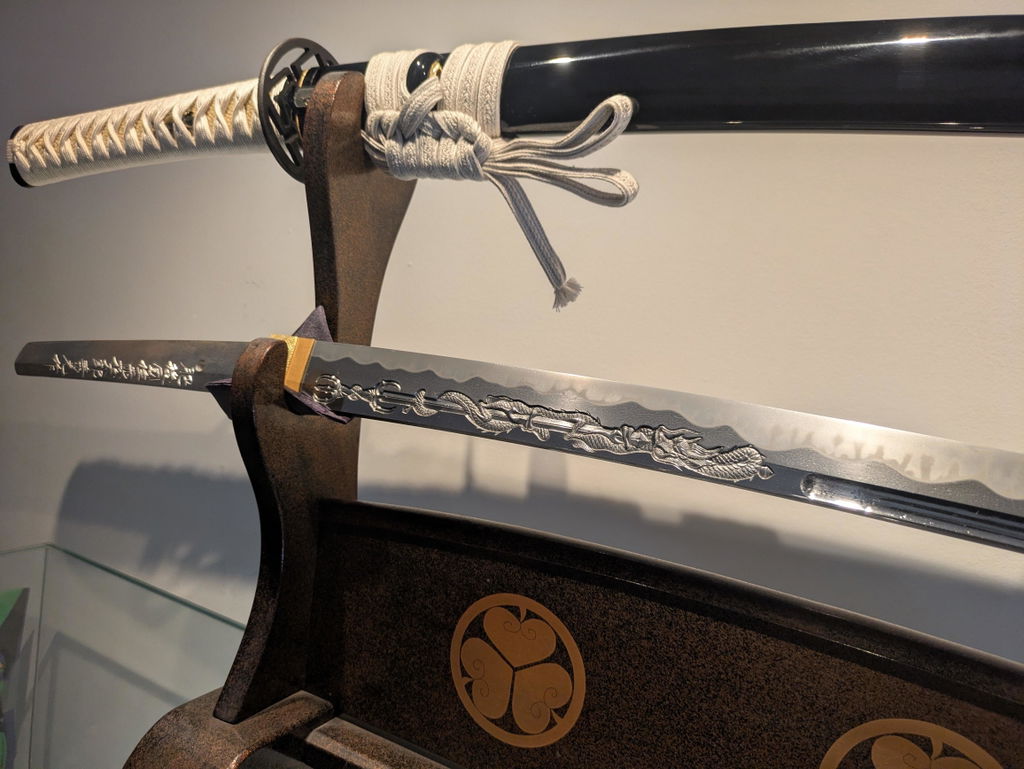
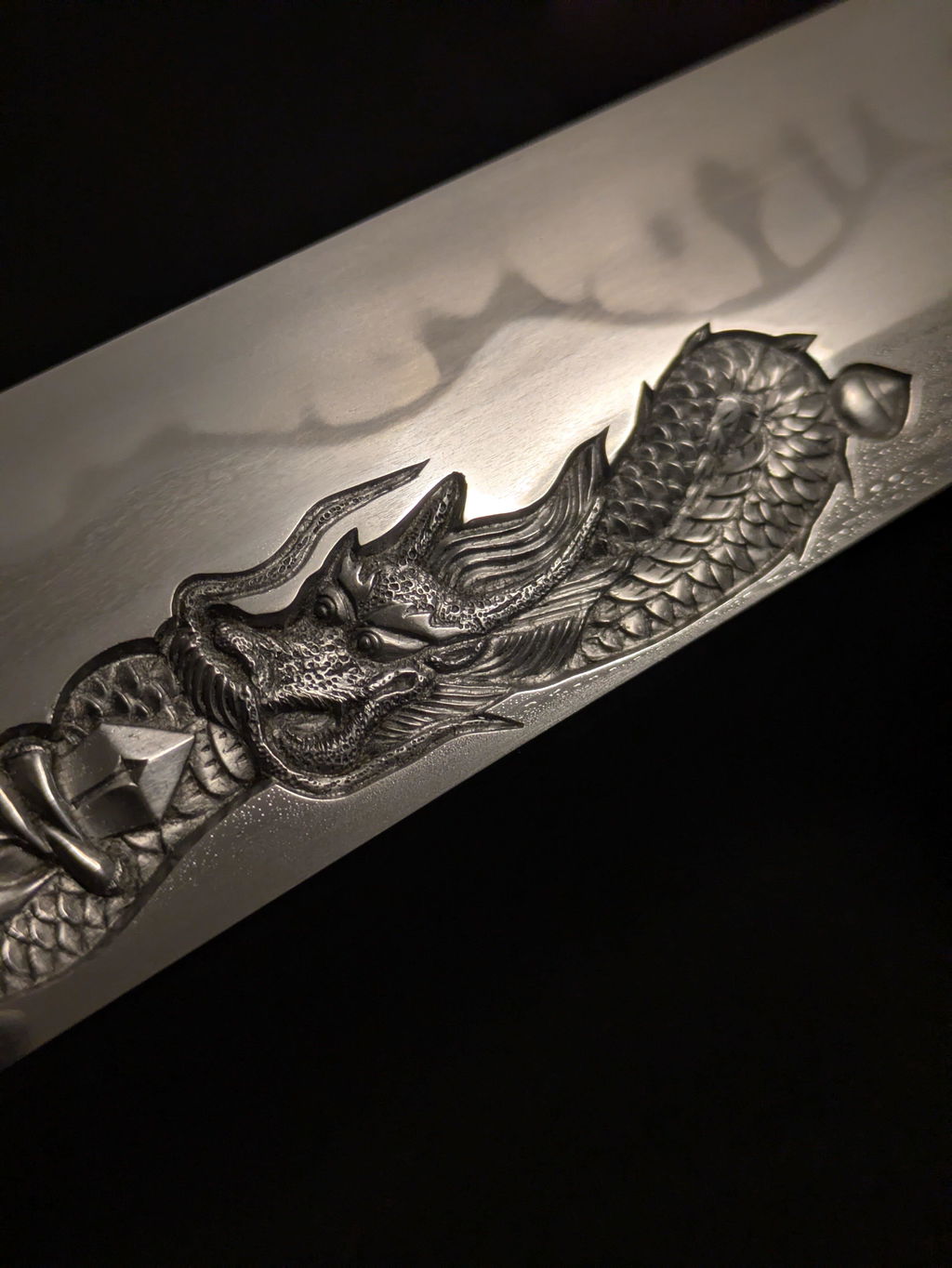
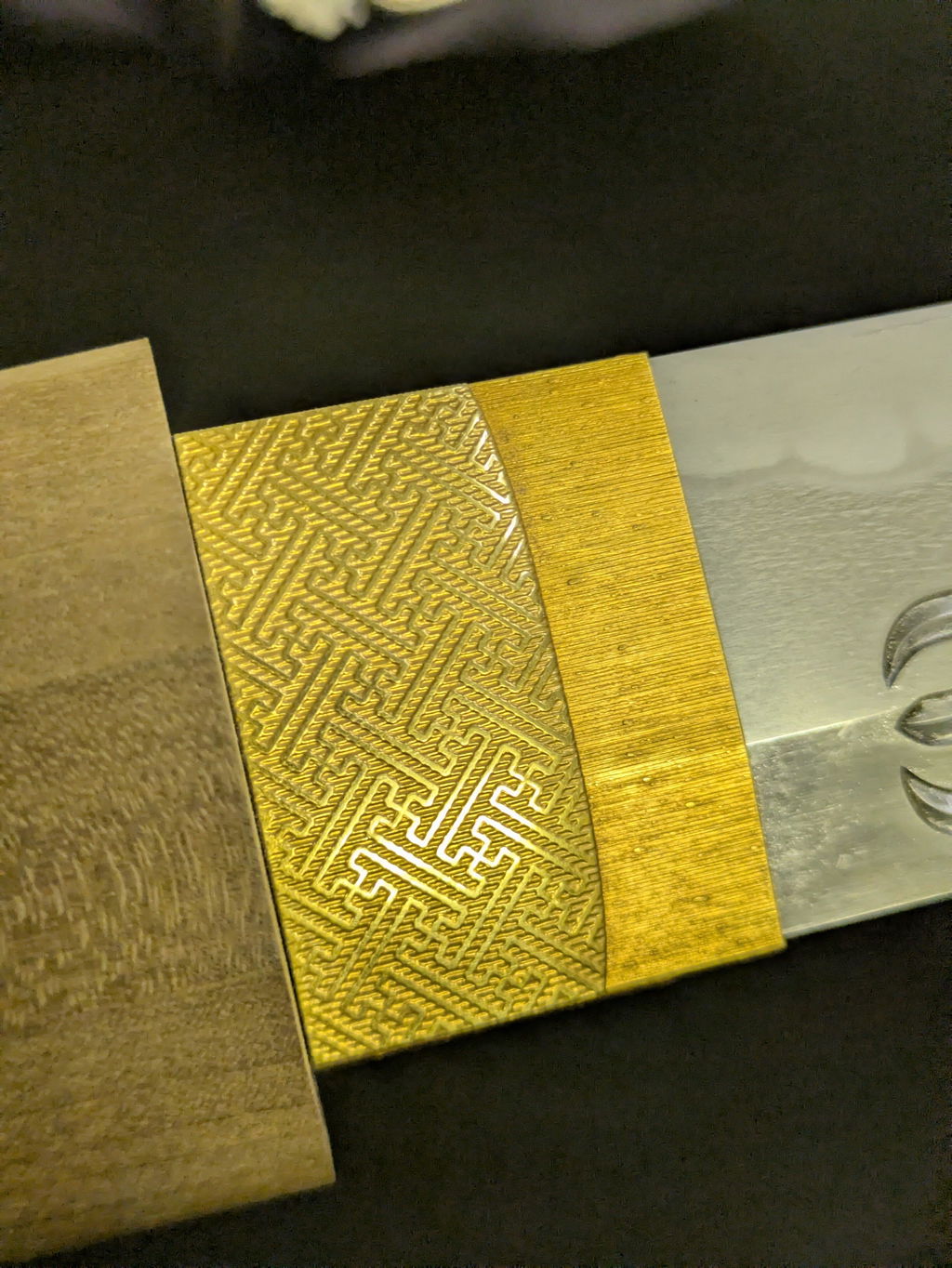
Given a superb polish, the blade is in outstanding condition, without a flaw or fault. It is clearly signed on the front Higo no Kuni jū Akamatsu Tarō Kanetsugu saku and on the reverse Reiwa 7, sixth month, a lucky day — a supreme modern work of consummate quality. It is forged from the self-smelted steel (jika-tanren steel) that is the true hallmark of the Akamatsu Tarō school, the group's greatest point of pride: iron the smith himself refines from ore and works up into his own steel. The jigane is an exquisitely worked itame, exceptionally well packed, with minute ji-nie spread densely across the surface so that it shows a transparent, bright clarity when the light catches it. The hamon is a leisurely notare into which mix gunome of varying height and chōji, with angular and pointed (togari) heads — the bold tempered midare peculiar to a Kiyomaro-utsushi. The deep, full nioiguchi is bright and clear, and lively ashi run richly into the edge, full of variation, drawing out to the very limit the "clarity of nie" and the sense of movement that are the essence of Kiyomaro. The bōshi turns in as a midare-komi with a pointed feeling and a deep return, faithfully reproducing Kiyomaro's characteristic bōshi. Throughout the blade there is not a single fault — a magnificent, thoroughly harmonious whole.
A magnificently robust figure, generous in both mihaba and kasane. A powerful sori sweeps up into a grand ō-kissaki (large point), faithfully recreating the spirited, commanding shape that is the very essence of bakumatsu Kiyomaro; the heft and balance in the hand are overwhelming. At a nagasa of 76.4 cm (over 2 shaku 5 sun), it has real presence.
Minamoto Kiyomaro, the untamed genius of the bakumatsu. Born in Shinano province (present-day Nagano), Minamoto Kiyomaro (real name Yamaura Tamaki) was a legendary master hailed as the "Masamune of Yotsuya" in the shinshintō era at the close of the Edo period. The term shinshintō ("new-new swords") refers to blades made from the late Edo period — from An'ei 1 (1772) — down to the Sword Abolition Edict (Haitōrei) of 1876; the name distinguishes them from the shintō, arising after Suishinshi Masahide championed a "revival" swordmaking that returned to making tamahagane from iron sand rather than the simplified methods of his day. Kiyomaro is the representative smith of that shinshintō movement. His style is defined above all by a magnificently robust build with a greatly extended ō-kissaki, a wild yet beautiful ō-gunome-midare, and a deep, brilliantly clear nie-deki. Together with a life of just forty-two years and its dramatic course, this has made him, to this day, one of the most popular and highly valued of all smiths among sword collectors.
Akamatsu Tarō Kanetsugu, the foremost maker of Kiyomaro-utsushi. A central smith of the Akamatsu Tarō school, which continues to forge in Yatsushiro, Kumamoto, Kanetsugu (Kimura Kanetsugu) was born in 1951 in Yatsushiro as the eldest son of the distinguished swordsmith Kimura Kaneshige, at the head of the sword-making brothers of the Kimura house — a lineage of historic standing in Higo. He entered his apprenticeship under his father in 1971 and received his swordsmith's license in 1976. Across well over a decade of entries in the Shinsaku Meitō-ten (New Swords Exhibition) he has won numerous Excellence Prizes (Yūshū-shō) and other top awards, and his precise yet powerful Kiyomaro copies have earned him the title "the reincarnation of Minamoto Kiyomaro" and an unshakable reputation in the modern sword world. The greatest reason the Akamatsu Tarō school commands such overwhelming support from collectors is its thoroughgoing insistence on jika-seitetsu — the smiths gather iron sand and smelt their own distinctive steel themselves, rather than relying solely on standard modern tamahagane. Blades forged from this self-smelted steel possess the strong tenacity and the uniquely beautiful ground that the finest kotō and bakumatsu swords once had. This piece brings together the skill Kanetsugu has accumulated and the school's self-smelting technique to recreate, superbly, in the Reiwa era, both the "spirit" and the "artistic clarity" of Kiyomaro — a work of the highest artistic appreciation value that also carries the documentary value of showing a master smith at the summit of his craft.
A supreme, magnificently powerful Kiyomaro-utsushi katana by Akamatsu Tarō Kanetsugu — its self-smelted itame steel and bold, brightly tempered midare drawn to the limit of Kiyomaro's spirit, preserved in perfect as-made condition in a shirasaya, and documented with a Nihontō Bunka Shinkō Kyōkai newly-made-sword certificate. A first-rank modern work ready to appreciate exactly as it is.
¥1,100,000 ¥1,150,000

¥200,000 ¥240,000

¥400,000 ¥430,000

¥390,000 ¥410,000

¥270,000 ¥290,000

¥300,000 ¥330,000


Every blade reflects generations of knowledge, discipline, and precision passed down through traditional Japanese swordmaking. From the forging of steel to the final finishing touches, each piece is shaped with patience, mastery, and deep respect for heritage.

From carefully selected materials to the refined finishing of every surface, each sword is crafted and presented with uncompromising attention to detail. Our commitment to authenticity ensures every piece reflects true tradition, lasting quality, and enduring cultural value.

Designed with balance, simplicity, and purpose, our blades embody the harmony between refined form and skilled craftsmanship. Each sword represents a thoughtful union of strength, elegance, and the timeless discipline of Japanese artisans.