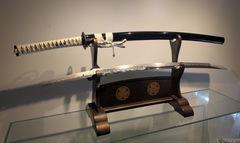
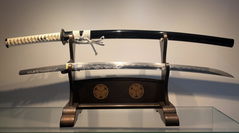
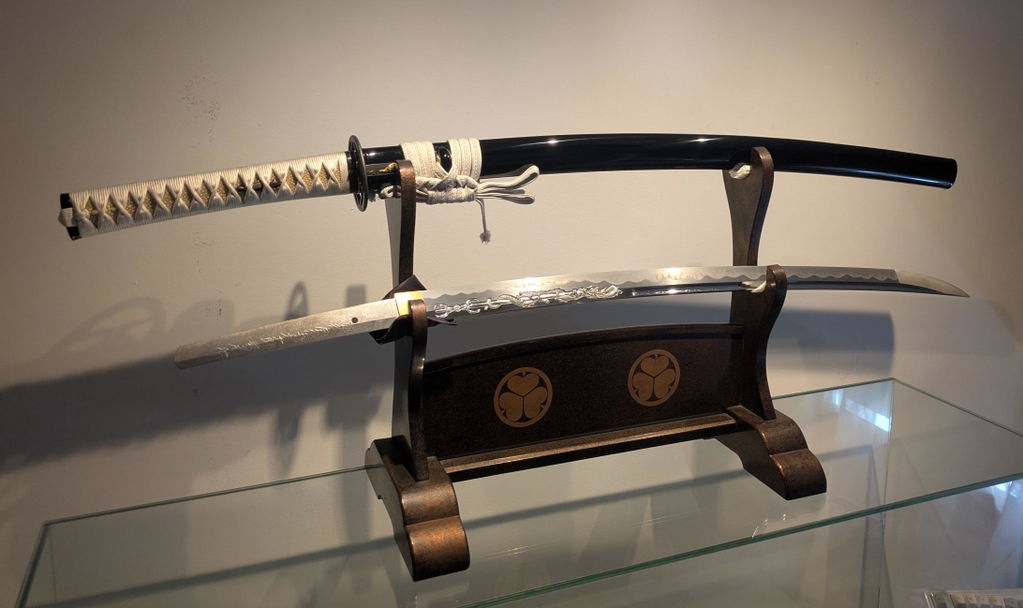
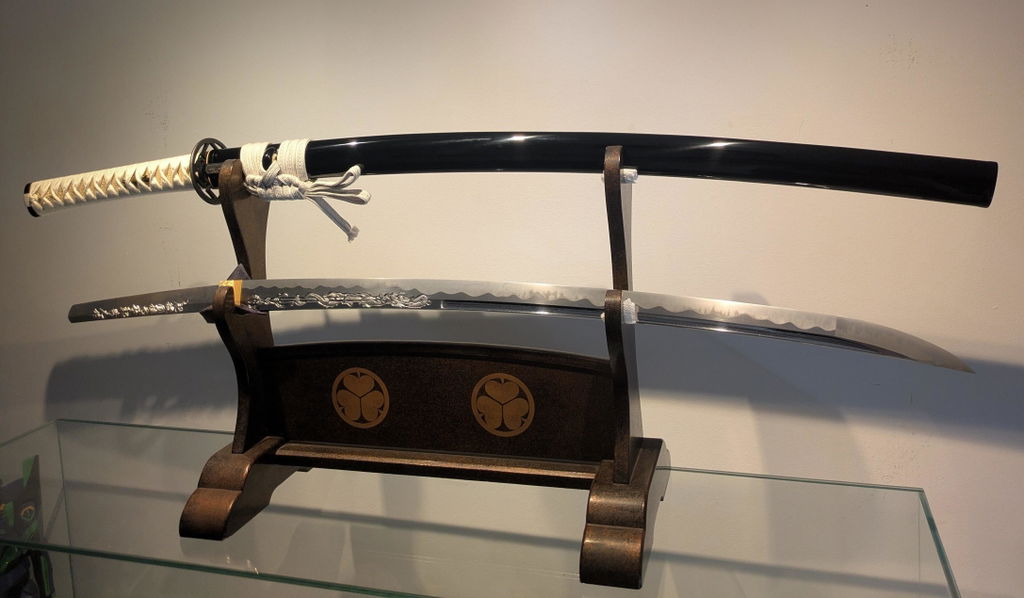
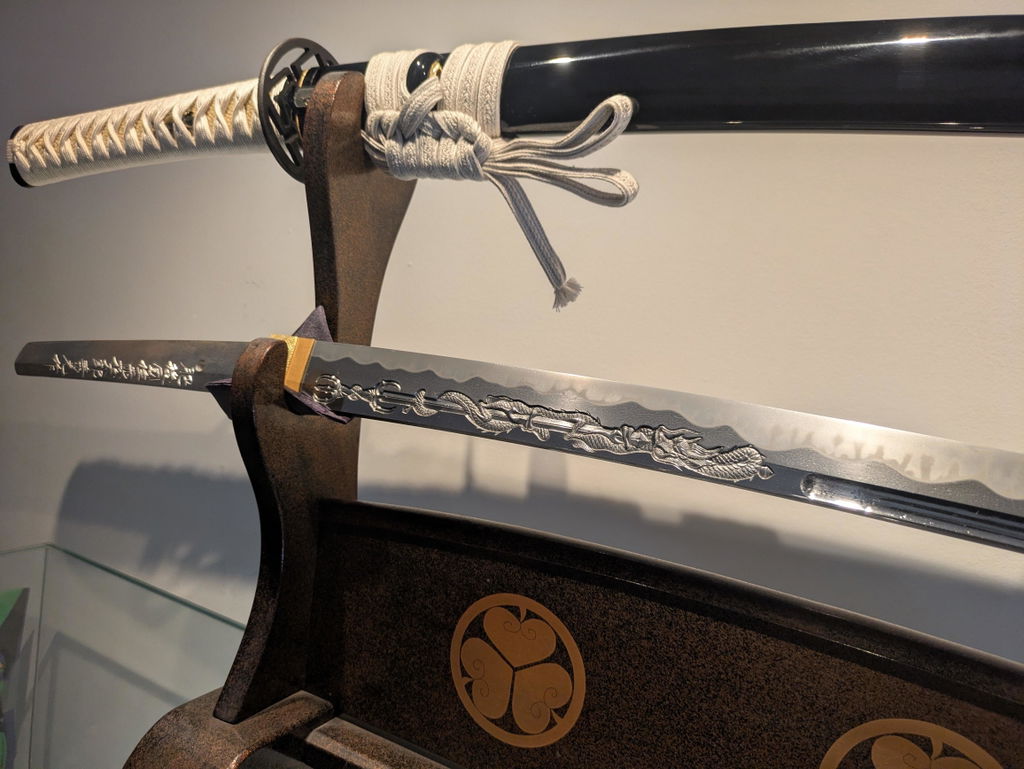
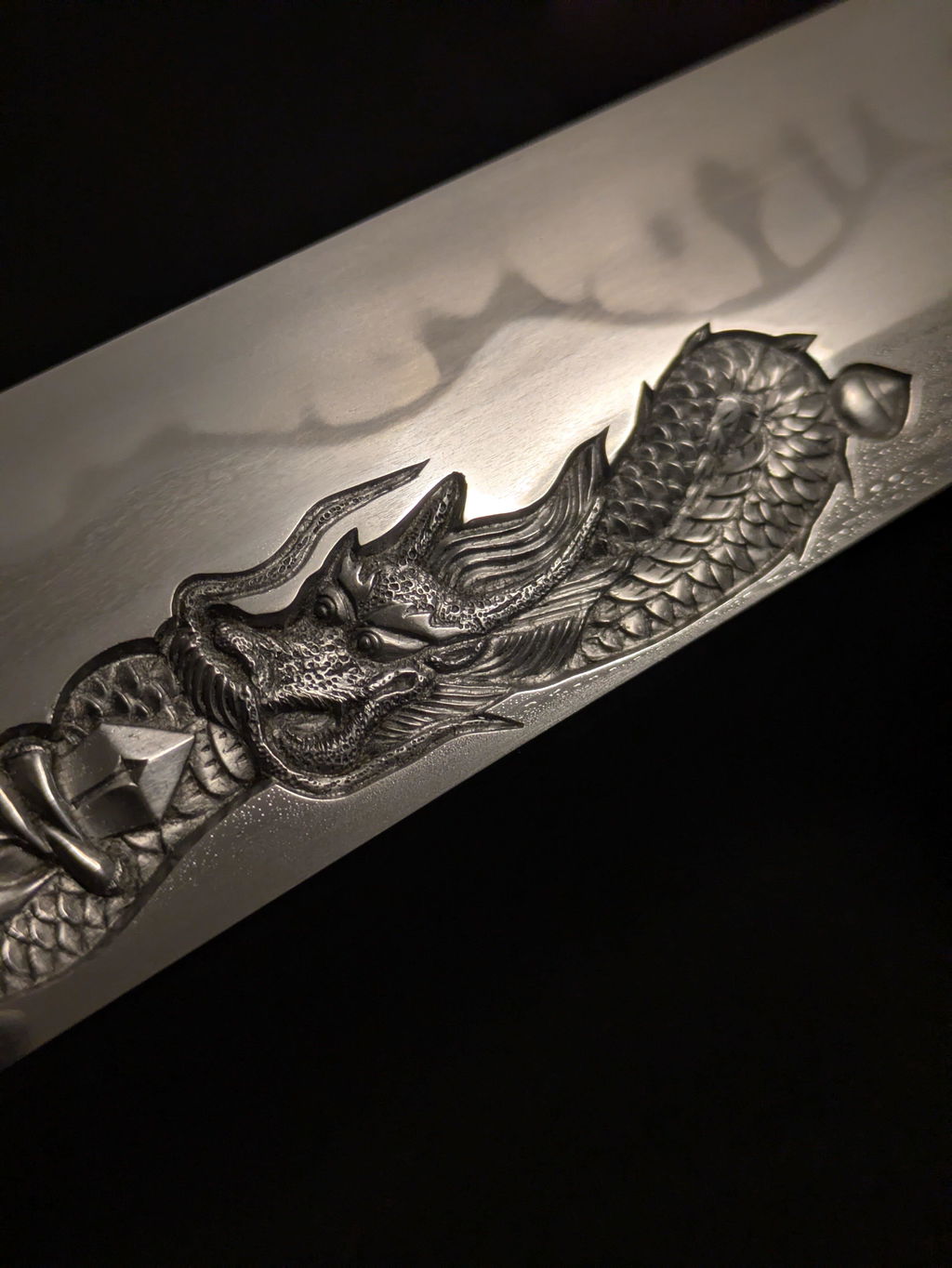
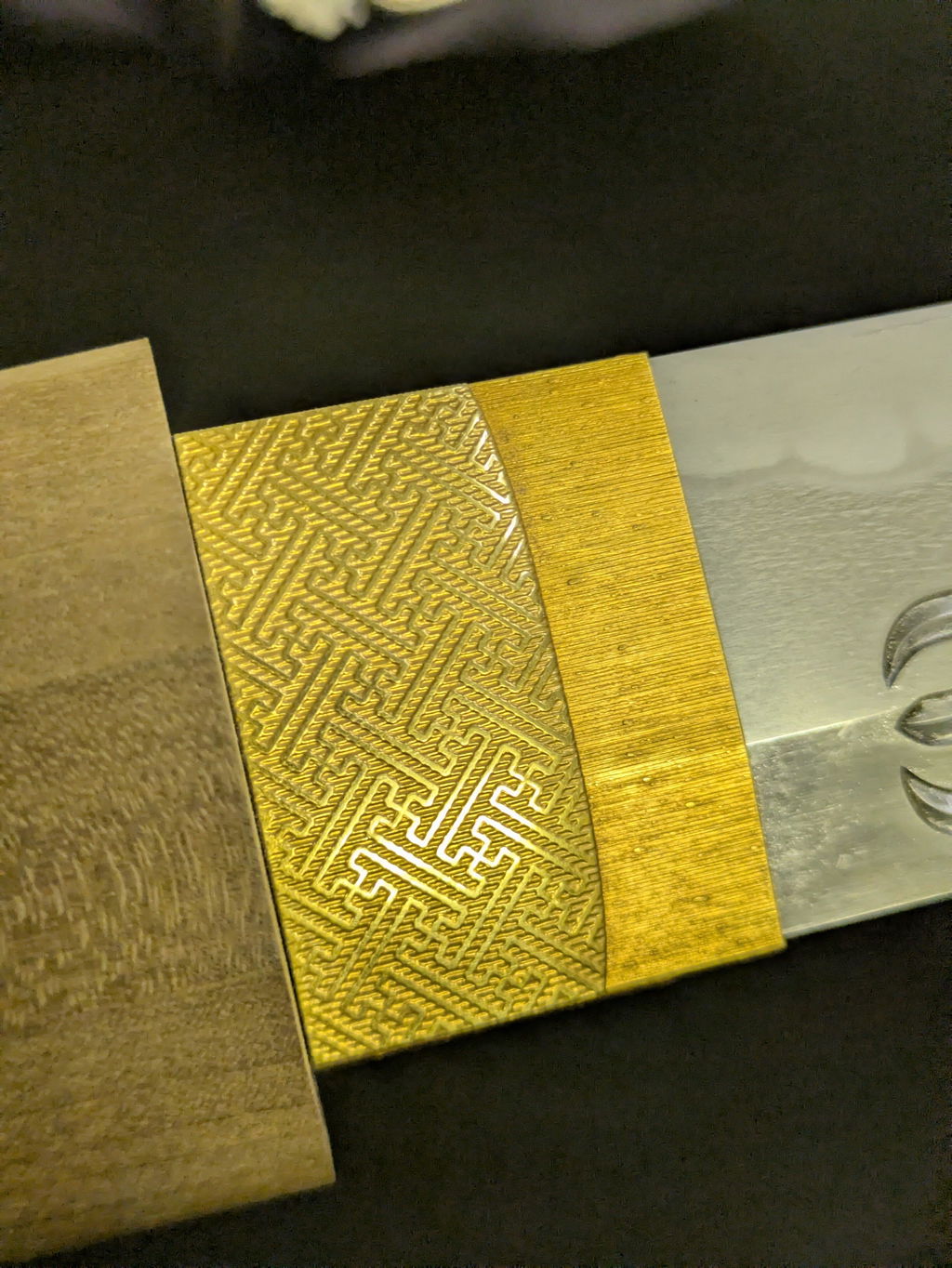
Antique Japanese Katana Sword - Mumei, Shinshinto Era - NBTHK Hozon Token(73.2 cm)
¥1,100,000 ¥1,150,000

A striking double-edged (moroha-zukuri) tanto by Miyairi Kozaemon Yukihira, a holder of the coveted Mukansa rank and one of the most distinguished swordsmiths working today. Signed on the front (omote) Kozaemon Yukihira, it is a fresh, fully sound work in which a beautifully forged blade is paired with a handsome mounting.
In perfect, as-made condition, the blade is a moroha-zukuri of shōbu-zukuri character — both long edges tempered and meeting at a symmetrical point. The jigane is a nie-deki itame (wood-grain) surface, and the hamon is a gently undulating notare set against a soft, moist (uruoi) nioiguchi — a quiet, refined temper that shows the maker's Sōshū-tradition hand.
A compact, symmetrical double-edged dagger. At a nagasa of 16.1 cm (about 5 sun 3 bu) with a straight, mu-sori profile, it has a tight, purposeful presence in the hand. The tang (nakago) has a single peg-hole (mekugi-ana).
Miyairi Kozaemon Yukihira (born 1957, real name Miyairi Megumi) works in Sakaki, Nagano Prefecture (old Shinshū), and holds the Mukansa ("exemption from examination") rank — the highest honor in the modern sword world. He is the second son of the Living National Treasure Miyairi Yukihira, head of the celebrated Miyairi school that also produced masters such as Amata Akitsugu and Ōsumi Toshihira. He began his apprenticeship under his father in 1977 and, after his father's death, continued under the master smith Fujiyasu Masahira, receiving his forging license in 1982. From his very first entry in the Shinsaku Meitō-ten (New Swords Exhibition) — where he took an Effort Prize (Doryoku-shō) — he built an exceptional competition record, winning numerous Excellence Prizes (Yūshū-shō) and Kanzan Prizes (Kanzan-shō), and taking the exhibition's highest honor, the Prince Takamatsu Memorial Prize (Takamatsu-no-miya Shō), an astonishing six times. In the mid-1990s he took the professional name Kozaemon Yukihira, incorporating his grandfather's name, and in 2000 he was awarded the Mukansa designation. Working in the Sōshū tradition in the manner of Shizu Kaneuji while establishing his own distinctive style, he is a former chairman of the All Japan Swordsmiths' Association and stands among the very foremost smiths of the present day.
The tanto is mounted aikuchi-style in a black-lacquer saya with a finely stippled (ishime) ground, its hilt set with menuki in the form of flying cranes (tsuru) worked in dark alloy with gold accents, and finished with a red silk sageo and tassel and a brass habaki. A plain wood shirasaya (resting scabbard) with a wooden placeholder blade (tsunagi) is also included, so the blade can be rested in the shirasaya or displayed in its handsome koshirae as desired.
A freshly made, signed moroha-zukuri tanto by the Mukansa master Miyairi Kozaemon Yukihira — its nie-based itame and softly moist notare temper set off by an elegant aikuchi koshirae with crane menuki, and accompanied by a shirasaya. A refined modern work by one of today's foremost smiths, ready to appreciate exactly as it is.
¥1,100,000 ¥1,150,000

¥200,000 ¥240,000

¥400,000 ¥430,000

¥390,000 ¥410,000

¥270,000 ¥290,000

¥300,000 ¥330,000


Every blade reflects generations of knowledge, discipline, and precision passed down through traditional Japanese swordmaking. From the forging of steel to the final finishing touches, each piece is shaped with patience, mastery, and deep respect for heritage.

From carefully selected materials to the refined finishing of every surface, each sword is crafted and presented with uncompromising attention to detail. Our commitment to authenticity ensures every piece reflects true tradition, lasting quality, and enduring cultural value.

Designed with balance, simplicity, and purpose, our blades embody the harmony between refined form and skilled craftsmanship. Each sword represents a thoughtful union of strength, elegance, and the timeless discipline of Japanese artisans.