Antique Japanese Katana Sword - Mumei, Shinshinto Era - NBTHK Hozon Token(73.2 cm)
¥1,100,000 ¥1,150,000

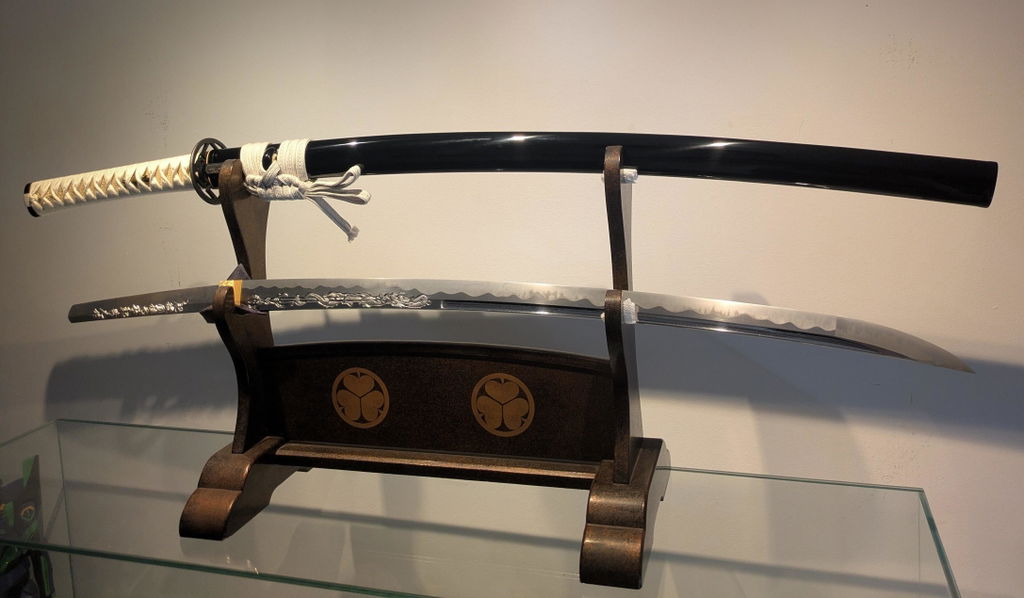
We are pleased to offer a powerful, full-length tachi by Masaya (正也), one of the most accomplished younger swordsmiths working today, based in Mino Province (present-day Gifu). Signed "Masaya saku" on the front and dated February Heisei 28 (2016) on the reverse, the blade pairs a deep, three-dimensional forging with a wild, high-reaching ō-midare temper that recalls the flamboyant work of the old Bizen masters. It comes complete with a finely matched uchigatana koshirae built around a single, auspicious theme — the carp that climbs the waterfall to become a dragon.
Masaya, whose given name is Yoshida Masaya, trained under the fine swordsmith Yoshida Masaaki II, from whom he inherited the traditional forging techniques and the composed, classical sense of form that descend from the koto era. He obtained his licence to forge swords from the Agency for Cultural Affairs in 2005 and has steadily built a formidable record of results and recognition: an Effort Prize (2019) and a Bronze Prize at the Sword-Craft Technical Exhibition (2019), culminating in the Kanzan Prize at the 2024 Modern Swordsmith Exhibition (Gendai Tōshoku-ten) hosted by the NBTHK — a prestigious honour among today's makers. He is particularly noted for his renderings of the flamboyant Bizen tradition, including "Yamatorige utsushi" (homages to the celebrated Ichimonji masterpiece), a background that shows clearly in the exuberant temper of this blade. Fusing sound traditional method with a highly developed aesthetic — and welcoming apprentices from abroad — Masaya is one of the young masters carrying the beauty and spirit of the Japanese sword to the next generation and to the wider world.
Selected career highlights:
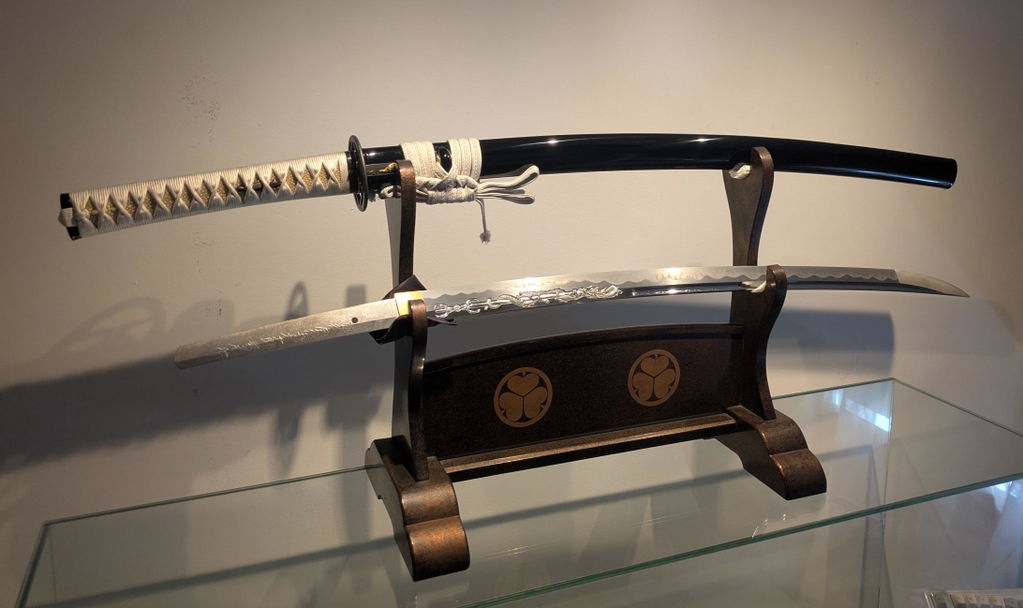
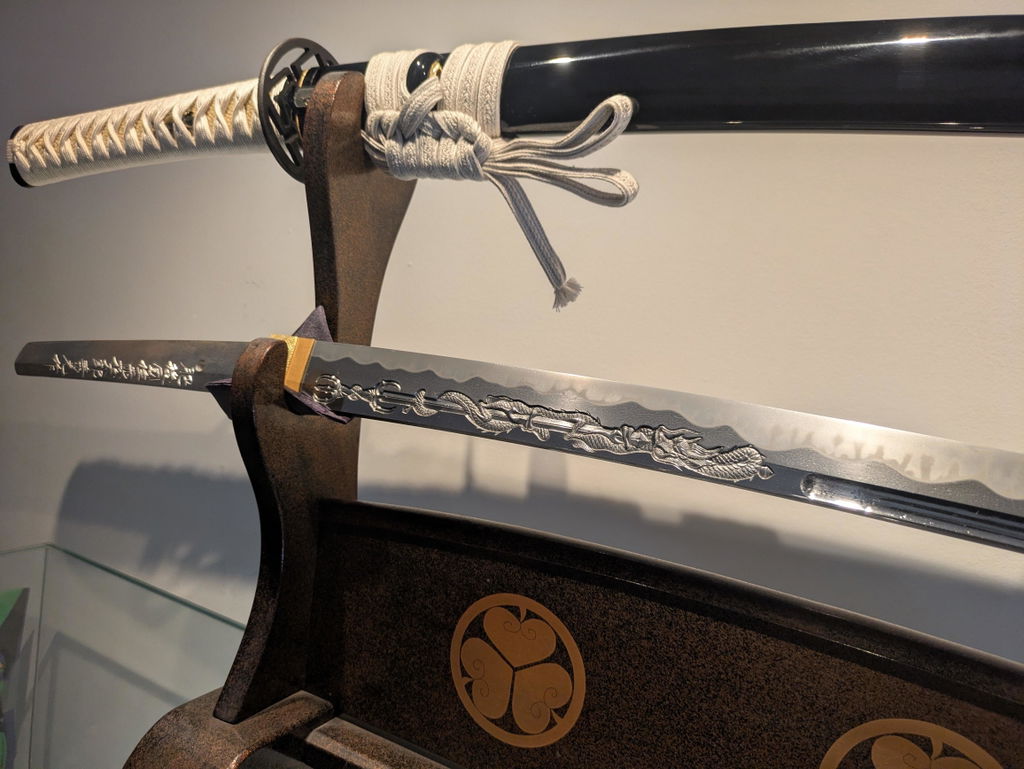
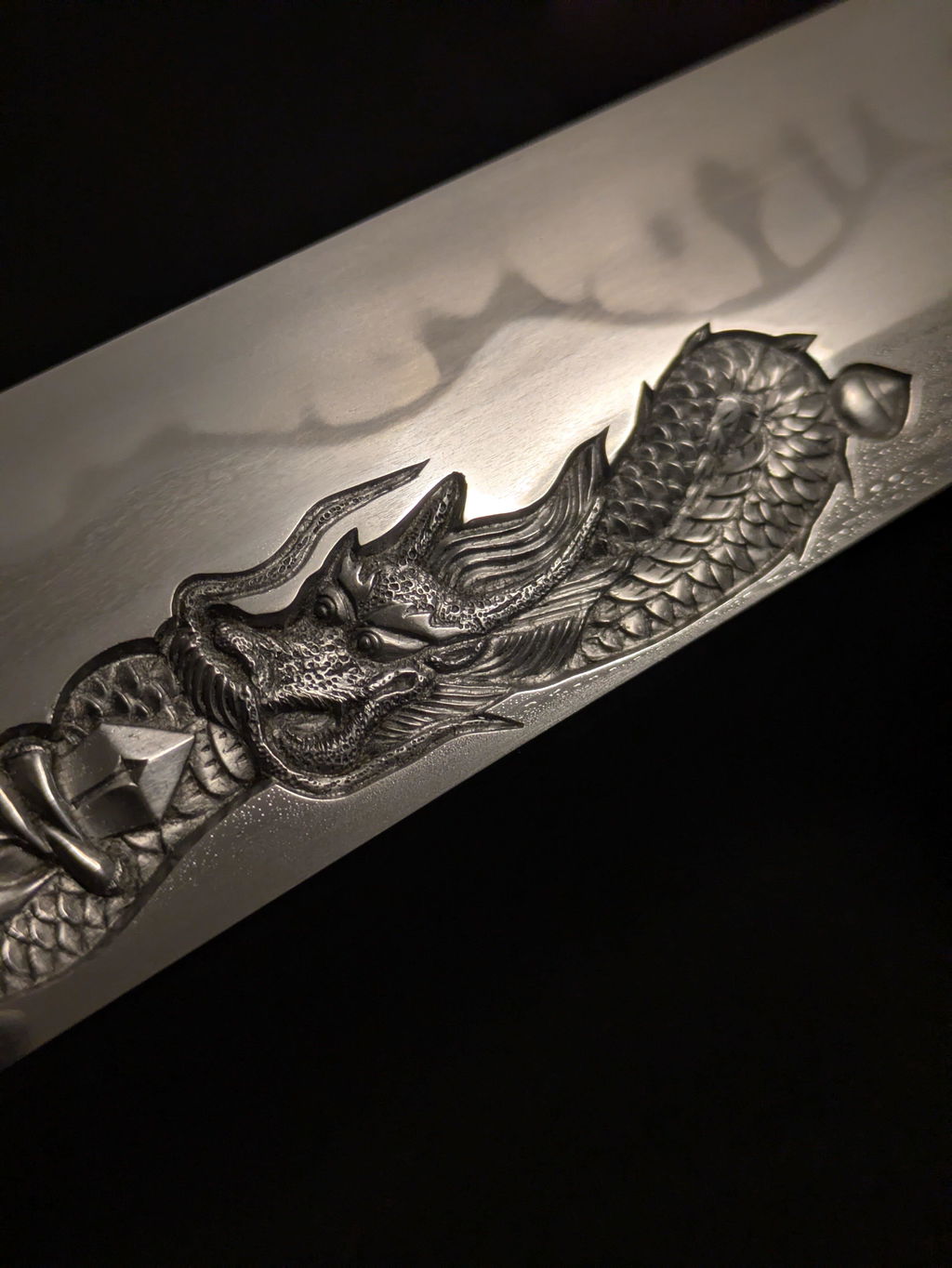
The jigane is forged in a large itame (ō-itame) that stands up boldly to give the surface real depth and dimensionality, with fine chikei threading intricately through it and dense ji-nie laid richly across the steel — an evocative, koto-like texture. The hamon is a fierce, high-reaching ō-midare that rises from the flat of the blade almost to the shinogi ridge, mixed with tobiyaki-like activity for a truly dramatic temper. Ko-nie gather beautifully along the habuchi, the nioiguchi is bright and clear, and the interior of the temper is rich in ashi and yō, drawing a dynamic, impassioned pattern of surging waves. The bōshi carries that same momentum, tumbling deep into a midare-komi and turning back — a thoroughly satisfying finish. As a newly made blade it is in flawless, as-forged condition, with no defects or rust.
The shape is a well-ordered shinogi-zukuri with iori-mune, of ample width and thickness and a beautiful curve, carrying an air of dignity. A slender yet powerful bōhi (single groove) is cut cleanly through, adding a taut tension and refinement to the whole. The nagasa is 76.5 cm (about 30.12 inches, roughly 2 shaku 5 sun 2 bu) with a sori of 1.4 cm (about 0.55 inch); motohaba 34.7 mm and sakihaba 23.5 mm, motokasane 8.2 mm and sakikasane 6.2 mm, with one mekugi-ana. The blade alone weighs 830 g, and 1,090 g mounted (without the scabbard).
The blade is furnished with a high-quality uchigatana koshirae assembled around one spirited, unified motif. Its great charm lies in the coordinated fittings, which evoke the "Dragon Gate" (登竜門 — a carp climbing a waterfall). The tsuba is an iron openwork piece rendering, with tremendous energy, a carp battling its way up through churning waves, and the menuki hidden within the hilt are likewise valiant carp. The image of the carp that surmounts the rapids and at last transforms into a dragon is a highly auspicious emblem of "success in life" and of the indomitable spirit that breaks through adversity. The tsuka is bound in dignified, deep wisteria-purple (fuji-murasaki) silk ito, wrapped in neat, orderly hishi over black-dyed same. A weighty black ishime-textured saya with a matching sageo draws the whole together and sets off the "Dragon Gate" story told by the tsuba and menuki. Blade and mounting meet at a high level — the martial spirit and aspiration of the samurai given form.
¥1,100,000 ¥1,150,000

¥200,000 ¥240,000

¥400,000 ¥430,000

¥390,000 ¥410,000

¥270,000 ¥290,000

¥300,000 ¥330,000


Every blade reflects generations of knowledge, discipline, and precision passed down through traditional Japanese swordmaking. From the forging of steel to the final finishing touches, each piece is shaped with patience, mastery, and deep respect for heritage.

From carefully selected materials to the refined finishing of every surface, each sword is crafted and presented with uncompromising attention to detail. Our commitment to authenticity ensures every piece reflects true tradition, lasting quality, and enduring cultural value.

Designed with balance, simplicity, and purpose, our blades embody the harmony between refined form and skilled craftsmanship. Each sword represents a thoughtful union of strength, elegance, and the timeless discipline of Japanese artisans.