

In the history of Japanese sword-making, a small number of figures stand apart — not merely as exceptional craftspeople, but as people who changed the direction of the entire tradition. Suishinshi Masahide (水心子正秀, 1750–1825) is one of perhaps three or four smiths who can be described this way without exaggeration. He did not simply forge exceptional blades. He identified a problem with the direction the tradition had taken, wrote extensively about why and how it needed to change, trained a generation of smiths to implement that change, and — almost single-handedly — created the Shinshinto period that would define Japanese sword-making for the next century. A blade signed by Suishinshi Masahide is not merely an antique Japanese sword. It is a piece of the argument that redirected a thousand-year-old tradition. Tozando currently has such a blade — and this article tells the story of the man who made it.
From Village Blacksmith to the Father of Shinshinto — Masahide's Journey
Suishinshi Masahide was born in 1750 in Yonezawa domain, Dewa Province — present-day Yamagata Prefecture. His birth name was Suzuki Saburo, and his early life gave no particular indication of the role he would eventually play in Japanese sword history. When he was about 18 years old, he started learning blacksmithing techniques from a local blacksmith named Yoshizawa Sanjiro, who specialised in producing farming tools.
The transition from agricultural tools to swords was deliberate and determined. In 1771, when he was 22 years old, he moved to Musashi Koku (present-day Tokyo) to become an apprentice of Miyagawa Yoshihide, also known as Shitahara Yoshihide — Masahide learned sword-forging techniques under this master, who belonged to the Shitahara school, one of the most prestigious schools in the area.
In 1774, Masahide started to serve Akimoto Tsunetomo, the head of the domain, because of his superb sword-forging techniques. It is said that he began to use Suishinshi as his title during this time and changed his maker's name to Kawabe Gihachiro Masahide. In 1781, he moved to Edo City, settling in a house owned by the Akimoto clan. It was in Edo that the intellectual project that would make him famous began to take shape.
The Fukko Ron — Why Masahide Believed the Tradition Had Gone Wrong
To understand why Masahide matters, you need to understand what he was arguing against. By the mid-Edo period, Japanese sword-making had entered what many contemporary observers recognised as a period of decline. The long peace of the Tokugawa shogunate had removed the practical pressure that had historically driven the tradition's development. Swords were made — but increasingly as status objects and decorative items rather than as functional weapons, and the aesthetic values that drove their production reflected this shift.
The Shinto period (roughly 1596–1780) produced many blades of genuine quality — the work of the Osaka smiths in particular, especially Tsuda Sukehiro and Inoue Shinkai, represented a high point of Shinto-period aesthetics. But Masahide's argument was that the tradition had become increasingly disconnected from its own classical roots. The techniques that had produced the masterworks of the Kamakura period — the specific qualities of jihada, hamon, and steel character that distinguished Bizen-den and Soshu-den blades at their historical peak — were being lost, diluted, or simply forgotten.
Masahide's response — articulated in his treatise Tōken Jitsuyo Ron and subsequent writings — was a call for fukko (復古, "restoration" or "return to the old"): a systematic effort to recover and re-implement the techniques of the Koto period. This was not nostalgia; it was a scholarly programme. Masahide studied surviving Koto masterworks with the same care that a musicologist might study original manuscripts, looking for what could be recovered, reconstructed, and taught.
The Shinshinto Period — What Masahide Created
In the Japanese sword world, swords made before Suishinshi Masahide's appearance are called "Shinto" (New Swords), and those made after are called "Shinshinto" (New New Swords) — distinguished to mark the significance of what his work represented. This is an extraordinary distinction: a single smith's contribution was considered significant enough to divide the Edo period's sword history into before and after.
The Shinshinto period that Masahide's work inaugurated lasted from approximately 1781 through the Meiji era's Haitōrei edict of 1876. During this period, smiths influenced by Masahide's fukko programme produced blades that self-consciously sought to recover the qualities of Koto masterworks — the fine itame jihada of Bizen-den, the abundant nie and dynamic hamon of Soshu-den, the masame and austere elegance of Yamato-den. The best Shinshinto blades are not mere imitations of Koto work; they are independent achievements that brought the tradition's knowledge of classical techniques to a new level of systematic understanding.
The Disciples — What Masahide Built
Masahide's influence extended far beyond his own blades. He trained over 100 disciples, whose locations spread from Dewa in the north to Satsuma in the south — a national network of smiths working in the Shinshinto tradition he had established. Three of his most distinguished students are known collectively as the "Edo Sansaku" (江戸三作, the Three Masters of Edo) — one of the most celebrated groupings in Shinshinto scholarship.
that redirected the tradition —
the physical evidence of a conviction
that changed the course of a thousand-year-old craft."
NBTHK Tokubetsu Hozon Certificate
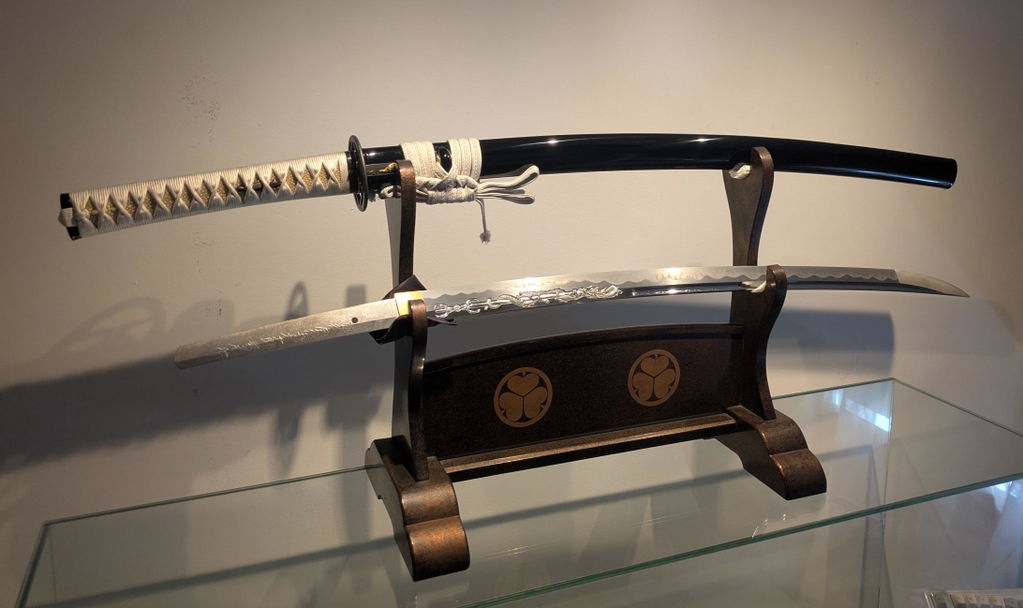
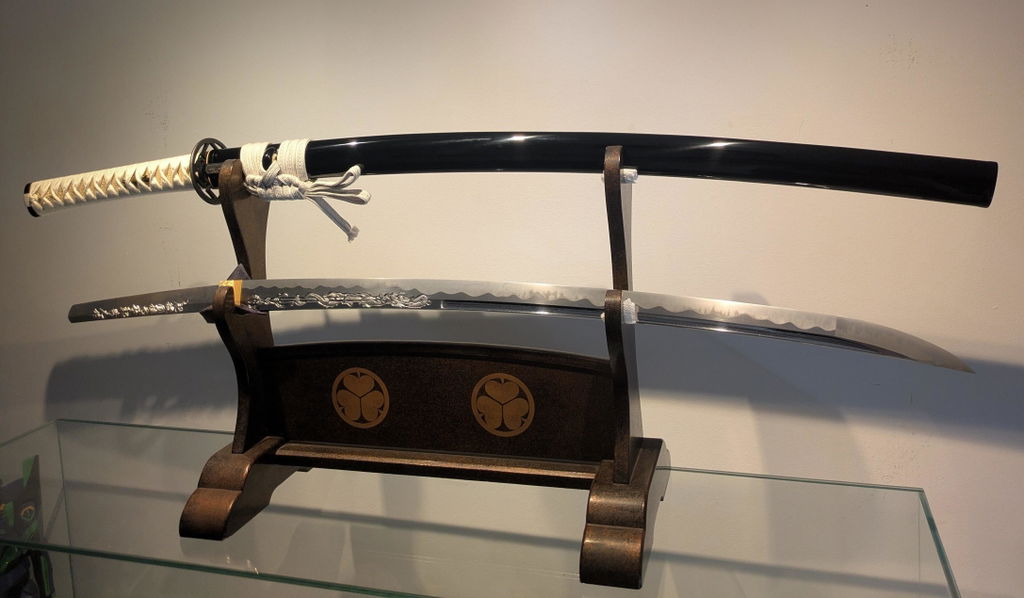
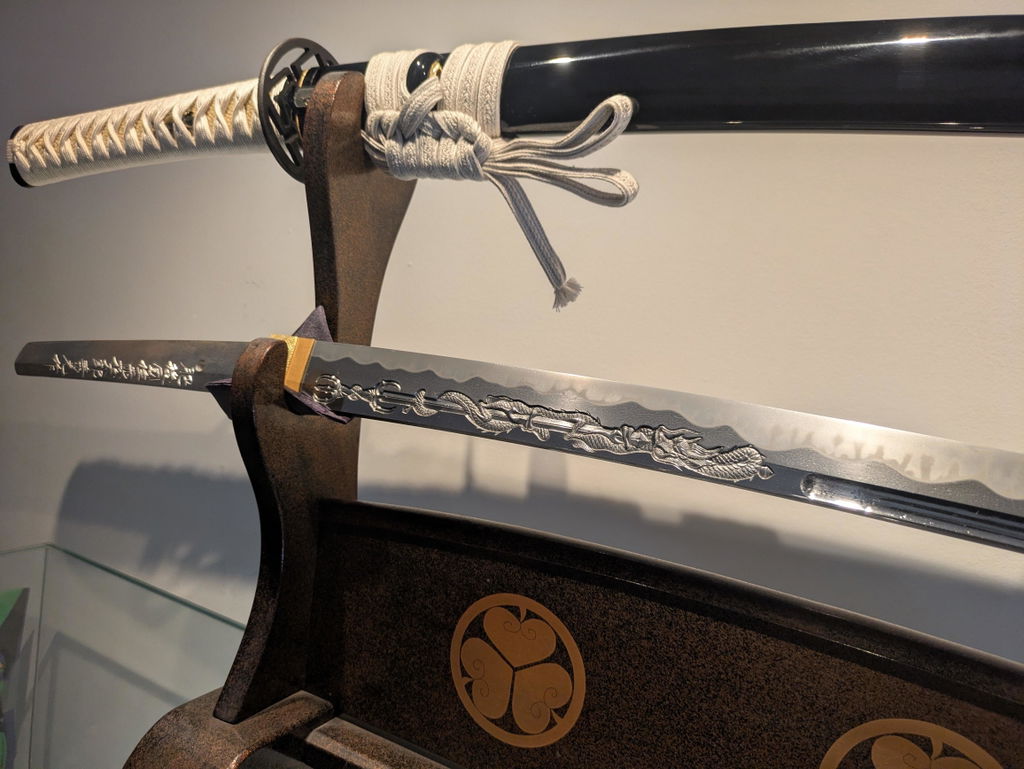
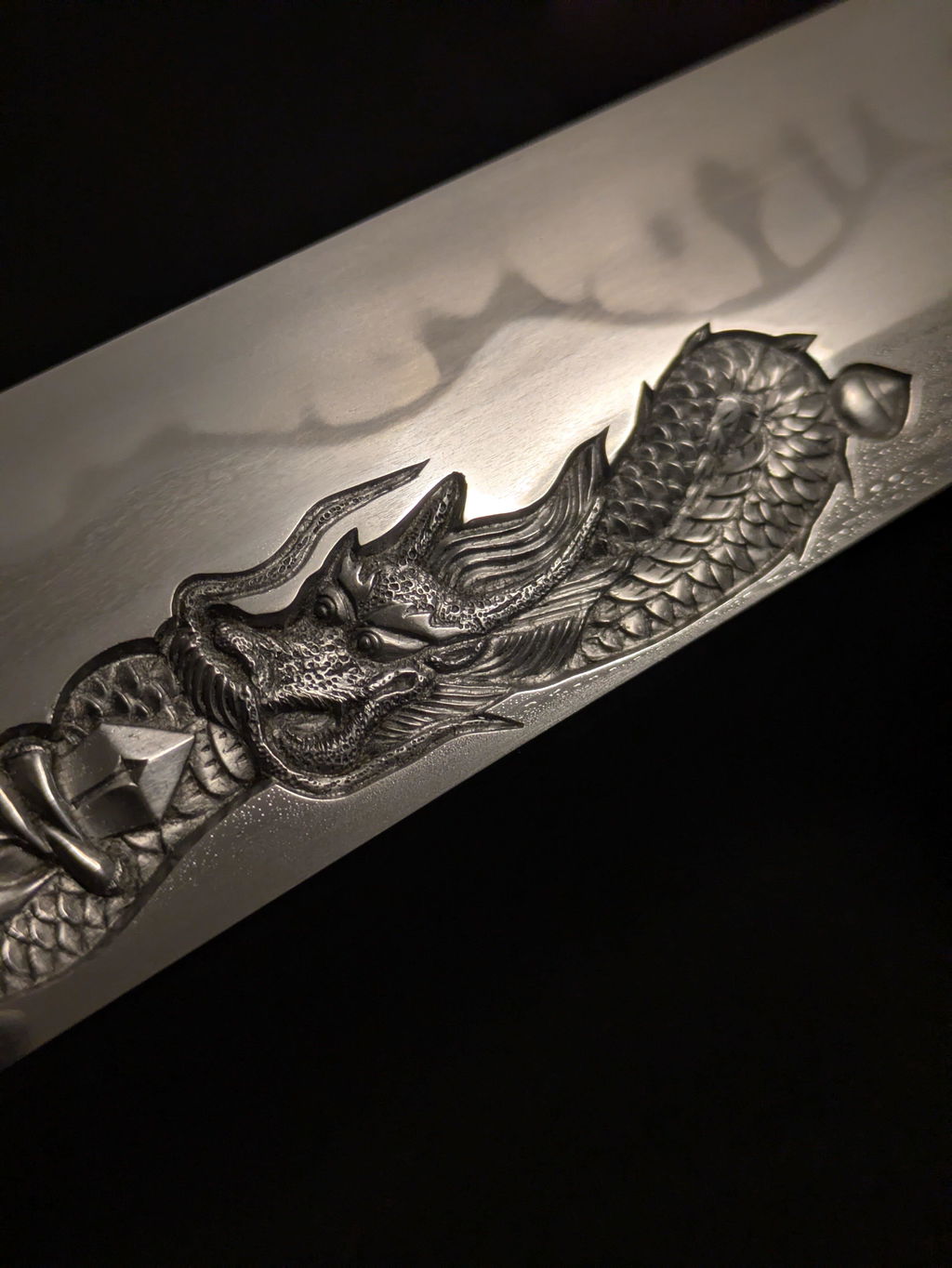
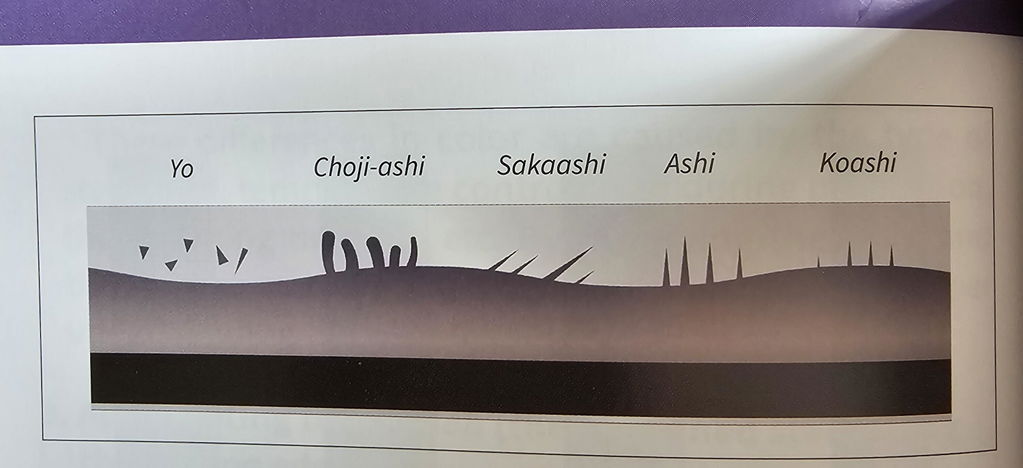
The sword is made by Suishinshi Masahide, who is also known as the father of Shinshinto. The preservation condition of the sword is so excellent that it could almost be considered modern, with no flaws such as flaws or rust, and it is very sound. The jigane is a well-packed itame hada with a bright and brilliant surface. The hamon is a blend of Ko-gunome and choji, with the choji slightly inverted. Within the ha, hataraki such as ashi and yo are very active.
The nakago bears Masahide's full signature — Kawabe Gihachiro Fujiwara Masahide — together with his kao (stylised seal) and kokuin (stamped signature). An ubu nakago (original, unaltered tang) means the full physical record of the smith's own hand is present and intact. The NBTHK's Tokubetsu Hozon certification confirms both the blade's authenticity and its above-average quality — independently verified by the panel's assessment.
The blade comes in both shirasaya and period koshirae — giving the collector the correct long-term storage mounting and the opportunity to see the blade presented as its original owner would have carried it. Because of its state of preservation and great value, the Society for Preservation of Japanese Art Swords appraised this piece by Tokubetsu Hozon in August 2008 and recognised it as a sword that is specially worthy of preservation for future generations.
Blades by Masahide appear on the market infrequently. A blade in this condition, with ubu nakago and full Tokubetsu Hozon certification, is an exceptional opportunity for a collector who understands the significance of what Masahide represents in the tradition.
in Tozando's collection
This blade will not remain available for long. Contact Tozando's specialists to discuss the piece in detail — its physical qualities, its documentation, and its significance in the context of Masahide's career and the Shinshinto tradition.
In Closing — What a Masahide Blade Represents
The Japanese sword tradition has produced many exceptional craftspeople across a thousand years of continuous practice. Very few of them changed the direction of the tradition itself. Suishinshi Masahide did — through a combination of practical skill, scholarly rigour, prolific writing, and the ability to teach and inspire a generation of smiths who carried his programme forward after his death.
Masahide was a smith of considerable ability, but his larger role was as the theorist who articulated why the Shinshinto period existed at all. His written advocacy for a return to Koto principles shaped the direction of Japanese sword-making for the whole nineteenth century.
A blade signed by Suishinshi Masahide is the physical record of a conviction — the evidence that one person understood what was being lost, argued clearly for why it mattered, and demonstrated through his own hands that it could be recovered. For a collector who understands what that means, it is not merely an antique. It is one of the rarest categories of object in the nihonto tradition: a masterwork that is also a historical argument, made tangible in steel.

Leave a comment: