Antique Japanese Katana Sword - Mumei, Shinshinto Era - NBTHK Hozon Token(73.2 cm)
¥1,100,000 ¥1,150,000

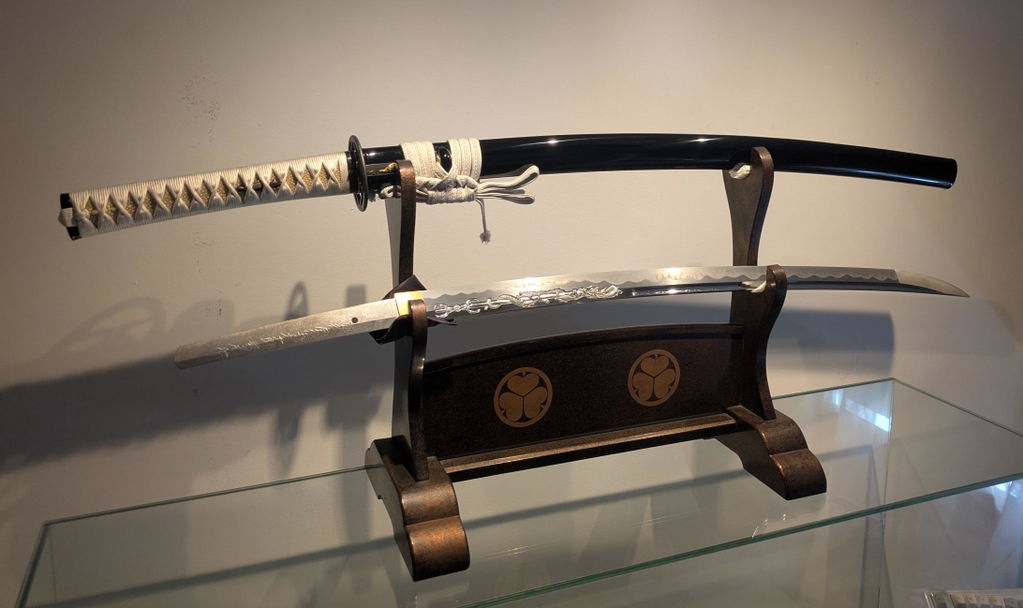
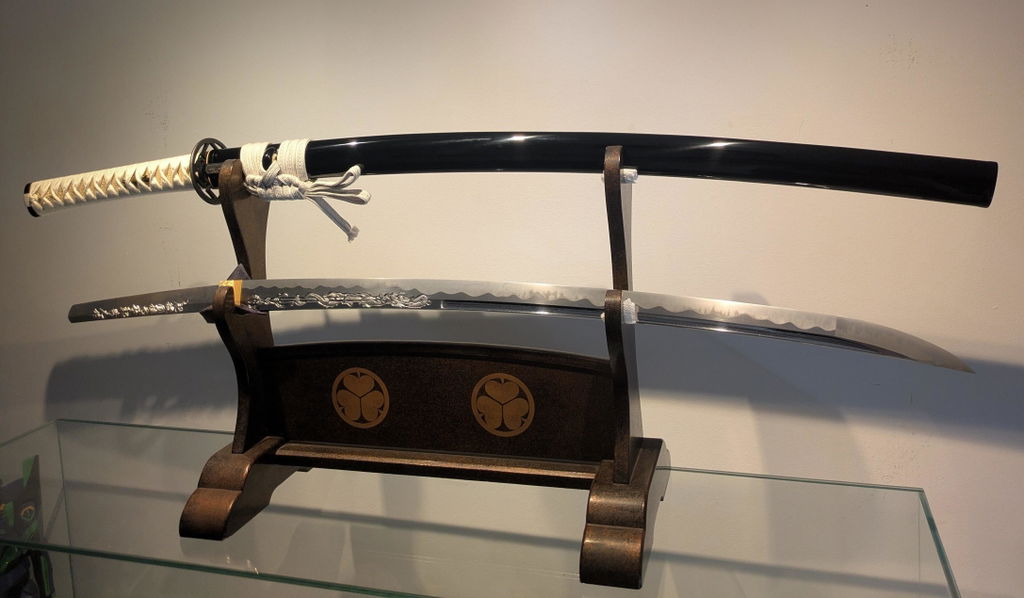
We are pleased to present a masterwork by Fujiwara Tadayuki (藤原忠行), younger brother of the first-generation Tadatsuna and a celebrated master of Osaka Shintō swordsmithing. Boasting an extraordinary length of 2 shaku 5 sun 5 bu (77.4 cm) and a dignified form reflecting the spirit of the Kanbun era in Edo, this blade exemplifies the very essence of a custom-ordered masterpiece, its faces richly carved with intricate horimono. Its pristine, healthy jigane and hamon are set off by a magical, protective sankozuka-ken and goma-bashi carved in vivid relief, and the blade is further adorned with a magnificent period koshirae of exceptional refinement, carrying the wisdom and martial fortune of Zhuge Kongming — a supreme piece certified as a Tokubetsu Hozon Tōken.
Certified as a Tokubetsu Hozon Tōken by the NBTHK, this superb blade is polished and in an exceptionally sound, nearly flawless condition, with no old damage or notable defects visible. A small area of black patina (kuro-sabi) is present on the mune (spine), though this does not affect the blade's quality. The jigane shows a fine mixture of itame and mokume (wood-grain and burl-grain), with minute ji-nie giving a bright, clear surface — the rich, beautiful texture distinctive of Osaka Shintō. The hamon is founded on a suguha-chō (straight-leaning temper line), the temper edge finely covered with ko-nie, drawing a bright, clear nioiguchi. Within the hamon, delicate activity can be seen, and the bōshi, too, settles neatly and turns back in a rounded maru — both the ji and the ha in truly superb condition.
At 2 shaku 5 sun 5 bu (77.4 cm), this blade's length is exceptionally rare among uchigatana of the Kanbun period. Its length, remarkable for its time, combined with a well-judged sori (curve) and an exquisite harmony between motohaba and sakihaba, gives the blade a dignified, powerful form, strongly suggesting it was a meticulously forged custom order, commissioned by a master swordsman or a samurai of high rank in that era.
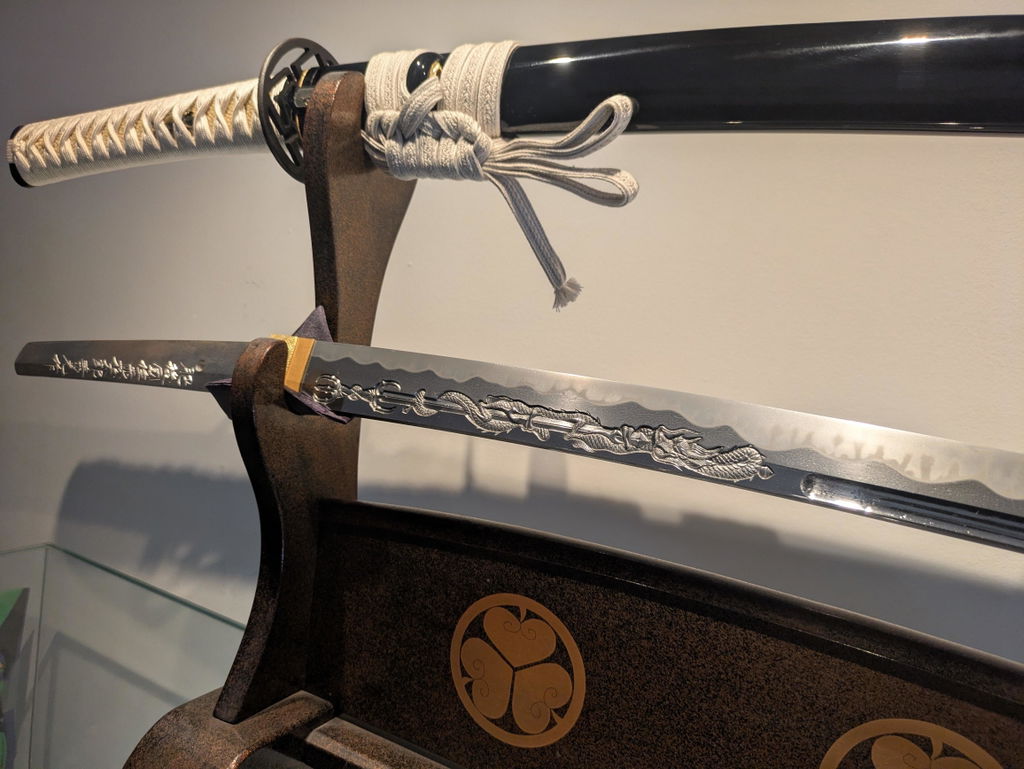
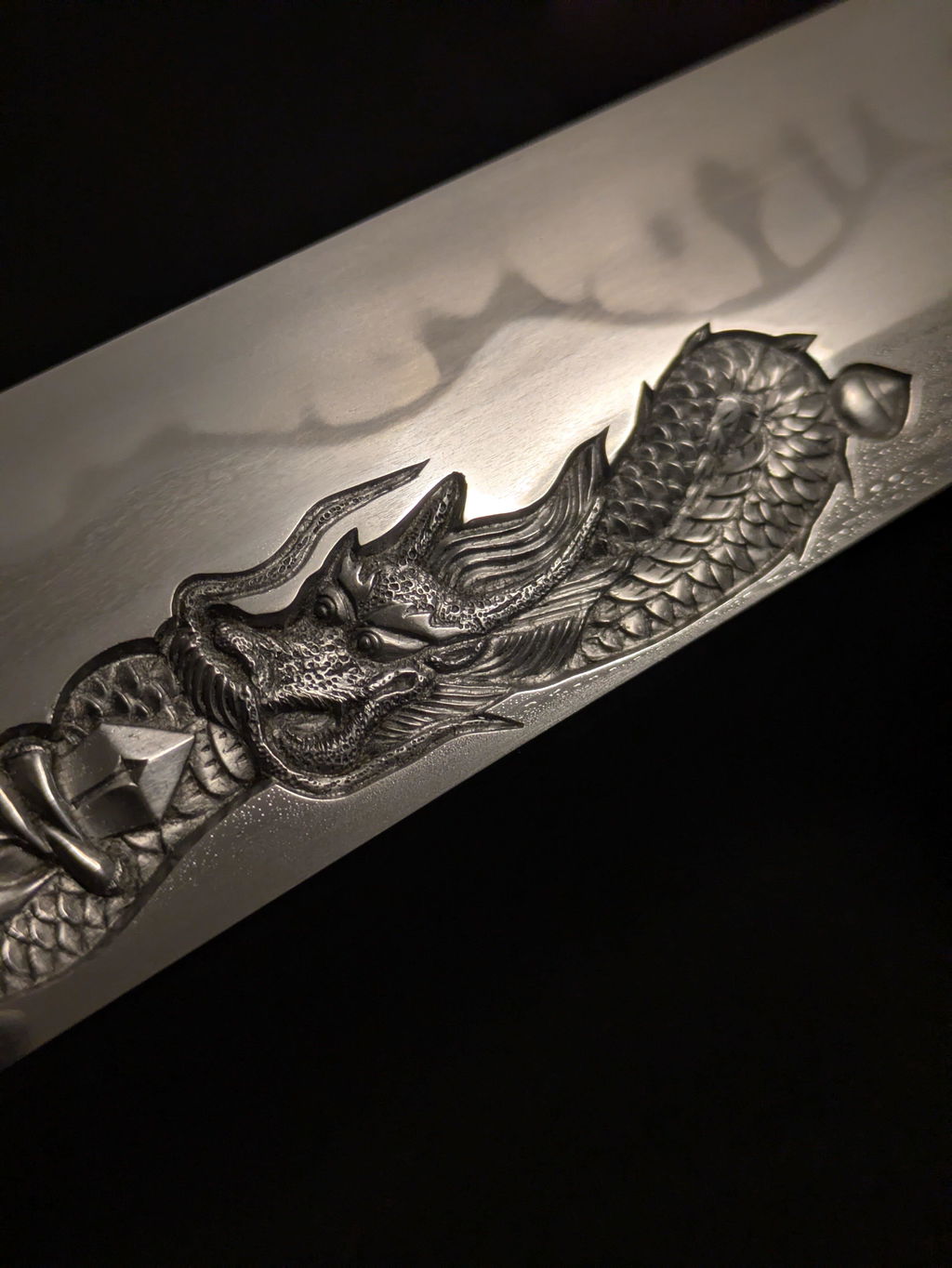
Of particular note are the richly conceived hi (groove) carvings on both faces of the blade. Executed using different advanced hand-carving techniques on each side, this blade sculpture lends the long blade a taut visual beauty and exceptional dignity. The nakago (tang) is ubu (unaltered), retaining in vivid detail the form it held at the time of forging, with the inscription "Sesshū-jū Fujiwara Tadayuki" (摂州住藤原忠行) cut into its front.
Omote (front): "Goma-bashi" — Two slender, beautifully parallel grooves cut in orderly fashion running from the habaki-moto (base of the blade), representing the ritual chopsticks (goma-bashi) used in the Buddhist goma (homa) fire ritual, in which offerings are burned to purify worldly desires and ward off misfortune. Carved onto a blade, this motif carries the same prayer for purification and protection, while lending the long blade a taut sense of design and dignity.
Ura (back): "Sankozuka-ken" — At the base of the back face, near the habaki-moto, is carved a sankozuka-ken (vajra-hilted sword), modeled after the sacred sword held in the right hand of Fudō Myōō (Acala). Stylizing the sanko, a sacred ritual implement of esoteric Buddhism, this bold yet meticulous carving embodies the profound prayer for "warding off evil and misfortune" and "protection of the bearer and lasting martial fortune."
Settsu-jū Fujiwara Tadayuki (1st generation) was one of the leading masters of Osaka Shintō, active chiefly in Settsu Province (present-day Osaka Prefecture) during the early Edo-period Kanbun era (circa 1661–1673). He was the younger brother of the first-generation Awataguchi Ōmi-no-kami Tadatsuna — said to be a descendant of Awataguchi Kunitsuna, one of the legendary "Five Swords Under Heaven" — and his skill was such that he is said to have even forged blades signed on his brother Tadatsuna's behalf (daisaku-daimei). His style shares much in common with that of his brother and his nephew, Ikkanshi Tadatsuna, and he excelled at the clear, luminous jigane distinctive of Osaka Shintō, as well as at gunome-midare and suguha hamon. Prized in his own time for exceptional sharpness and practicality, his work has since earned the lasting reputation of yoki-wazamono (a blade of fine cutting quality) in later sword appraisal. Blades bearing his own signature survive in extremely limited numbers, making them objects of especially high rarity.
The period koshirae accompanying this blade is an exceptionally rewarding set, its design filled with the spirit and storytelling sensibility of the samurai, retaining a dignified, time-worn presence and excellent state of preservation.
The menuki set on the tsuka (hilt) depict "bamboo and tiger," rendered in brilliant, glittering gold — a tiger standing amid a bamboo grove, full of vitality, symbolizing the courage and authority of the warrior house. The tsuba (hand guard) carries a design themed on Zhuge Kongming (Zhuge Liang), the hero and peerless strategist of the Romance of the Three Kingdoms. On its front face is carved a figure seated on a rocky outcrop, holding the feather fan that is Kongming's foremost symbol, his head wrapped in the traditional headscarf (ringin) worn by scholars and Daoist sages — a figure of quiet composure concealing sharp wisdom. Across the background and the reverse face, delicate openwork carving depicts the gnarled branches of an old, deeply rooted pine that has weathered wind and snow, along with a landscape of mountains and water, evoking the atmosphere of Kongming's "Sleeping Dragon" years, quietly biding his time in the mountains before rising to prominence. Adorning a samurai's sword fittings with the figure of Zhuge Kongming expresses reverence not merely for martial strength, but for "peerless strategic brilliance" and "deep learning and wisdom." Combined with the evergreen pine, a symbol of longevity and sincerity, the design becomes a highly dignified prayer for lasting martial fortune and mastery of both the literary and martial arts.
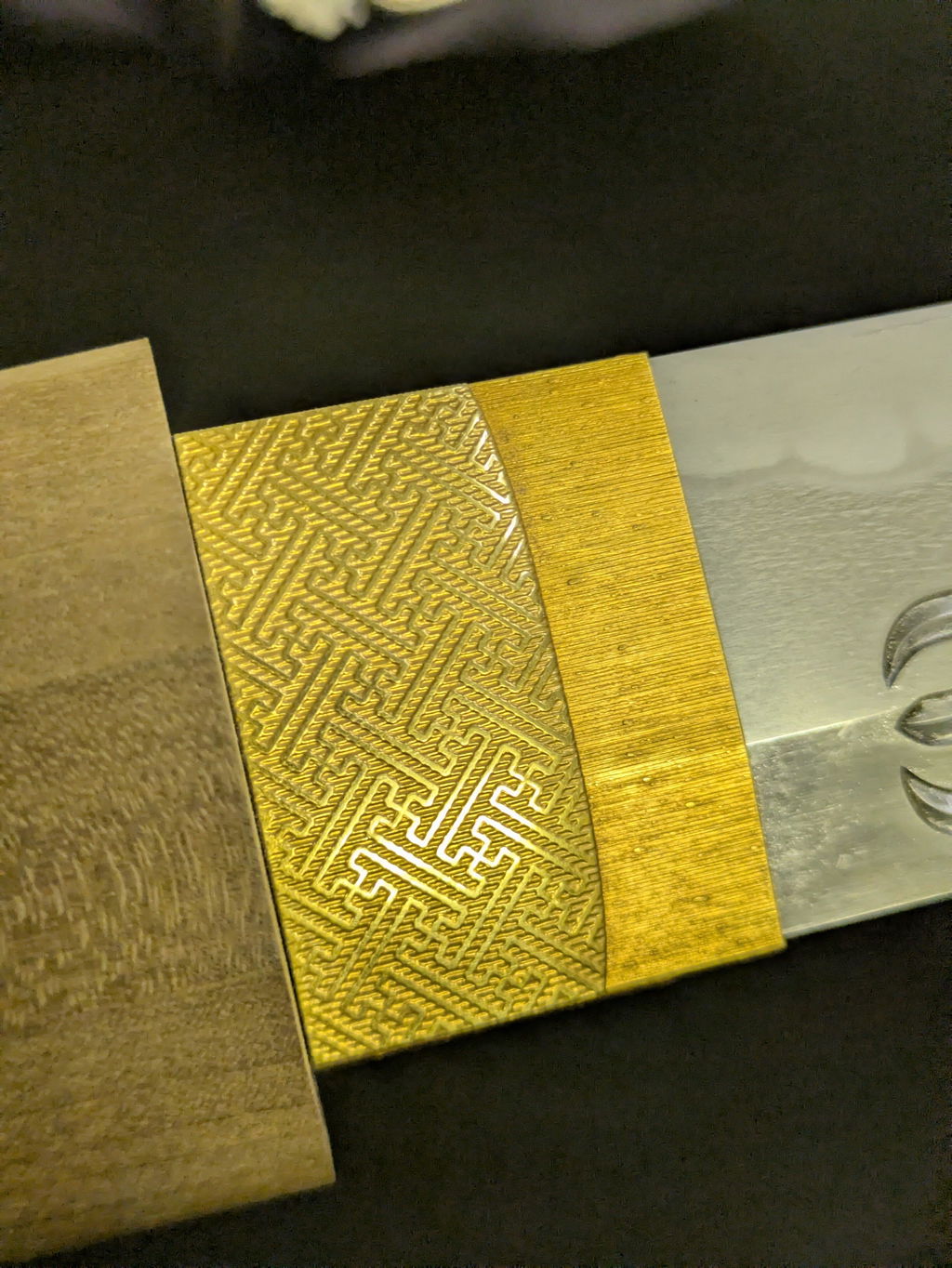
Further lending the piece a dignified, time-worn presence is its chic, composed cha-gawari-nuri (variegated brown lacquer) saya and a well-worn, hand-fitted tsuka wrapping, elevating the completeness of the whole work. The set is further accompanied by a shirasaya (a faint crack is present, but with no effect on function) made to protect the blade, making this an outstanding set for both preservation and appreciation.
A tall, powerful form; the profound depth of its esoteric Buddhist carving; the clear jigane and hamon distinctive of Osaka Shintō; and a period koshirae carrying prayers for mastery of both the literary and martial arts — every element here is brought into flawless, elevated harmony, revealing new depths with every viewing. Among the known works of the yoki-wazamono master Tadayuki (1st generation), a blade combining this degree of dignity and length is exceedingly rare.
¥1,100,000 ¥1,150,000

¥200,000 ¥240,000

¥400,000 ¥430,000

¥390,000 ¥410,000

¥270,000 ¥290,000

¥300,000 ¥330,000


Every blade reflects generations of knowledge, discipline, and precision passed down through traditional Japanese swordmaking. From the forging of steel to the final finishing touches, each piece is shaped with patience, mastery, and deep respect for heritage.

From carefully selected materials to the refined finishing of every surface, each sword is crafted and presented with uncompromising attention to detail. Our commitment to authenticity ensures every piece reflects true tradition, lasting quality, and enduring cultural value.

Designed with balance, simplicity, and purpose, our blades embody the harmony between refined form and skilled craftsmanship. Each sword represents a thoughtful union of strength, elegance, and the timeless discipline of Japanese artisans.