Antique Japanese Wakizashi Sword - Mumei, Shinto Era (36.6 cm)
¥200,000 ¥240,000

This blade has been acquired. Discover other exceptional swords currently available in our collection.


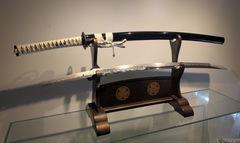
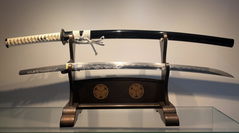
We are pleased to present an ubu, mumei (unsigned) katana attributed by the NBTHK (Nihon Bijutsu Tōken Hozon Kyōkai) to Mito Masakatsu (水戸正勝), real name Katsumura Hikosaburō, a student of the celebrated Mito-han smith Katsumura Tokukatsu (勝村徳勝). Forged in Hitachi Province during the late Edo period, in the Keiō era of the Bakumatsu years, this blade carries an NBTHK Hozon Tōken (Worthy of Preservation) certificate. The blade survives in outstanding, nearly flawless polish, and is accompanied by a beautifully preserved period koshirae whose fittings are unified by an auspicious "shōchikubai" (pine-bamboo-plum) theme — a rare pairing of scholarly attribution, blade condition, and mounting completeness, ideal for both study and display.
The blade is fully polished and in superb condition, with essentially no flaws, allowing the fresh "moisture" (uruoi) of the ji-ha to be fully appreciated. The jigane is a tightly forged itame-hada (wood-grain pattern) with fine ji-nie (steel martensite particles), producing a clear, luminous surface. The hamon is a dignified suguha (straight temper line) base with occasional shallow notare (undulations), its nioiguchi (temper-line boundary) bright and lustrous — an elegant yet battle-ready temper that reflects the strength and integrity characteristic of Mito-han work.
The blade presents a solid, healthy shape with substantial mihaba (width) and kasane (thickness), a well-balanced sori, and an elongated kissaki (point) — the vigorous, confident silhouette typical of Bakumatsu-era shinshintō blades.
Mito Masakatsu, whose given name was Katsumura Hikosaburō, was a senior smith of the shinshintō (new-new sword) period, working as a student — by some accounts a relative — of Katsumura Tokukatsu, the smith who defined Mito-han swordsmithing in the closing years of the shogunate. Active chiefly during the Keiō era in Hitachi Province, he forged blades for the samurai of the Mito domain, earning a strong reputation for cutting performance and structural soundness. Though this blade is mumei, the NBTHK's rigorous appraisal process has attributed it to Mito Masakatsu, lending confidence in both quality and lineage.
The accompanying jidai koshirae (period mounting) is, overall, in excellent, well-preserved condition, its design carrying an elegant sense of samurai refinement and reverence for nature — every motif imbued with auspicious meaning. The tsuka is finished in the luxurious sōzame-maki style, wrapped edge-to-edge in same (ray skin) without ito binding, projecting both durability and formal status. The menuki depict ume (plum blossom), which flowers first in the cold and so symbolizes nobility, perseverance, and good fortune. The tsuba, carved into a weathered iron ground, bears matsu (pine), a tree said to live a thousand years and thus a symbol of longevity and unwavering integrity — together with the plum menuki, evoking the shōchikubai (pine-bamboo-plum) theme of good fortune. The fuchigashira fittings complete the set with a "nami ni kaigara" (waves and shells) design — paired shells representing marital harmony and good match, set against ceaseless waves symbolizing the bounty and prosperity of the sea.
This is a rare opportunity to own a blade that embodies the spirit of a late-Edo Mito-han swordsman — an exceptional example by Mito Masakatsu paired with a thoughtfully unified period koshirae. Together they offer historical significance, connoisseurship value, and the deep satisfaction of ownership in equal measure.
¥200,000 ¥240,000

¥400,000 ¥430,000

¥390,000 ¥410,000

¥270,000 ¥290,000

¥300,000 ¥330,000


Every blade reflects generations of knowledge, discipline, and precision passed down through traditional Japanese swordmaking. From the forging of steel to the final finishing touches, each piece is shaped with patience, mastery, and deep respect for heritage.

From carefully selected materials to the refined finishing of every surface, each sword is crafted and presented with uncompromising attention to detail. Our commitment to authenticity ensures every piece reflects true tradition, lasting quality, and enduring cultural value.

Designed with balance, simplicity, and purpose, our blades embody the harmony between refined form and skilled craftsmanship. Each sword represents a thoughtful union of strength, elegance, and the timeless discipline of Japanese artisans.