Antique Japanese Wakizashi Sword - Mumei, Shinto Era (36.6 cm)
¥200,000 ¥240,000

This blade has been acquired. Discover other exceptional swords currently available in our collection.


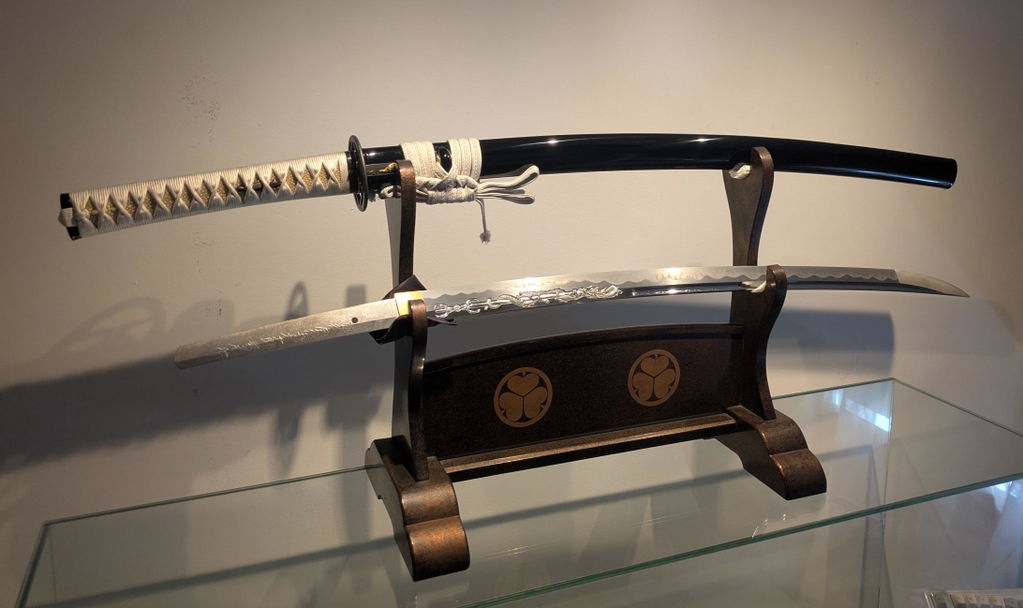
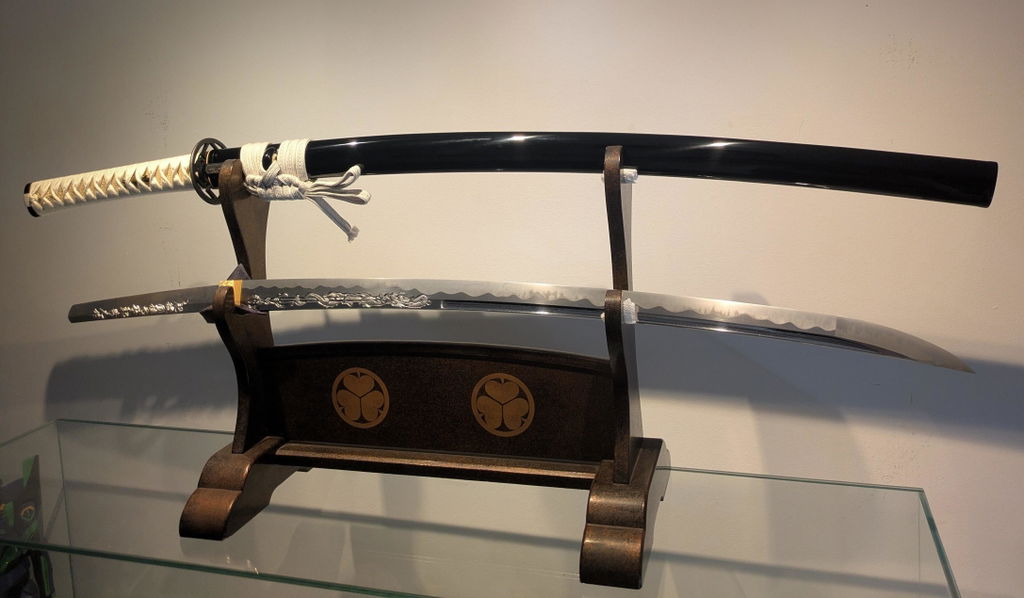
The early Edo period — the age when, as the country turned toward lasting peace, the aesthetic of the warrior came into full flower. Here is a high-toned blade of commanding stature, a full 2 shaku 3 sun 8 bu in length. Beyond the soundness of the blade itself, the vivid bō-hi carved on both faces and the sumptuous raden (mother-of-pearl) mounting — which shifts its expression with the angle of the light — harmonize beautifully, making this a piece of great satisfaction for both appreciation and collection.
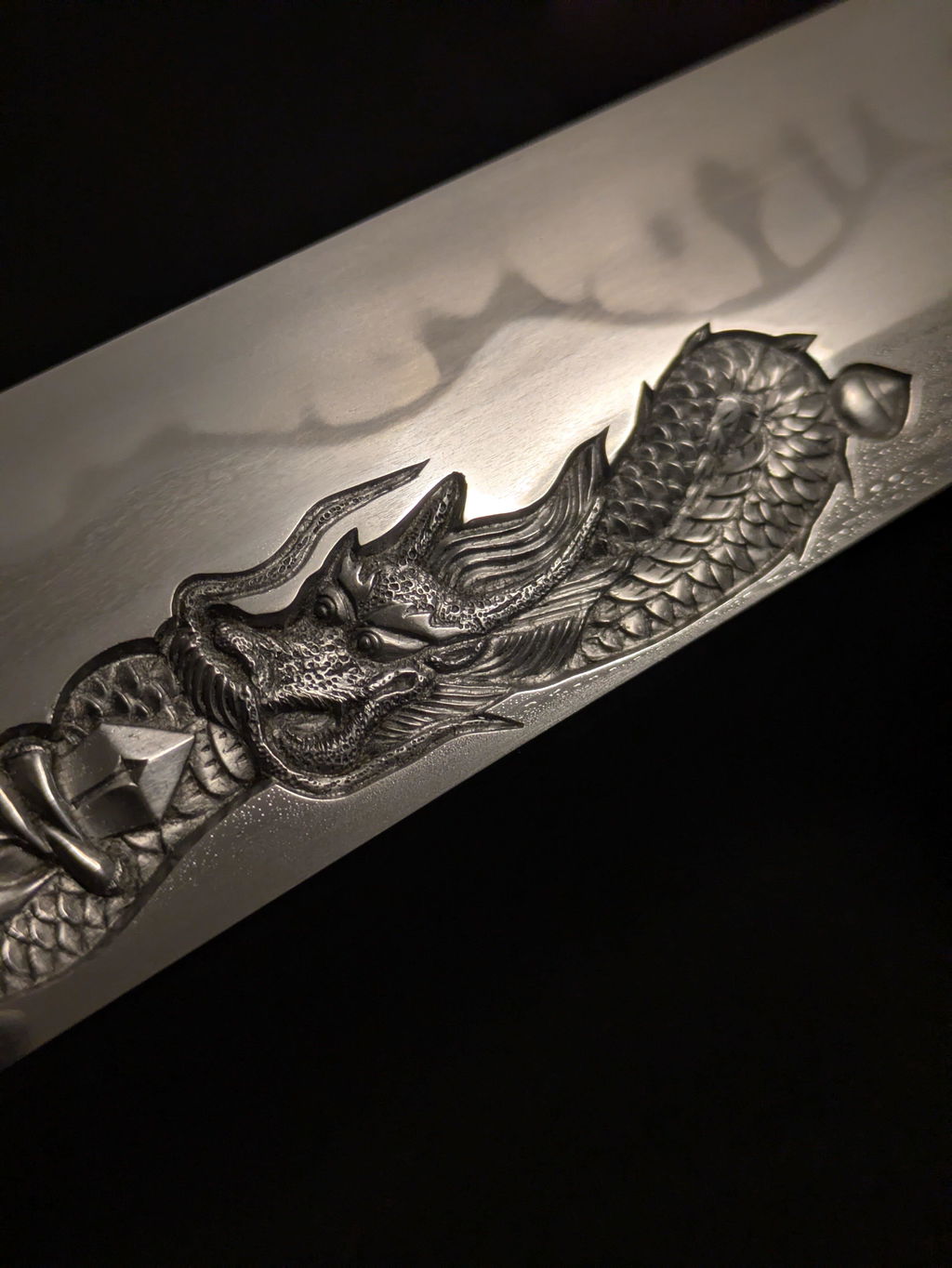
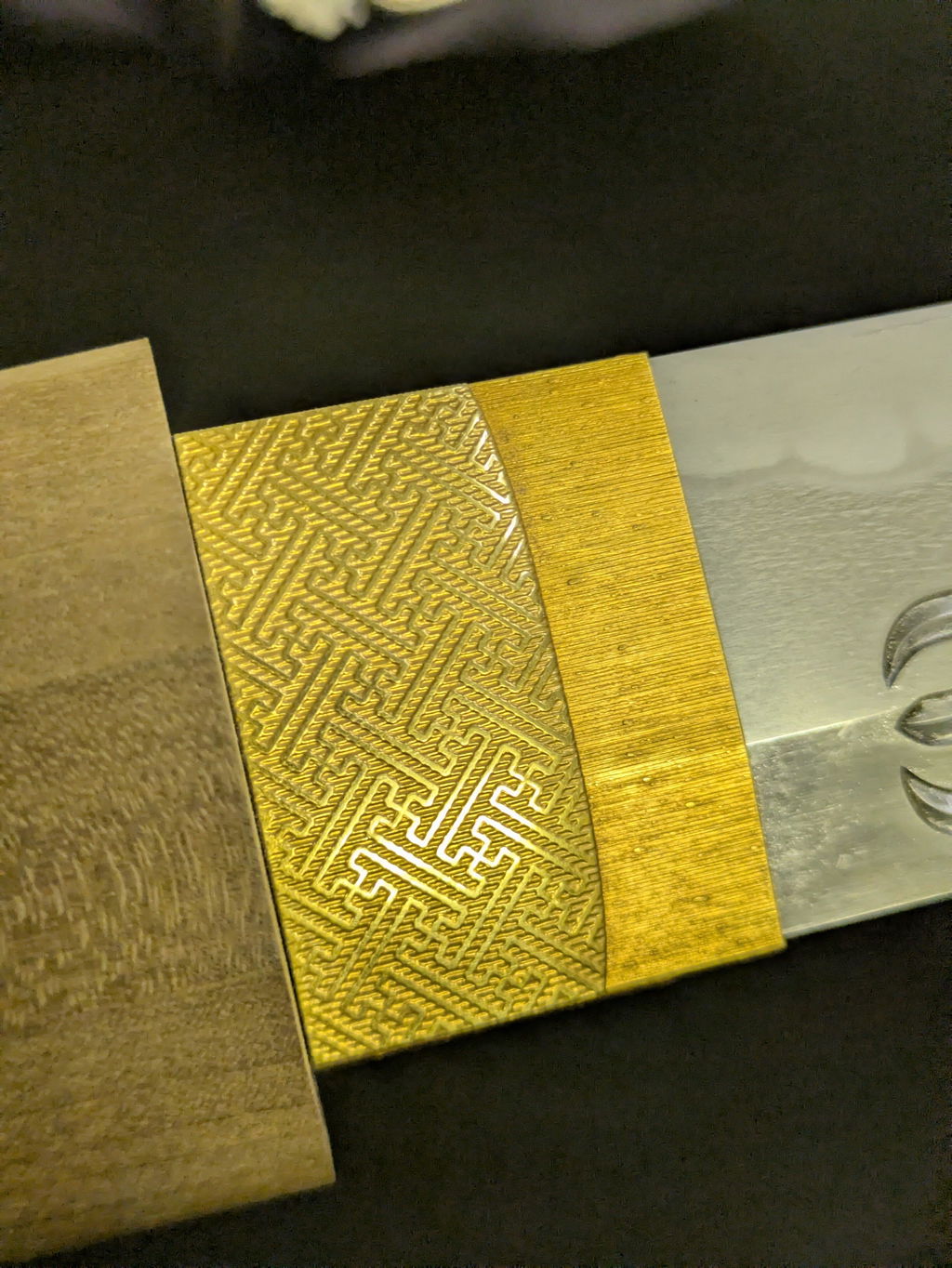
Freshly polished, the blade keeps a fresh, vivid condition in both ground and edge. The jigane is a densely forged itame, carpeted with fine ji-nie for a clear, limpid surface. The hamon is a rich midare of ko-nie-deki — a gunome mixed with ko-midare and ko-notare — with fine ko-nie gathered firmly along the temper edge, and ashi and yō scattering softly into the edge. Each time it is held to the light, the undulating temper rises vividly, delighting the viewer's eye.
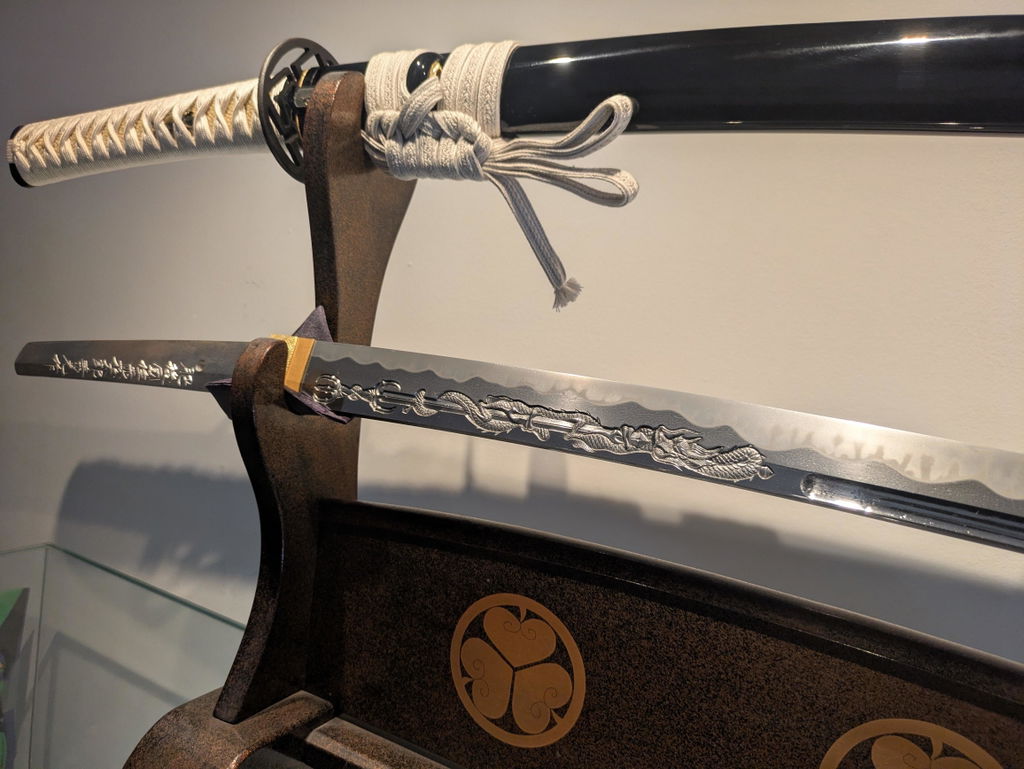
For its generous nagasa of 2 shaku 3 sun 8 bu (about 72 cm), the blade is finished with a rather shallow sori, giving a dignified, composed figure. One of its great highlights is the bō-hi (straight groove) on both faces, carefully finished with rounded ends (maru-dome) — the mark of meticulous work.
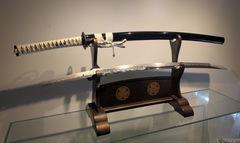
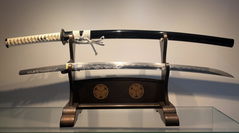
What further raises the value of this piece is its period mounting, taken to the very height of ornament: a raden (shell-inlay) scabbard koshirae. Finely crushed shell is inlaid across the entire saya in the raden technique, giving off a bewitching, high-toned radiance like stars glittering in the dark — a sumptuous design gathering the essence of Japanese traditional craft, of the kind seen even on the kazari-tachi and tachi that are National Treasures and Important Cultural Properties of the Heian period. The hilt is finished in sō-same-maki, the top grade of work, lavishly wrapped in high-quality ray skin, and the fittings — beginning with a bold, high-toned unryū (dragon-in-clouds) fuchi-kashira — are fine pieces worked in detail throughout. It is a work that vividly speaks of the former owner's exceptional means and very high aesthetic sense. A shirasaya, indispensable for careful storage, is also included, completing the ensemble as a cherished piece.
Though unsigned, the clear ground and flamboyant temper peculiar to the early Edo (shintō) period reveal the hand of a capable, leading smith. Lavishly forged ground and temper, a crisp bō-hi line running true, a lively ko-nie-deki midare edge, and a raden mounting strewn with light — this fine piece distills the craft beauty of the early Edo period.
¥200,000 ¥240,000

¥400,000 ¥430,000

¥390,000 ¥410,000

¥270,000 ¥290,000

¥300,000 ¥330,000


Every blade reflects generations of knowledge, discipline, and precision passed down through traditional Japanese swordmaking. From the forging of steel to the final finishing touches, each piece is shaped with patience, mastery, and deep respect for heritage.

From carefully selected materials to the refined finishing of every surface, each sword is crafted and presented with uncompromising attention to detail. Our commitment to authenticity ensures every piece reflects true tradition, lasting quality, and enduring cultural value.

Designed with balance, simplicity, and purpose, our blades embody the harmony between refined form and skilled craftsmanship. Each sword represents a thoughtful union of strength, elegance, and the timeless discipline of Japanese artisans.