Antique Japanese Wakizashi Sword - Mumei, Shinto Era (36.6 cm)
¥200,000 ¥240,000

This blade has been acquired. Discover other exceptional swords currently available in our collection.


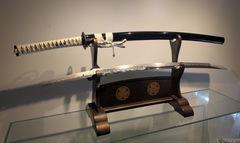
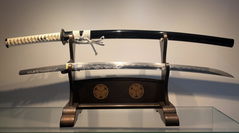
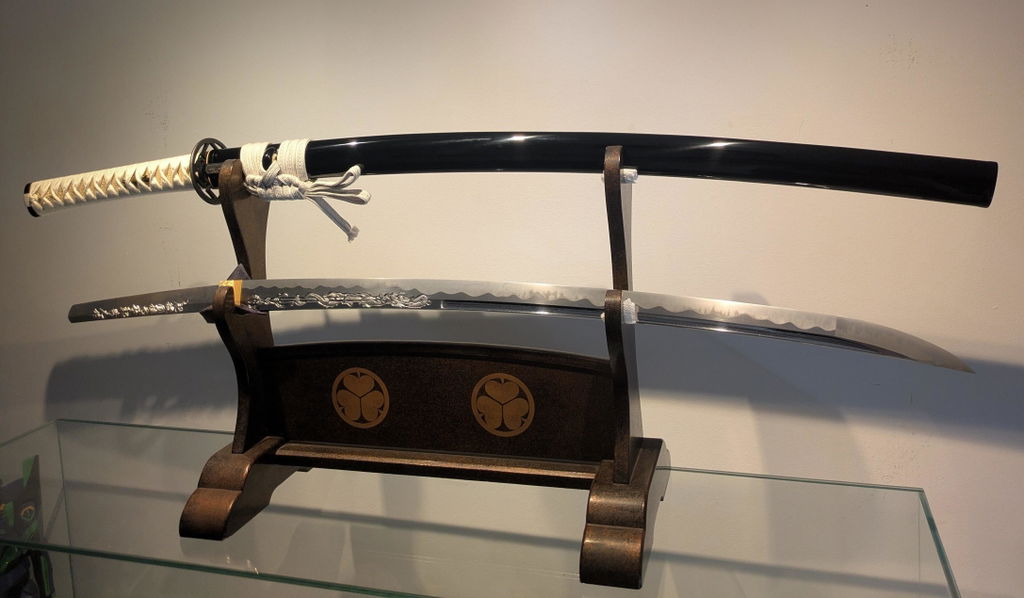
A fine piece of Settsu province symbolizing the flowering of the early-Edo shintō period. A top-grade blade in which an exquisitely packed ground and a bright, lucid temper harmonize beautifully, accompanied by a flavorful period mounting with a fitted kozuka — a work of high appreciation value in both blade and mounting.
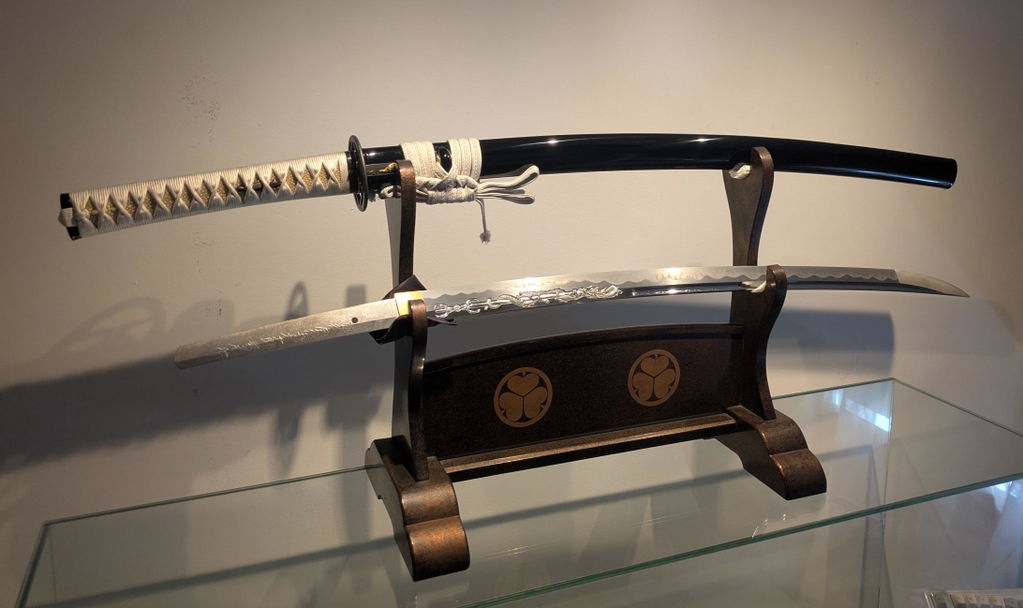
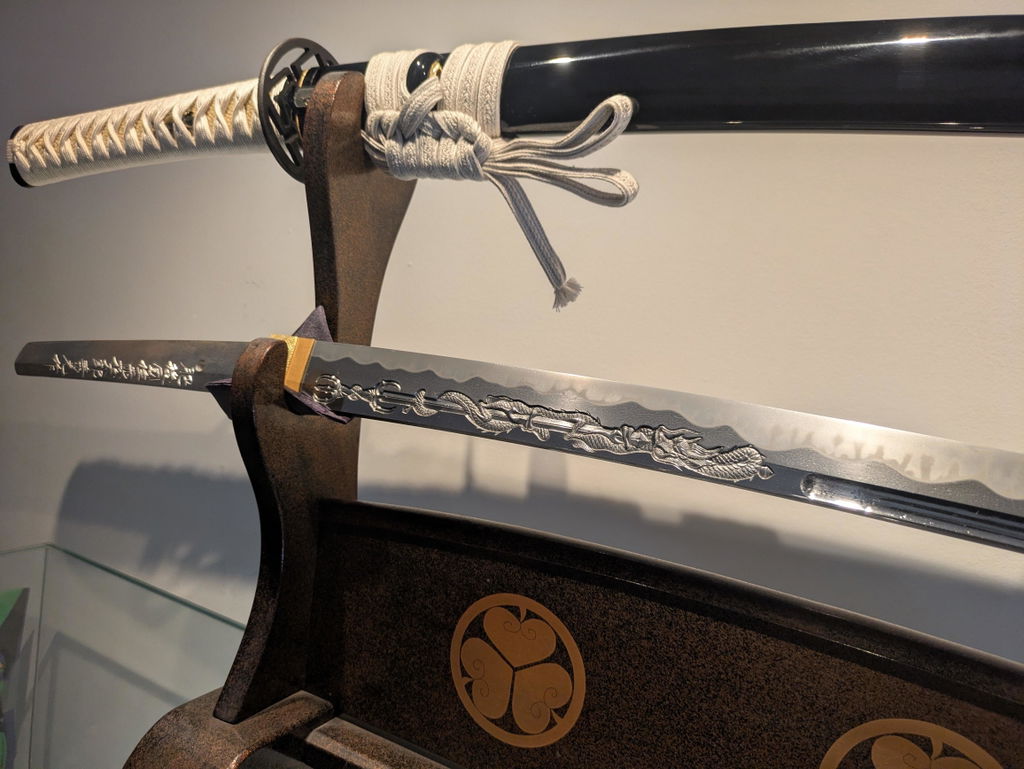
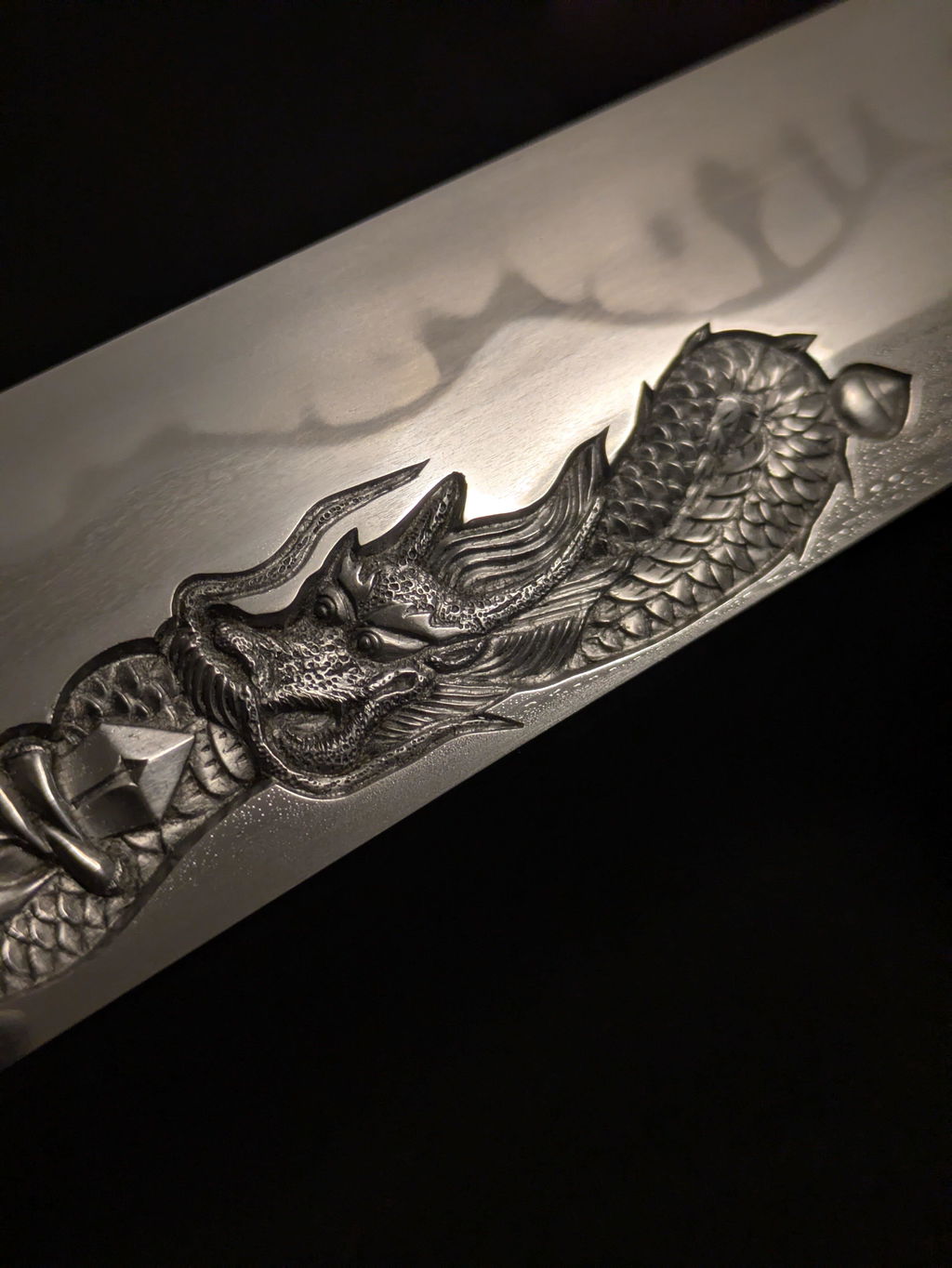
Freshly polished, the blade is exceptionally sound. The jigane is an itame forged extremely tight, its fine grain delicately clothed in ji-nie — a very smooth, limpid steel in which the forging clarity peculiar to the shintō-era Settsu smiths stands out. The hamon is a generous, broad temper of ō-midare mixed with gunome. The temper edge is extremely bright and clear, letting one fully savor the charm of a nie-deki temper; fine sunagashi and kinsuji run from the boundary into the edge, and together with the depth of the nioiguchi they create points of interest in every direction.
Solid in both mihaba and kasane, with a moderate sori and rich hiraniku, the blade presents a powerful figure. The tang (nakago) is neatly cut with the signature Sesshū-jū Izumi no Kami Kuni…, though its lower portion has unfortunately been lost to later shortening (suriage). Even so, this work is strongly judged to be from the hand of Izumi no Kami Kunisada, one of the foremost masters of the shintō era.
A legendary master who worked in the early Edo period (Kan'ei–Kanbun eras) in Settsu province (present-day Osaka), the greatest center of new-sword making. Born in Hyūga province (Miyazaki), he is said to have gone to Kyoto and studied under Dewa Daijō Kuniji of the Mishina school, later moving to Osaka; in Genna 9 (1623) he received the honorary title Izumi no Kami. The first-generation Kunisada, known under the name Izumi no Kami Kunisada, is affectionately called Oya-Kunisada ("parent Kunisada") by collectors for his overwhelming forging skill and artistic refinement, and is very highly esteemed as the real father (and teacher) of the later great master Tsuda Echizen no Kami Sukehiro — the "western yokozuna of the shintō". His style, fusing the refined Yamashiro-tradition beauty of the ground with a Sōshū-tradition strength of nie, laid the foundation of Osaka shintō, and works by this giant have always commanded exceptional popularity and standing in the sword market to this day.
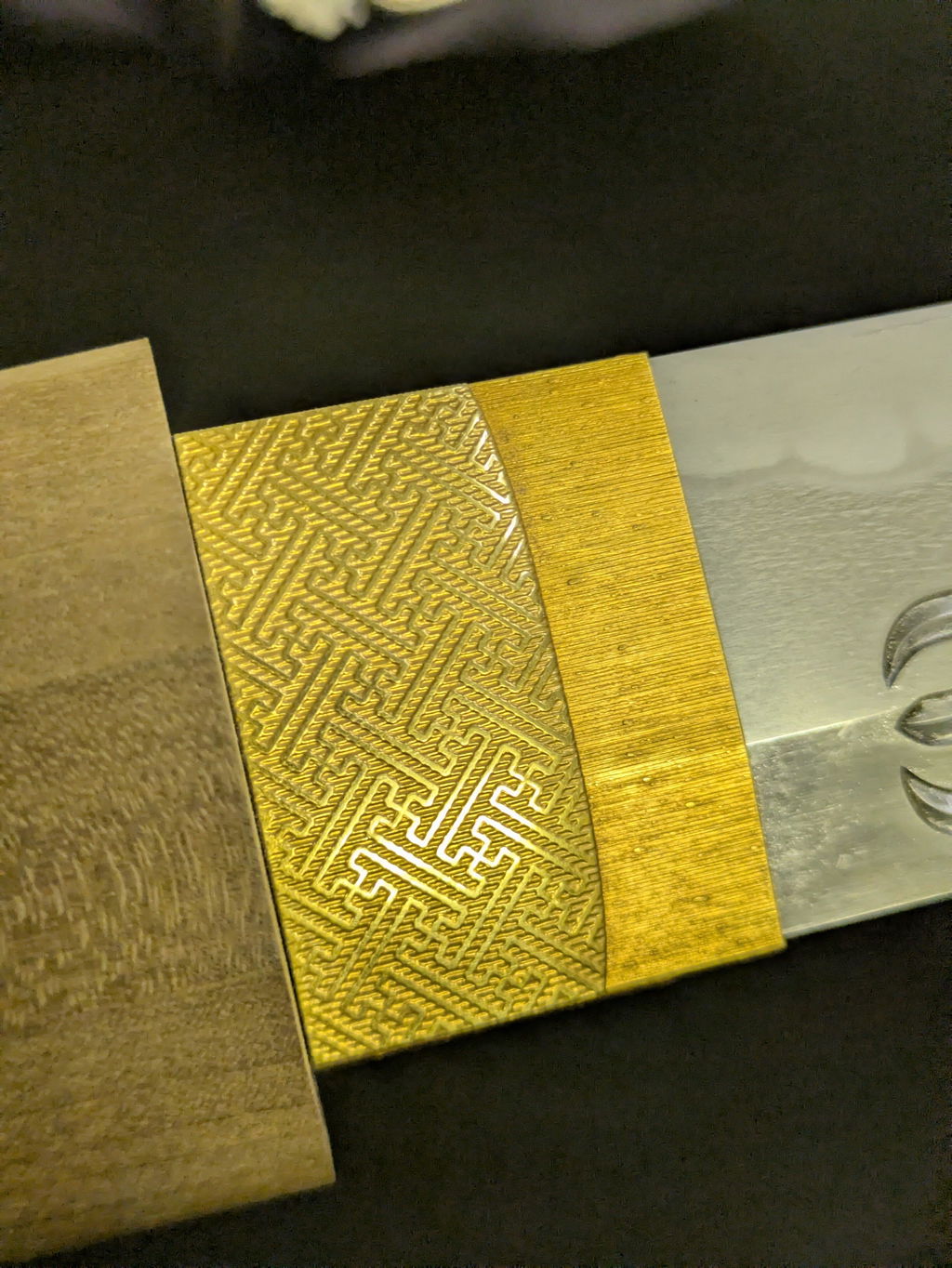
A fine period mounting: a beautiful jet-black lacquer saya, an elaborately worked hilt wrap and tsuba, and a kozuka that combines utility with ornament. Among the fittings, the kozuka bears Mt. Fuji — Japan's supreme sacred peak, an auspicious emblem tied to fuji ("without a second") and fushi ("immortality / everlasting prosperity") — while the menuki that adorn the hilt take the form of a boar (inoshishi), a motif beloved of the samurai for its headlong charge, signifying good health and valor. It is a deeply flavorful mounting uniting practicality, decoration, and the owner's wishes. The seppa and copper habaki are likewise very carefully made, further setting off the dignity of the blade. A shirasaya, indispensable for careful keeping, is also included, completing the piece as a collection item.
Though the signature is a shortened (suriage) one, this is an outstanding blade into which the skill and aesthetic of the Osaka-shintō giant Kunisada were lavishly poured. Together with an auspicious period koshirae woven of Mt. Fuji and boar, it is a masterpiece that will shine on forever as the crown of your collection.
¥200,000 ¥240,000

¥400,000 ¥430,000

¥390,000 ¥410,000

¥270,000 ¥290,000

¥300,000 ¥330,000


Every blade reflects generations of knowledge, discipline, and precision passed down through traditional Japanese swordmaking. From the forging of steel to the final finishing touches, each piece is shaped with patience, mastery, and deep respect for heritage.

From carefully selected materials to the refined finishing of every surface, each sword is crafted and presented with uncompromising attention to detail. Our commitment to authenticity ensures every piece reflects true tradition, lasting quality, and enduring cultural value.

Designed with balance, simplicity, and purpose, our blades embody the harmony between refined form and skilled craftsmanship. Each sword represents a thoughtful union of strength, elegance, and the timeless discipline of Japanese artisans.