Antique Japanese Katana Sword - Mumei, Shinshinto Era - NBTHK Hozon Token(73.2 cm)
¥1,100,000 ¥1,150,000

This blade has been acquired. Discover other exceptional swords currently available in our collection.


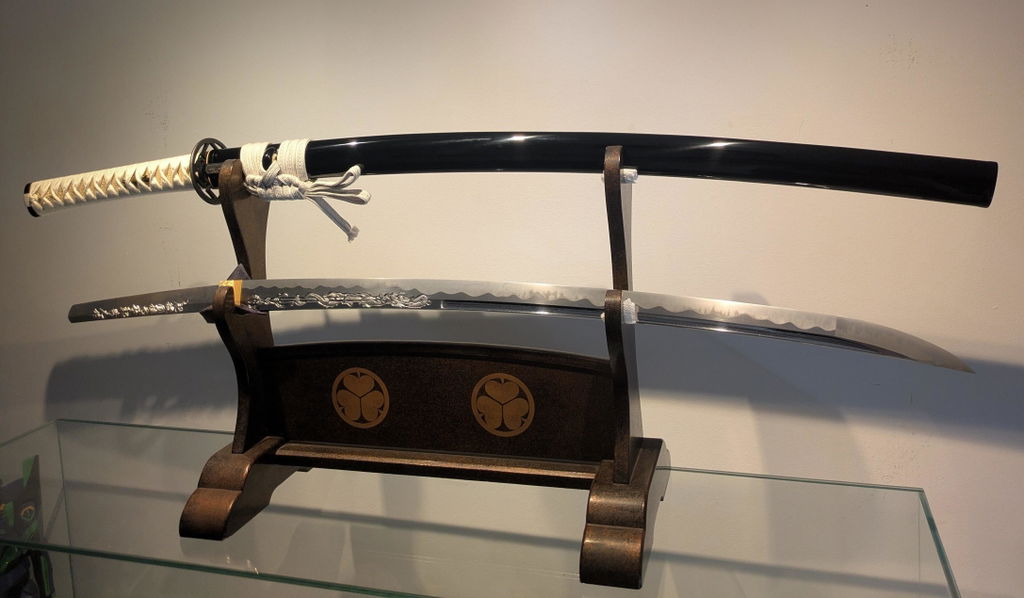
A sword of the very highest trust and evaluation: it carries "double" NBTHK certification, spanning from a Tokubetsu Kichō Tōken ("Especially Precious Sword") designation of Shōwa 44 (1969) to the higher Tokubetsu Hozon Tōken rank of Reiwa 4 (2022) — proof that, across more than half a century and the changing standards of appraisal, it has been consistently held in high esteem. This is a commanding long wakizashi by Izumo Daijō Fujiwara Yoshitake, a master who worked in Yamashiro province (present-day Kyoto) in the Enpō era (1673–1681) of the early Edo period. Its magnificently robust figure, breathtaking at a glance, is the very essence of Yoshitake — counted one of the "Five Early Kyoto Masters" — and conveys the exceptional discernment of the patron who commissioned it.
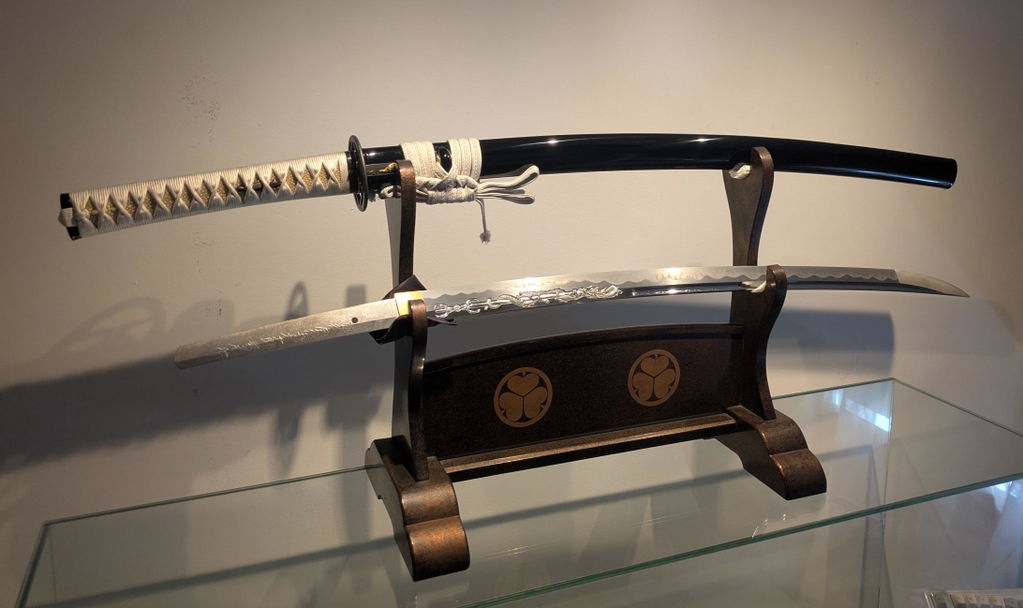
With virtually no loss from re-polishing, the blade boasts astonishing soundness — essentially flawless. The jigane is a finely, minutely packed ko-itame, over which thick ji-nie gather, bringing out the refined beauty of the Yamashiro tradition. The hamon is broad, based on a notare mixed with ko-gunome; the temper edge (habuchi) is bright and utterly clear, and within the edge sunagashi and kinsuji "activity" appear freely in every direction.
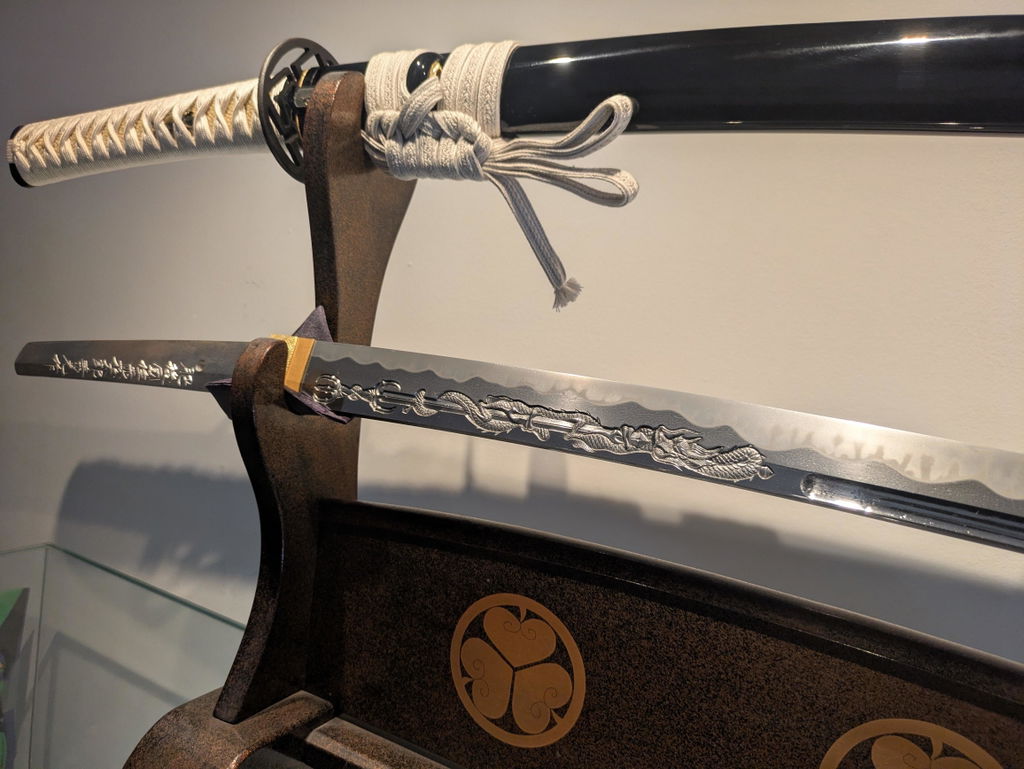
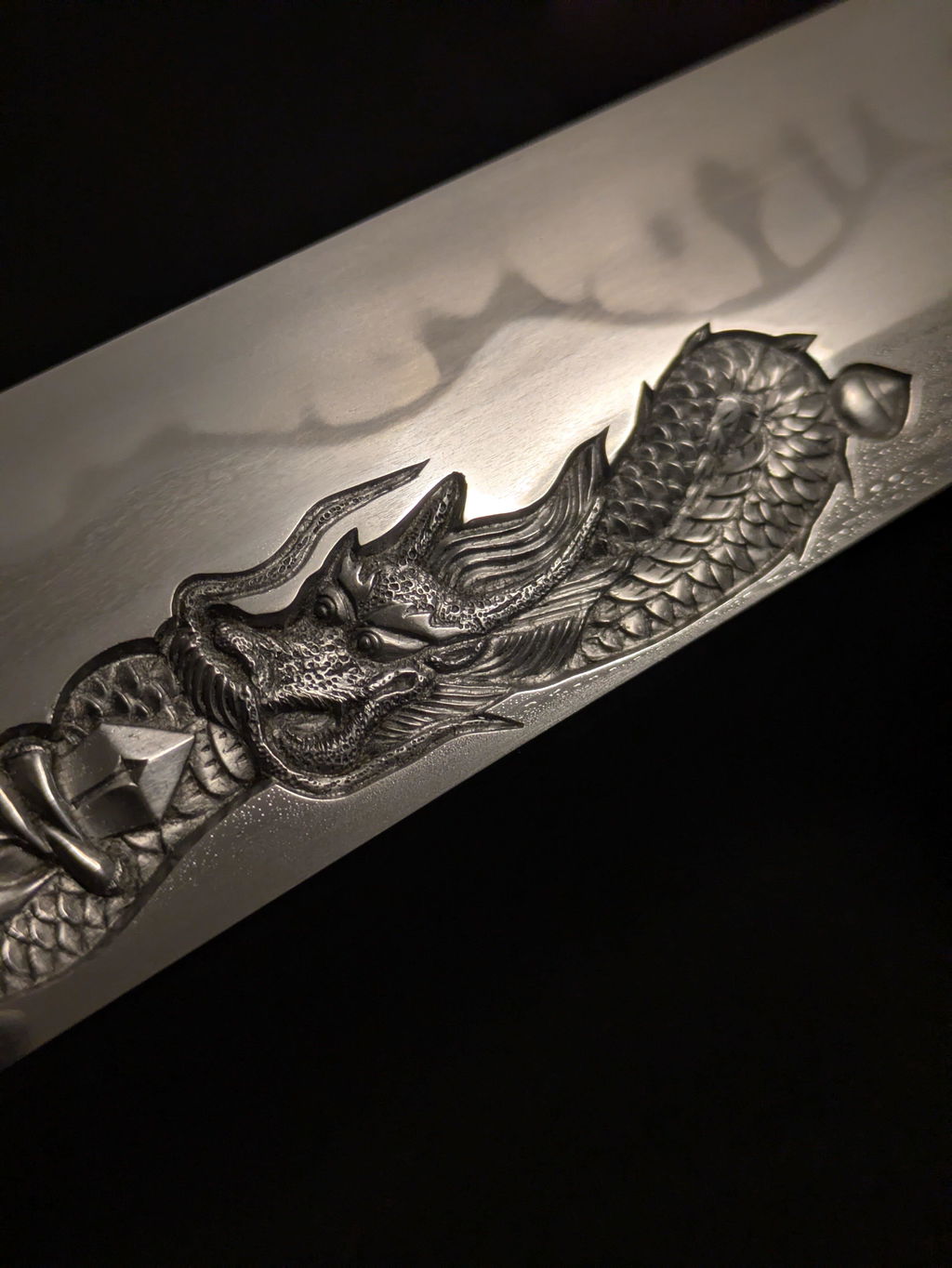
The nagasa is a little over 1 shaku 8 sun 7 bu (about 56.7 cm). With a moderate sori and a sakihaba that does not diminish, it is a grand, imposing blade. The deeply carved bō-hi on both faces preserves the blade's strength while reducing its weight, and at the same time serves as a design element that draws a vivid trailing image in motion. Taken in hand, it transmits its tremendous mass and Yoshitake's outstanding forging skill.
His real name was Kobayashi Hayato. Carrying on the line of the Mishina school, he is counted one of the "Five Early Kyoto Masters" (Yoshitake, Kunimichi, Sadakuni, Yoshimichi, and Kunitake) — a smith of real standing who received the honorary title of Izumo Daijō. Made in the Enpō era, the ripest period of his career, this piece shows Yoshitake's forging skill and artistry at their very height — a blade fully deserving to be called a representative work.
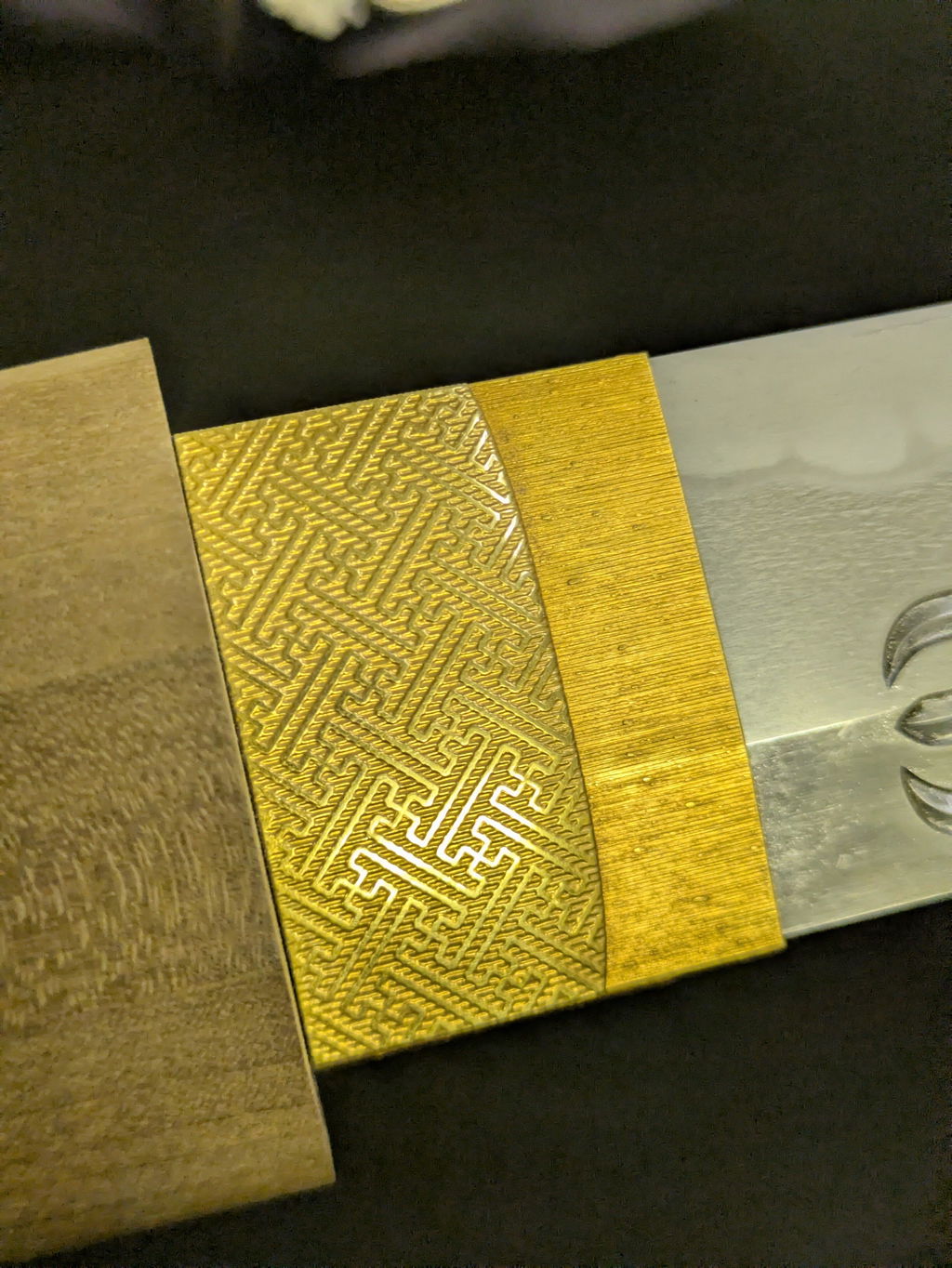
The blade comes in a fine shirasaya that safely protects and hands down the master's spirit. On the scabbard is a sayagaki reading Izumo Daijō Fujiwara Yoshitake in vivid ink, reinforcing the certainty of the attribution — a sayagaki that is not merely a record but an immediate, intuitive testament to the smith's name and standing. The beautifully carved horn fittings and the silver-ground habaki are likewise very carefully made.
A magnificently robust long wakizashi born in the Enpō era, as the culture of Edo moved toward maturity — a truly outstanding work in which Yoshitake's skill is displayed to the full. A piece uniting this width, this soundness, and the sure backing of a double certification is a standout in the market; it will shine on, forever, as the crown of your collection.
¥1,100,000 ¥1,150,000

¥200,000 ¥240,000

¥400,000 ¥430,000

¥390,000 ¥410,000

¥270,000 ¥290,000

¥300,000 ¥330,000


Every blade reflects generations of knowledge, discipline, and precision passed down through traditional Japanese swordmaking. From the forging of steel to the final finishing touches, each piece is shaped with patience, mastery, and deep respect for heritage.

From carefully selected materials to the refined finishing of every surface, each sword is crafted and presented with uncompromising attention to detail. Our commitment to authenticity ensures every piece reflects true tradition, lasting quality, and enduring cultural value.

Designed with balance, simplicity, and purpose, our blades embody the harmony between refined form and skilled craftsmanship. Each sword represents a thoughtful union of strength, elegance, and the timeless discipline of Japanese artisans.